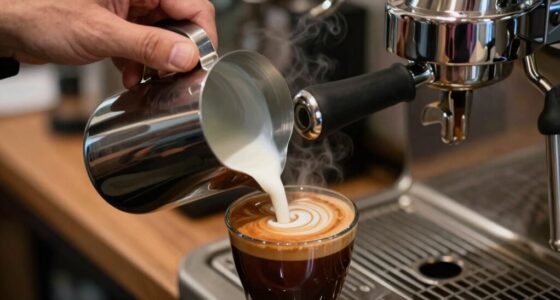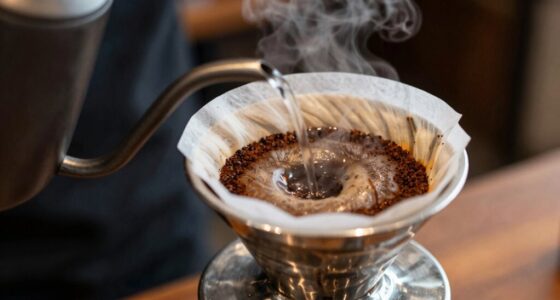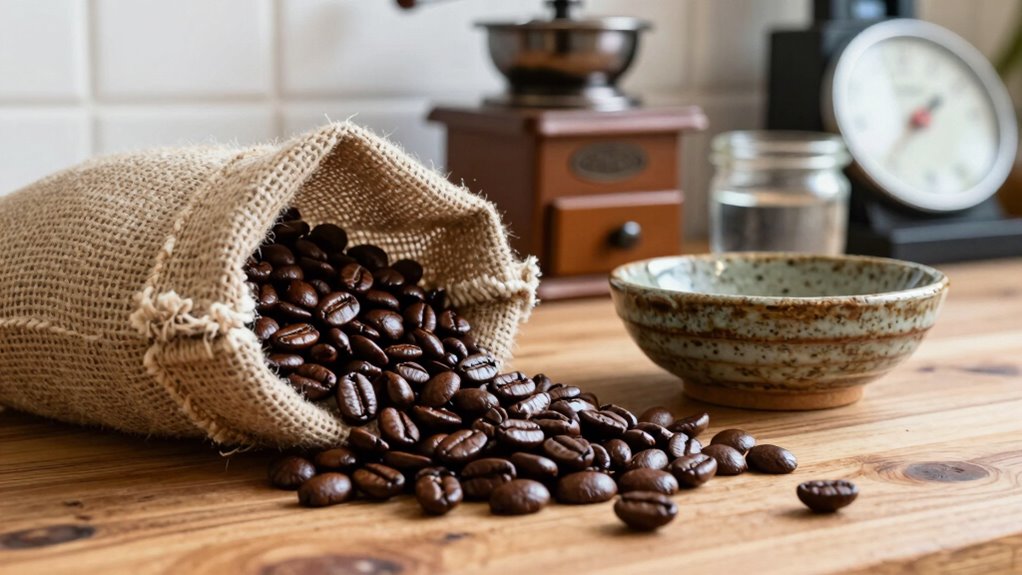

When your beans keep aging day-to-day, you should tweak your grind size and brew temperature regularly. Finer grounds can help extract more flavor as oils oxidize, while slightly hotter water can counteract dullness. Keep track of how each change affects taste, and don’t hesitate to experiment with small adjustments. By understanding how aging impacts extraction, you’ll find your ideal balance—if you want strategies to get consistent results despite changing beans, continue exploring these tips.

Get kitchen gear delivered free — and shop member deals
- Fast, free delivery on millions of items
- Access to Prime Big Deal Days deals on October 6–7
- Prime Video, Amazon Music and more included
Key Takeaways
- Regularly adjust grind size: finer for duller beans, coarser if flavors become too intense.
- Modify brew temperature: increase for flat or dull beans, decrease to prevent bitterness.
- Keep detailed notes of each adjustment and tasting results to identify optimal settings.
- Experiment with brew time and water quality to counteract flavor shifts caused by aging.
- Stay attentive to flavor changes daily, and fine-tune parameters to maintain consistent extraction.
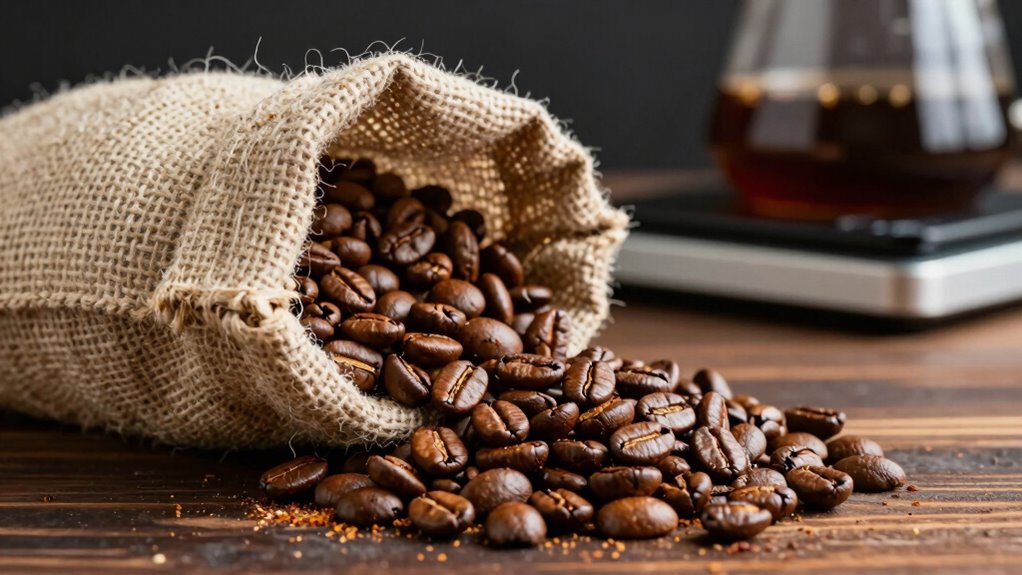
If your coffee beans are aging day to day, it can be challenging to maintain a consistent flavor profile. As beans get older, their oils oxidize, and their flavor compounds change, making your usual brew taste different from one day to the next. To counteract this, you need to adjust your brewing process, especially focusing on grind size and brew temperature. These two factors have a direct impact on extraction, which determines how the flavors are pulled from your beans. By fine-tuning them, you can better accommodate the natural shifts in your beans’ profile and keep your coffee tasting consistent.
Start with your grind size. When beans age, their surface oils and internal structure change, which can affect how quickly they release flavors during brewing. A finer grind generally increases extraction because it offers more surface area for water to contact, but it also risks over-extraction if too fine. Conversely, a coarser grind decreases extraction, which might be necessary if older beans are losing their vibrancy. You should experiment with small adjustments, making your grind slightly finer or coarser depending on the taste. This helps compensate for the natural decline in freshness and ensures your water extracts the desired flavors evenly.
Brew temperature is equally critical. As your beans age, their solubility changes, meaning they might require a slightly different temperature to achieve ideal extraction. Generally, hotter water—around 200°F or slightly above—can help extract more flavors from older beans that have lost some of their freshness. However, if the beans are too old and have developed off-flavors, lowering the brew temperature slightly might prevent over-extraction of undesirable compounds. It’s a delicate balance: you want enough heat to extract the good flavors without pulling out bitterness or stale notes. Keep your water temperature consistent and adjust it based on your taste. If your coffee tastes flat or dull, try increasing the temperature slightly, and if it’s bitter or overly strong, dial it back. Additionally, understanding that sustainable practices can influence bean freshness and flavor stability can help you manage these variables more effectively.
Beyond grind size and temperature, keep in mind that other variables like brew time and water quality also influence flavor. But regularly experimenting with your grind size and brew temperature is your best strategy for dialing in your coffee when your beans age day to day. Stay attentive to how each adjustment affects the final taste, and don’t hesitate to keep notes. With patience and careful tweaks, you’ll be able to extract the best possible flavor from your beans, even as they change over time.
coffee grinder with grind size adjustment
As an affiliate, we earn on qualifying purchases.
As an affiliate, we earn on qualifying purchases.
Frequently Asked Questions
How Does Ambient Humidity Affect Coffee Bean Aging?
Ambient humidity profoundly impacts coffee bean aging by influencing moisture absorption. High humidity causes beans to absorb excess moisture, accelerating staling and flavor loss, while low humidity helps preserve their freshness. You need to maintain environmental stability to slow aging and keep beans consistent. By controlling humidity levels, you guarantee your beans stay fresh longer, reducing unwanted moisture fluctuations and maintaining ideal flavor potential during storage and brewing.
Can Storage Containers Extend the Freshness of Aging Beans?
Yes, using airtight containers or vacuum sealing can considerably extend the freshness of your aging beans. Airtight containers prevent exposure to oxygen, slowing down staling, while vacuum sealing removes air entirely, preserving flavor and aroma longer. Keep your beans in a cool, dark place after sealing. These methods help maintain ideal freshness, giving you better control over your coffee’s aging process and ensuring a delightful brew each time.
Is There a Way to Slow Down Bean Aging Without Refrigeration?
Imagine locking in bean flavor preservation like a treasure chest, slowing the aging process control without refrigeration. Keep your beans in a cool, dark place, away from sunlight and humidity, to extend freshness. Use airtight containers to shield them from air and moisture, which hasten aging. These simple steps help you maintain their vibrant flavor longer, giving you better control over aging, even without refrigeration.
How Often Should I Taste Test Beans During Aging?
You should taste test your beans every few days during aging to monitor freshness preservation and flavor development. Regular tasting helps you catch the ideal point where beans are fresh but have developed rich, nuanced flavors. Keep notes on each tasting to track progress, and avoid over-aging, which can diminish quality. This approach ensures you enjoy beans at their peak, balancing preservation and flavor enhancement effectively.
Does Bean Variety Impact How Quickly It Ages?
Yes, bean variety impacts how quickly it ages because bean genetics influence flavor development and aging rate. Some beans, like robust dark roasts, develop complex flavors faster, while delicate beans, like light roasts, need more time. You’ll notice this in how their aroma, texture, and taste evolve over days. To optimize flavor, monitor these changes closely, adjusting your aging process based on the specific bean’s genetic traits.
As an affiliate, we earn on qualifying purchases.
Conclusion
Just like tuning a musical instrument takes patience, dialing in your beans as they age requires a bit of experimentation. Don’t get discouraged if things shift from day to day—think of it as adjusting a recipe to taste. Keep notes on your grind and brew times, and soon you’ll find that perfect balance. With practice, you’ll master the art of dialing in, making each cup as fresh and flavorful as the first.
As an affiliate, we earn on qualifying purchases.
water quality filter for coffee maker
As an affiliate, we earn on qualifying purchases.
As an affiliate, we earn on qualifying purchases.
Fall Picks
fall essentials
As an affiliate, we earn on qualifying purchases.