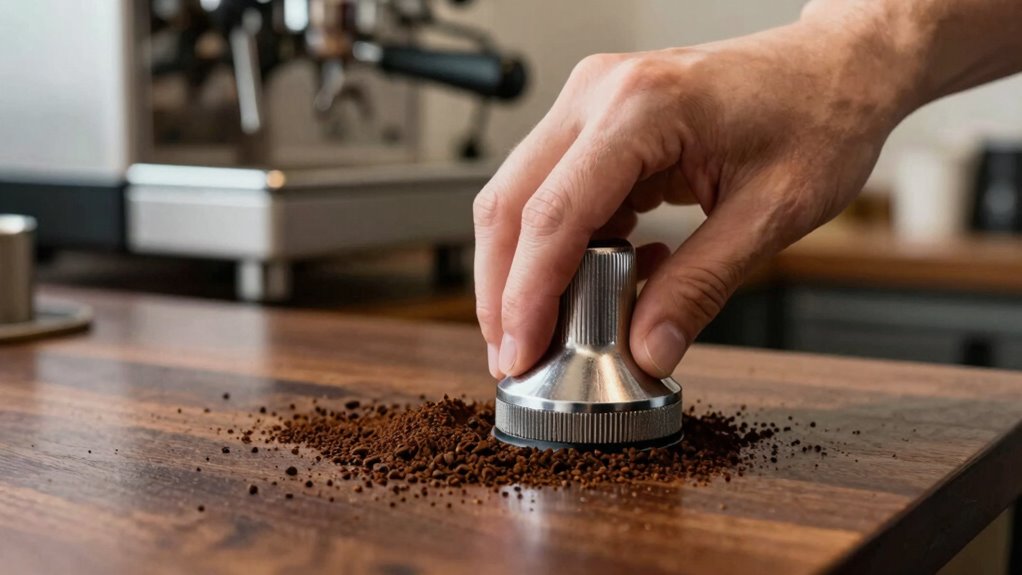

To improve your tamping accuracy, start by gently rocking your portafilter side to side to check for any unevenness in the coffee grounds. Visually inspect the surface and make sure the grounds are level before pressing down. If you notice unevenness, redistribute the grounds and recheck. Incorporating this simple step guarantees even compression and better extraction, resulting in tastier espresso. Keep going, and you’ll discover more tips to perfect your technique.

Get kitchen gear delivered free with Prime
- Fast, free delivery on millions of items
- Prime Video, Amazon Music and more included
- Member-only deals all year
Key Takeaways
- Gently rock the portafilter side to side to detect uneven coffee grounds before tamping.
- Visually inspect the surface of the grounds for levelness and correct any unevenness.
- Use tactile cues, like feeling for a flat, even surface, to confirm levelness.
- Recheck and adjust grounds after redistributing if you notice unevenness.
- Incorporate quick visual or tactile checks into your routine to develop consistent tamping.
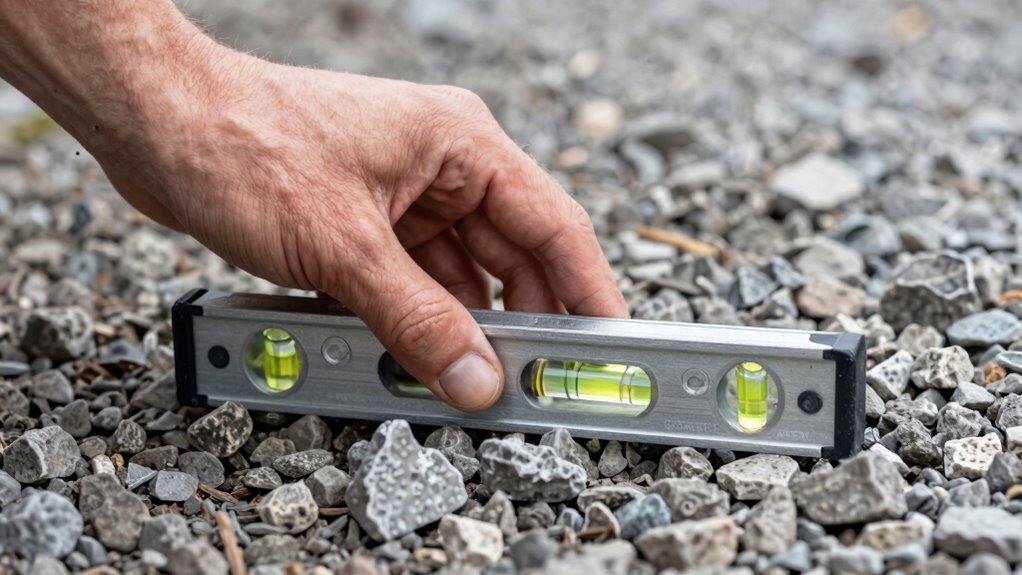
Achieving the perfect tamp is vital for a great espresso shot, and one simple step can make all the difference: checking your level before pressing down. This small but critical move ensures that your coffee grounds are evenly compressed, which directly impacts the quality of your brew. Think of tamping like laying railway ballast — just as proper ballast supports and stabilizes the tracks, a well-tamped coffee bed provides a solid foundation for extraction. If the tamp isn’t level, water will flow unevenly through the coffee, leading to over-extraction in some areas and under-extraction in others. This imbalance creates a bitter or weak flavor, ruining what could be a perfect shot.
Check your level before tamping for a balanced, flavorful espresso shot.
Using tamping machinery or doing it manually, your goal is consistency. Before applying pressure, take a moment to verify that the coffee bed is level. You can do this by gently rocking the portafilter side to side or visually inspecting the surface. A quick glance might reveal unevenness that, if left uncorrected, could compromise your shot. When you check your level, you’re fundamentally making sure your tamping process is precise, just like how accurate tamping machinery ensures proper packing of railway ballast. Properly leveled grounds allow for uniform water flow, resulting in a more balanced extraction and richer flavor. Additionally, developing a good tamping technique involves practicing the habit of level checking to achieve consistent results over time. Incorporating this step into your routine can help you develop an intuitive touch and feel for the right amount of pressure, leading to more consistent shots. Remember, consistent tamping is essential for replicating quality espresso shots and avoiding common issues like channeling or uneven extraction.
If you notice unevenness, simply tap or tap lightly around the edges of the portafilter to redistribute the grounds, then check again. Doing so helps maintain a consistent tamp, especially when you’re working with multiple shots. This step also helps you develop a feel for how much pressure to apply, leading to better control over your technique. Remember, the goal isn’t just to press down hard but to evenly distribute pressure across the coffee bed. A level tamp reduces the risk of channeling—those undesirable paths water takes when the coffee is unevenly packed—ensuring your espresso is smooth and flavorful. It’s also helpful to understand how tamping accuracy can influence extraction quality and overall espresso consistency. Moreover, paying attention to the quality of the grounds can further improve your tamping precision, ensuring a more consistent bed every time.
Incorporating this simple level check into your routine can dramatically improve your tamping accuracy. It’s a small habit that makes a big difference in the final taste of your espresso. Whether you’re using manual tampers or automated tamping machinery, verifying the level is a universal step that guarantees consistency. By paying close attention to your tamp’s level, you’re setting yourself up for a perfect extraction every time, much like how well-maintained railway ballast keeps trains running smoothly. So, take that extra second to check your level before pressing down, and enjoy the difference it makes in your coffee.
As an affiliate, we earn on qualifying purchases.
Frequently Asked Questions
Can This Level Check Be Used on Uneven Ground?
Yes, this level check can be used on uneven terrain, but you need to be cautious. First, guarantee proper level calibration on flat, stable ground before using it on uneven terrain. When checking, place the level on the surface carefully, and make adjustments to account for any slope. This helps maintain accuracy despite uneven ground, ensuring your tamping is consistent and precise even on challenging surfaces.
How Often Should I Perform the Level Check?
You should perform the level check regularly to maintain accuracy. The calibration frequency depends on how often you use the tool, but a good rule is to check it weekly or after any impact or rough handling. Its tool simplicity makes it easy to do, so consistent rechecks ensure your tamping remains precise. Regular checks help catch issues early, keeping your work consistently accurate and reliable.
Does It Require Any Special Tools?
Did you know that over 60% of tamping errors come from improper level checks? You don’t need special tools for this process—just a reliable spirit level or a simple bubble level that’s compatible with your equipment. Ensuring your tools fit well with your tamping equipment makes the process smoother and more accurate. No fancy gadgets required; just basic, compatible tools can greatly boost your tamping precision.
Can This Method Be Applied to All Types of Tampers?
Yes, you can apply this method to all types of tampers, but keep in mind that maintaining tamping consistency is essential. It works best when your equipment is properly calibrated, ensuring accurate results across different tamper models. Regular checks help identify any variations, so you can adjust accordingly. This simple level check is versatile, improving the precision of your tamping regardless of the equipment you use.
Is There a Risk of Damaging the Tamping Equipment?
Think of your tamping equipment like a delicate instrument—if you’re careless, damage can happen. Yes, there’s a risk if you neglect proper equipment maintenance or skip safety precautions. Always check for signs of wear and tear before use, and follow manufacturer guidelines. Regular inspections and cautious handling help prevent damage, ensuring your tampers stay in top shape and your work remains safe and efficient.
espresso portafilter leveling gauge
As an affiliate, we earn on qualifying purchases.
As an affiliate, we earn on qualifying purchases.
Conclusion
By keeping your tamping level simple, you set the stage for precision, much like a steady hand guiding a ship through calm waters. When you check that level consistently, you’re not just ensuring accuracy—you’re crafting a smoother, more reliable path beneath your tracks. Imagine each spike and tie falling perfectly into place, the rhythm of your work echoing like a well-tuned instrument. With this simple step, you turn the chaos of construction into a harmonious, steady journey.
As an affiliate, we earn on qualifying purchases.
As an affiliate, we earn on qualifying purchases.
Fall Picks
fall essentials
As an affiliate, we earn on qualifying purchases.