
Using reverse osmosis for coffee can improve water purity by removing contaminants and unwanted tastes. However, it also strips away essential minerals like calcium and magnesium that help develop flavor. Overfiltering water might make your coffee taste dull or flat. To avoid this, you’ll need to manage mineral levels carefully, perhaps by adding minerals back after filtration. Want to make the most of your brew? Keep exploring how to balance filtration and flavor.
Key Takeaways
- Reverse osmosis removes impurities but also strips essential minerals vital for flavor extraction in coffee.
- Overfiltering can lead to flat, dull-tasting coffee due to mineral depletion.
- To maintain optimal flavor, consider adding minerals back into RO-filtered water.
- Balancing filtration and mineral content ensures better control over brewing taste and extraction.
- Understand your water source and adjust filtration and mineralization accordingly for best results.
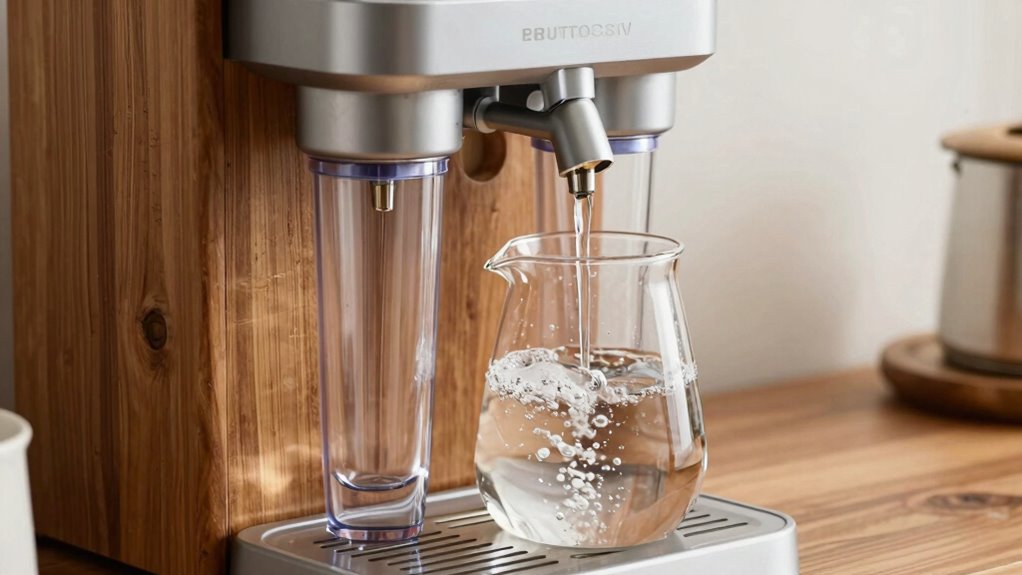
If you’re serious about brewing the perfect cup of coffee, understanding how reverse osmosis can improve your water quality is crucial. Reverse osmosis (RO) systems are renowned for their ability to remove impurities, but they also strip away essential minerals that contribute to water mineralization. While pure water might sound ideal, it can actually lead to flatter, less flavorful coffee because minerals like calcium and magnesium play a fundamental role in extracting flavors from coffee grounds. When you overfilter with an RO system, you risk creating water that’s too “clean,” which can dull the nuanced flavors you’re aiming to highlight in your brew.
One of the key benefits of reverse osmosis is its high filtration efficiency. It can eliminate a broad spectrum of contaminants, including chlorine, chloramine, heavy metals, and dissolved solids. This level of filtration ensures that your water is free from unwanted tastes and odors, allowing the true flavor profile of your coffee beans to shine through. However, because RO systems are so thorough, they can also remove beneficial minerals that improve water’s overall quality and influence extraction. Without these minerals, water becomes more aggressive and can even cause over-extraction, leading to bitter or harsh flavors. Understanding water composition is essential for optimizing your brewing process and achieving the desired flavor profile. Additionally, adjusting mineral content is vital because water mineralization directly impacts extraction and flavor development. To maintain the right balance, many coffee enthusiasts supplement their RO-filtered water with mineral additives, which can enhance the flavor profile and improve the overall brewing experience. Properly managing water mineralization can also help prevent over-extraction, ensuring a balanced and flavorful cup.
Additionally, understanding how water composition impacts extraction can help you fine-tune your brewing process for optimal flavor. Before you commit to an RO system, consider your specific water source and how it impacts your brewing. If your tap water is already low in minerals, overfiltering might leave you with water that’s too pure, requiring you to add minerals back in. Conversely, if your water is heavily mineralized, RO can be a great way to create a blank slate, giving you control over mineral content. In either case, understanding the interplay between water mineralization and filtration efficiency helps you customize your water to produce consistently excellent coffee. Remember, the goal isn’t just to remove impurities but to craft water that complements your beans, enhances flavors, and elevates your brewing experience.

iSpring RCC7AK-BN NSF Certified, 75 GPD, Alkaline 6-Stage Reverse Osmosis System, pH+ Remineralization RO Water Filter System Under Sink Patented Top-Mounted Faucet Design for Easy Installation
- Patented Top-Mounted Faucet Design: Easy above-sink installation
- Mineral Boost Technology: Adds essential minerals and balanced pH
- Transparent Filter Housing: Monitor contaminant buildup easily
As an affiliate, we earn on qualifying purchases.
As an affiliate, we earn on qualifying purchases.
Frequently Asked Questions
Does Reverse Osmosis Remove Beneficial Minerals From Coffee Water?
Yes, reverse osmosis removes beneficial minerals from coffee water, impacting mineral balance and water pH. When you overfilter with RO systems, essential minerals like calcium and magnesium get stripped away, which can make your coffee taste flat and alter extraction. To maintain a proper mineral balance and water pH, consider re-mineralizing your water after filtration, ensuring your coffee retains its rich flavors and ideal brewing qualities.
How Often Should I Replace the Reverse Osmosis Filter for Coffee Brewing?
You should replace your reverse osmosis filter for coffee brewing every 6 to 12 months. Regular filter maintenance and sticking to a consistent replacement schedule guarantee your water stays pure and tastes great. Keep an eye on the filter’s condition, and if you notice a decline in water flow or taste, replace it sooner. Proper maintenance prevents buildup and maintains the filter’s effectiveness for maximum coffee flavor.
Can Reverse Osmosis Water Improve or Worsen Coffee Flavor?
Reverse osmosis water can improve coffee flavor through flavor enhancement by removing impurities that dull taste. However, it can also worsen flavor due to mineral depletion, which strips essential minerals that contribute to coffee’s complexity. If you use reverse osmosis water, consider adding mineral supplements to preserve the coffee’s rich profile. Proper balance guarantees you enjoy the best flavor without sacrificing the mineral content that enhances aroma and body.
Is Reverse Osmosis Suitable for All Types of Coffee Beans?
Think of reverse osmosis like a blank canvas; it can highlight or hide the unique traits of your coffee beans. It’s not suitable for all, especially if your beans come from delicate origins or have intricate roast profiles. For beans with subtle nuances, over-filtering can strip away flavor, but for robust beans, it might enhance clarity. Know your bean origin and roast profile to decide if RO elevates or diminishes your brew.
What Are the Long-Term Effects of Using Reverse Osmosis Water on My Coffee Equipment?
Using reverse osmosis water long-term can impact your coffee equipment by disrupting mineral balance, which may lead to equipment corrosion. Without minerals, your machine’s parts might wear down faster, and mineral buildup that improves flavor could be lost. To prevent this, consider remineralizing your water or regularly inspecting and maintaining your equipment. This way, you preserve both your machine’s longevity and your coffee’s quality.
mineral additive for RO water coffee
As an affiliate, we earn on qualifying purchases.
As an affiliate, we earn on qualifying purchases.
Conclusion
If you’re considering reverse osmosis for your coffee, pause and ponder. Perfect purity might seem appealing, but overfiltering can strip essential minerals, spoiling your sip. Remember, moderation matters—maintain a mindful balance between filtration and flavor. By blending your brewing basics with a dash of discretion, you’ll craft coffee that’s consistently compelling. So, steer clear of overfiltering, stay savvy, and savor every sip of your superb, well-balanced brew.

COFFEE WATER Mineral Packs for Making Water for Coffee (Makes 25 Gallons)
- Enhances water for better coffee: Turns pure water into optimal brewing water
- Compatible with RO/distilled water: Ideal for use with filtered or distilled water
- Certified for coffee standards: Meets all Specialty Coffee Association standards
As an affiliate, we earn on qualifying purchases.
As an affiliate, we earn on qualifying purchases.
RO water filtration system for brewing
As an affiliate, we earn on qualifying purchases.
As an affiliate, we earn on qualifying purchases.