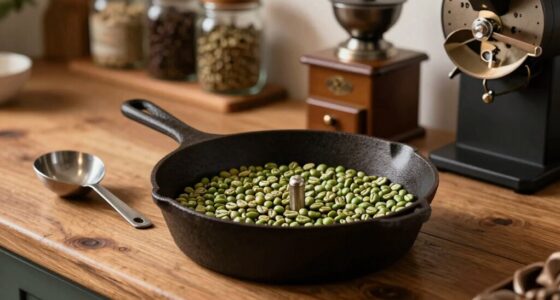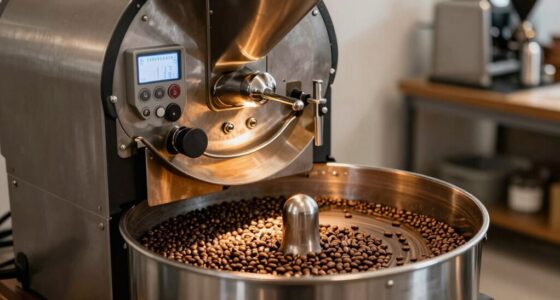

If you’re new to roasting, an air roaster is a good choice because it offers preset profiles and automatic controls, making it easier to get started quickly. If you want more control and enjoy fine-tuning your process, a drum roaster might suit you better, though it has a steeper learning curve. Keep exploring, and you’ll discover more about how each option can fit your roasting journey.

Get kitchen gear delivered free — and shop member deals
- Fast, free delivery on millions of items
- Access to Prime Big Deal Days deals on October 6–7
- Prime Video, Amazon Music and more included
Key Takeaways
- Drum roasters offer more control and nuanced profile development, suited for those willing to invest time in learning.
- Air roasters provide preset profiles and automation, ideal for beginners seeking quick, straightforward roasting experiences.
- Developing skills with drum roasting requires understanding airflow, temperature, and manual adjustments.
- Air roasting simplifies the process, reducing the need for extensive manual control and initial learning effort.
- Choose drum roasting if you want detailed customization; opt for air roasting if ease and speed are priorities.

When choosing a coffee roaster, understanding the differences between drum and air roasters is vital to finding the right fit for your preferences and needs. Both types influence your coffee profile, which is the flavor, aroma, and body of your roasted beans. Drum roasters typically produce a more consistent and traditional roast, giving you a fuller-bodied coffee with complex flavors. They heat the beans evenly through contact with a rotating metal drum, allowing you to develop nuanced profiles with careful control. The process of dialing in the roast can be more time-consuming initially, but it offers greater control over the final flavor. Conversely, air roasters are generally easier for beginners. They often come with preset profiles or automatic controls that simplify the process, making it easier to produce consistent results without extensive experience. However, mastering the subtleties of airflow and temperature adjustments can still take some practice if you want to refine your roast. Additionally, understanding the importance of roast profile and how it impacts your coffee can significantly enhance your roasting results. Knowing about roast profile development can help you tailor your roasting process to achieve specific flavor characteristics. Proper maintenance practices are also crucial to ensure your roaster performs optimally over time and to preserve the quality of your roasted beans.
As an affiliate, we earn on qualifying purchases.
Frequently Asked Questions
Which Roaster Is More Energy-Efficient?
Air roasters are more energy-efficient because they use hot air circulation to roast coffee quickly, saving power. You’ll notice their fast roasting times and consistent flavor profiles, making them cost-effective in the long run. Drum roasters tend to consume more energy due to longer roasting periods and heat retention. When comparing costs, air roasters often have lower operational expenses, making them a smarter choice if energy efficiency is your priority.
Can I Roast Different Bean Types Equally Well?
Yes, you can roast different bean types equally well, but it takes practice. Did you know that adjusting your heat and airflow can enhance bean flavor and improve roast consistency? With air roasters, you might find it easier to fine-tune these variables for different beans. Drum roasters, on the other hand, often require more skill to achieve consistent results across various bean types. Either way, patience and experimentation are key.
How Long Does It Take to Master Each Roaster?
Mastering each roaster varies, but generally, you’ll see improvements within 20-40 roasts. With drum roasters, you might take longer to achieve flavor consistency because of their slower roast speed, requiring more attention. Air roasters offer quicker results, helping you refine your skills faster. Overall, consistent practice is key, and your familiarity with the roasting process will determine how quickly you reach mastery.
Are Maintenance Requirements Different Between the Two?
Maintenance requirements differ significantly between drum and air roasters. Think of them as different puzzles—you’ll find drum roasters demand more maintenance complexity, with regular cleaning frequency to prevent buildup, and parts like drums and chaff collectors need attention. Air roasters are simpler, with less frequent cleaning and easier access, making upkeep more straightforward. Your choice depends on how much time you’re willing to dedicate to maintaining your equipment.
Which Roaster Is Better for Small-Scale Home Use?
For small-scale home use, an air roaster is a great choice because it offers quick roasting times and easy cleanup. You’ll appreciate its flavor consistency and straightforward roasting control, making it ideal for beginners. While drum roasters may provide more nuanced control, they often require more space and maintenance. An air roaster simplifies the process, helping you produce consistently good coffee with less effort.
automatic coffee roasting machine
As an affiliate, we earn on qualifying purchases.
As an affiliate, we earn on qualifying purchases.
Conclusion
Choosing between drum and air roasters isn’t just a decision; it’s the turning point that could make or break your coffee dreams. Imagine mastering the perfect roast, feeling like a coffee wizard, all thanks to the right machine. Don’t settle for mediocrity—embrace the challenge and transform your brewing game forever. The right roaster will reveal a world of flavor you never knew existed—are you ready to take that leap and become a coffee legend?
As an affiliate, we earn on qualifying purchases.
air coffee roaster with preset profiles
As an affiliate, we earn on qualifying purchases.
As an affiliate, we earn on qualifying purchases.
Fall Picks
fall essentials
As an affiliate, we earn on qualifying purchases.