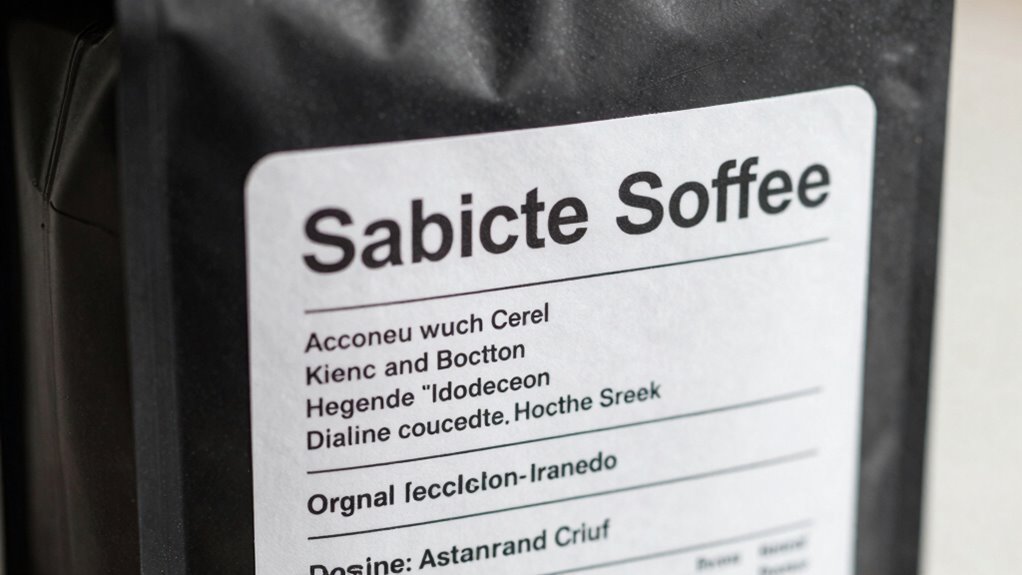

To understand a coffee label without falling for fancy words, focus on clear details like roast level, which shows flavor strength, and origin, revealing typical taste notes. Check the processing method to know how it was made, and pay attention to the roast date to guarantee freshness. Labels that mention brewing tips or grind size can help you prepare your coffee better. Keep these basics in mind, and you’ll uncover what truly matters—there’s more to discover beyond the surface.
Key Takeaways
- Focus on straightforward details like roast level, origin, and processing method rather than decorative descriptions.
- Check the roast date to ensure freshness and optimal flavor.
- Look for clear labels indicating brewing recommendations and grind size.
- Prioritize transparent information about farm, region, or processing for quality insight.
- Ignore subjective or flowery language; rely on objective facts to guide your choice.
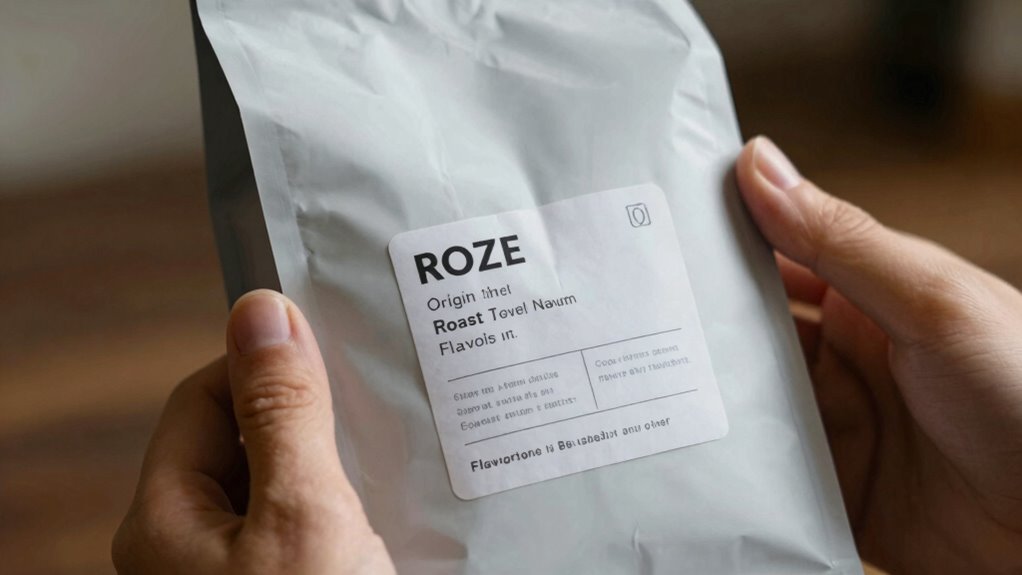
Have you ever looked at a coffee label and wondered what all those words and numbers mean? It can be overwhelming at first glance, especially with the range of terms that seem to describe everything from the coffee’s origin to its flavor profile. But understanding a few key details can help you pick the right coffee for your taste and brewing style. When reading a coffee label, start with the roast level. Often, labels will specify whether the coffee is light, medium, or dark roasted. This gives you a good idea of the flavor intensity and body of the coffee. Light roasts tend to preserve the beans’ original flavors and are often more acidic, while dark roasts develop a bold, smoky profile. Knowing this helps you match the coffee to your preferred brewing method. For example, light roasts work well with pour-over or drip brewing, which highlight subtle flavors, whereas French press or espresso can handle darker roasts with their fuller body.
Understanding roast levels helps you choose the right coffee for your preferred brewing method and flavor preferences.
Next, look at the origin of the beans. The country or region listed can tell you a lot about the typical flavor notes to expect. For instance, Ethiopian coffees often have floral and fruity qualities, while Colombian beans might offer a balanced, nutty flavor. This information helps you understand what flavors will come through when you brew your coffee and guides you to try new regions if you’re exploring different taste profiles. The label might also include the specific farm or estate, especially if it’s specialty coffee, indicating higher quality and traceability. Additionally, many specialty coffees highlight sustainable farming practices, which can influence your selection if you prioritize environmental impact. Recognizing how processing methods influence flavor can further refine your choice, as different techniques impart unique characteristics to the coffee. It’s also helpful to note that some labels specify whether the coffee is single-origin or a blend, which can impact the overall flavor balance.
Pay attention to the processing method if it’s listed—washed, natural, or honey processed—since this influences the flavor as well. But perhaps most important, look for the roast date. Coffee is best enjoyed fresh, so a recent roast date guarantees maximum flavor and aroma. Older coffee tends to lose its vibrancy and can taste stale. Additionally, understanding the processing method can help you anticipate the flavor profile and select coffee that suits your taste preferences. Many labels will also suggest ideal brewing methods, which can guide you in choosing the right grind size and equipment, enhancing your overall coffee experience. Recognizing these details helps you avoid falling for fancy words that don’t add much value and instead focus on the information that actually guides your choice. By paying attention to roast level, origin, processing, and freshness, you’re better equipped to select a coffee that matches your brewing method and taste preferences, making each cup a satisfying experience.

Qhapaq Coffee Roast Chart Wall Art, Vintage Coffee Guide Poster for Kitchen (Unframe-style,12 * 18inches)
- Coffee Roast Level Guide: Visual comparison of roast levels and beans
- Flavor and Color Reference: Details on bean color, aroma, and taste
- Vintage Cafe Design: Warm tones with coffee bean illustrations
As an affiliate, we earn on qualifying purchases.
As an affiliate, we earn on qualifying purchases.
Frequently Asked Questions
What Does “Single-Origin” Really Mean?
“Single-origin” means the coffee comes from one specific location, like a single farm or region. This often results in distinct flavor profiles that reflect that area’s unique climate and soil. The altitude impact influences these flavors — higher elevations tend to produce beans with brighter, more complex tastes. When you see “single-origin,” expect a more authentic experience, showcasing the unique characteristics of that particular place without blending different beans.
How Can I Tell if Coffee Is Fresh?
To tell if coffee is fresh, smell and taste it—fresh coffee has a vibrant aroma and bright flavor. Check the roast date on the label; ideally, buy within a month of that date. Use proper storage tips, like keeping beans in an airtight container away from light and moisture. Also, consider your brewing method—fresher beans work best with methods like pour-over or AeroPress, which highlight their bright flavors.
Do Labels Indicate Roast Level Accurately?
Labels often try to tell you the roast level, but they can be misleading, just like flavor profiles that vary by brewing method. A “dark roast” might taste different depending on how you brew it, so don’t rely solely on the label. Instead, look for descriptions that mention the flavor profile and consider your preferred brewing method. That way, you get a more accurate idea of what’s inside.
Is Fair Trade Certification Important?
Yes, fair trade certification is important because it guarantees ethical sourcing and promotes fair wages for farmers. It also helps reduce environmental impact by encouraging sustainable farming practices. When you choose fair trade coffee, you’re supporting farmers who prioritize eco-friendly methods and fair labor conditions. This certification gives you confidence that your coffee purchase aligns with your values, making a positive difference for both people and the planet.
What Certifications Should I Look For?
You should look for certifications like Organic, Fair Trade, and Rainforest Alliance, which subtly indicate quality and sustainability. These certifications often hint at richer flavor profiles and better packaging quality, ensuring your coffee aligns with ethical standards. Trust labels that emphasize environmental and social responsibility, as they tend to reflect a commitment to excellence. By choosing certified options, you enjoy a more flavorful experience with confidence in the product’s integrity.

Agratronix Coffee Moisture Tester Model 08150
- Accurate Coffee Moisture Testing: Calibrated for various coffee commodities
- Multilingual Backlit Display: Provides clear readings in dark environments
- User-Friendly Operation: Easy to operate anywhere, anytime
As an affiliate, we earn on qualifying purchases.
As an affiliate, we earn on qualifying purchases.
Conclusion
Ultimately, reading a coffee label is about more than deciphering fancy words—it’s about understanding what truly matters: flavor, origin, and your own taste. Just as a master chef appreciates simple ingredients beneath elaborate dishes, you can enjoy coffee by focusing on what’s genuine rather than what’s flashy. In stripping away the marketing, you discover the essence of each brew, reminding yourself that authenticity often outshines the superficial, making every cup a personal discovery.

Pour Over Coffee Maker Set with Manual Coffee Grinder and Coffee Scale
- Complete Pour Over Coffee Set: Includes kettle, filter, cup, grinder, scale
- High-Quality Materials: Food-safe stainless steel and borosilicate glass
- Dishwasher Safe Components: Kettle, filter, cup, and scale are dishwasher safe
As an affiliate, we earn on qualifying purchases.
As an affiliate, we earn on qualifying purchases.

How to Make Coffee So Good You'll Never Waste Money on Starbucks Again (The Coffee Maestro Series Book 1)
As an affiliate, we earn on qualifying purchases.
As an affiliate, we earn on qualifying purchases.