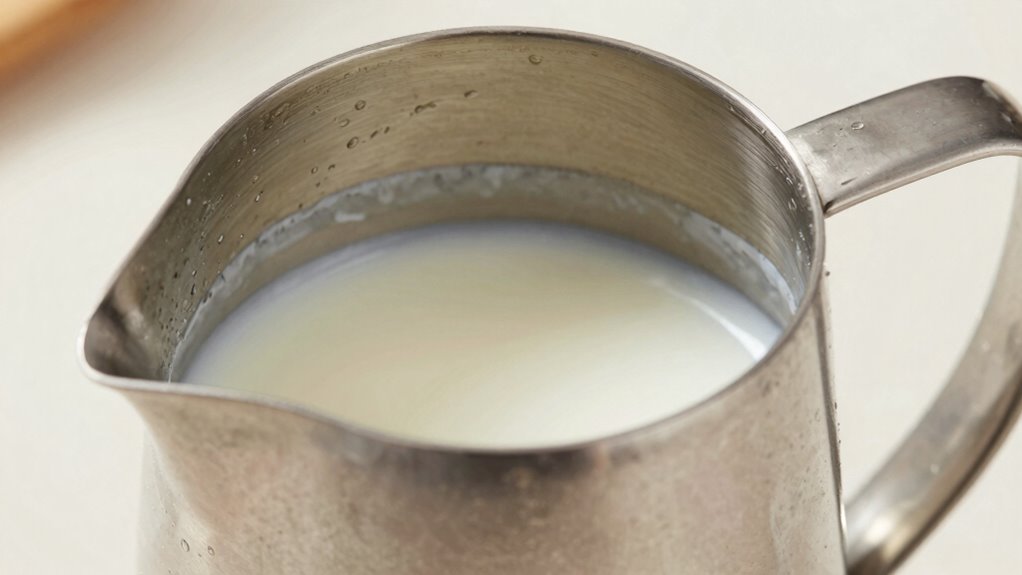

A quick rinse may remove visible milk, but it leaves microscopic residues, oils, and bacteria behind, which can affect hygiene and the flavor of your drinks. Rinsing alone isn’t enough to clean thoroughly, especially since dried milk and oils cling to surfaces. Using proper cleaning techniques—warm water, suitable detergent, and scrubbing—ensures your pitcher stays hygienic and maintains quality. Keep going to find out how to keep your equipment in top shape and guarantee safety.
Key Takeaways
- Microscopic residues, oils, and bacteria remain after a quick rinse, risking flavor contamination and hygiene issues.
- Proper cleaning with detergent and scrubbing removes dried milk, oils, and hidden residues effectively.
- Different materials like stainless steel, plastic, and glass require tailored cleaning methods to prevent damage and buildup.
- Regular sanitizing and thorough drying prevent bacterial growth, odors, and water spots, ensuring safety and equipment longevity.
- Proper cleaning maintains the quality, flavor, and appearance of milk-based beverages, preventing contamination and extending pitcher lifespan.
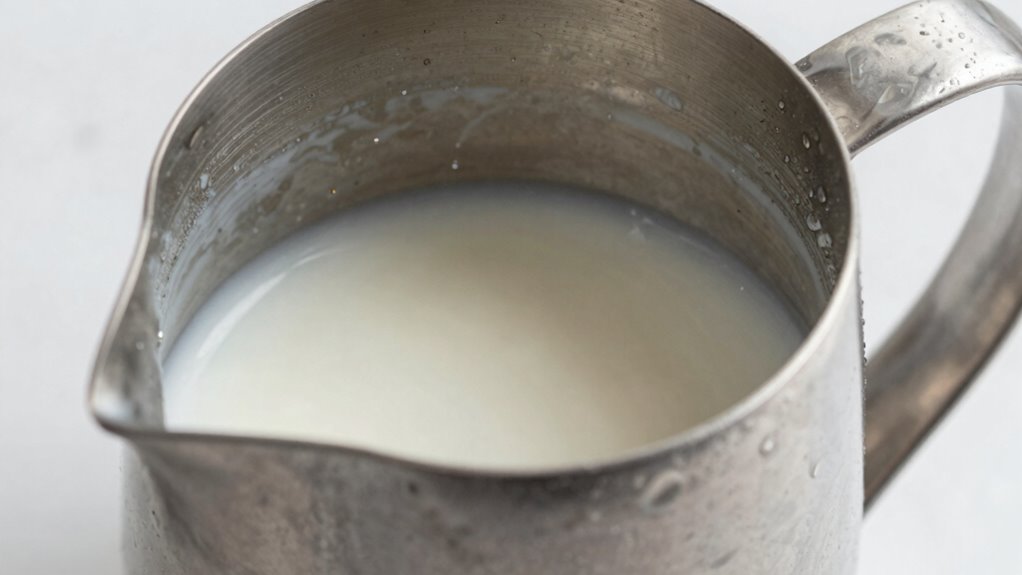
When it comes to maintaining your milk pitchers, a simple rinse isn’t enough to guarantee they’re truly clean. Milk residue, oils, and bacteria can cling stubbornly to the surfaces, especially after multiple uses. That’s why employing effective cleaning techniques is essential. A quick rinse might remove visible milk, but it often leaves behind microscopic traces that can affect flavor and hygiene. To truly clean your pitchers, you need to go beyond just water; use warm water combined with a suitable detergent designed for dairy equipment. Scrubbing with a soft brush or sponge helps dislodge dried milk and oils stuck on the interior surfaces. Make sure to reach all corners and crevices because milk can hide in the smallest spaces. Additionally, understanding the material considerations of your pitchers helps tailor your cleaning approach for optimal results. Material considerations play a crucial role in how you approach cleaning your milk pitchers. Different materials—stainless steel, plastic, glass—respond uniquely to cleaning techniques. Stainless steel pitchers are durable and resistant to most cleaning agents, but they can develop water spots or streaks if not dried properly. For these, a gentle scrub and thorough drying prevent buildup. Plastic pitchers are lightweight but tend to retain stains and odors if not cleaned properly. Use non-abrasive cleaners to avoid scratching the surface, which can harbor bacteria over time. Glass pitchers, although easy to clean, are prone to smudges and streaks, so a careful wash and polish are necessary for clarity and hygiene. Proper cleaning also involves understanding the best practices for each material to ensure longevity and hygiene. Regularly sanitizing your pitchers with a food-safe sanitizer after washing adds an extra layer of protection. Incorporating proper cleaning frequency into your routine is essential for maintaining optimal hygiene and preventing bacterial growth. Additionally, proper drying techniques are vital to preventing bacterial growth and water spots. Using appropriate tools like brushes and cloths designed for kitchen use can greatly enhance the cleaning process. Remember, even if your pitchers look clean on the outside, bacteria and milk residues can lurk inside, especially in hard-to-reach areas. So, it’s critical to use the right tools and methods for each material type. Taking these steps not only prolongs the lifespan of your equipment but also guarantees the quality and safety of every cup of coffee you serve. Proper cleaning isn’t just about appearance; it’s about maintaining excellent hygiene and flavor integrity in your daily routine.

MOSOLAN Stainless Steel Water Bottle Brush, Long Handle Scrubbing Brush, Built for Cleaning Sport Bottles, Baby Bottles, Cups, Coffee Mugs, Glasswares, Wine Decanters, Flask, 2 Pack, 15 in
The Last Bottle Brush You Want: Made of premium 18/8 stainless steel and food grade polypropylene, BPA- free…
As an affiliate, we earn on qualifying purchases.
As an affiliate, we earn on qualifying purchases.
Frequently Asked Questions
How Often Should I Deep Clean My Milk Pitcher?
You should deep clean your milk pitcher daily to maintain proper milk pitcher maintenance and guarantee hygiene. Regular cleaning prevents milk residue buildup, which can affect taste and spoilage. Even if you rinse after each use, a thorough cleaning with warm water and soap at least once a day keeps the pitcher sanitary. Consistent cleaning frequency helps preserve the pitcher’s condition, ensuring your drinks taste fresh and your equipment lasts longer.
Can I Use Harsh Cleaning Agents on My Milk Pitcher?
You shouldn’t use harsh cleaning agents on your milk pitcher, as they can damage the surface and leave residues that affect milk foam quality. Think of your pitcher as a delicate canvas—harsh chemicals can stain and weaken it, making pitcher stains more stubborn over time. Instead, opt for mild, non-abrasive cleaners that gently remove milk residue without compromising the pitcher’s integrity, ensuring your milk foam stays smooth and perfect.
What’s the Best Method to Remove Stubborn Milk Residue?
To remove stubborn milk residue, use a cleaning brush designed for milk pitchers. Fill the pitcher with warm water and a small amount of mild detergent, then scrub thoroughly with the brush, focusing on any buildup. Rinse well with clean water to guarantee no residue or soap remains. Regularly using cleaning brushes helps break down stubborn milk residue, keeping your pitcher spotless and safe for future use.
Does the Material of the Pitcher Affect Cleaning Requirements?
Yes, the material of your milk pitcher affects its cleaning needs. Durable materials like stainless steel resist staining and are easier to clean thoroughly, while glass or ceramic pitchers may have higher surface porosity, trapping milk residues more easily. You should pay extra attention to these porous surfaces, ensuring thorough scrubbing and proper drying, as residual milk can harbor bacteria or cause staining. Proper cleaning extends your pitcher’s lifespan and maintains hygiene.
Are There Specific Tools Recommended for Thorough Cleaning?
Imagine a cleaning brush slipping into your milk pitcher, scrubbing away stubborn residue. For thorough cleaning, you should use dedicated cleaning brushes designed for pitchers, ensuring every nook is reached. Incorporate proper sanitization techniques, like soaking in a food-safe solution or steaming, to eliminate bacteria. These tools and methods work together to keep your milk pitchers hygienic and ready for the next use, preventing buildup and ensuring quality.

LEXX® RTU Food Contact Surface Sanitizer & Cleaner Spray – EPA-registered and NSF-listed Category A1, D2 Sanitizer, Formulated with natural ingredients, powered by Citric acid. No Rinse Required
Powerful Sanitizing Performance – LEXX RTU Food Contact Surface Sanitizer & Cleaner is an EPA-registered, NSF-listed Category A1,…
As an affiliate, we earn on qualifying purchases.
As an affiliate, we earn on qualifying purchases.
Conclusion
Remember, a quick rinse isn’t enough to keep your milk pitchers spotless. You need to scrub, sanitize, and dry thoroughly to prevent buildup, bacteria, and cross-contamination. You need to remove residues, eliminate odors, and guarantee cleanliness. Neglecting these steps can affect the quality of your milk and the taste of your drinks. So, take the time to care for your pitchers properly—because cleanliness isn’t just a task, it’s a necessity for every barista.

INVODA 4PCS Bottle Brush,Bottle Washer Set Long Sponge Bottle Cleaning Brushes Baby Bottle Cleaner Brush, Nipple Brush (4 pcs)
【Packaging Includes】 You will receive 12 sponge nipple brushes in four colors, with each nipple cleaning brush measuring…
As an affiliate, we earn on qualifying purchases.
As an affiliate, we earn on qualifying purchases.

MR.SIGA Long Handle Bottle Brush, Flexible Scrub Brush for Water Bottles, Glasswares, Mugs, Black, 2 Pack
Made of non-scratch and odorless nylon bristles. Firm grey bristles on the tip are able to clean off…
As an affiliate, we earn on qualifying purchases.
As an affiliate, we earn on qualifying purchases.