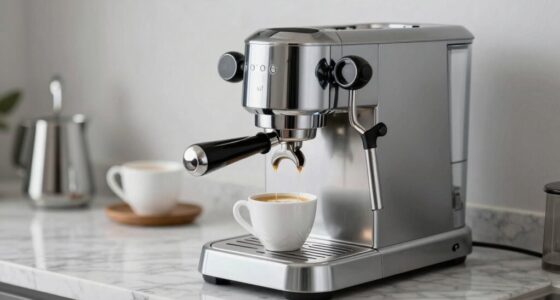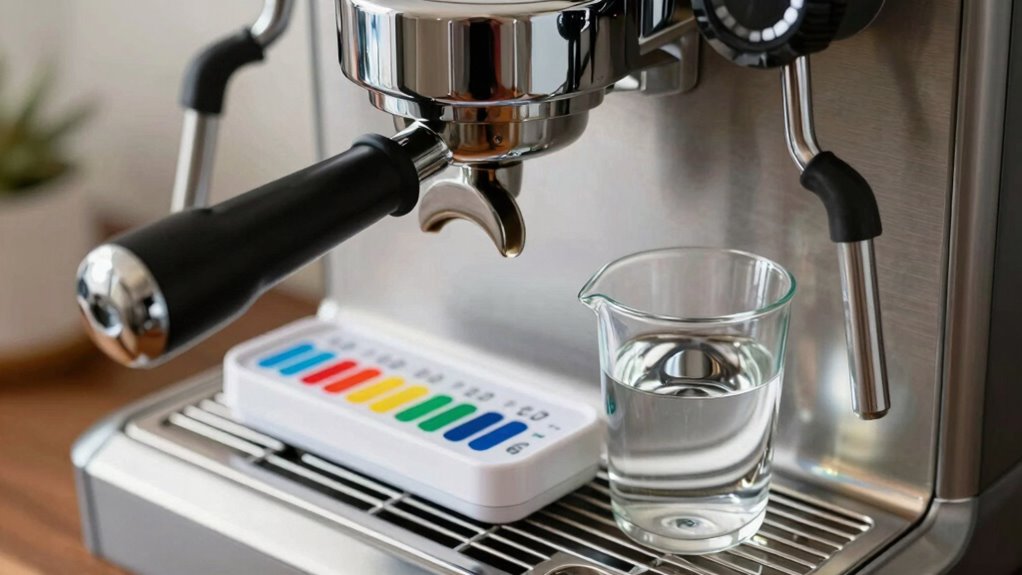

If you have hard water, check if your espresso machine has a built-in filter or consider installing a dedicated water softener. Regularly test your water’s mineral content and descalethe machine every 3 to 6 months, especially if the water’s very hard. Use filtered or bottled water designed for coffee machines to reduce scale buildup. Monitoring and maintaining water quality can extend your machine’s lifespan and improve your coffee. Keep exploring for more tips on managing hard water effectively.

Get kitchen gear delivered free with Prime
- Fast, free delivery on millions of items
- Prime Video, Amazon Music and more included
- Member-only deals all year
Key Takeaways
- Test your water’s mineral content regularly to assess hardness levels.
- Use filtered or bottled water specifically designed for espresso machines in hard water areas.
- Install a water softener or dedicated espresso water filter to reduce mineral buildup.
- Descale your machine every 3 to 6 months, or more frequently if water is very hard.
- Monitor for signs of mineral buildup, like decreased water flow or longer brewing times, and maintain accordingly.
Have you ever wondered how hard water can impact your espresso machine’s performance and longevity? The truth is, water mineral content plays an essential role in how well your machine functions over time. Hard water contains high levels of minerals like calcium and magnesium, which can lead to scale buildup inside your machine. This buildup hampers heat transfer, reduces water flow, and can cause your machine to work harder than necessary. Over time, this strain can decrease the lifespan of your espresso maker and affect the quality of your brew. To prevent these issues, understanding the importance of proper descaling frequency becomes vital. Regularly removing mineral deposits ensures your machine runs smoothly and maintains ideal temperature control.
Before purchasing or using an espresso machine, check whether it has a built-in water filter or if you need to buy one separately. A good water filter can substantially reduce mineral content, lowering the risk of scale formation. If your tap water is particularly hard, consider using bottled or filtered water designed for coffee machines. This simple step can extend the intervals between descaling and keep your machine functioning efficiently. Keep in mind, the water mineral content directly influences how often you need to descale—more minerals mean more frequent cleaning. Monitoring water quality is also important to maintain optimal machine performance and prevent unexpected issues. Additionally, understanding your local water composition can help you better plan your maintenance routine.
Knowing the descaling frequency is key to maintaining your espresso machine’s performance. Most manufacturers recommend descaling every three to six months, but if your water is very hard, you might need to do it more often. Pay attention to signs like a decrease in water flow, longer brewing times, or the machine shutting off unexpectedly—all indicators that mineral buildup is affecting performance. Regularly inspecting your machine and following the manufacturer’s guidelines can save you costly repairs down the line. Using descaling solutions specifically designed for espresso machines makes the process easier and safer for your equipment. Additionally, water mineral content can vary depending on regional sources, so understanding your local water quality can help you better plan your maintenance routine. Taking steps to manage water hardness can significantly reduce the frequency of descaling needed. Incorporating water testing into your routine can help you stay ahead of potential issues before they become serious problems. Being aware of water treatment options can further help you maintain a cleaner, more efficient machine.
In addition to water mineral content and descaling frequency, consider the overall water management plan for your machine. Installing a water softener or using a dedicated espresso water filter can drastically reduce mineral deposits, minimizing the need for frequent descaling. Staying proactive by monitoring your water quality and sticking to a cleaning schedule ensures your machine works at its best. When you pay attention to these factors, you’ll enjoy consistently flavorful espresso shots and prolong the lifespan of your investment, making every cup a pleasure rather than a chore.
As an affiliate, we earn on qualifying purchases.
Frequently Asked Questions
How Often Should I Test My Water Hardness Levels?
You should test your water hardness levels at least once a month to stay on top of any changes. Regular water testing helps you monitor the hardness levels and determine if your water softening system needs adjustment. Keep an eye on fluctuations, especially if your water source changes or after maintenance. Consistent testing guarantees your espresso machine operates smoothly and prevents mineral buildup from hard water.
Can I Use Bottled Water Instead of Filtered Water?
Yes, you can use bottled water instead of filtered water for your espresso machine. Just make certain that the bottled water is low in minerals and free from impurities to prevent mineral buildup and damage. Filtered water often offers consistent quality and mineral levels, making it a reliable choice. Avoid using distilled or overly soft bottled water, as it can affect the taste and machine performance.
What Are the Long-Term Effects of Hard Water on My Espresso Machine?
You might notice mineral buildup over time, which can clog your machine’s components and affect flavor. Hard water causes corrosion, weakening metal parts and reducing your espresso machine’s lifespan. Without proper maintenance, these issues escalate, leading to costly repairs or replacements. To prevent long-term damage, consider using water softeners or filtered water, and regularly descale your machine. This way, you protect your investment and enjoy consistent, high-quality espresso.
Are There Specific Water Softening Systems Recommended for Espresso Machines?
You should consider water softening methods like ion exchange or reverse osmosis, which effectively reduce mineral buildup. Recommended filtration systems for espresso machines include specific water filters designed to target hard water minerals, such as salt-based softeners or commercial-grade systems. These systems help protect your machine, improve the taste of your espresso, and extend its lifespan. Always choose a filtration system compatible with your machine’s requirements for the best results.
How Does Water Hardness Affect the Taste of My Espresso?
Water hardness directly impacts the taste of your espresso by altering its mineral content. Hard water, rich in minerals, can cause a bitter or off-flavor, while soft water allows the true, nuanced flavors of your coffee to shine. When you manage mineral content effectively, you enhance the overall taste, ensuring a smooth, balanced espresso. Proper water treatment helps you achieve consistent taste enhancement, making every shot more enjoyable.
hard water espresso machine descaler
As an affiliate, we earn on qualifying purchases.
As an affiliate, we earn on qualifying purchases.
Conclusion
By keeping these hard water tips in mind, you’re steering your espresso machine through a rocky sea with confidence. Think of your machine as a delicate sailboat; with the right water care, it’ll glide smoothly, brewing perfect shots without being weighed down by mineral buildup. Stay vigilant, clean regularly, and your espresso adventures will remain a rich, flavorful voyage. Sail on, knowing you’ve got the right checklist to keep your machine sailing smoothly for years to come.
water softener for coffee machine
As an affiliate, we earn on qualifying purchases.
As an affiliate, we earn on qualifying purchases.
bottled water for espresso machines
As an affiliate, we earn on qualifying purchases.
As an affiliate, we earn on qualifying purchases.
Halloween Picks
halloween
As an affiliate, we earn on qualifying purchases.