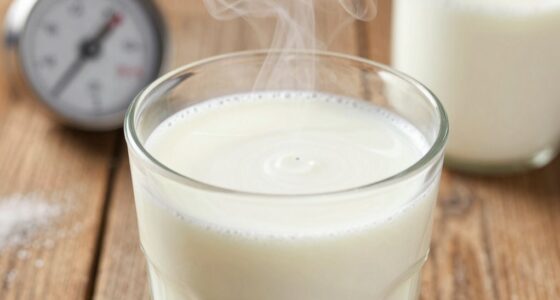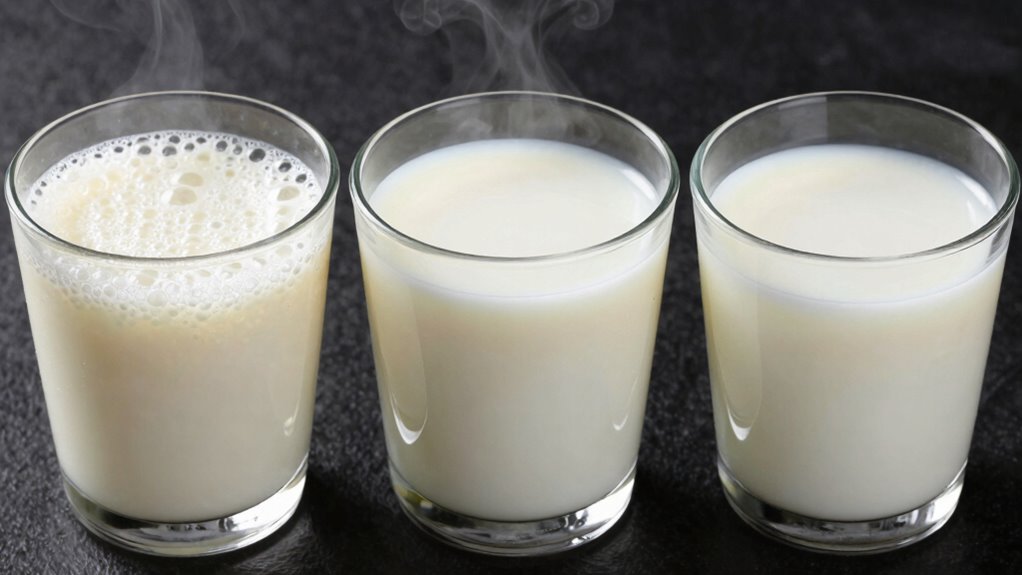

If you heat milk outside the ideal range of 130°F to 140°F, your drinks can turn duller in flavor and lose their creamy texture. Overheating above 150°F destroys delicate proteins and sugars, dulling the taste and diminishing richness. On the other hand, heating below 120°F prevents proper flavor development and can make the drink feel thin. Staying within the right temperature range helps preserve natural brightness and smoothness—stay tuned to learn how to perfect your milk heating technique.
Open a free Amazon Business account
Business pricing, bulk buying and tax-exempt orders.
As an affiliate, we earn on qualifying purchases.
Key Takeaways
- Heating milk above 150°F (65°C) causes flavor breakdown, dulling the drink’s natural vibrancy.
- Temperatures exceeding 150°F suppress delicate proteins and sugars, reducing richness.
- Overheating milk diminishes flavor complexity, leading to a muted taste.
- Excessive heat destroys microstructure, resulting in less satisfying flavor profiles.
- Properly maintaining milk between 130°F – 140°F preserves flavor and prevents dullness.
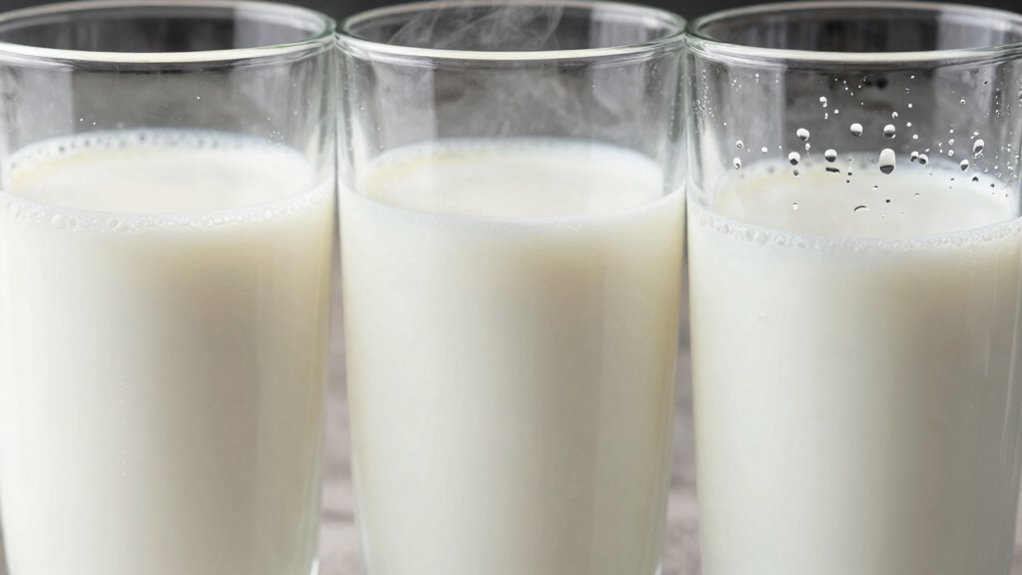
Have you ever wondered why your coffee or latte doesn’t taste quite right? Often, the culprit isn’t just the beans or the brewing process but the temperature of the milk you add. Milk temperature plays an essential role in flavor enhancement and texture consistency, directly influencing how lively or dull your drink ends up tasting. When milk is heated within certain ranges, it can suppress some of the nuanced flavors you’re aiming for, making your drink feel flat or dull rather than vibrant and inviting.
Typically, people think that the hotter the milk, the better. But this isn’t always true. Milk that’s heated too much—say, above 150°F (65°C)—can cause the delicate proteins and sugars to break down, which diminishes the richness and complexity of the flavor. Instead of highlighting the natural sweetness and creaminess, overly heated milk can mask these qualities, resulting in a duller taste. This temperature range often leads to a loss of flavor enhancement because the fundamental elements that give milk its depth are compromised. You might notice your latte feels less lively, with muted flavors that don’t excite the palate the way a properly heated milk would.
Overheating milk above 150°F dulls flavors by breaking down proteins and sugars, reducing richness and vibrancy.
On the flip side, milk that’s heated too gently—around 120°F (49°C)—may not develop the smooth, velvety texture you desire. While it might taste fresher, the texture consistency can suffer, leaving your drink feeling thin or watery. This temperature range doesn’t fully activate the proteins responsible for creating that creamy mouthfeel, which means your drink lacks the richness that makes coffee beverages so satisfying. When the milk isn’t heated enough, the flavor profile remains dull, and the overall experience of your drink becomes less enjoyable. Additionally, maintaining an appropriate temperature helps preserve the flavor profile and overall quality of your beverage. Proper temperature control is essential because it influences how the proteins and sugars interact, affecting both flavor and texture. Achieving the right temperature ensures that the milk’s natural sugars and proteins work harmoniously, enhancing the overall sensory experience.
Furthermore, understanding the optimal temperature range can help you consistently craft better drinks, whether you’re a home barista or a professional. The correct temperature also impacts how well the milk’s microstructure is preserved, which is vital for achieving that perfect foam and mouthfeel. The sweet spot for milk temperature is usually between 130°F (54°C) and 140°F (60°C). Within this range, you get the perfect balance: the flavors are enhanced without losing their natural vibrancy, and the texture remains smooth and consistent. Properly heated milk in this range allows the proteins and sugars to work together, creating that luscious mouthfeel and flavorful experience you’re after. By keeping your milk within this temperature window, you avoid dullness and elevate your drink’s overall quality, making each sip more satisfying and true to its natural flavors. So, next time you prepare your coffee or latte, pay attention to the milk temperature—your taste buds will thank you.
As an affiliate, we earn on qualifying purchases.
Frequently Asked Questions
How Does Milk Temperature Affect Drink Aroma?
You’ll notice that milk temperature directly impacts drink aroma and your temperature perception. When milk is too hot, it can mask delicate aromas, making your drink seem duller. Cooler milk preserves those subtle scents, enhancing aroma and flavor. As the temperature rises, your sensory perception shifts, often dulling the milk’s aroma and making the drink less appealing. Keeping milk at a suitable temperature guarantees you experience its full aroma potential.
Is There a Difference in Milk Temperature for Hot and Cold Drinks?
Yes, there’s a difference in milk temperature for hot and cold drinks. For hot drinks, you should warm the milk to around 140-150°F, ensuring it’s heated evenly through proper milk storage and temperature consistency. Cold drinks require milk chilled to about 35-45°F to preserve freshness and flavor. Maintaining proper milk storage and temperature consistency is key to achieving the best taste and aroma in both hot and cold beverages.
Can Milk Temperature Influence Foam Quality?
Yes, milk temperature greatly influences foam quality. When you heat milk to the right temperature, you achieve better milk texture and stable foam. If the temperature isn’t consistent, the foam can become too airy or flat. Ideally, you should aim for a temperature around 150°F to 155°F, which creates smooth, glossy microfoam. Maintaining temperature consistency guarantees your foam remains velvety and durable, enhancing your coffee experience.
What Are the Health Implications of Heating Milk Too Much?
Heating milk excessively can increase health risks; for instance, milk spoilage accelerates at high temperatures, risking bacterial growth. Nutrient degradation also occurs, especially of vitamins like B12 and C, reducing its nutritional value. Studies show that overheating milk can create compounds that may cause digestive issues or inflammation. So, when you heat milk, keep it below 70°C to preserve nutrients and prevent spoilage, ensuring it remains safe and healthy to drink.
How Quickly Does Milk Temperature Drop After Steaming?
After steaming, milk cools quickly, typically dropping in temperature within 2-3 minutes. This rapid milk cooling is due to the ambient air and transfer of heat away from the milk, affecting temperature stability. To maintain ideal taste and texture, you should use a thermometer and serve the milk promptly. If you want to keep the milk warm longer, consider using a thermal pitcher or insulator to preserve temperature stability.
milk steaming pitcher for coffee
As an affiliate, we earn on qualifying purchases.
As an affiliate, we earn on qualifying purchases.
Conclusion
Mastering the perfect milk temperature can truly transform your drinks, turning them from dull to dazzling. When you keep milk within the ideal range, your creations burst with flavor and richness, making every sip an extraordinary experience. Don’t settle for bland, lifeless beverages—your taste buds deserve the best. Think of it as revealing the secret to coffee perfection; once you get it right, you’ll wonder how you ever drank anything less. Cheers to perfect milk every time!
As an affiliate, we earn on qualifying purchases.
As an affiliate, we earn on qualifying purchases.
NFL season / tailgating Picks
team gear
As an affiliate, we earn on qualifying purchases.