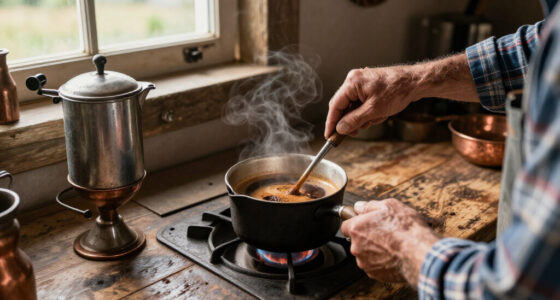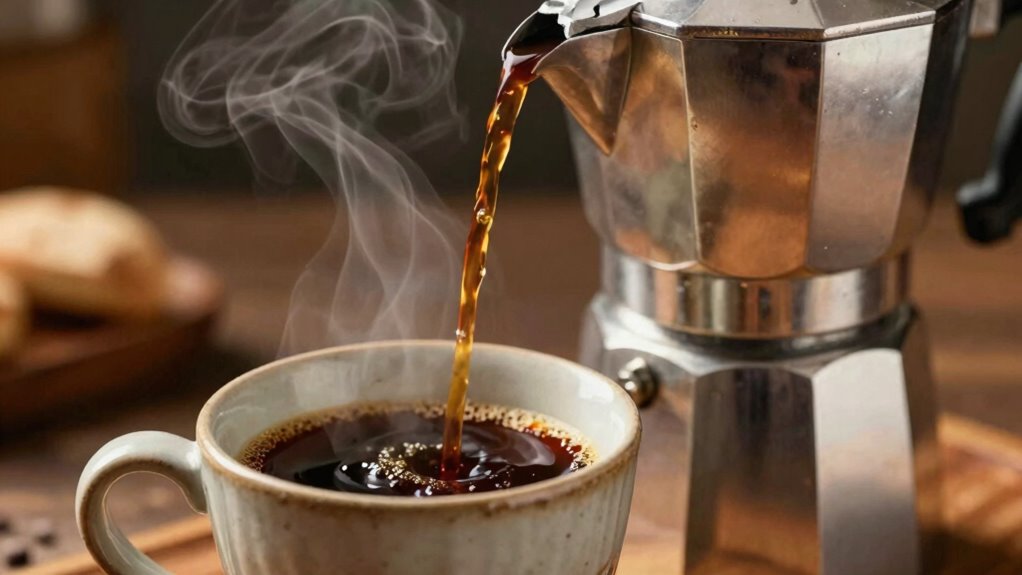

If your Moka pot coffee turns harsh too quickly, it’s likely because you’re brewing at too high a temperature or over-extracting the grounds. Rapid boiling pushes hot water through the coffee too fast, pulling unwanted compounds and creating bitterness. Using too much water or grinding the beans too finely can also increase resistance, raising temperature and extraction speed. Controlling heat and grind size helps prevent harsh flavors—keep these factors in check to improve your brew’s balance and enjoy better results.

Get kitchen gear delivered free with Prime
- Fast, free delivery on millions of items
- Prime Video, Amazon Music and more included
- Member-only deals all year
Key Takeaways
- Using excessively high heat accelerates extraction, leading to bitterness and harsh flavors.
- Overfilling the water chamber increases pressure and temperature, causing quick, over-extraction.
- Finer grind size raises resistance, speeding up brewing and risking harsh taste.
- Removing residual heat after brewing prevents over-extraction and flavor deterioration.
- Stale beans produce uneven extraction, resulting in a harsher, less balanced coffee.
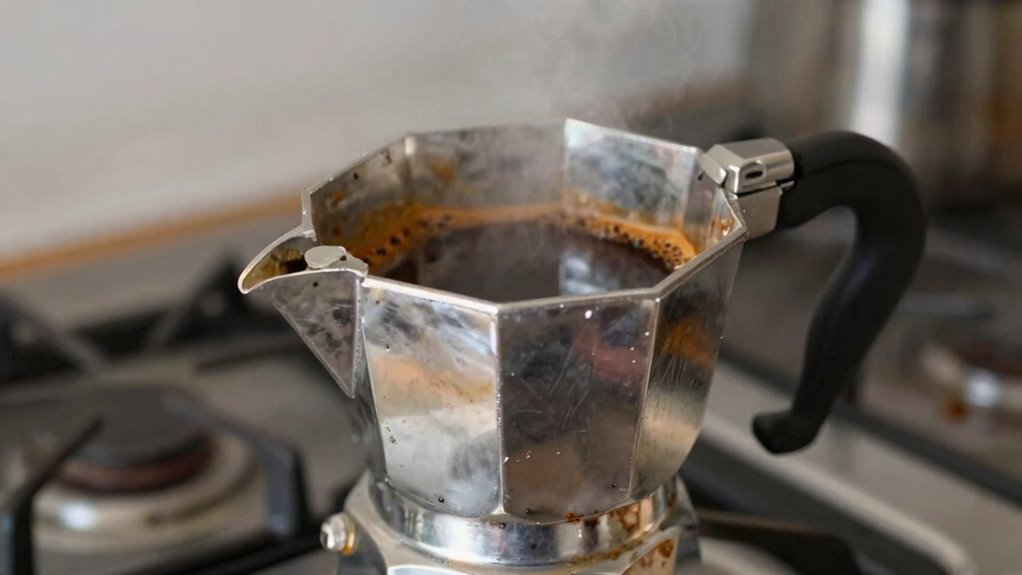
If you’ve noticed your Moka pot coffee turns bitter or harsh faster than expected, you’re not alone. Many coffee lovers experience this problem and wonder what’s going wrong. The issue often boils down to how the coffee extraction process happens and the brewing temperature you use. When coffee extraction is too rapid or uneven, it can lead to over-extraction, which pulls out bitter compounds and creates that harsh taste. The key is understanding how brewing temperature influences this process.
With a Moka pot, temperature plays a vital role. If the water heats too quickly or reaches too high a temperature, it accelerates the extraction process. When water boils at a high temperature, it pushes hot water through the coffee grounds too fast, resulting in over-extraction. This extraction pulls more than just the desirable flavors—bitterness, acidity, and unwanted compounds—leading to that harsh, unpleasant taste. Conversely, if the brewing temperature is too low, the water might not extract enough flavor, leaving the coffee weak or sour. Finding the right brewing temperature is critical because it directly impacts how evenly and thoroughly the coffee grounds are extracted.
To prevent your coffee from turning harsh too quickly, start by controlling the heat during brewing. Use medium heat rather than high; this allows the water to rise gradually and maintains a more consistent temperature. A gentle, steady heat ensures the water doesn’t boil aggressively, which helps achieve a more balanced coffee extraction. Also, pay attention to how much water you put in the bottom chamber. Too much water can increase the pressure and temperature, leading to rapid extraction and bitterness. Make sure you’re using the right amount of water—enough to generate a steady, controlled pressure without causing the water to overheat.
Another factor to consider is the grind size of your coffee. Finer grounds increase resistance, which can further raise the brewing temperature and speed up extraction. Using a slightly coarser grind can help moderate the extraction rate, giving you a smoother, less harsh cup. Additionally, avoiding residual heat after brewing can prevent the coffee from over-extracting and becoming bitter, as continued heat can alter the flavor profile. Properly controlling heat throughout the brewing process can significantly improve your coffee’s taste. Being mindful of the extraction process can also impact flavor consistency and prevent bitterness. Also, using fresh coffee beans can help ensure a more balanced extraction, as stale beans tend to produce uneven flavors.
Moka pot coffee temperature control
As an affiliate, we earn on qualifying purchases.
As an affiliate, we earn on qualifying purchases.
Frequently Asked Questions
Can the Type of Water Affect Coffee Harshness?
Yes, the type of water affects coffee harshness. When water has high mineralization, it can make your coffee taste bitter or harsh. Similarly, if the pH balance is off—either too acidic or too alkaline—it can impact flavor, making it less smooth. Using filtered or balanced water helps prevent harshness, ensuring your Moka pot coffee remains rich and flavorful rather than sharp or bitter.
Does the Grind Size Impact How Quickly It Turns Harsh?
Yes, grind size impacts how quickly your Moka Pot coffee turns harsh. If your grind consistency is uneven, with inconsistent particle sizes, over-extraction happens faster, making the brew bitter. Finer particles, especially, increase surface area and extraction speed, leading to a harsher taste sooner. To prevent this, use a uniform grind size, ideally medium-fine, ensuring consistent extraction and a smoother flavor without turning harsh quickly.
How Does Storage Affect Moka Pot Coffee Freshness?
Did you know coffee begins to lose aroma just 15 minutes after grinding? Proper storage affects moka pot coffee freshness considerably. When you store coffee in airtight storage containers, it preserves the rich coffee aroma longer, preventing exposure to air, moisture, and light. Keep your beans in a cool, dark place, and avoid transparent containers that can let in sunlight. This way, you’ll enjoy fresher, more flavorful coffee with every brew.
Is It Better to Clean the Moka Pot Regularly?
Yes, it’s better to clean your moka pot regularly. A consistent cleaning routine prevents residue buildup, which can affect the flavor and cause the coffee to turn harsh quickly. After each use, rinse all parts thoroughly and occasionally scrub with a soft brush to remove oils and deposits. Regular cleaning keeps your moka pot in top condition, ensuring fresh, smooth coffee every time and prolonging its lifespan.
Can Brewing Time Influence Coffee Bitterness?
Yes, brewing time can influence coffee bitterness. If you brew too long, over-extraction occurs, pulling out bitter compounds and reducing flavor quality. Maintaining ideal brewing temperature helps control this process, ensuring proper flavor extraction without bitterness. When you limit brewing time and keep the temperature steady, you preserve the coffee’s rich flavors and avoid harsh, bitter notes, resulting in a more balanced and enjoyable cup.
As an affiliate, we earn on qualifying purchases.
Conclusion
So, when your Moka pot coffee turns harsh, it’s like a sunset abruptly losing its warmth—sharp, uninviting, and fleeting. To keep that rich, smooth flavor shining bright, pay attention to grind size, brewing time, and cleanliness. Think of your Moka pot as a delicate melody; with gentle care, it’ll sing sweetly every time. Treat it right, and your coffee will stay cozy and inviting, never rushing into bitterness too soon.
As an affiliate, we earn on qualifying purchases.
As an affiliate, we earn on qualifying purchases.
Fall Picks
fall essentials
As an affiliate, we earn on qualifying purchases.