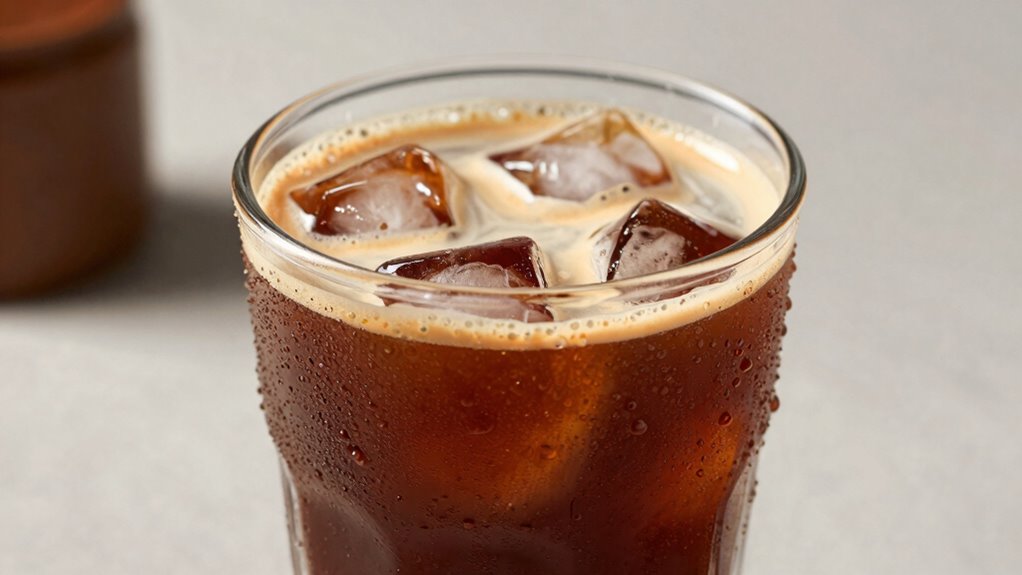

The biggest mistake in making iced coffee happens before you even add the ice — it’s how you brew it. Pouring hot coffee over ice can cause rapid dilution and unwanted bitterness. Instead, you should focus on brewing the coffee properly, using the right method and temperature to preserve delicate flavors. Proper extraction and cooling techniques create a solid flavor foundation that withstands the ice, ensuring your iced coffee stays rich and smooth. Keep exploring to learn the full approach.

Get kitchen gear delivered free with Prime
- Fast, free delivery on millions of items
- Prime Video, Amazon Music and more included
- Member-only deals all year
Key Takeaways
- Pouring hot coffee directly over ice causes rapid dilution and flavor loss.
- Using overly hot brewing methods can produce bitter, flat-tasting iced coffee.
- Brewing at improper temperatures compromises flavor clarity and nuanced notes.
- Not letting coffee cool naturally before adding ice leads to watered-down taste.
- Starting with weak or poorly brewed coffee undermines the quality of the iced drink.
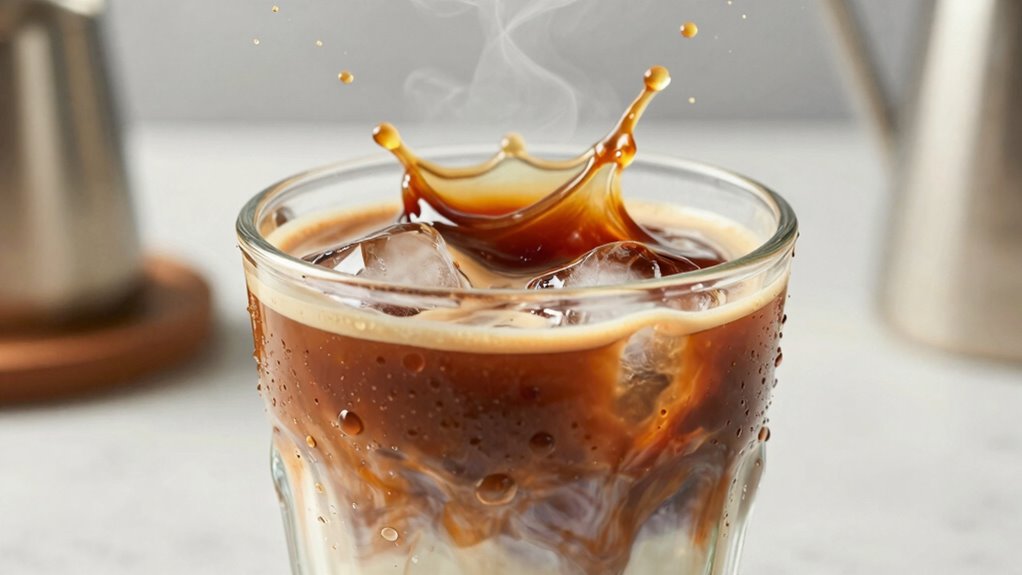
Many people make the mistake of pouring hot coffee directly over ice, thinking it will quickly cool down the drink. While this might seem like a straightforward way to make iced coffee, it often leads to unintended consequences that impact the overall experience. The real problem lies in how the coffee is brewed. When you brew your coffee too hot or too quickly, it can throw off the delicate flavor balance you’re aiming for. Hot brewing methods—like boiling water over grounds—release more bitter compounds and can overshadow the nuanced flavors you want in your iced coffee. As a result, instead of a smooth, revitalizing beverage, you get a cup that tastes harsh or overly bitter.
To get the best flavor balance, you need to start with your coffee brewing method. Opt for a brewing process that emphasizes clarity and preserves delicate notes—such as pour-over or cold brew. These methods allow the coffee to develop its full spectrum of flavors without extracting excess bitterness. When you brew your coffee carefully, it becomes easier to maintain a balanced profile, even after chilling. This is especially important because if your coffee is over-extracted or brewed at too high a temperature, it’ll be more prone to tasting flat or bitter once cooled down. Additionally, understanding the importance of coffee extraction can help you refine your brewing process for better iced coffee. Paying attention to water temperature during brewing can also significantly impact the final flavor. Choosing the right brewing temperature ensures the extraction process preserves the coffee’s nuanced qualities. A slight adjustment in brewing technique can make a notable difference in the overall flavor and aroma. Furthermore, controlling the brewing time can help prevent over-extraction that leads to bitterness.
Another mistake many make is brewing the coffee too hot and then pouring it directly over ice. The sudden temperature change causes rapid dilution, which washes out the flavor and leaves your drink tasting watered down. Instead, consider brewing your coffee to a slightly lower temperature or letting it cool naturally before pouring it over ice. This helps preserve the integrity of the flavor profile and prevents unnecessary dilution. If you want a truly balanced iced coffee, you should also pay attention to the brewing strength. A slightly stronger brew can compensate for some dilution, helping you maintain a satisfying flavor.
In the end, the key to avoiding the classic iced coffee mistake is paying attention to how your coffee is brewed. It’s not just about the ice; it’s about creating a solid foundation that holds up once cooled. When you focus on proper coffee brewing techniques and aim for a good flavor balance from the start, your iced coffee will taste richer, smoother, and more satisfying—no matter how much ice you add. The next time you make iced coffee, remember: start with a well-brewed, balanced coffee, and the ice will do its job without compromising the flavor.
As an affiliate, we earn on qualifying purchases.
Frequently Asked Questions
How Does Water Quality Affect Iced Coffee Taste?
Water quality directly impacts your iced coffee’s taste. If you use water with high mineral content, it can make your brew taste off, overpowering the coffee’s natural flavors. Pure water, free from impurities, guarantees a clean, smooth taste. Opt for filtered or spring water to maintain the perfect balance of mineral content. This way, your iced coffee remains crisp, flavorful, and enjoyable every time.
What Alternative Sweeteners Work Best in Iced Coffee?
Did you know 60% of coffee drinkers prefer natural sweeteners? In iced coffee, choose options like honey, maple syrup, or agave nectar for better sweetener compatibility. Natural sugar options enhance flavor without overpowering the coffee’s richness. They dissolve well in cold liquids, ensuring a smooth, balanced taste. So, next time, opt for these natural sweeteners to elevate your iced coffee experience effortlessly.
Can Brewing Temperature Impact Ice Melt Rate?
Yes, brewing temperature can impact the ice melt rate in your iced coffee. When you brew at a higher temperature, the coffee’s stronger and hotter, which can slow down the ice melting process once poured over. Conversely, brewing at a lower temperature might result in a less stable flavor, but the ice could melt faster because the overall temperature difference is less. Adjust your brewing temperature to control how quickly your ice melts.
Is It Better to Brew Coffee Hot or Cold for Iced Drinks?
Did you know cold brew coffee typically has 60% less acidity than hot brewed coffee? For iced drinks, brewing methods matter—cold brew yields a smoother, less bitter flavor, perfect for hot days. Brewing coffee hot and then chilling it preserves more nuanced coffee flavors, enhancing your drink’s complexity. So, if you want a richer coffee flavor, brewing hot and cooling it down is better. Otherwise, go cold brew for a mellow, revitalizing taste.
How Do Different Coffee Beans Influence Final Flavor?
You’ll notice that different coffee beans greatly influence your iced coffee’s flavor profiles. Bean origins, like Ethiopian or Colombian, bring unique notes—Ethiopian beans offer fruity, floral hints, while Colombian beans provide balanced, nutty flavors. The type of bean and its origin shape the final taste, so experiment with various beans to find what complements your preferred flavor profile best. This way, your iced coffee becomes a personalized, flavorful experience.
As an affiliate, we earn on qualifying purchases.
Conclusion
If you want your iced coffee to taste like a masterpiece and not a watered-down disaster, don’t make the mistake of starting with ice that’s too cold or too much. It’s a small change that can turn your drink from an icy ruin into a velvety, flavorful delight. Trust me, one perfectly prepared glass can elevate your entire day—like a burst of sunshine in a cup. So, start smart and sip happily!
As an affiliate, we earn on qualifying purchases.
temperature-controlled coffee kettle
As an affiliate, we earn on qualifying purchases.
As an affiliate, we earn on qualifying purchases.
Halloween Picks
halloween
As an affiliate, we earn on qualifying purchases.