
To avoid a weak cold brew concentrate, use a 1:4 or 1:5 coffee-to-water ratio. This guarantees your brew is rich and flavorful, preventing it from becoming bland or overly weak. Proper ratios help extract the full depth of flavor without diluting or over-concentrating. Getting this balance right makes a smoother, more satisfying cup every time. Stick around to discover even more ways to perfect your cold brew.

Get kitchen gear delivered free with Prime
- Fast, free delivery on millions of items
- Prime Video, Amazon Music and more included
- Member-only deals all year
Key Takeaways
- Use a 1:4 or 1:5 coffee-to-water ratio to ensure a strong, rich cold brew concentrate.
- Adjust steeping time appropriately; typically 12-24 hours for optimal flavor extraction.
- Maintain proper brewing temperature between 35°F and 50°F for consistent, balanced extraction.
- Avoid using too little coffee, which results in a weak, watered-down concentrate.
- Dilute the concentrate to taste with water, milk, or ice to prevent overly strong or weak final drinks.

Finding the perfect cold brew ratio is key to making a smooth, flavorful coffee every time. When you get this ratio right, you guarantee that every cup delivers the rich flavor extraction you’re after without ending up weak or overly concentrated. The amount of coffee grounds relative to water directly influences how much flavor your brew will have, so understanding this balance is essential. Too little coffee, and your cold brew will taste bland, lacking depth. Too much, and it can become overly strong or thick, making it hard to enjoy. Striking this balance means experimenting with ratios until you find what suits your taste buds best.
Finding the right cold brew ratio ensures a smooth, flavorful, and perfectly balanced cup every time.
Another critical factor in achieving an ideal cold brew is brewing temperature. Since cold brew is steeped at cooler temperatures, typically between 35°F and 50°F, the flavor extraction process is slower but more controlled. This slower extraction allows more nuanced flavors to develop, giving your coffee a smoother, less bitter profile. When you combine the right ratio with a proper brewing temperature, you maximize flavor extraction, resulting in a well-rounded, satisfying cup. If the temperature is too cold or the ratio off, you risk under-extracting, which leaves your coffee flat, or over-extracting, which can introduce undesirable bitterness. Paying attention to brewing temperature can help you optimize the extraction process even further. Additionally, maintaining a consistent brewing environment can improve your results over time.
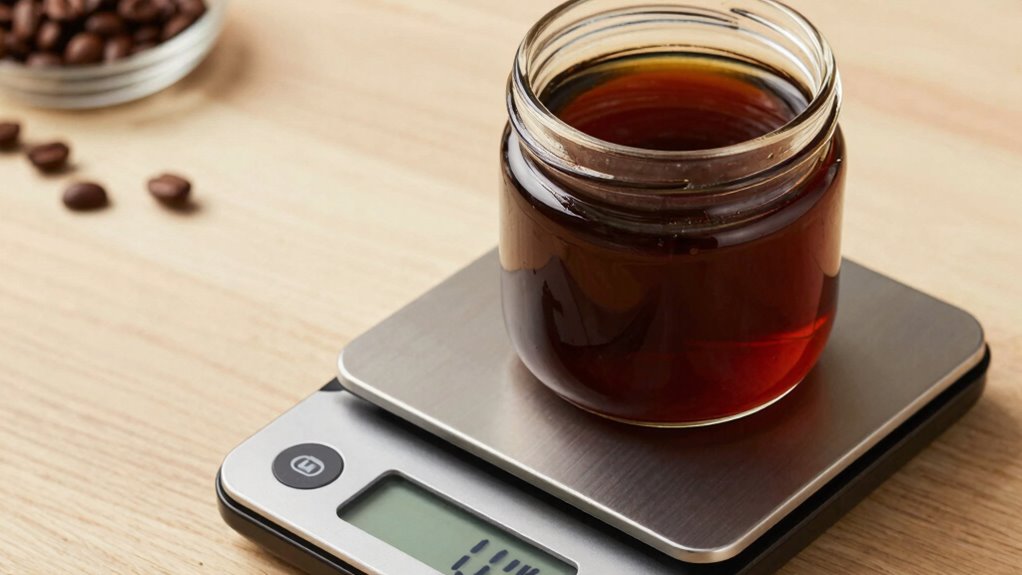
Getting your ratio right involves understanding how much coffee grounds you need for the amount of water you’re using. Commonly, a 1:4 or 1:5 coffee-to-water ratio works well for a rich, concentrated brew that you can dilute later. For instance, if you use 1 cup of coffee grounds, you’ll need about 4 to 5 cups of water. This concentration ensures you get enough flavor extraction without ending up with a weak or overly intense concentrate. Once brewed, you can dilute this concentrate with milk, water, or ice, customizing each drink to your preference. This flexibility is part of what makes cold brew so popular—you control the strength each time. Additionally, understanding flavor extraction and its effect on the final taste can help you refine your process further. Being mindful of brewing time is also important because over-steeping can lead to bitterness, while under-steeping might result in a weak brew. Adjusting steeping time based on your taste preferences and notes can further enhance your cold brew quality. Keeping detailed notes on your ratios and timing can help you consistently produce your ideal cold brew.
cold brew coffee maker with adjustable ratio
As an affiliate, we earn on qualifying purchases.
As an affiliate, we earn on qualifying purchases.
Frequently Asked Questions
How Long Should I Steep Cold Brew for Optimal Strength?
You should steep cold brew for about 12 to 24 hours for ideal strength. Use a cold brewing temperature, around room temperature or cooler, and choose a steeping vessel that allows the coffee grounds to fully immerse in water. Longer steeping times increase extraction, but avoid going beyond 24 hours to prevent over-extraction, which can result in bitterness. Adjust steeping time based on your preferred strength.
Can I Adjust the Ratio for Flavored Cold Brew?
Absolutely, you can adjust the ratio for flavored cold brew. Experimenting with more coffee or water helps control flavor intensity, giving you that perfect balance. Want a sweeter or more robust taste? Adjust the sweetener accordingly. Keep in mind, changing the ratio can dramatically alter your flavor profile, so start small and taste as you go. This way, you’re in control of your flavor customization and sweetener adjustments, creating your ideal cold brew.
Does the Coffee Grind Size Affect the Ideal Ratio?
Yes, grind size affects the ideal cold brew ratio. A finer grind increases extraction efficiency but can lead to over-extraction if too concentrated, so you might need a slightly higher coffee-to-water ratio. Consistent grind size guarantees even extraction, preventing weak or bitter flavors. To find the perfect ratio, experiment with different grind sizes, keeping in mind that smaller, consistent grounds generally require adjustments to maintain balance and flavor strength.
How Do I Store Cold Brew Concentrate Safely?
If you want your cold brew concentrate to stay fresh, don’t ignore proper storage. Use airtight storage containers to keep out air and moisture, which can spoil it faster. Keep the container in the fridge and pay attention to its shelf life—usually up to two weeks. Beyond that, the flavor deteriorates, and it might even spoil. So, store it carefully, and enjoy the rich taste every time.
Is There a Difference in Ratios for Different Coffee Bean Types?
Yes, different coffee bean origins and roasting levels can influence the ideal cold brew ratio. Light roasts and beans from specific regions like Ethiopia often have more delicate flavors, so you might use a slightly higher ratio of coffee to water to extract those nuances. Dark roasts and beans from Brazil tend to be bolder, so a standard or slightly lower ratio works well. Adjust based on taste preference and bean characteristics.
As an affiliate, we earn on qualifying purchases.
Conclusion
Now that you know the perfect cold brew ratio, you’ll never settle for weak, bland coffee again. Imagine Sarah, a busy professional, who struggled with watery brews until she discovered the ideal 1:4 ratio. Since then, her mornings are energized, and her coffee’s rich flavor is consistent every time. Stick to the right ratio, and you’ll enjoy bold, delicious cold brew that keeps you fueled without wasting beans or money.
As an affiliate, we earn on qualifying purchases.
As an affiliate, we earn on qualifying purchases.
Halloween Picks
halloween
As an affiliate, we earn on qualifying purchases.