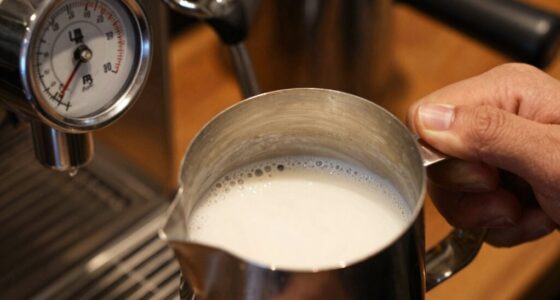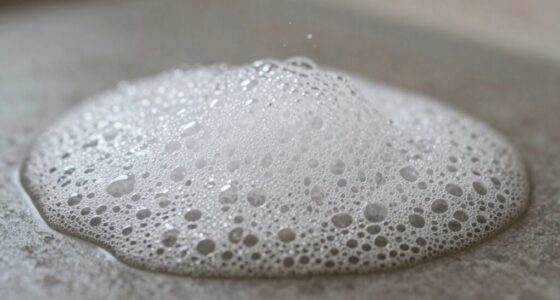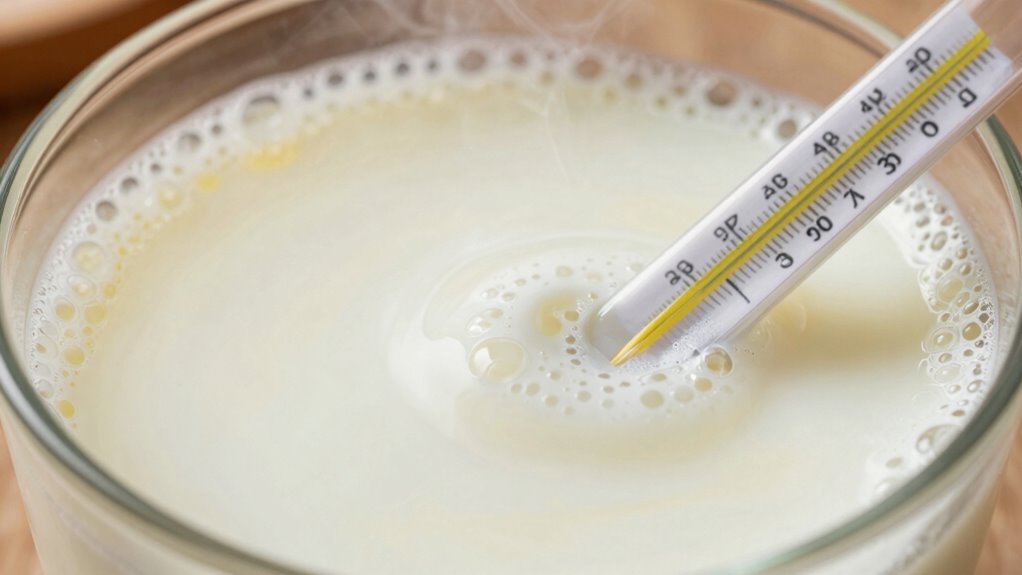

Most people tend to overshoot the ideal milk temperature, which should be between 140°F and 150°F for perfect flavor and foam. Heating beyond this range can burn the milk, produce scorched flavors, and ruin foam stability. Keeping a thermometer handy and heating gently helps you hit that sweet spot consistently. If you want to master perfect microfoam and flavor every time, there’s plenty more to discover on how to control your milk temperature precisely.

Get kitchen gear delivered free with Prime
- Fast, free delivery on millions of items
- Prime Video, Amazon Music and more included
- Member-only deals all year
Key Takeaways
- Many people overshoot the ideal milk temperature, often exceeding 150°F, which can scorch the milk and degrade flavor.
- The recommended temperature range for optimal microfoam and flavor is between 140°F and 150°F.
- Overheating causes protein breakdown, resulting in thin foam and burnt taste, impacting overall coffee quality.
- Using a thermometer helps prevent overshooting and maintains milk within the optimal temperature zone.
- Gentle heating and stopping steaming at the right temperature ensure the perfect balance of texture and flavor.
digital milk frothing thermometer
As an affiliate, we earn on qualifying purchases.
As an affiliate, we earn on qualifying purchases.
What Is the Ideal Milk Temperature for Coffee and Lattes?
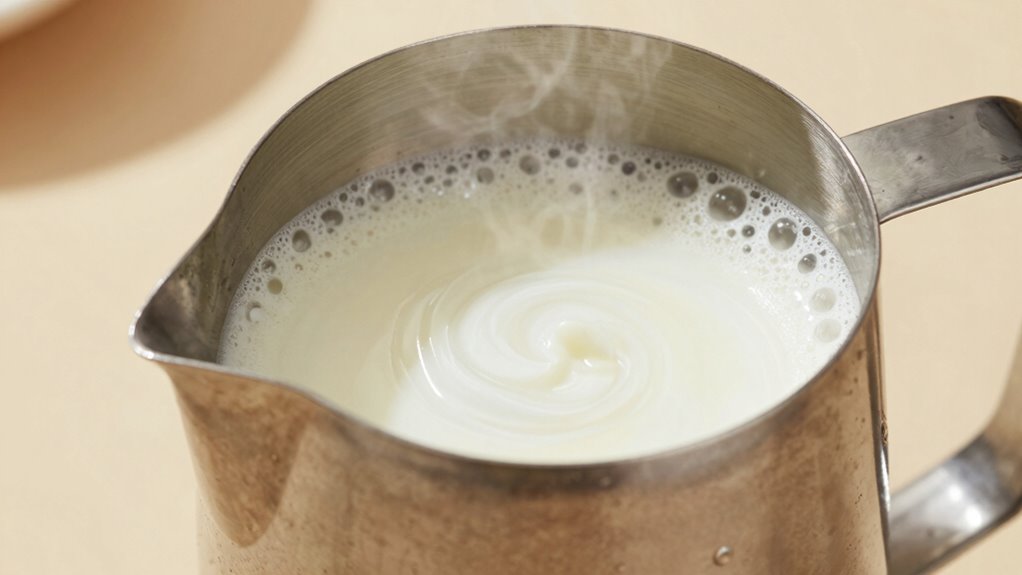
To achieve the perfect texture and flavor in your coffee and lattes, the ideal milk temperature is typically between 140°F and 150°F (60°C to 65°C). This range allows you to perform milk frothing effectively, creating a creamy, velvety microfoam essential for smooth drinks. When milk reaches this temperature, it’s easier to produce the stable foam needed for latte art, enabling you to craft intricate designs on your beverages. If the milk gets too hot, it can scald and lose its sweetness, making it harder to froth and less appealing visually. Keeping your milk within this temperature window guarantees your latte art looks professional and your drink tastes balanced, with a rich, silky texture that enhances every sip. Understanding milk temperature control can also help prevent overheating and ensure consistency in your coffee preparations.
milk temperature gauge for espresso
As an affiliate, we earn on qualifying purchases.
As an affiliate, we earn on qualifying purchases.
Why Does Milk Temperature Matter for Flavor and Texture?
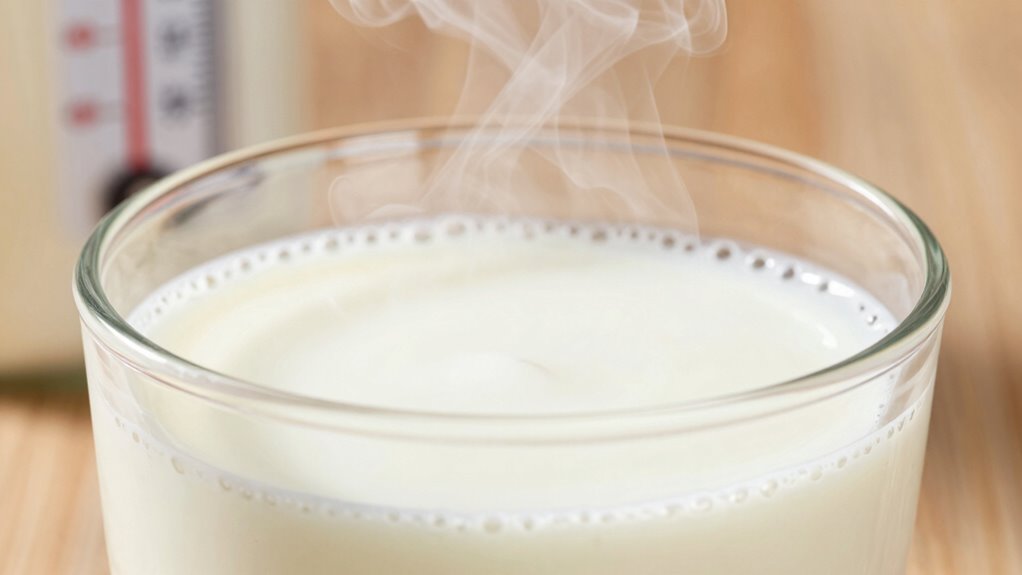
Your milk’s temperature directly affects how well its natural flavors stay intact, ensuring your drink tastes fresh and balanced. When milk gets too hot or too cold, it can alter the texture, making foam less smooth and creamy. Understanding these effects helps you achieve the perfect flavor and texture every time. Additionally, temperature control plays a vital role in maintaining optimal flavor and consistency in your milk-based beverages.
Flavor Preservation Dynamics
Milk temperature plays a crucial role in maintaining its flavor and texture because it influences the rate of chemical reactions and microbial activity that can degrade quality. The temperature impact on milk flavor is significant; higher temperatures accelerate spoilage and can produce off-flavors by activating enzymes and bacteria. Conversely, keeping milk at the right temperature slows down these processes, maintaining its natural sweetness and fresh taste longer. When milk is too warm, it becomes more prone to developing sour or bitter notes, diminishing its overall flavor profile. Proper temperature control ensures that flavor compounds stay stable, preventing undesirable changes. By understanding the flavor preservation dynamics, you can better appreciate why avoiding temperature extremes helps keep milk tasting fresh and flavorful for as long as possible. Additionally, maintaining proper temperature helps preserve nutritional value and prevents the growth of harmful bacteria.
Texture and Foam Quality
Maintaining the right temperature is essential for achieving the ideal texture and foam quality in milk. When milk is heated properly, it froths more easily and produces stable, velvety foam. If it’s too hot, the proteins break down, causing poor foam stability and uneven texture. Conversely, too cold milk won’t froth well, resulting in thin, weak foam. Proper temperature helps you create milk with a smooth, creamy mouthfeel and consistent microfoam that integrates seamlessly with espresso. Additionally, temperature regulation plays a crucial role in preserving the milk’s natural sweetness and preventing scorched or burnt flavors. Getting the temperature right is key to mastering milk’s texture and achieving perfect foam quality.
coffee milk frothing thermometer
As an affiliate, we earn on qualifying purchases.
As an affiliate, we earn on qualifying purchases.
How to Heat Milk to the Perfect Temperature: Step by Step
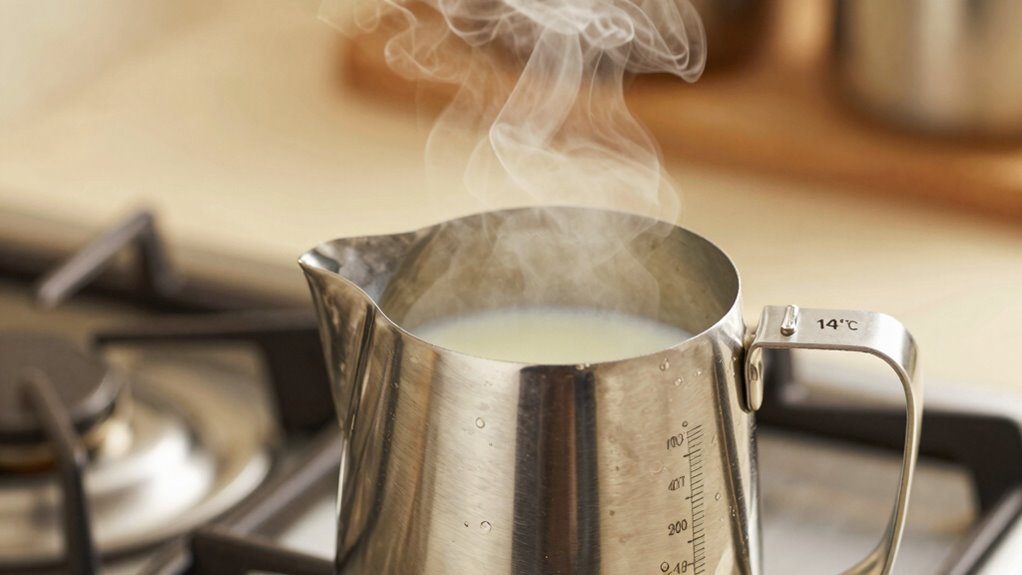
Wondering how to heat milk to the perfect temperature? Start by pouring your milk into a metal or microwave-safe container. Use a thermometer to monitor the temperature closely. When heating on the stove, do so over low heat to maintain temperature stability and prevent scorching. Stir gently to distribute heat evenly, ensuring the milk heats uniformly. If using a microwave, heat in short bursts, stirring between each to avoid hot spots. For milk frothing, aim for around 140°F to 150°F; this range creates ideal foam without overheating. Keep a close eye on the thermometer to prevent surpassing the ideal temperature, which can compromise foam quality and flavor. Additionally, filter maintenance plays a crucial role in ensuring your appliances perform efficiently, just as proper milk heating ensures a perfect cup. Following these steps ensures your milk reaches the perfect temperature for a smooth, velvety cup.
milk steaming thermometer for espresso
As an affiliate, we earn on qualifying purchases.
As an affiliate, we earn on qualifying purchases.
Common Mistakes When Heating Milk and How to Avoid Them
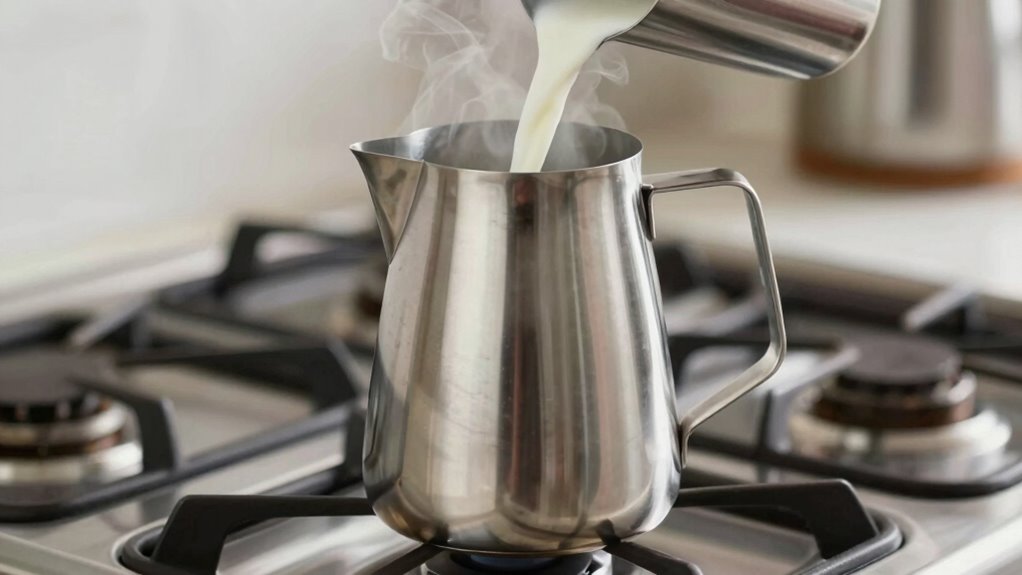
One common mistake when heating milk is overheating it, which can scorch the bottom or create a film on the surface. When milk gets too hot, it can negatively impact milk frothing, making it harder to achieve a smooth texture. Overheating also accelerates lactose breakdown, altering flavor and sweetness. To avoid these issues, keep a close eye on the temperature. Using a thermometer to monitor milk accurately during heating helps maintain the ideal temperature and prevents overheating. Warm milk slowly over low heat to prevent scorching. Stir regularly to distribute heat evenly and avoid hot spots.
Essential Tools and Techniques for Precise Milk Heating
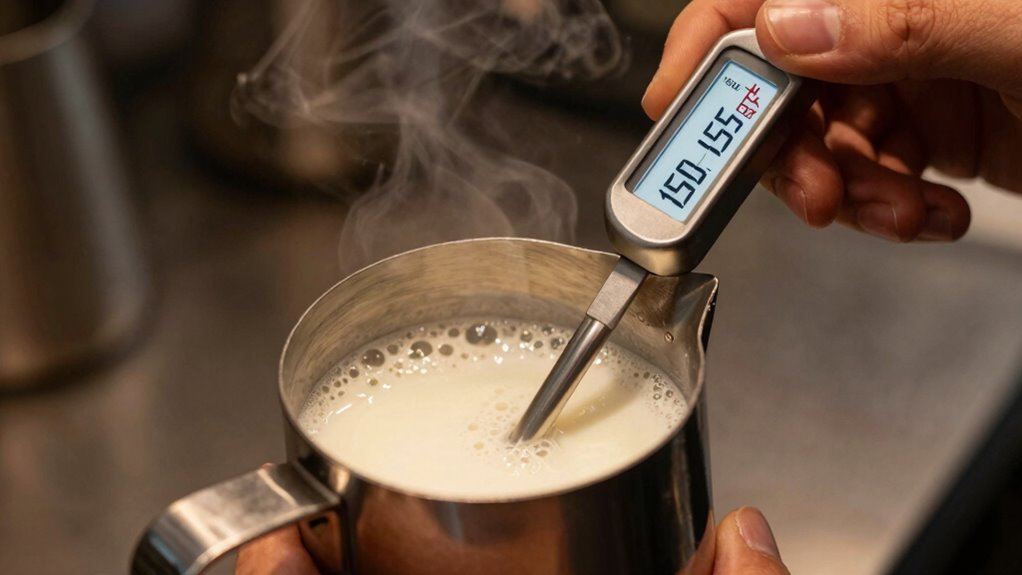
To heat milk accurately, you need the right tools, starting with a well-calibrated steaming pitcher. Choosing a reliable thermometer is essential, so look for one that gives quick, precise readings. Mastering these tools ensures you hit the perfect temperature every time. Additionally, understanding risk management strategies can help prevent overheating or underheating milk, ensuring optimal results.
Steaming Pitcher Calibration Techniques
Calibrating your steaming pitcher is essential for achieving consistent milk temperatures, and it starts with using the right tools. Proper steam pitcher calibration ensures your frothing technique produces the ideal microfoam without over- or under-heating. To begin, measure the pitcher’s capacity at different fill levels to understand its true volume. Mark the ideal fill line for your preferred milk amount to maintain consistency. When practicing steam pitcher calibration, focus on controlling airflow and pressure for uniform frothing. Remember, a well-calibrated pitcher helps prevent overheating or cooling the milk too quickly. Home charging strategies can also help ensure your equipment operates safely and effectively.
- Use a calibrated measuring cup to verify volume accuracy
- Practice with different milk types to understand thermal behavior
- Consistently monitor and adjust your frothing technique for best results
Thermometer Selection Tips
Choosing the right thermometer is essential for accurately heating milk to the perfect temperature. A good thermometer ensures precise temperature control, which is key for ideal milk frothing and achieving the perfect texture. Look for a digital or instant-read thermometer with a fast response time and a wide temperature range. For milk frothing, a thermometer with a pointed or probe tip helps you get an accurate reading without disrupting the milk. Avoid glass or analog thermometers that can be less precise or fragile. Calibration features are a bonus, helping you maintain accuracy over time. Whether you’re steaming for a latte or simply warming milk, selecting a reliable thermometer makes all the difference in preventing overshoot and ensuring your milk reaches that sweet spot every time. Energy-efficient design is also beneficial for reducing waste and conserving resources during your milk preparation process.
FAQs: Achieving the Perfect Milk Temperature Every Time
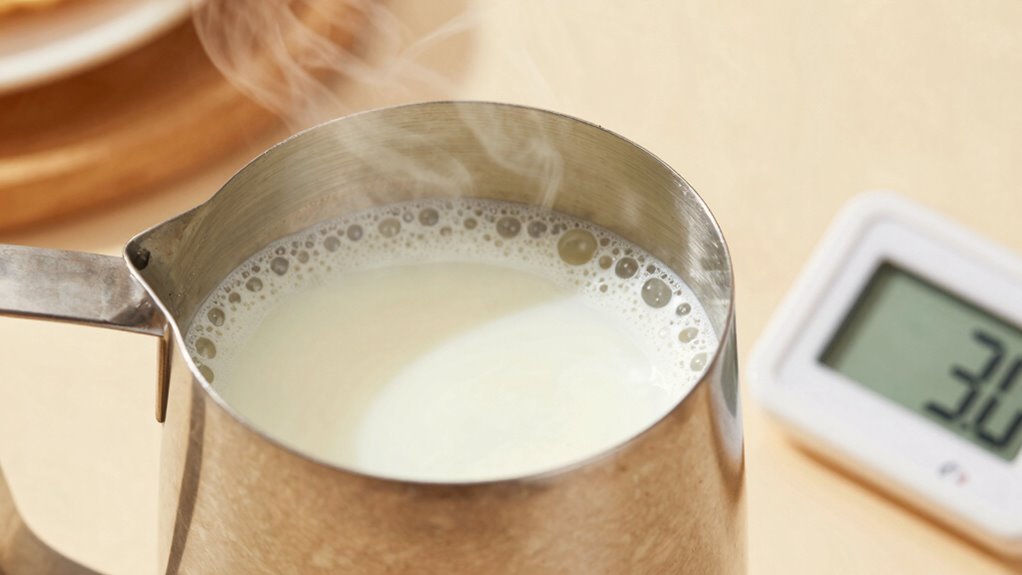
Have you ever wondered what the ideal milk temperature is for your perfect latte or cappuccino? Achieving consistent results starts with proper temperature control during milk frothing. To hit that perfect range, keep your milk between 150°F and 155°F (65°C–68°C). Here are some tips to help you get there:
- Use a reliable thermometer to monitor milk temperature accurately.
- Practice gentle, steady milk frothing to prevent overheating.
- Stop steaming once the milk reaches the target temperature—avoid overshooting.
- Remember that milk temperature control is key to ensuring your coffee drinks taste just right each time.
Frequently Asked Questions
How Does Milk Temperature Affect the Nutritional Content?
When you heat milk, its nutritional preservation can decline if the temperature gets too high, risking vitamin loss. Enzyme activity also decreases with excessive heat, which affects digestion and other functions. To keep the nutrients intact, aim for a moderate temperature—around 140°F (60°C)—so you preserve both nutritional content and enzyme activity. Overheating can diminish milk’s benefits, so controlling temperature is key.
Can Different Types of Milk Require Different Heating Methods?
Absolutely, different milk types demand unique heating methods—failing to do so can turn your kitchen into a science experiment! For perfect milk frothing, whole milk needs gentle steaming, while almond or soy milk might require alternative approaches to avoid curdling. Always consider proper milk storage to keep freshness intact, and tailor your heating to prevent overcooking or scorching. Ignoring these details could ruin your drink faster than you can say “latte.”
Is It Safe to Microwave Milk for Steaming?
Yes, it’s safe to microwave milk for steaming if you follow microwave safety guidelines. Use a microwave-safe container, heat in short bursts, and stir frequently to prevent uneven heating. Keep an eye on the temperature to avoid overheating, which can scald the milk or cause it to spill. Alternatively, consider heating on the stovetop for more even control. This helps maintain the milk’s quality and guarantees safe, effective steaming.
How Does Ambient Room Temperature Influence Milk Heating?
If your room temperature is cooler, your milk takes longer to heat and might require more attention to reach the ideal temp. For example, in a chilly kitchen, milk may stay below the perfect steaming range, leading you to overheat it. Ambient influence plays a significant role; warmer rooms help milk warm up faster, while colder environments demand more careful monitoring to avoid scorching or uneven heating.
What Are Signs of Overheating Milk Beyond the Ideal Temperature?
When you overheat milk, you’ll notice it loses its smooth milk foam, becoming grainy or burnt-tasting. It also has poor heat retention, cooling down quickly and not staying warm enough for ideal frothing. The surface may develop a skin, and bubbles become large or uneven. These signs indicate you’ve gone past the perfect temperature, compromising both texture and flavor. Always aim for that perfect warm spot!
Conclusion
Mastering the perfect milk temperature is like wielding a magic wand, ensuring your coffee and lattes taste divine with just the right texture. Don’t let your milk turn into a scorched relic or a lukewarm disappointment. With the right tools and techniques, you’ll be brewing barista-quality drinks every time — no need for a time machine to fix a mistake. Keep practicing, and soon you’ll be serving up perfection that even the most discerning medieval monk would envy.
Halloween Picks
halloween
As an affiliate, we earn on qualifying purchases.