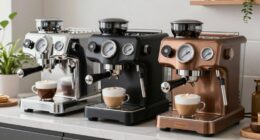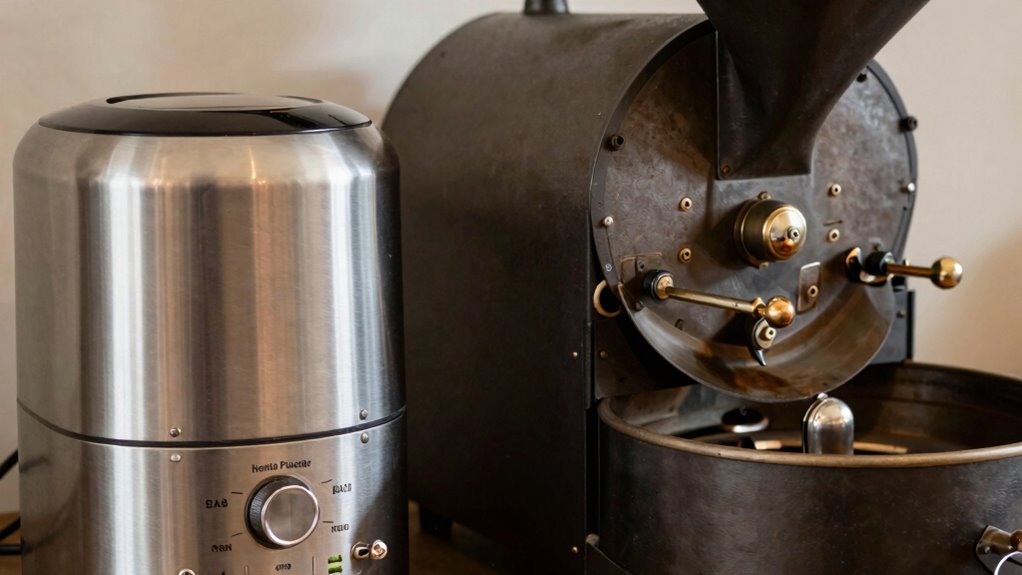

Home coffee roasters mainly come in two types: air and drum roasters. Air roasters use hot air to circulate and suspend beans, offering quicker, more precise control and producing brighter, lighter roasts. Drum roasters rely on rotating heated drums for longer, gentler roasting, resulting in richer, deeper flavors. Each type suits different preferences and space needs. To understand which fits your style and setup best, keep exploring the details below.

Get kitchen gear delivered free — and shop member deals
- Fast, free delivery on millions of items
- Access to Prime Big Deal Days deals on October 6–7
- Prime Video, Amazon Music and more included
Key Takeaways
- Air roasters use hot air circulation for quick, even roasting, producing brighter, more acidic coffee flavors.
- Drum roasters rely on direct heat from a rotating drum for slower, deeper flavor development.
- Air roasters are compact, easier to operate, and ideal for beginners; drum roasters are larger and suited for more control.
- Air roasters excel at lighter, faster roasts; drum roasters support longer, caramelized, darker roasts.
- The choice depends on space, desired flavor profiles, control level, and roasting volume.
As an affiliate, we earn on qualifying purchases.
What Are Home Coffee Roasters and How Do They Work?
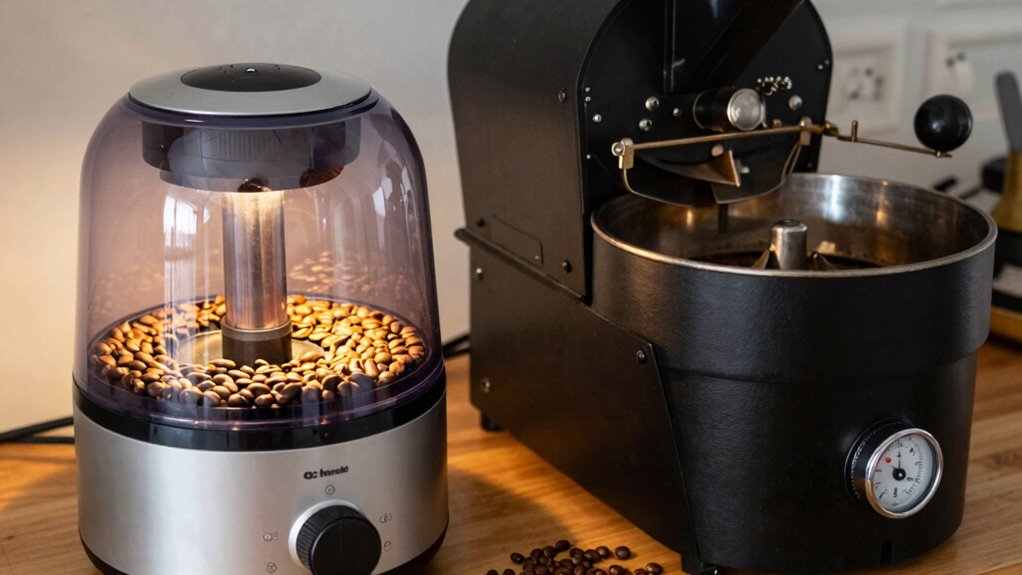
Home coffee roasters are devices that allow you to roast green coffee beans right in your own kitchen. They work by applying heat to transform raw beans into aromatic, roasted coffee. Different coffee bean types may require varying roasting durations to bring out their best flavors, so your choice of beans influences your roasting process. Some roasters use hot air, while others rely on rotating drums, but all aim to control temperature and time precisely. You’ll need to monitor and adjust the roasting duration carefully to achieve a light, medium, or dark roast, depending on your preference. With practice, you’ll learn how different beans respond to roasting times, revealing a customized coffee experience right at home. Proper temperature management is essential for achieving consistent and optimal results with your home coffee roaster. Additionally, understanding roasting techniques can help you refine your process for better flavor development, including cooling methods that are critical for stopping the roast at the desired level. Incorporating smart automation features can further enhance control and consistency in your roasting process.
As an affiliate, we earn on qualifying purchases.
How Do Air and Drum Coffee Roasters Differ in Mechanism?
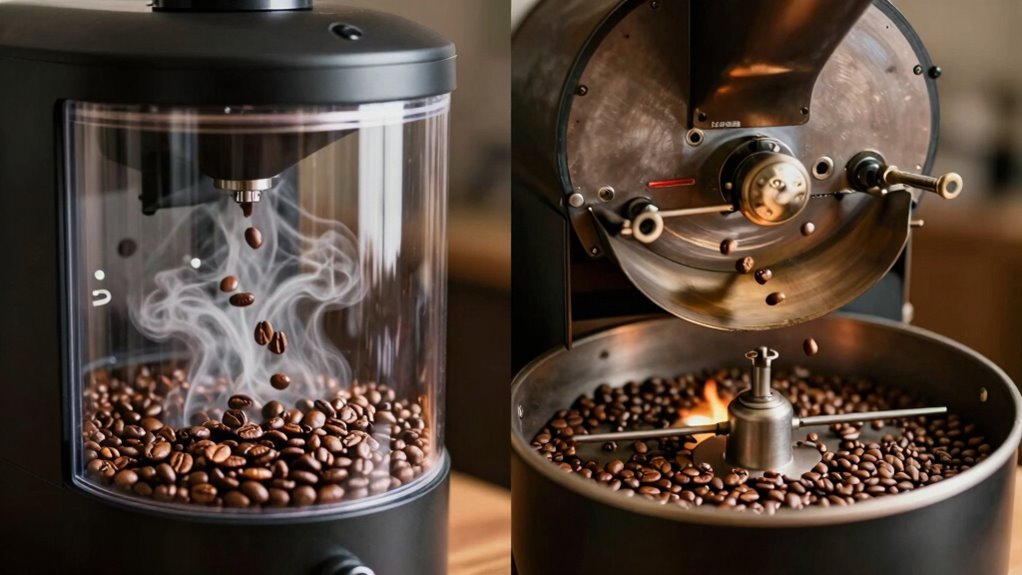
Air roasters heat beans using hot air that circulates rapidly around them, while drum roasters rely on direct heat from a heated drum. The way beans move during roasting also differs: air roasters keep beans suspended in the air, whereas drum roasters tumble them inside the drum. Additionally, temperature control varies between the two, affecting how precisely you can manage the roast.
Heating Method Differences
While both air and drum coffee roasters heat beans to achieve the perfect roast, they do so through fundamentally different mechanisms. Air roasters use hot air, often generated by electric heating or gas heating, to circulate around the beans rapidly. This creates a quick, even heat transfer, allowing for precise control. Drum roasters, on the other hand, rely on direct contact with heated metal, usually heated by electric or gas sources, to transfer heat gradually through conduction. Heat transfer methods greatly influence the roast’s consistency and flavor development.
Roast Movement Mechanics
Understanding how beans move during roasting reveals key differences between air and drum roasters. In air roasters, hot air circulation creates a rapid, consistent flow that surrounds the beans, leading to even heat transfer. The beans are gently agitated by the continuous airflow, keeping them moving freely and preventing sticking or uneven roasting. This method also helps maintain sticking wall decor and reduces the risk of bean damage during the process. Additionally, the air circulation enhances heat transfer efficiency, ensuring a uniform roast. Conversely, drum roasters use a rotating drum that tumbles the beans as they cook. This rotation ensures bean agitation, mixing the beans consistently, but the movement is more deliberate and slower compared to air circulation. The mechanical rotation of the drum provides a physical means of moving the beans, making the roast more uniform through steady tumbling. These distinct roast movement mechanics influence heat transfer, roast consistency, and ultimately, flavor development.
Temperature Control Variations
The mechanisms behind temperature control in air and drum roasters differ markedly, directly impacting how heat is applied and maintained during roasting. Air roasters rely on rapid airflow adjustments, allowing you to finely tune temperature regulation with quick responses. Drum roasters use a heated drum and a control system that maintains consistent heat, offering better heat stability over time. This distinction affects your ability to manage roast curves and prevent temperature fluctuations. Consider these points:
- Air roasters excel in quick temperature adjustments
- Drum roasters provide steady heat for consistent roasting
- Air roasters respond faster to temperature changes
- Drum roasters maintain stable heat over longer periods
- Both require careful monitoring to optimize flavor profiles
Understanding these differences helps you choose the right machine for precise temperature control and desired roast outcomes.
As an affiliate, we earn on qualifying purchases.
What Are the Main Differences in Flavor and Roast Consistency?
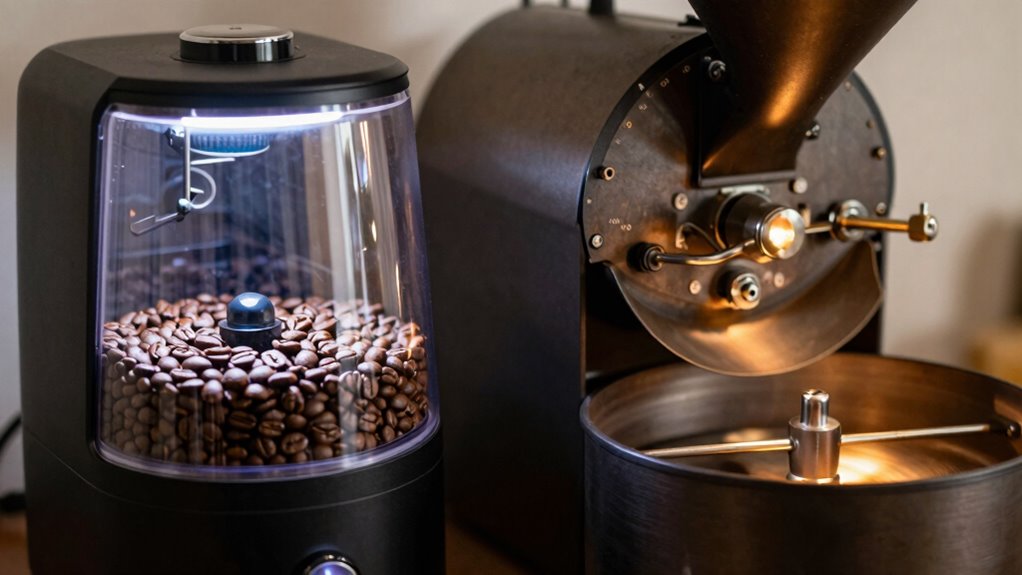
Your choice of roaster impacts flavor development and roast consistency markedly. With different machines, you’ll notice variations in how well you can control roast levels and achieve uniform batches. Understanding these differences helps you fine-tune your coffee to match your preferred taste and quality standards. Additionally, considering toilet maintenance and repairs can ensure your equipment remains in optimal condition, preventing issues that might affect your coffee roasting environment. Regularly maintaining your equipment, including proper cleaning routines, can further enhance your roasting results and longevity. Being aware of equipment calibration practices can also make a significant difference in achieving consistent results over time.
Flavor Development Differences
Different home coffee roasters produce distinct flavor profiles and roast consistency due to variations in their heating methods and control features. With air roasters, rapid heat transfer often highlights brighter, more acidic notes, while drum roasters tend to develop richer, deeper flavors through longer roasting durations. Your choice impacts not only flavor but also how bean freshness influences the final cup. Faster roasting preserves more delicate aromas, whereas slower roasting enhances complex flavors. Consider these points:
- Bean freshness markedly affects flavor clarity.
- Roasting duration shapes flavor complexity.
- Air roasters often produce more vibrant, lively profiles.
- Drum roasters tend to develop deeper, caramelized notes.
- Consistent heat control influences roast uniformity and flavor balance.
Understanding these differences helps you tailor your roast for your preferred flavor profile.
Roast Level Control
Controlling roast level is essential because it directly influences both the flavor profile and the consistency of your coffee. With an air roaster, you often have precise control over the brew temperature, allowing you to adjust heat quickly for lighter or darker roasts. Drum roasters, on the other hand, rely more on managing the roasting time and heat application, which affects the overall roast level. Bean density also plays a role: denser beans require higher temperatures or longer roast times to reach the desired level. By understanding these factors, you can fine-tune your process to achieve a consistent roast, ensuring your coffee tastes as you want it every time. This control helps you balance flavor nuances and achieve the ideal roast level for your preferences.
Consistency in Batches
Achieving consistent batches is essential because it guarantees that each roast delivers the same flavor profile and quality. Your batch size and roasting duration markedly impact this consistency. Air roasters often excel at maintaining uniform heat, resulting in more predictable outcomes across batches. Drum roasters, however, may require careful control of roasting duration to prevent uneven results, especially with larger batch sizes. Variations in these factors can lead to flavor discrepancies and roast inconsistencies. To improve batch consistency, consider the following:
- Adjust batch size carefully for uniform heat distribution
- Monitor roasting duration precisely
- Use consistent bean moisture levels
- Regularly calibrate your roaster
- Record roasting parameters for future reference
- Consistent heat is key to predictable roasting results.
- Additionally, understanding thermal transfer methods can help optimize roasting uniformity. Employing advanced temperature controls can further enhance consistency in your batches.
As an affiliate, we earn on qualifying purchases.
Which Coffee Roaster Is Easiest for Beginners?
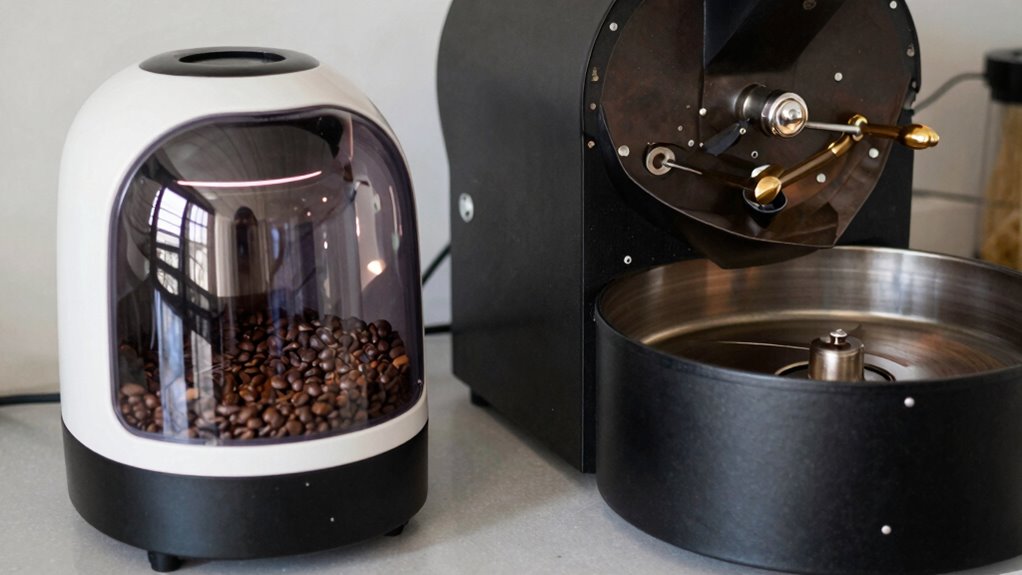
If you’re new to home coffee roasting, choosing an easy-to-use roaster can make the process much more enjoyable. Air roasters are generally simpler because they heat beans quickly and evenly, resembling popcorn popping in a popcorn machine. They often require less setup and are easier to clean, making them ideal for beginners. Drum roasters, on the other hand, involve more control and familiarity with roasting profiles, which can be a bit overwhelming at first. Whichever you choose, remember that proper coffee bean storage is key to maintaining freshness. Beginners should look for a roaster with straightforward operation, minimal mess, and quick results. Starting with an air roaster can be the easiest way to immerse yourself in home roasting without getting bogged down by complex equipment.
How Much Space and Money Do Air and Drum Roasters Require?
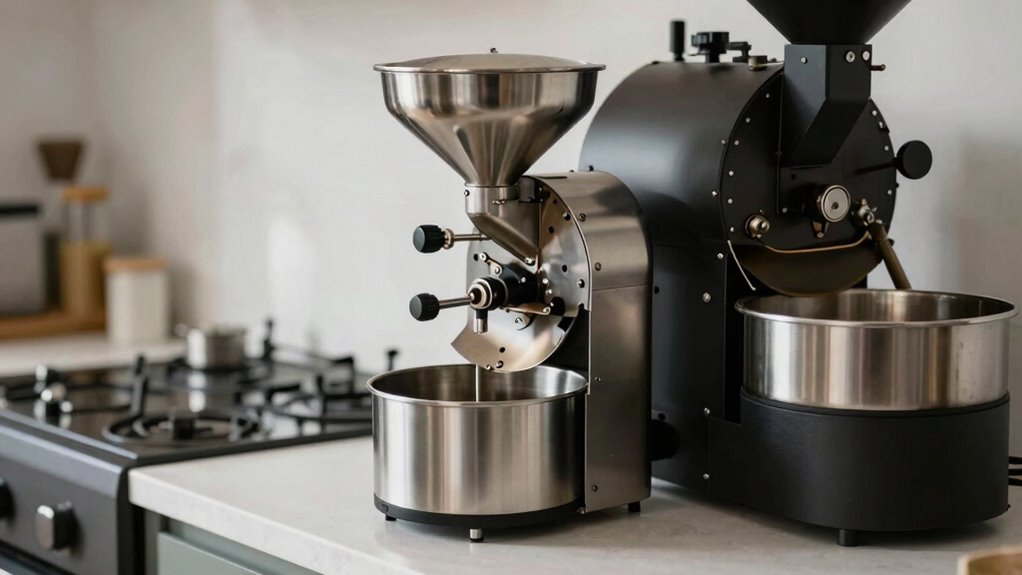
When choosing between air and drum roasters, considering the space they require and the budget involved is essential. Air roasters are typically compact, making them ideal for small spaces and lower upfront costs. Drum roasters generally need more room due to their size and ventilation needs, often costing more initially. When comparing the cost comparison, keep in mind that:
- Air roasters are usually more affordable upfront.
- Drum roasters can require significant kitchen space.
- Ventilation requirements increase with larger units.
- Maintenance costs may vary based on size and complexity.
- Long-term investment depends on your roasting volume and space availability.
- Cooling methods also influence the setup costs and space requirements for both types of roasters.
Additionally, understanding the initial setup costs helps in planning your overall budget and anticipating future expenses. For those interested in professional-grade equipment, technological integration can enhance operational efficiency and quality control in your roasting process. Furthermore, evaluating energy consumption is important for managing operational costs over time and ensuring sustainability. Moreover, considering space optimization strategies can help maximize limited areas and improve workflow efficiency.
How Do You Maintain and Keep Your Coffee Roaster in Top Shape?
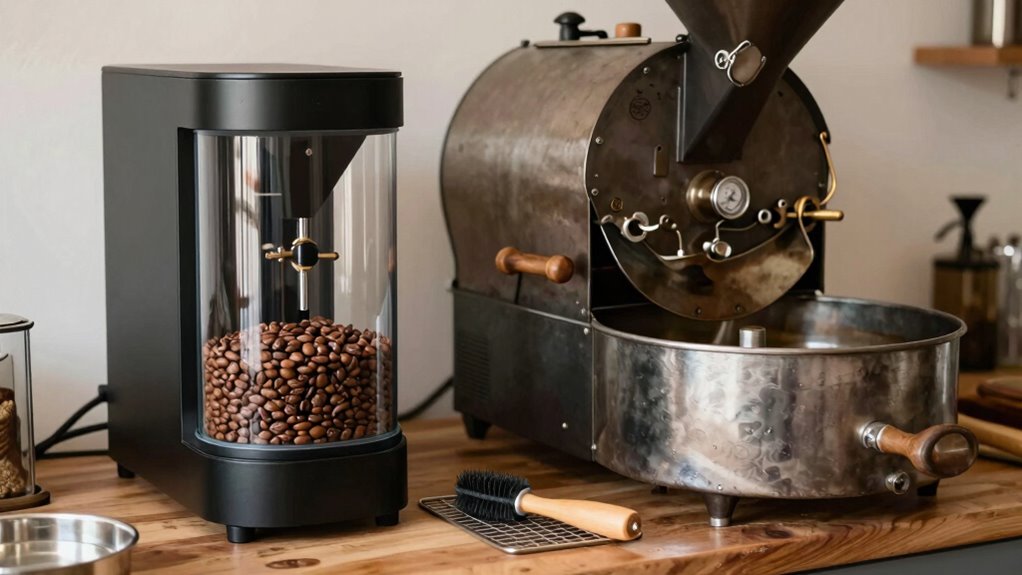
Maintaining your coffee roaster is essential to guarantee consistent performance and prolong its lifespan. Regular maintenance tips include inspecting components for wear and tear, ensuring all parts are functioning correctly. Establish cleaning routines after each roasting session to remove chaff, oil buildup, and residue that can affect flavor and machine efficiency. Use appropriate brushes and cleaning tools to reach hard-to-access areas. Keep the cooling tray and chaff collector clean to prevent blockages. Check the electrical connections and vents regularly for dust or obstructions. Lubricate moving parts as recommended by the manufacturer. Proper upkeep not only preserves the quality of your roasts but also reduces the risk of breakdowns. Staying diligent with these maintenance tips ensures your coffee roaster remains in top shape for years to come. Additionally, being aware of machine weight is important when moving or installing your roaster to prevent accidents or damage. Regularly reviewing manufacturer guidelines can help you stay updated on specific maintenance procedures tailored to your model.
What’s the Best Home Coffee Roaster for Your Coffee Style?
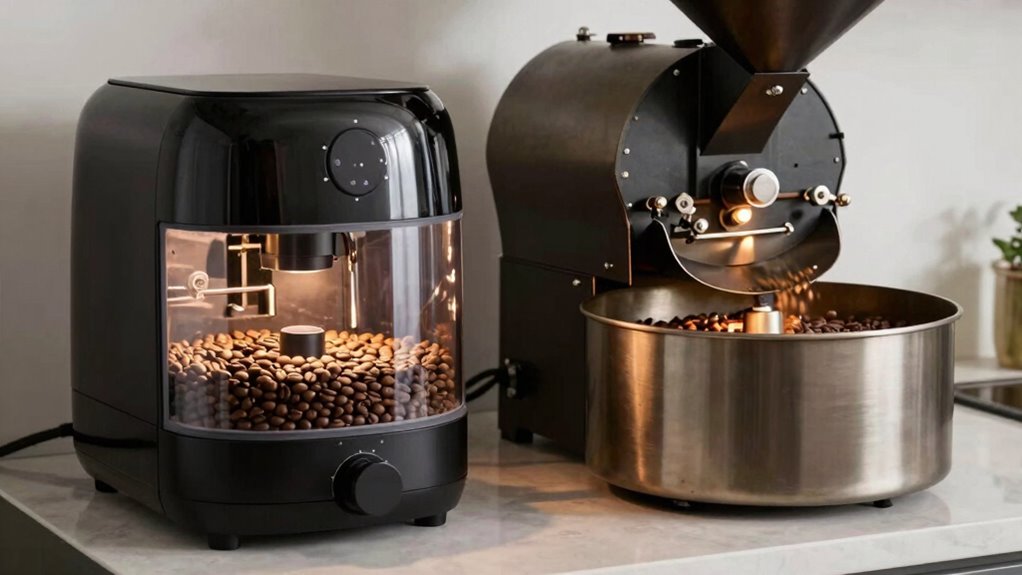
Choosing the right home coffee roaster depends on your personal taste and brewing preferences. If you love exploring bean origin and unique flavors, a roaster that offers precise control might suit you best. For those passionate about coffee certifications, selecting a model that allows careful roasting guarantees you can highlight qualities like organic or fair-trade beans. Consider these factors:
Choosing a home coffee roaster tailored to your taste enhances your unique brewing experience.
- Roast level control for light, medium, or dark roasts
- Ability to handle different bean sizes and origins
- Ease of use for consistent results
- Capacity aligned with your consumption rate
- Compatibility with specialty coffee preferences
Your choice impacts how you bring out the best in your beans, whether emphasizing origin nuances or certification qualities. Picking the right roaster helps you craft a personalized coffee experience that aligns with your style and values.
Pros and Cons of Air vs Drum Coffee Roasters
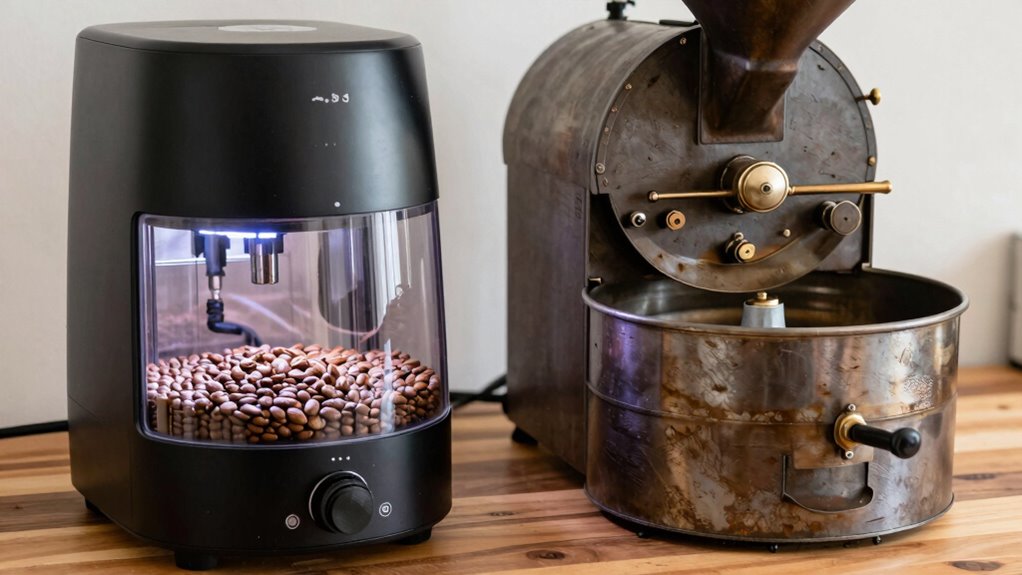
Air and drum coffee roasters each offer unique advantages and challenges, making it important to contemplate how their features align with your roasting goals. Air roasters typically have shorter roast durations, allowing you to quickly see results and adjust your process. They are also known for being quieter, which can be a benefit if you roast indoors or in shared spaces. However, they may produce less control over heat and airflow, impacting consistency. Understanding heat transfer is crucial for mastering the nuances of each roasting method. Additionally, the type of heat source used in each roaster significantly influences flavor development and process control. The roast profile you choose can greatly affect the final taste and aroma of your coffee. Drum roasters, on the other hand, often have longer roast durations but excel in providing even, consistent heat, ideal for developing complex flavors. They tend to be louder during operation, which might be a drawback if noise is a concern. Your choice depends on whether you prioritize speed and quietness or control and flavor development.
How to Choose the Right Home Coffee Roaster for You
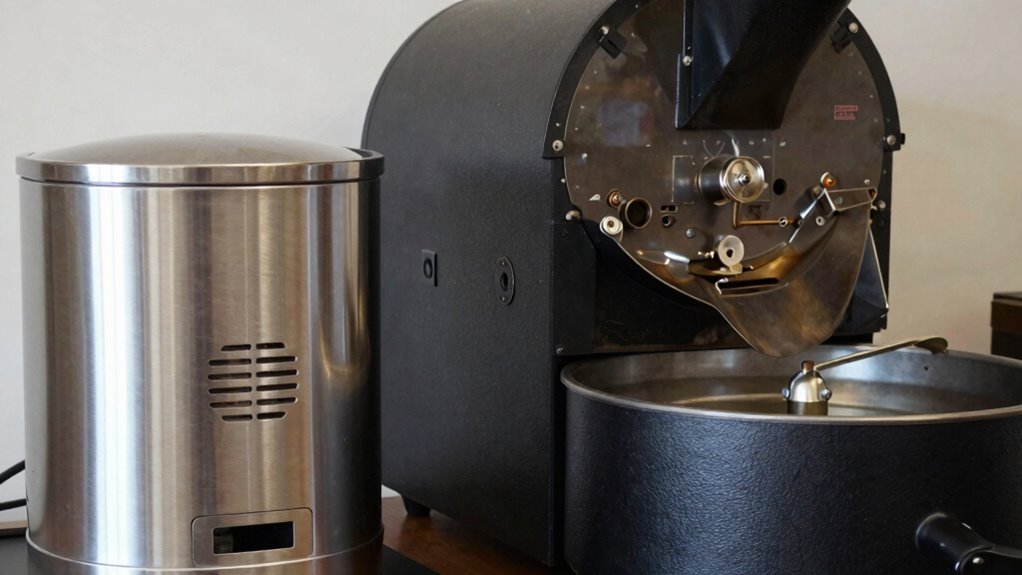
Selecting the right home coffee roaster depends on your specific roasting goals, space, and budget. Consider how much control you want over roasting temperature, as this affects flavor development and consistency. Think about how you’ll store beans; some roasters require minimal bean storage, while others benefit from pre-measured quantities.
When choosing, keep in mind:
- Your preferred roast level and flavor profile
- Space available for setup
- Budget constraints
- Ease of use and maintenance
- How you plan to store and cool beans post-roast
A good roaster matches your skill level and lifestyle while allowing you to experiment with roasting times and temperatures. Select one that aligns with your goals to enjoy fresh, flavorful coffee at home.
Frequently Asked Questions
Can I Roast Different Coffee Bean Sizes With Air or Drum Roasters?
Yes, you can roast different coffee bean sizes with both air and drum roasters. Bean size compatibility varies, but most roasters handle a range of sizes effectively. Keep in mind that roasting uniformity may be affected if the bean sizes are too diverse, leading to uneven roast levels. To achieve the best results, try to select beans with similar sizes or adjust your roasting process accordingly for even roasting.
How Long Does a Typical Home Coffee Roasting Session Take?
Ever wondered how long your home roasting session should last? Typically, a roasting duration can range from 10 to 20 minutes, depending on your bean type and preferred roast level. This session efficiency varies based on your equipment and experience. Are you aiming for a light, medium, or dark roast? Adjust the time accordingly, but always stay attentive to avoid over-roasting or under-roasting your beans.
Are There Health Risks Associated With Home Coffee Roasting?
Yes, there are health safety concerns when you home roast coffee, mainly from roasting fumes. These fumes can contain smoke and tiny particles that might irritate your respiratory system if you don’t take proper precautions. To stay safe, make sure good ventilation in your roasting area, use a dedicated space, and consider wearing a mask if you’re sensitive. Proper safety measures help you enjoy roasting without risking your health.
What Are the Energy Consumption Differences Between Air and Drum Roasters?
You’ll find that air roasters generally have lower power consumption, making them more energy-efficient for home use. They heat quickly and cool rapidly, which helps save energy during each roast. Drum roasters tend to use more power because they rely on longer, sustained heating periods to evenly roast beans. If energy efficiency is your priority, an air roaster could be a better choice, but consider your roasting volume and preferences too.
Can I Roast Coffee Beans Outdoors With Either Type of Roaster?
Thinking of roasting outdoors? Well, sure, you can try, but don’t forget outdoor roasting safety—smoke clouds and sparks aren’t exactly nature’s best friends. Whether air or drum, the environmental impact can be significant, risking local air quality. Plus, unpredictable weather could turn your cozy coffee ritual into an unintended fire drill. So, if you value your beans—and your backyard—consider controlled indoor roasting instead.
Conclusion
Choosing between an air and drum roaster is like picking your favorite melody—each offers a unique tune. Picture the warm aroma swirling around you as you craft your perfect roast, whether it’s the quick, crisp notes of air roasting or the steady, rich symphony of drum roasting. Whichever you pick, your home coffee journey begins with a simple step—embrace the process, enjoy the aroma, and savor the moment with each fresh cup.
Fall Picks
fall essentials
As an affiliate, we earn on qualifying purchases.