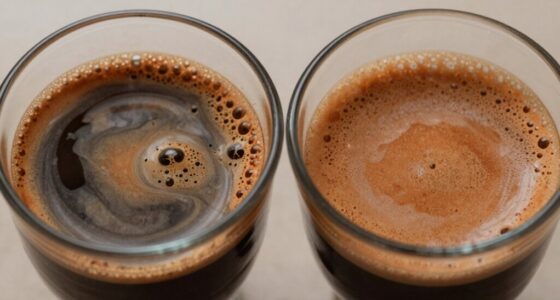
If you’re comparing Arabica and Robusta, you’ll notice that Robusta produces a thicker, more persistent crema thanks to its higher caffeine and oil content, making your espresso richer. Arabica has less caffeine, resulting in a lighter crema but a more nuanced, smoother flavor. The caffeine levels differ widely—Robusta has about double that of Arabica—affecting both taste and strength. To truly understand how these differences impact your cup, keep exploring the details behind each variety.

Get kitchen gear delivered free with Prime
- Fast, free delivery on millions of items
- Prime Video, Amazon Music and more included
- Member-only deals all year
Key Takeaways
- Robusta beans produce thicker, more persistent crema due to higher oil and protein content.
- Arabica beans generally create a lighter, less dense crema but with more nuanced flavor.
- Robusta contains about twice the caffeine of Arabica, resulting in a stronger, more bitter taste.
- Arabica’s lower caffeine level emphasizes its delicate aroma and complex flavor profile.
- The choice of bean affects crema quality and caffeine strength, influencing espresso’s texture and taste.
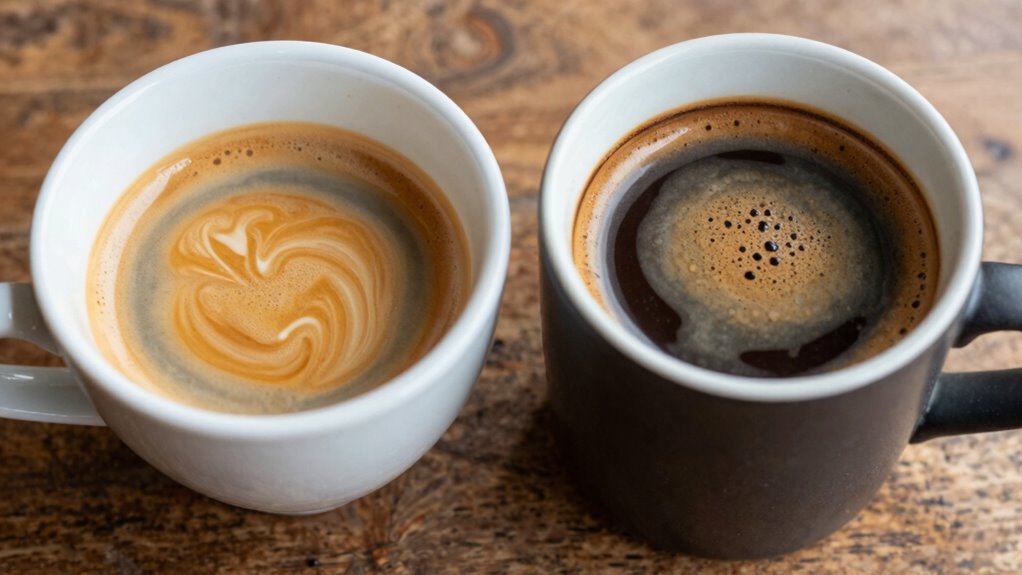
When choosing between Arabica and Robusta coffee, understanding their key differences can help you make an informed decision. One of the most noticeable distinctions lies in their flavor profiles. Arabica beans tend to have a smoother, more nuanced taste with a wide range of flavors, including hints of fruit, floral notes, and a touch of acidity that adds brightness. On the other hand, Robusta beans usually deliver a stronger, more bitter flavor with earthy, woody, and sometimes nutty undertones. If you prefer a milder, more refined cup, Arabica is typically the way to go. But if you enjoy a bold, robust flavor with a bit more bite, Robusta might be your best choice.
Arabica offers smooth, nuanced flavors; Robusta delivers bold, bitter notes with earthy undertones.
Growing conditions play a significant role in shaping these beans’ characteristics. Arabica plants thrive at higher altitudes with cooler temperatures, often between 600 and 2200 meters above sea level. They prefer rich, volcanic soil and require stable, moderate climates to develop their complex flavors. Because of these specific growing conditions, Arabica coffee is often grown in regions like Central and South America, Ethiopia, and parts of Asia. Meanwhile, Robusta plants are hardier and can tolerate lower elevations, hotter climates, and more challenging growing conditions. They flourish in environments with high temperatures, abundant rainfall, and less fertile soil, making them easier and cheaper to cultivate in countries across Africa, Southeast Asia, and parts of South America.
The differences in growing conditions also influence the caffeine content of each variety. Robusta beans generally contain about twice the caffeine of Arabica beans, which contributes to their bitter taste and increased resilience against pests and diseases. The higher caffeine level is why Robusta is often used in espresso blends where a stronger kick and better crema are desired. Arabica, with its lower caffeine content, offers a milder experience and tends to be more aromatic, emphasizing flavor complexity rather than caffeine strength. Additionally, the contrast ratio of a coffee influences its perceived depth and clarity, much like how contrast impacts image quality in projectors.
Ultimately, your choice hinges on what you value most—whether it’s the refined, intricate flavors of Arabica or the bold, full-bodied profile of Robusta. Knowing these key differences—flavor profiles and growing conditions—helps you select the coffee that best suits your taste and brewing preferences. Whether you prioritize a smooth, aromatic cup or a potent, energizing brew, understanding the distinctions will guide you to the right coffee for your palate.
Frequently Asked Questions
How Does Altitude Affect Arabica and Robusta Flavor Profiles?
Altitude effects considerably influence Arabica and Robusta flavor development. As you grow coffee at higher elevations, Arabica beans develop more complex, nuanced flavors due to slower maturation, leading to brighter acidity and intricate aroma profiles. Robusta, typically grown at lower altitudes, tends to have a stronger, more bitter taste. So, altitude shapes the overall flavor profiles, making high-altitude Arabicas more refined and lower-altitude Robustas bolder.
Can Blend Ratios Change the Caffeine and Crema Qualities Significantly?
Blending ratios can considerably impact caffeine variability and crema quality, with studies showing Robusta adds about twice the caffeine of Arabica. When you adjust the blend composition, you directly influence these qualities—more Robusta boosts caffeine and crema, while more Arabica offers smoother flavors. So, by tweaking the blend, you control not just taste but also the caffeine punch and crema richness, giving you a personalized coffee experience.
Are There Health Benefits Linked to Robusta’s Higher Caffeine Content?
Yes, the higher caffeine content in Robusta offers some health benefits, such as increased alertness, improved focus, and potential antioxidant effects. The caffeine advantage can boost your energy levels and enhance mental clarity. However, too much caffeine may cause jitters or sleep issues, so enjoy Robusta in moderation. Its health benefits are a plus when you’re looking for a stronger caffeine kick in your coffee.
How Do Processing Methods Impact Crema Stability in Each Bean Type?
Imagine your coffee as a delicate ballet, where processing techniques are the choreographers shaping crema stability. Robusta’s processing methods, like quick washes, often preserve its bold crema, while Arabica’s gentler techniques can lead to a more fragile dance. Your choice of processing impacts how long that luscious crema stays atop your brew, making each sip a performance of flavor and texture.
What Environmental Factors Influence the Growth and Quality of Arabica Versus Robusta?
You’ll notice that soil composition and pest resistance greatly influence Arabica and Robusta growth. Arabica prefers rich, well-drained soils, thriving in higher altitudes with stable temperatures, while Robusta tolerates poorer soils and higher temperatures. Pest resistance is also key; Robusta’s tougher skin helps it withstand pests better, making it more resilient in harsher environments. These factors directly impact the overall quality and flavor of each coffee type.
Conclusion
Ultimately, Arabica offers a smoother, nuanced flavor, while Robusta delivers a bold punch and higher caffeine. It’s like choosing between elegance and strength—each has its own appeal, but neither is inherently better. Your perfect brew depends on what you seek: a delicate sip or an energizing jolt. So, whether you savor the subtlety or crave the kick, remember, it’s all about what fuels your day and your taste buds.
Halloween Picks
halloween
As an affiliate, we earn on qualifying purchases.