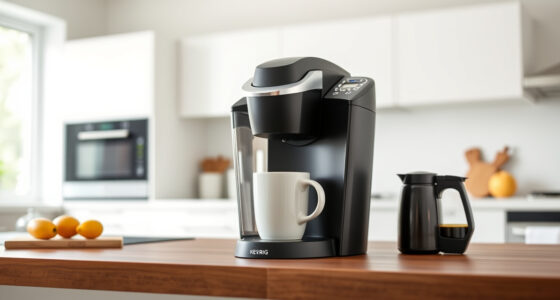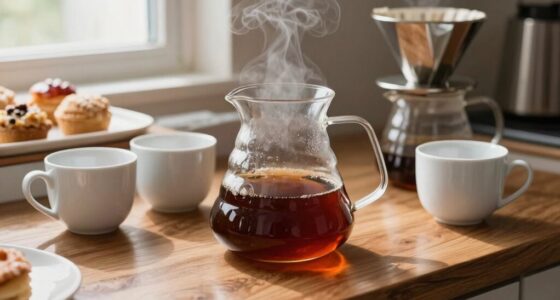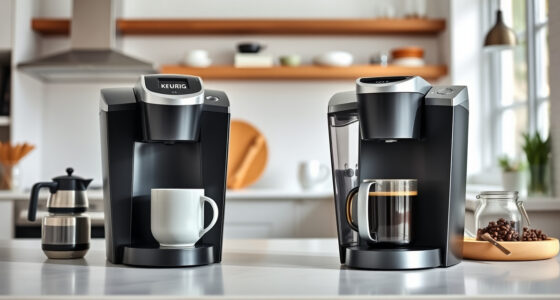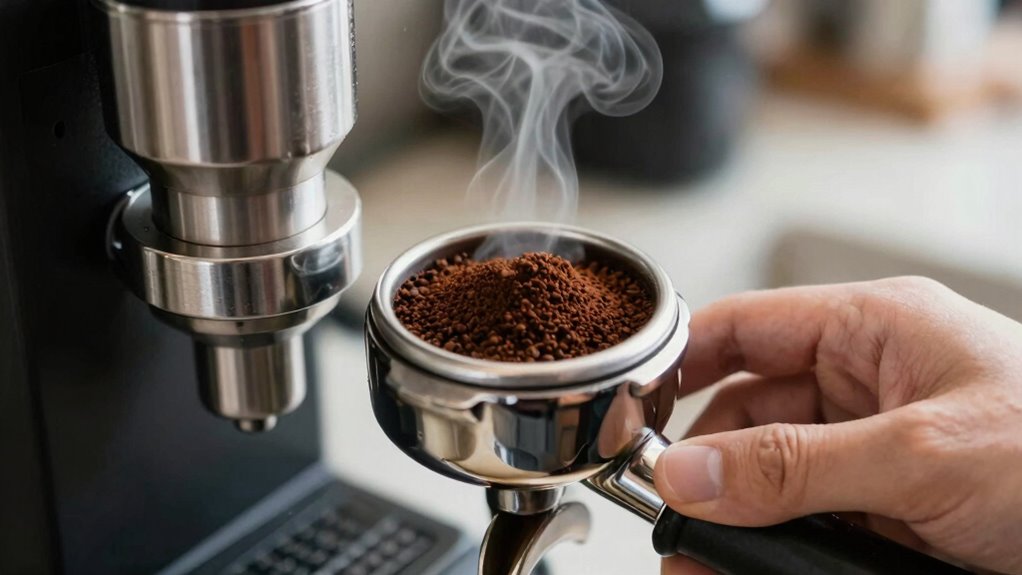
Even the best batch brewers need a good grind strategy because uneven grounds can cause inconsistent extraction, leading to weak or bitter coffee. Maintaining a uniform grind size helps control water flow and prevents channeling, ensuring balanced flavor. Adjusting grind size with water temperature optimizes extraction and reduces waste. If you want to consistently produce great coffee, understanding how grind consistency interacts with brewing variables is essential—there’s more to discover that can elevate your brews.

Get kitchen gear delivered free with Prime
- Fast, free delivery on millions of items
- Prime Video, Amazon Music and more included
- Member-only deals all year
Key Takeaways
- Even high-quality batch brewers rely on consistent grind size for even water flow and optimal extraction.
- Proper grind strategy prevents channeling, ensuring uniform flavor and reducing waste.
- Maintaining grind uniformity simplifies temperature adjustments for ideal brewing conditions.
- Good grind control enhances overall brewing efficiency and reproducibility of high-quality coffee.
- Synergizing grind consistency with temperature management unlocks the full flavor potential of the coffee.
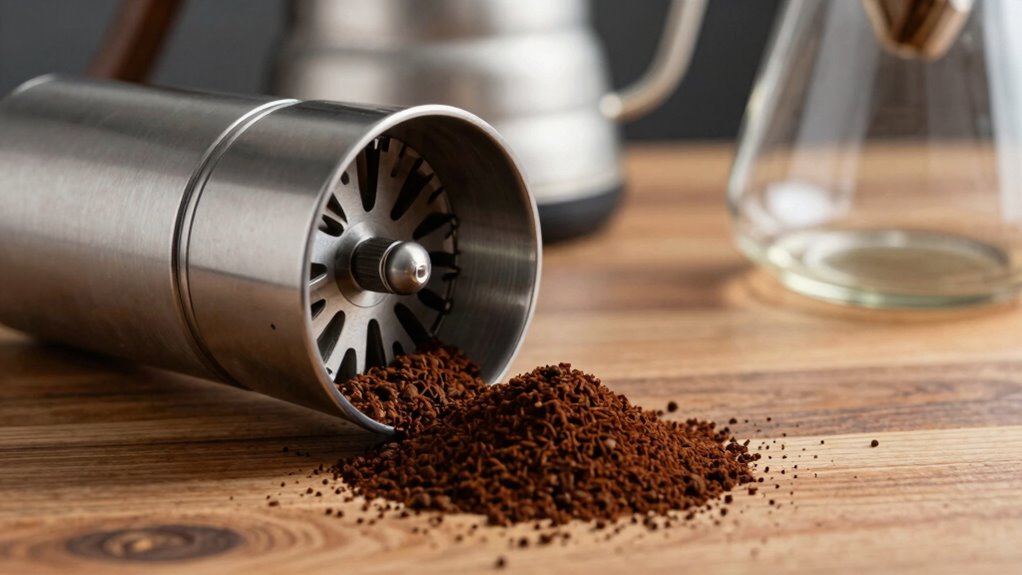
If you want to optimize your coffee brewing process, understanding how batch brewers and grind strategies work together is essential. Even the best batch brewer can fall short if your grind isn’t properly tailored. Grind consistency plays a crucial role here because uneven grounds lead to uneven extraction, resulting in weak or over-extracted coffee. When you use a consistent grind size, the water flows evenly through the coffee bed, ensuring each sip is balanced and flavorful. In contrast, inconsistent grind sizes cause channels to form, allowing water to bypass some grounds and leaving others under-extracted. This imbalance impacts the overall quality, regardless of how advanced your brewing equipment is.
Consistent grind size ensures even extraction, resulting in balanced, flavorful coffee every time.
Water temperature is another vital factor that interacts closely with your grind strategy. Most batch brewers operate optimally within a specific temperature range, typically between 195°F and 205°F. When your water temperature is too low, even a perfect grind won’t extract enough of the coffee’s flavor compounds. Conversely, if the water is too hot, it risks over-extracting bitter compounds, leading to a harsh taste. The grind size influences how quickly water extracts flavors; finer grinds increase extraction speed, making water temperature even more critical. If you’re using a finer grind, you need to ensure your water isn’t excessively hot, or you risk over-extraction. Conversely, with a coarser grind, slightly higher temperatures might be necessary to achieve proper extraction.
A good grind strategy is about finding that delicate balance—matching grind size with water temperature and the specific batch brewer you’re using. When your grind is consistent, you can better control how water interacts with the grounds, making it easier to dial in the ideal temperature. This consistency ensures that the water’s temperature effectively extracts the full range of flavors without pushing the coffee into bitterness or sourness. Proper grind size also reduces the likelihood of channeling, which can happen if grounds are uneven, and helps maintain a uniform extraction process across the entire batch. Additionally, understanding how grind size impacts extraction rate can help refine your brewing process even further. Recognizing the importance of grind uniformity can lead to more predictable and high-quality results in batch brewing. Moreover, maintaining grind consistency can reduce waste and improve the overall efficiency of your brewing routine. For best results, regularly calibrating your grinder and paying attention to particle size distribution can help maintain optimal consistency.
Ultimately, even the most sophisticated batch brewer can’t compensate for poor grind strategy. Your goal should be to maintain grind consistency and adjust water temperature based on your grind size and coffee type. This synergy ensures your coffee is flavorful, balanced, and satisfying with every brew. When these elements work together, you unlock the full potential of your batch brewing setup, delivering high-quality coffee consistently.
coffee grinder for consistent grind size
As an affiliate, we earn on qualifying purchases.
As an affiliate, we earn on qualifying purchases.
Frequently Asked Questions
How Does Grind Size Affect Brew Time in Batch Brewing?
Grind size directly impacts brew time because it influences coffee extraction and grind uniformity. A finer grind increases surface area, speeding up extraction but risking over-extraction if brew time is too long. Conversely, a coarser grind slows extraction, requiring more time to fully develop flavors. You need to find the right grind size to balance extraction and maintain consistent brew times, ensuring peak flavor and quality in your batch brewing.
What Tools Can Help Optimize Grind Consistency?
You can optimize grind consistency with tools like burr grinders, which maintain uniformity and prevent uneven extraction. Regular equipment maintenance guarantees your grinder operates smoothly, avoiding inconsistent grind sizes. Using a scale to measure your beans and a timer for grind settings helps maintain precision. Additionally, sieve tests can check for uniformity, ensuring your grind size remains steady. These tools and practices improve overall brew quality by promoting even extraction and flavor clarity.
Can Grind Adjustments Improve Flavor in Large Batch Brewing?
Yes, grind adjustments can improve flavor in large batch brewing. By optimizing grind uniformity, you enhance flavor extraction, ensuring each batch has a consistent and balanced taste. Finer grinds increase extraction, intensifying flavors, while coarser grinds reduce over-extraction and bitterness. Adjusting your grind size based on your brewing method and beans helps you achieve the desired flavor profile, making your batch more flavorful and enjoyable.
How Often Should I Recalibrate My Grinder for Batch Brewing?
Recalibrate your grinder regularly—about every 2 to 4 weeks—based on your batch brewing frequency and flavor consistency. Consistent grind maintenance keeps your beans balanced, boosting brew brilliance. When you notice inconsistent extraction or flavor flaws, it’s time for calibration. By maintaining meticulous mill management, you guarantee your grind remains precise, producing pristine pours and perfect profiles with minimal mess and maximum flavor.
What Are Common Mistakes in Grind Strategy for Batch Brewers?
A common mistake in grind strategy is ignoring grind temperature, which affects extraction quality. You might also overlook grind noise, signaling inconsistent grind size or machine issues. Rushing the grind process or using a fixed setting without adjustments can lead to uneven extraction. Always pay attention to grind noise and temperature, making small tweaks to optimize flavor. Proper calibration and attentive adjustments help guarantee your batch brews consistently great coffee.
automatic coffee grinder with adjustable settings
As an affiliate, we earn on qualifying purchases.
As an affiliate, we earn on qualifying purchases.
Conclusion
So, as luck would have it, a good grind strategy isn’t just about precision—it’s about embracing the little chances that turn a good brew into a great one. When you pay attention to your grind, you might find that perfect cup waiting just around the corner. Sometimes, the right grind is a happy accident, reminding you that even in brewing, a little bit of luck—and the right approach—can make all the difference.
coffee brewing temperature control device
As an affiliate, we earn on qualifying purchases.
As an affiliate, we earn on qualifying purchases.
coffee filter basket for batch brewing
As an affiliate, we earn on qualifying purchases.
As an affiliate, we earn on qualifying purchases.
Halloween Picks
halloween
As an affiliate, we earn on qualifying purchases.