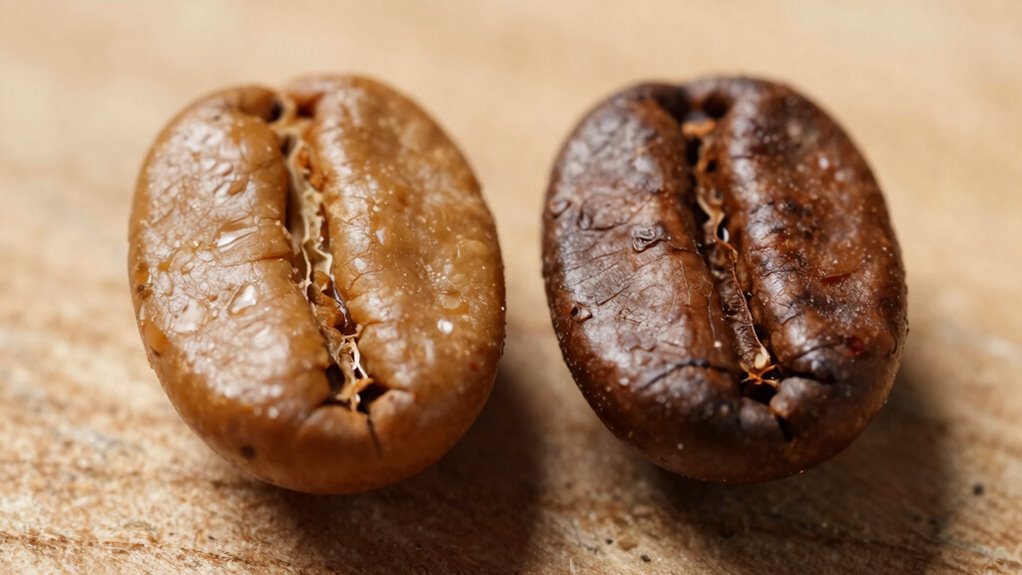

Washed coffees behave differently from naturals because their processing involves carefully removing the fruit before drying, resulting in a cleaner, brighter, and more consistent flavor. Controlled fermentation during washing guarantees predictable outcomes, while drying methods preserve the beans’ clarity. In contrast, naturals retain the fruit during drying, leading to more intense, fruity, and variable flavors. If you’re curious about how these methods shape flavor even further, there’s much more to explore.
Listen free for 30 days with Audible
Thousands of audiobooks and originals — cancel anytime.
As an affiliate, we earn on qualifying purchases.
Key Takeaways
- Washed coffees undergo controlled processing and fermentation, leading to more predictable, cleaner, and brighter flavor profiles.
- Naturals dry with the fruit intact, resulting in extended fermentation and more intense, fruity, and variable flavors.
- The removal of mucilage in washed coffees reduces fermentation time, emphasizing clarity and acidity.
- Contact with fruit sugars during natural processing enhances fruity and wine-like flavors.
- Drying conditions and processing methods significantly influence flavor consistency and variability between the two types.

Understanding why washed coffees behave differently from naturals starts with recognizing the fundamental differences in their processing methods. These methods directly influence the coffee’s flavor profile, body, and acidity, making it essential to grasp how each approach shapes the final cup. Washed coffees undergo a meticulous processing method that involves removing the fruit from the beans before drying, emphasizing clarity and brightness. In contrast, naturals are processed with the beans remaining inside the fruit during drying, leading to a more intense, fruity, and often heavier profile.
Washed coffees are bright and clean, while naturals develop rich, fruity flavors due to different processing methods.
The key difference lies in how fermentation processes are managed during processing. In washed coffees, fermentation is controlled and usually limited to a brief period after the fruit is removed. This step helps break down mucilage and ensures the beans are thoroughly cleaned, resulting in a cleaner cup with pronounced acidity and clarity. Because the beans aren’t in contact with the fruit for long, the fermentation processes are more predictable and consistent. This control over fermentation allows producers to highlight specific flavor characteristics, often resulting in a bright, crisp cup. Additionally, the processing method used in washed coffees can influence the consistency and clarity of the final flavor profile. The impact of microbial activity during fermentation is also minimized in washed coffees, further contributing to their predictability. Recognizing the importance of processing techniques can help in understanding the nuances of each coffee type. Furthermore, advances in processing technology have contributed to more uniform results in washed coffee production, reducing variability.
Moreover, climate conditions during drying can significantly influence the final flavor, making controlled drying essential for consistent results. Processing methods also play a significant role. With washed coffees, the beans are typically mechanically depulped, then washed with water to remove any remaining fruit residue. This process reduces the influence of the fruit’s sugars and flavors on the beans, allowing the intrinsic qualities of the coffee variety to shine through. The drying process in washed coffees is usually more controlled, often using raised beds or patios, which helps maintain uniformity and prevents over-fermentation or mold.
On the other hand, naturals are dried with the fruit still intact. This method exposes the beans to longer fermentation periods as the fruit’s sugars ferment along with the beans, creating a different set of flavors. The natural process enhances the fruity and wine-like qualities of the coffee, but it can also introduce variability. The fermentation processes in naturals tend to be less predictable, which can lead to batch-to-batch differences in flavor and body.
In essence, the processing methods and fermentation processes shape how washed and natural coffees behave. Washed coffees tend to be cleaner, brighter, and more consistent because their processing is more controlled. Naturals, with their extended contact with the fruit, develop richer, fruit-forward flavors but with more variability. Understanding these fundamental differences helps you appreciate why these two processing methods produce such distinct coffee experiences.
As an affiliate, we earn on qualifying purchases.
Frequently Asked Questions
How Does Altitude Affect Washed and Natural Coffee Profiles?
Altitude effects both washed and natural coffee profiles by influencing flavor development. Higher altitudes typically lead to slower cherry maturation, resulting in brighter, more nuanced flavors. For washed coffees, this enhances clarity and acidity, while natural coffees develop more complex, fruity profiles. You’ll notice that at higher elevations, both processing methods produce beans with vibrant, distinctive flavors, making altitude a key factor in shaping the final cup’s character.
What Are the Environmental Impacts of Each Processing Method?
You might notice washed coffees typically use more water, leading to higher water usage and potential environmental pollution if not managed properly. Naturals, on the other hand, require less water, reducing pollution risks. However, both methods can impact local ecosystems—washed processes may strain water sources, while naturals can cause waste disposal issues. Sustainable practices are key to minimizing environmental impacts for either method.
Can Processing Method Influence Shelf Life and Storage?
Processing methods definitely influence shelf life and storage stability. For example, washed coffees often undergo fermentation effects that reduce microbial activity, helping them stay fresher longer. Naturals, with their higher sugar content and residual fruit, may be more prone to spoilage if not stored properly. So, your choice of processing impacts how well the coffee resists deterioration over time, making storage considerations essential for maintaining quality.
How Do Consumer Preferences Vary Between Washed and Natural Coffees?
You’ll notice that consumer preferences differ between washed and natural coffees because of their distinct flavor complexities. Washed coffees often appeal to those who prefer cleaner, brighter tastes, while naturals offer more fruity, complex profiles. Harvest seasons also influence these preferences, as seasonal variations can highlight unique flavor notes. Ultimately, your choice depends on whether you enjoy a crisp, refined cup or a bold, fruity experience.
Are There Specific Brewing Techniques Suited to Each Processing Style?
You should tailor your brewing techniques to highlight flavor nuances in each processing style. For washed coffees, use precise brewing adjustments like consistent grind size and temperature control to emphasize clarity and bright acidity. For naturals, opt for methods that enhance body and sweetness, such as longer extraction times or immersion methods like French press. Adjusting these factors helps you bring out the best in each coffee’s unique profile.
As an affiliate, we earn on qualifying purchases.
Conclusion
Understanding why washed coffees behave differently from naturals isn’t just about science—it’s about appreciating the journey from bean to cup. Each process shapes the flavor, aroma, and character of your brew, making every sip a story. So, the next time you savor that cup, remember: behind the smoothness or brightness lies a world of craftsmanship and passion. Isn’t it remarkable how a simple choice in processing can transform your coffee experience into pure magic?
As an affiliate, we earn on qualifying purchases.
As an affiliate, we earn on qualifying purchases.
Fall yard work Picks
leaf blowers
As an affiliate, we earn on qualifying purchases.