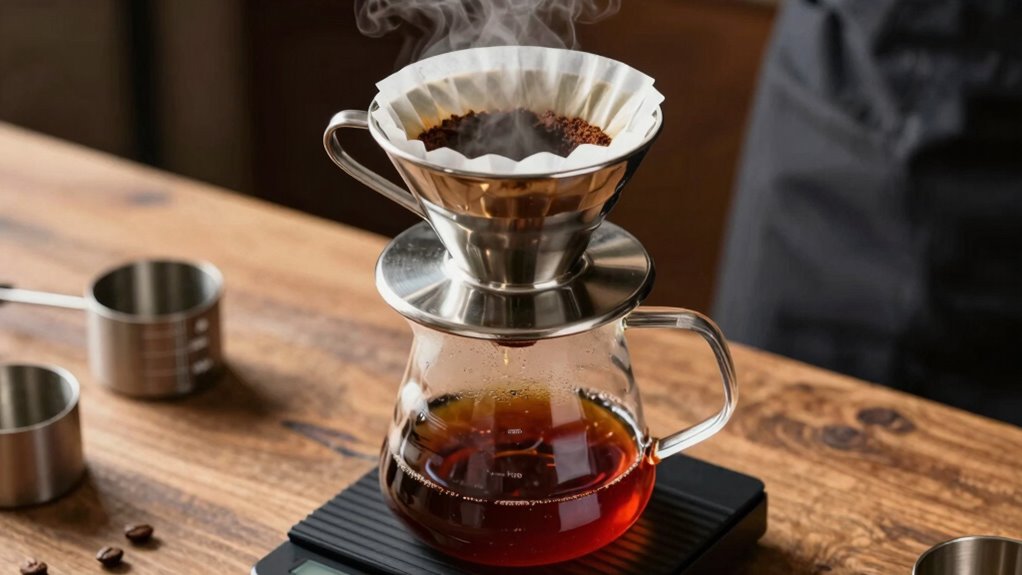

Brew ratio, strength, and extraction are key coffee concepts that often cause confusion. Brew ratio refers to the coffee-to-water balance, affecting flavor intensity and body. Strength measures how bold the final brew feels, influenced by ratio and extraction. Extraction is about how completely flavors dissolve during brewing, impacting taste clarity and complexity. Understanding how these three interact helps you brew better coffee; keep exploring to master the details behind each.

Get kitchen gear delivered free — and shop member deals
- Fast, free delivery on millions of items
- Access to Prime Big Deal Days deals on October 6–7
- Prime Video, Amazon Music and more included
Key Takeaways
- Brew ratio is the coffee-to-water proportion; strength measures perceived intensity, while extraction indicates soluble compounds dissolved during brewing.
- Higher brew ratios generally increase strength and body but can reduce clarity if over-extracted.
- Proper extraction balances flavor, acidity, and bitterness, directly affecting strength and overall taste.
- Adjusting grind size, brew time, and temperature fine-tunes extraction without solely altering brew ratio.
- Understanding the distinct roles of each parameter helps optimize brewing for clarity, flavor, and desired strength.
As an affiliate, we earn on qualifying purchases.
What Are Brew Ratio, Strength, and Extraction? A Clear Explanation
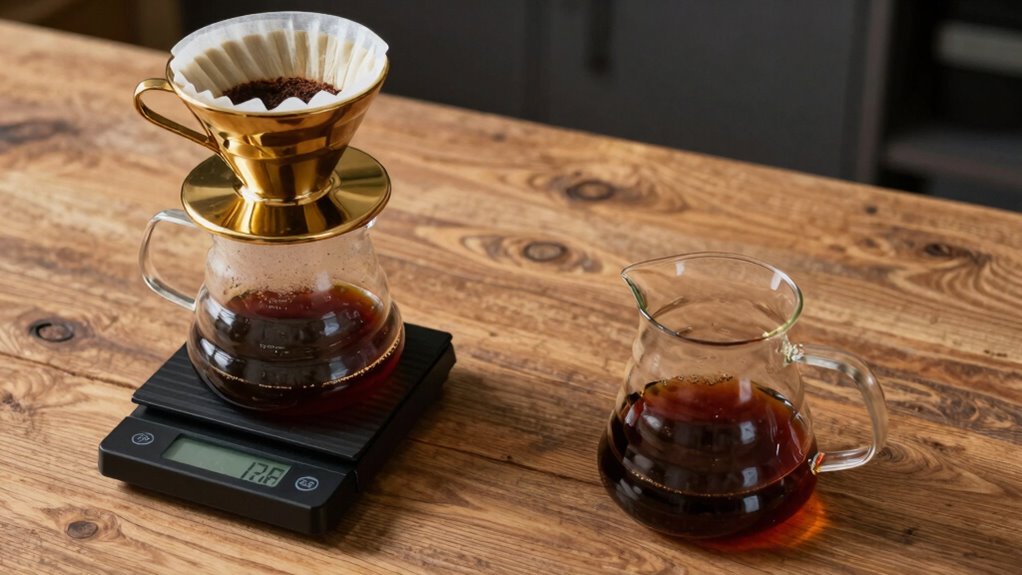
Ever wondered what brew ratio, strength, and extraction really mean in coffee making? These terms are key to understanding brew chemistry and achieving the perfect flavor balance. Brew ratio refers to the proportion of coffee grounds to water, influencing how concentrated your coffee is. Strength measures the overall intensity or boldness you perceive, which depends on both brew ratio and extraction. Extraction, on the other hand, describes how much of the coffee’s soluble compounds are dissolved during brewing. Properly managing these elements helps you control flavor, body, and aroma. When balanced well, they work together to produce a harmonious cup. Additionally, understanding brew chemistry can help you optimize your brewing process for better consistency and flavor. Understanding these concepts allows you to tweak your brewing process intentionally, ensuring each cup hits the right notes of flavor and complexity.
As an affiliate, we earn on qualifying purchases.
How Extraction Affects Your Coffee’s Flavor and Body

When you control extraction, you directly influence your coffee’s flavor profile and overall body. Proper extraction highlights desirable notes while balancing texture, ensuring your brew isn’t too thin or overwhelming. Understanding this connection helps you craft a more balanced and enjoyable cup every time. Additionally, color accuracy in your brewing process can subtly affect how you perceive the flavors and aromas of your coffee. Mastering extraction techniques allows for greater control over the final taste and mouthfeel of your brew, making each cup uniquely tailored to your preferences. Recognizing the role of paranormal phenomena in the context of coffee rituals can add an intriguing dimension to your brewing routine.
Flavor Profile Development
Extraction plays a crucial role in shaping your coffee’s flavor and body, directly influencing how it tastes on your palate. As extraction progresses, it pulls out specific compounds that define your coffee’s flavor profile, highlighting tasting notes like fruity, nutty, or chocolaty qualities. If you under-extract, your coffee may taste sour or flat, lacking depth. Over-extraction can cause bitterness and mask delicate flavors. Achieving the right extraction balance ensures you develop a well-rounded flavor profile that captures the intended tasting notes. By adjusting grind size, brew time, and technique, you control how extraction influences flavor development. This process allows you to fine-tune your coffee, enhancing its complexity, clarity, and overall sensory experience. Understanding extraction control is essential for developing a nuanced and balanced cup, which is why mastering brew parameters is key to consistent results. Additionally, the use of digital displays in high-tech vapes demonstrates how technology can assist users in monitoring and optimizing their experience, much like adjusting brew variables for perfect coffee. Moreover, understanding the science behind compound extraction can help brewers tailor their methods for specific flavor outcomes. Properly managing these factors enables brewers to achieve a desired flavor profile, ensuring a satisfying and personalized coffee experience.
Body and Texture Balance
Adjusting extraction levels not only influences flavor but also plays a significant role in shaping your coffee’s body and texture. When extraction is too low, your coffee may taste thin, with a watery mouthfeel and lacking richness. Conversely, over-extraction can lead to a heavy, overly viscous body that feels unbalanced. Proper extraction enhances the body texture by highlighting the coffee’s natural oils and soluble compounds, resulting in a smooth, rounded mouthfeel. Achieving the right balance ensures your brew has a pleasing weight and consistency without feeling overpowering or flat. Extraction control through controlling grind size, brew time, and water flow helps you fine-tune the extraction, allowing you to craft a coffee with a satisfying body that complements its aroma and flavor profile. Understanding how extraction impacts the overall profile can help you develop more consistent brewing techniques.
As an affiliate, we earn on qualifying purchases.
What Is Coffee Strength and How Do You Measure It?
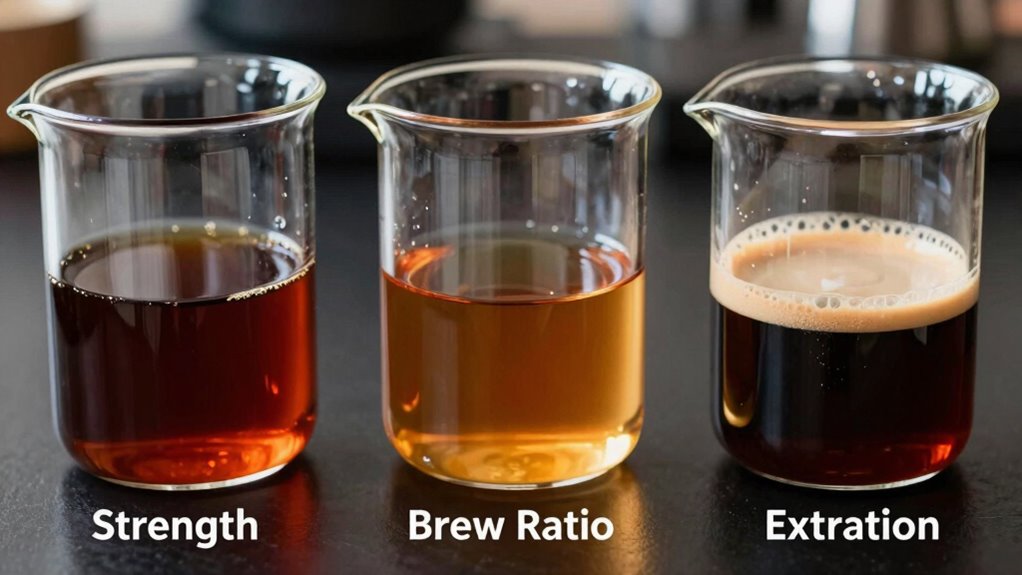
Have you ever wondered how strong your coffee truly is? Coffee strength refers to the concentration of dissolved solids in your brew, impacting flavor, aroma, and overall intensity. You can measure strength through subjective taste or objective methods like TDS (Total Dissolved Solids). Factors like coffee aroma and brewing temperature influence perceived strength—more aroma often signals a richer experience, while higher brewing temps extract more solids, increasing strength. Here’s a quick comparison:
| Aspect | Effect on Strength | How to Measure |
|---|---|---|
| Coffee aroma | Indicates flavor richness | Sensory evaluation |
| Brewing temperature | Higher temps boost extraction | Thermometer readings |
| Dissolved solids | Direct measure of strength | TDS meters |
| Brew ratio | Concentration depends on ratio | Weight/volume measurements |
Understanding these helps you tailor your brew for the perfect strength. Recognizing the content quality and relevance of your brewing process can further optimize your results. Being aware of extraction techniques can also lead to more consistent and desirable outcomes.
As an affiliate, we earn on qualifying purchases.
How Brew Ratio and Extraction Interact in Coffee Brewing
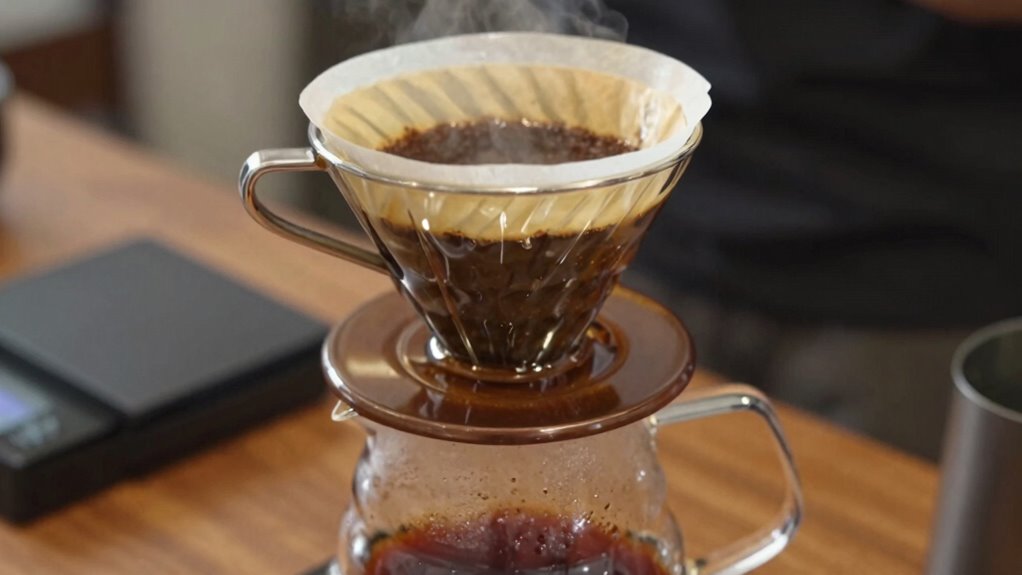
Your brew ratio directly influences how much extraction occurs during brewing, shaping the coffee’s flavor and strength. A higher ratio can lead to a more balanced clarity, while a lower ratio might enhance body but risk over-extraction. Understanding this interaction helps you fine-tune your brew for desired taste and consistency.
Brew Ratio’s Effect
Brew ratio plays a crucial role in determining how efficiently coffee grounds release their flavors during extraction. When you adjust the brew ratio, you influence the amount of coffee bean material in relation to water, affecting flavor clarity and strength. A higher ratio means more coffee grounds per fluid ounce, which can intensify flavor and body. Conversely, a lower ratio might produce a lighter, more delicate cup. Keep in mind that brewing temperature interacts with brew ratio; hotter water extracts more solubles, making the ratio even more impactful. To optimize your brew:
- Use a balanced ratio to maximize flavor without over-extraction
- Recognize that a higher brew ratio often requires a slightly lower brewing temperature
- Adjust based on bean roast and grind size for best results
- Consider brew strength and how it relates to extraction efficiency for a well-rounded cup
Extraction and Flavor
Because brew ratio directly influences how much coffee solubles are extracted, it plays a vital role in shaping flavor. Higher extraction levels often reveal richer flavor nuances, enhancing characteristics like sweetness and complexity. Conversely, under-extraction can lead to sour or flat tastes, dulling the coffee’s true profile. Extraction also impacts body development; well-balanced extraction produces a full, rounded mouthfeel, while uneven extraction can cause thin or inconsistent textures. By adjusting your brew ratio, you control the amount of solubles dissolved, which directly affects both flavor nuances and body. Striking the right balance guarantees your coffee’s flavor remains vibrant and well-defined, highlighting its unique attributes without over-extracting harsh notes. Proper extraction is key to revealing the best possible flavor in every cup.
Balancing Strength and Clarity
Balancing strength and clarity in coffee brewing hinges on how brew ratio and extraction work together to shape the final flavor profile. When you adjust the brew ratio, you influence both taste harmony and aroma development. A higher brew ratio can enhance strength, but may muddy clarity, while a lower ratio preserves brightness but risks under-extraction. To achieve ideal balance, consider these factors:
- Fine-tune grind size to control extraction and maintain clarity
- Adjust brew time to develop aroma without sacrificing transparency
- Monitor brew ratio to ensure strength complements flavor complexity
Comparing Brew Ratio, Strength, and Extraction: What’s the Difference?

Understanding the differences between brew ratio, strength, and extraction is essential for making a great cup of coffee. Brew ratio refers to the amount of coffee used relative to water, directly affecting brew quality and how much coffee you extract. Strength measures how concentrated the final brew is, influenced by both the ratio and brewing process. Extraction describes how fully the coffee’s flavors are dissolved into the water, impacting flavor complexity and balance. While these terms are interconnected, they serve distinct roles: brew ratio sets the foundation, strength adjusts the intensity, and extraction determines flavor richness. Recognizing these differences helps you fine-tune your brewing method, ensuring a well-balanced cup with *ideal* brew quality and vibrant flavor complexity.
Common Mistakes That Confuse Brew Ratio, Strength, and Extraction
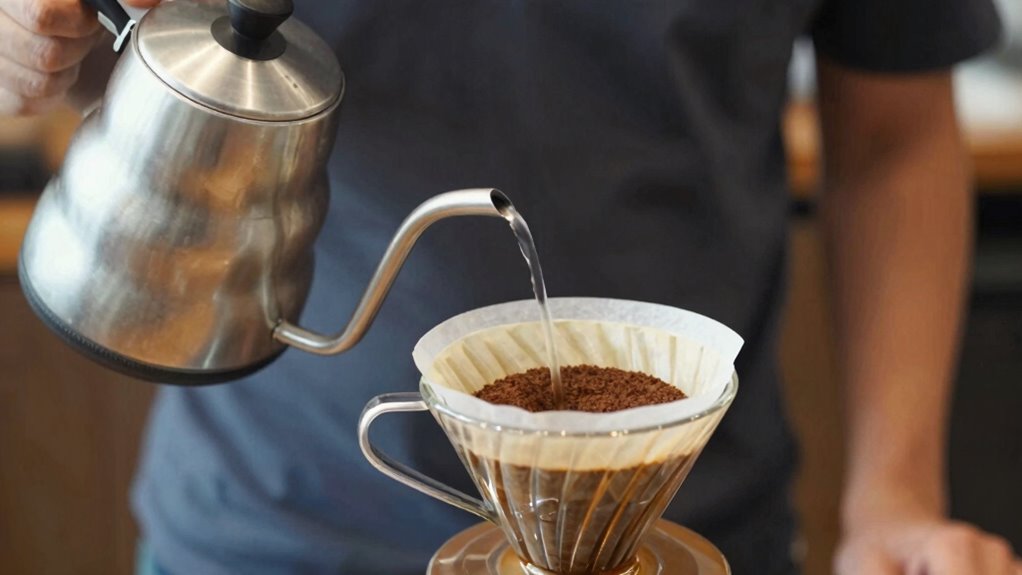
Many coffee enthusiasts mistakenly think that adjusting one parameter automatically improves the others, but this often leads to confusion. For example, changing the coffee grind affects extraction, yet people may assume it directly impacts brew strength without considering other factors. Similarly, focusing solely on brew temperature can alter extraction but not necessarily influence brew ratio or strength. Common mistakes include:
- Assuming a finer coffee grind always increases strength without considering over-extraction
- Believing higher brew temperatures will automatically enhance extraction without affecting taste balance
- Overlooking how changes in brew ratio influence perceived strength, regardless of grind size or temperature
These misconceptions can cause inconsistent results. Understanding that each parameter interacts differently helps prevent confusion and encourages precise adjustments for better coffee.
How to Adjust Brew Parameters to Brew Better Coffee
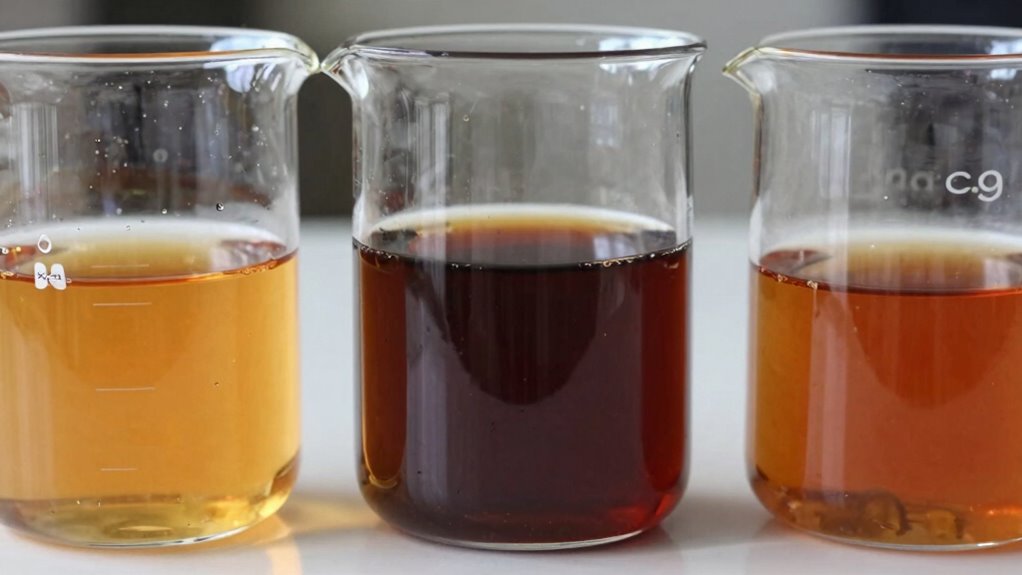
Adjusting brew parameters effectively requires a clear understanding of how each factor influences your coffee’s flavor and strength. To enhance coffee aroma, start by experimenting with brewing temperature; higher temperatures generally extract more aromatic compounds, boosting aroma but risking over-extraction if too hot. Lower temperatures can highlight brightness and clarity. Adjust the grind size and brew time to control extraction, ensuring you don’t under- or over-extract. Slight changes in brew ratio also impact flavor concentration. Remember, small tweaks in temperature and grind size can substantially influence aroma and overall profile. Additionally, understanding the heat distribution in your brewing equipment can help optimize extraction and consistency. Proper temperature control is essential for consistent results, as fluctuations can lead to unpredictable flavor outcomes. Developing awareness of the brew ratio helps tailor the coffee’s strength to your preference. Being mindful of the gold IRA markets can also provide insights into how investment strategies might influence your financial planning for future coffee ventures. Incorporating consistent brewing techniques can further enhance the reliability of your coffee flavor; small adjustments and careful monitoring are key. By methodically adjusting these parameters, you’ll find the ideal balance that brings out your preferred flavor notes and strength, resulting in a more satisfying coffee experience.
Practical Tips for Balancing Brew Ratio, Strength, and Extraction
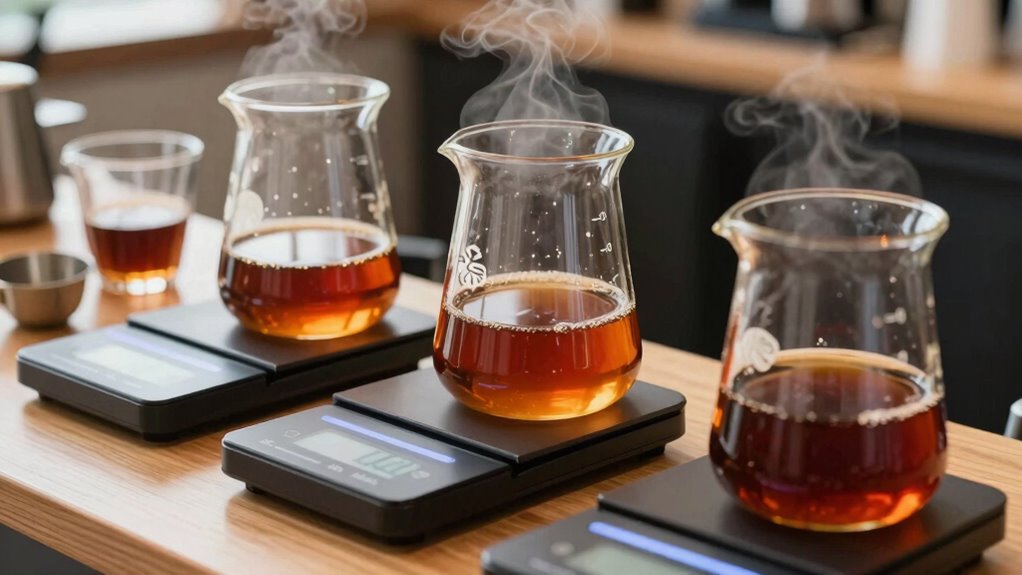
Balancing brew ratio, strength, and extraction requires a thoughtful approach to fine-tune your coffee’s flavor and body. Start by maintaining proper coffee storage; keep beans airtight and away from light to preserve freshness, ensuring consistent grind and extraction. Adjust brewing temperature carefully—aim for the ideal range to prevent under- or over-extraction, which impacts strength and clarity. Consider these practical tips:
Maintain proper storage, control brewing temperature, and measure precisely for balanced, flavorful coffee.
- Use a scale to measure coffee and water precisely for consistency.
- Experiment with grind size to influence extraction without drastically changing ratio.
- Consistently monitor brewing temperature to maintain flavor balance.
- Pay attention to your brewing environment—factors like humidity and ambient temperature can also influence extraction and flavor.
With these habits, you’ll better control how your brew ratio impacts strength and extraction, leading to more satisfying coffee every time.
FAQs About Brew Ratio, Strength, and Extraction

Understanding the relationship between brew ratio, strength, and extraction can seem complex, but asking the right questions helps clarify these concepts. For example, how does adjusting brew ratio affect coffee acidity? A higher ratio often results in a bolder flavor, but it can also mute acidity if over-extracted. Similarly, does brewing temperature impact extraction? Yes, higher temperatures generally increase extraction, highlighting brighter notes and acidity. Many ask if stronger coffee means more extraction—it’s not always the case; it depends on grind size and brew time. Balancing these factors ensures ideal flavor without overdoing acidity or under-extracting. Paying attention to brew ratio adjustments and how they influence overall taste helps you fine-tune your brewing process for better taste, aroma, and overall coffee quality. Additionally, understanding how body and mouthfeel relate to extraction can help you achieve a richer coffee experience.
Frequently Asked Questions
How Does Grind Size Influence Brew Ratio and Extraction?
Grind size and consistency directly affect your brew ratio and extraction. Finer, more uniform particles increase surface area, leading to faster extraction and stronger flavor, even with the same amount of coffee. Conversely, a coarser grind slows extraction, requiring adjustments in brew ratio to maintain strength. By controlling particle size and consistency, you can fine-tune your brew ratio and optimize extraction, ensuring a balanced, flavorful cup every time.
Can I Optimize All Three—Ratio, Strength, and Extraction—Simultaneously?
Yes, you can optimize all three—ratio, strength, and extraction—simultaneously to achieve perfect brew consistency and flavor balance. Focus on adjusting grind size, brew time, and coffee amount carefully, monitoring results closely. By fine-tuning each variable, you create harmony among the three, ensuring your coffee is consistently delicious and well-balanced. This approach empowers you to craft the ideal cup every time, elevating your brewing experience.
What Are Signs of Over-Extraction Versus Under-Extraction?
You can tell if your coffee is over-extracted by a bitter taste and a harsh, overly robust flavor, often with a flavor imbalance. Under-extraction results in a weak, sour, or flat cup, lacking depth. To improve, adjust your brew time or grind size. Bitterness detection signals over-extraction, while a lack of flavor complexity signals under-extraction. Tasting is the best way to fine-tune your process for a balanced cup.
How Does Water Temperature Impact Extraction and Coffee Strength?
You’ll notice that water temperature greatly impacts extraction and coffee strength. Higher temperatures increase water chemistry’s ability to dissolve solubles, leading to a more balanced extraction and stronger brew. Maintaining temperature stability ensures consistent results, preventing over- or under-extraction. If water is too hot, you might over-extract, causing bitterness; too cool, and you’ll under-extract, resulting in weak flavor. Proper temperature control optimizes extraction and enhances your coffee’s overall strength.
Is There an Ideal Brew Ratio for Different Coffee Brewing Methods?
Think of your brew ratio as a musical score guiding your coffee symphony; the right balance guarantees consistent flavor. For drip coffee, a ratio of about 1:15 to 1:17 helps you achieve brewing consistency, while espresso demands a tighter 1:2 to 1:3. Adjust based on taste, but remember, a well-tuned brew ratio is your secret to a reliably delicious cup every time.
Conclusion
Now that you understand the differences between brew ratio, strength, and extraction, you’re closer to mastering your perfect cup. But the real challenge lies in knowing how to balance these elements for ideal flavor. Are you ready to experiment and discover what truly makes your coffee shine? The secret to brewing greatness is within your reach—just a few adjustments away. So, what will your next brew reveal? The journey to exceptional coffee starts now.
Fall Picks
fall essentials
As an affiliate, we earn on qualifying purchases.