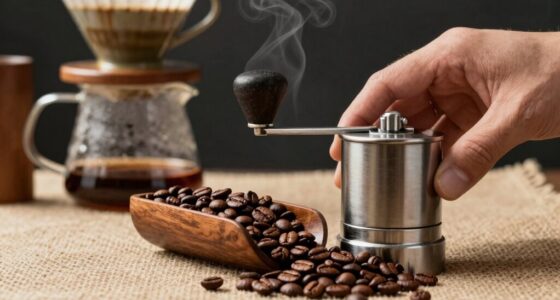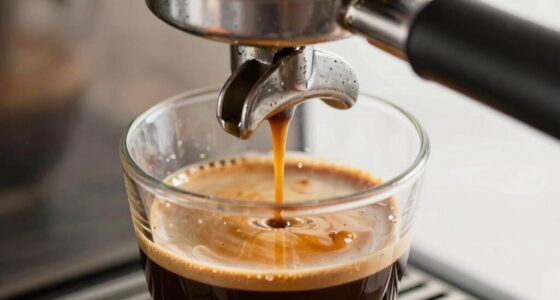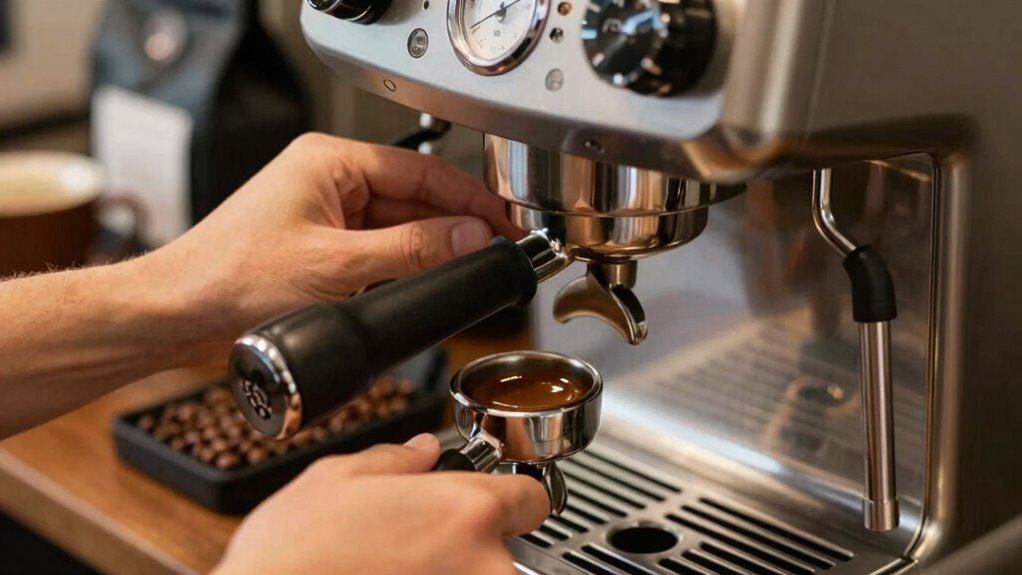

To dial in espresso with only one change at a time, start by choosing a consistent tool setup and record your baseline shot. Next, adjust one variable—such as grind size—until the extraction reaches the desired flavor and flow. Keep everything else constant, then move on to the next adjustment, like temp or tamping pressure. This focused approach helps you understand each change’s effect, and if you’re curious about mastering each step, there’s more to explore.

Get kitchen gear delivered free with Prime
- Fast, free delivery on millions of items
- Prime Video, Amazon Music and more included
- Member-only deals all year
Key Takeaways
- Make only one adjustment at a time, such as grind size, to isolate its effect on extraction.
- Use consistent tools and techniques to ensure changes are accurately measured and understood.
- Record each adjustment and its impact to track progress and identify optimal settings systematically.
- Focus on signs of proper extraction—balanced flavor and crema—before proceeding with further changes.
- Tackle issues methodically by changing one variable, like brew time or temperature, to pinpoint root causes.
As an affiliate, we earn on qualifying purchases.
Why Making Small, Focused Changes Helps Dial in Your Espresso
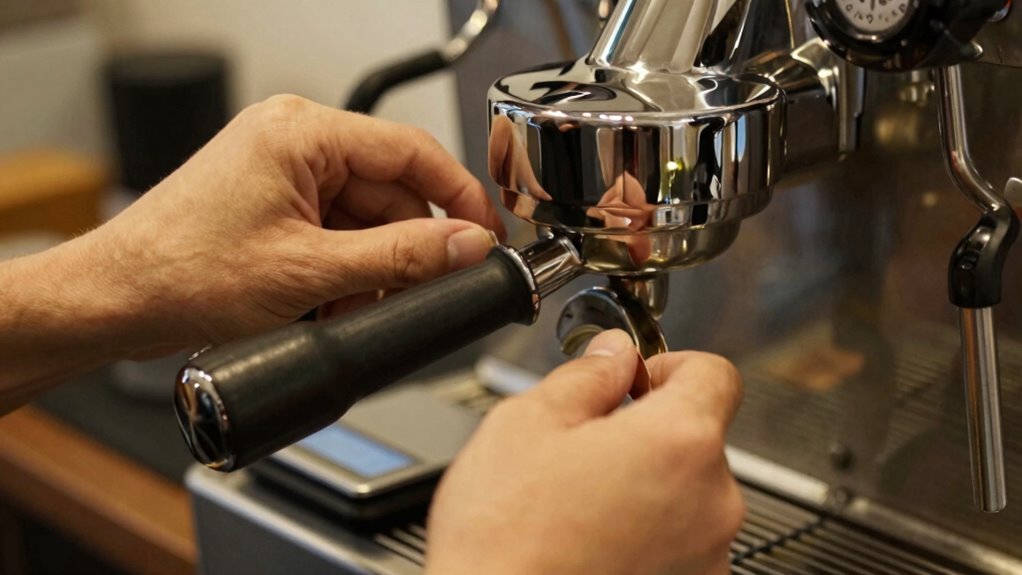
Making small, focused adjustments is essential because espresso brewing is a delicate balance. When you tweak one factor at a time, like milk frothing or coffee storage, you better understand its impact on the final shot. For instance, adjusting milk frothing techniques influences the texture and temperature, which can subtly change the espresso’s flavor. Similarly, optimizing coffee storage ensures your beans stay fresh, preventing off-flavors that can ruin your shot. Small changes allow you to isolate variables, making it easier to identify what works best. Jumping to big adjustments can mask the cause of issues and make troubleshooting frustrating. By focusing on one element at a time, you develop a more intuitive sense of how each factor affects your espresso, leading to consistent, high-quality results. Additionally, paying attention to grind size helps you fine-tune extraction and achieve the desired flavor profile.
As an affiliate, we earn on qualifying purchases.
How to Choose the Right Grind Size for Your Espresso
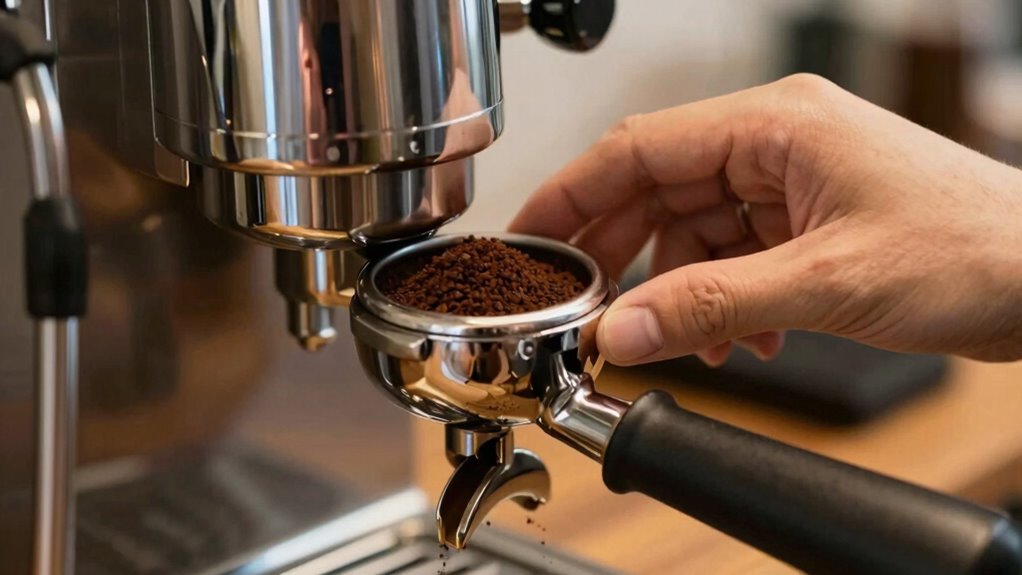
Choosing the right grind size is essential for a perfect espresso, and you should start by adjusting the fineness until the flow feels just right. Pay attention to signs of over- or under-extraction, like sourness or bitterness, to guide your adjustments. Using consistent tools helps you make precise changes and track your progress effectively. Additionally, understanding how grind size impacts extraction can help you fine-tune your process for optimal flavor.
Adjust Grind Fineness
Finding the right grind size is crucial for pulling a perfect espresso shot, as it directly affects extraction and flavor. When adjusting the grind, start with a consistent baseline and make small, incremental grind adjustments. Finer grinds slow down extraction, while coarser grinds speed it up. If your shot pulls too quickly, try a slightly finer grind; if it’s too slow or bitter, go coarser. Remember, grind adjustment is often coupled with dose variation—changing the amount of coffee can help fine-tune extraction. Keep notes of each change to identify what works best. Your goal is to find the balance where the shot extracts evenly without over- or under-extraction, delivering ideal flavor and body. Utilizing precise, energy-efficient European cloud servers can streamline your data tracking and analysis to optimize your espresso-making process more sustainably.
Recognize Extraction Signs
Recognizing the signs of proper extraction is essential for selecting the right grind size. When your espresso tastes balanced, with a rich, full flavor profile, it indicates you’re on the right track. Over-extraction results in bitter, harsh notes and a thin body, while under-extraction yields sour, acidic flavors and a weak cup. Pay attention to the color of the crema—should be thick and caramel-colored. Also, consider bean freshness; fresher beans often require a slightly finer grind to extract their vibrant flavors fully. As you taste, adjust your grind size incrementally, aiming for a shot that has a sweet spot between sour and bitter. Proper signs of extraction reflect your grind size’s alignment with bean freshness and desired flavor profile. For consistent results, understanding proper equipment maintenance can help ensure your grinder and espresso machine are performing optimally.
Use Consistent Tools
Using consistent tools is key to dialing in the perfect grind size for your espresso. When you keep your grinder and tamper consistent, you eliminate variables that can throw off your shot. A uniform grind size ensures water flows evenly through the coffee, leading to better extraction. Pay attention to tamp pressure as well—applying the same force each time helps maintain consistency. If your tamp is too light or too firm, it can affect the flow rate and extraction time, making it harder to get an ideal shot. By sticking to the same tools and techniques, you can more accurately identify how changes to grind size impact your espresso. This consistency allows you to fine-tune your process efficiently and achieve reliably great results every time. Maintaining consistent techniques is essential for accurate adjustments and optimal flavor.
As an affiliate, we earn on qualifying purchases.
How to Adjust Your Coffee Dose for Better Extraction

To improve your espresso extraction, you need to get your coffee dose just right. Proper measurement techniques guarantee consistency, so you can adjust the dose based on how your shot pulls. Keep an eye on your brew to see how changes affect the flavor and maintain a steady process. Incorporating Free Floating techniques can help you fine-tune your dosing for even better results.
Proper Dose Measurement Techniques
Adjusting your coffee dose is a key step in dialing in the perfect espresso extraction. To do this accurately, measurement precision matters. Use a high-quality scale to weigh your coffee grounds and guarantee measurement accuracy. Regularly calibrate your scale according to the manufacturer’s instructions—this keeps your measurements reliable. Consistent dosing depends on precise weight, which helps you replicate successful shots and make meaningful adjustments. Avoid eyeballing or estimating; instead, rely on your calibrated scale for consistency. Proper dose measurement techniques create a solid foundation for troubleshooting and refining your espresso. Remember, small changes in weight can profoundly impact extraction, so careful measurement is essential for achieving balance and flavor in your espresso shots. Accurate measurement is essential for making precise adjustments and consistently dialing in your espresso.
Adjusting Dose for Extraction
When you want to improve your espresso extraction, changing the dose can make a significant difference. Increasing the coffee dose can create a richer, more balanced shot, while decreasing it might enhance clarity and brightness. Keep in mind that adjusting the dose affects not only extraction but also milk frothing and overall espresso maintenance. A higher dose often results in a thicker crema, which can support better milk foaming, but it may require recalibrating your grinder’s grind size. Conversely, lowering the dose can reduce pressure on your machine, easing upkeep. Always measure carefully to maintain consistency. Remember, small adjustments lead to better extraction, so tweak your dose gradually and observe how it influences flavor, crema, and your routine in maintaining your espresso setup. For optimal results, consider how at‑home coffee technology can help you fine-tune your brewing process.
Monitoring Brew Consistency
Monitoring brew consistency is crucial to guarantee your espresso shot remains balanced and repeatable. Focus on maintaining grind consistency; a uniform grind ensures even extraction and prevents under- or over-extraction. Check that your grinder produces stable particle sizes and adjust if needed. Tamp pressure also plays a vital role; applying consistent tamp pressure helps create an even puck, reducing channeling and uneven extraction. Use a scale to measure your dose precisely and keep your technique steady. Regularly observe your shot timing, flow rate, and taste. If your results vary, revisit your grind settings or tamp pressure, making only one change at a time. This disciplined approach helps you identify what influences your brew, ensuring each shot is as consistent and high-quality as the last. Paying attention to grind consistency helps maintain a stable extraction process over time.
coffee storage airtight container
As an affiliate, we earn on qualifying purchases.
As an affiliate, we earn on qualifying purchases.
How to Tweak Brew Time and Extraction Duration

Tweaking your brew time and extraction duration can substantially influence the flavor and strength of your espresso. If your shot pulls too quickly, it might taste sour or weak; too slow, and it can become bitter or over-extracted. To adjust, experiment with the grind size—finer for longer extraction, coarser for shorter. Consistent machine maintenance guarantees your espresso flows smoothly and maintains accurate timing. Remember, the extraction time also affects milk frothing; a well-extracted shot produces better foam and flavor. Keep track of your adjustments, and don’t change multiple variables at once. Fine-tuning brew time helps you dial in the perfect balance, resulting in richer espresso and more satisfying milk frothing. Patience and careful observation are key to mastering this step. Understanding your espresso machine’s performance and maintenance ensures consistent results.
How to Adjust Water Temperature for Richer Flavor
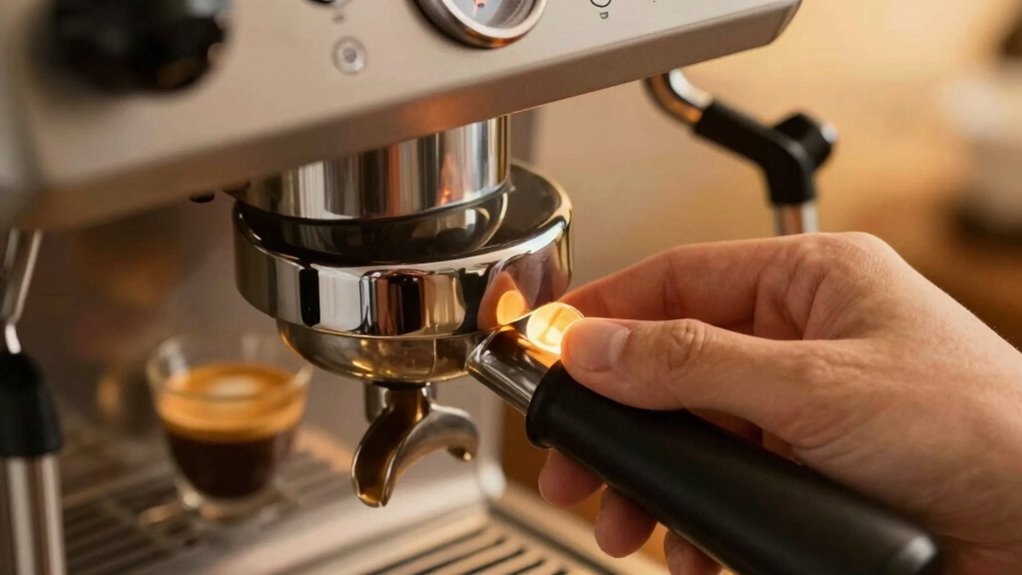
Adjusting the water temperature is a crucial step in enhancing your espresso’s flavor, as it directly influences extraction and aroma. If your water’s too hot, you’ll over-extract, resulting in bitterness and harshness; too cool, and you’ll under-extract, leading to sourness and weak flavor. To boost flavor richness, try increasing the water temperature slightly, but do so gradually—about 2°F at a time. Many espresso machines allow you to set or modify the temperature, so check your model’s specifications. Consistency is key, so keep track of your adjustments. Higher temperatures tend to extract more oils and solids, giving your espresso a fuller, richer taste. Proper temperature control is essential for achieving optimal extraction results. Remember, small tweaks can make a big difference in achieving that well-rounded, flavorful shot you’re aiming for.
How to Tamp Consistently for Better Shots
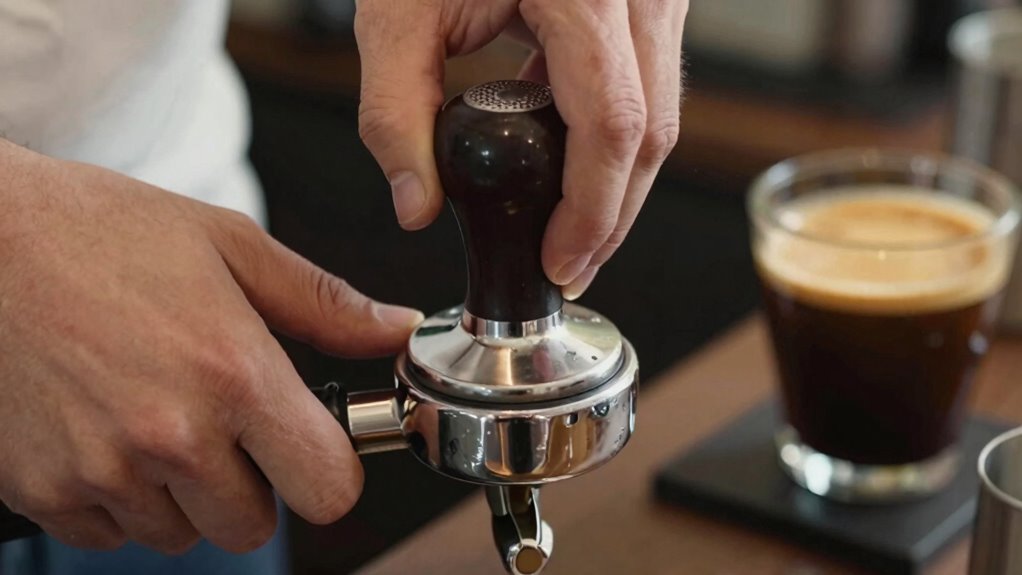
Achieving a consistently good espresso shot starts with how you tamp the coffee grounds. Your tamping pressure should be firm but even, around 30 pounds of force, to guarantee uniform extraction. Use a steady tamping technique: place the tamper flat on the puck, apply consistent pressure, and avoid twisting or uneven force. Consistency is key—practice until your tamp feels the same every time. A proper tamp creates a flat, compact coffee bed that allows water to flow evenly through the grounds, preventing channeling. Keep your tamping hand steady and focus on applying steady pressure without overthinking. Over time, developing a reliable tamping technique helps produce better shots, reducing variability caused by inconsistent tamping pressure or technique. Additionally, tamping technique plays a crucial role in ensuring your espresso extraction remains consistent and high-quality.
How to Troubleshoot Common Espresso Issues by Isolating Variables

When your espresso shot doesn’t turn out as expected, troubleshooting begins with isolating individual variables to identify the root cause. Start by adjusting one brewing variable at a time—grind size, dose, tamp pressure, or extraction time—to see how it affects the flavor profile. If your shot tastes sour, you might need a finer grind or longer extraction; if it’s bitter, try a coarser grind or shorter brew time. By methodically changing one factor, you can pinpoint which variable impacts taste and consistency. Understanding precision and automation in your brewing process can further help you achieve consistent results. Keep notes on each adjustment to track how changes affect your shot and achieve a balanced, flavorful espresso.
Final Tips for Achieving Consistent Espresso Dial-In
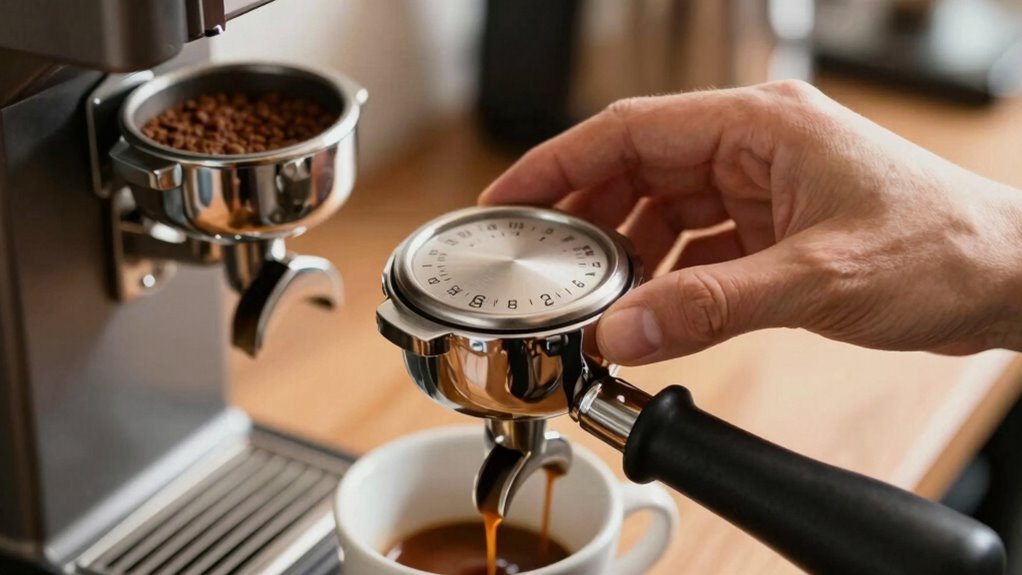
Consistent espresso dialing requires developing a systematic approach and sticking to it. First, choose quality coffee bean types suited for espresso and keep your beans fresh. Consistency in bean selection helps stabilize flavor and extraction. Next, prioritize grinder maintenance; regularly cleaning and calibrating your grinder ensures uniform grind size and prevents clogs or uneven extraction. Always measure your coffee dose precisely and record your settings and results. Adjust one variable at a time, such as grind size or tamp pressure, to see how each impacts your shot. Stay patient and methodical, avoiding quick changes. Over time, this disciplined approach builds a reliable routine, helping you dial in espresso shots with greater consistency and confidence. Incorporating smart automation tools can also assist in maintaining consistent brewing parameters and tracking adjustments for better results.
Frequently Asked Questions
How Can I Tell if My Grind Size Is Too Coarse or Too Fine?
You can tell if your grind size is too coarse or too fine by paying attention to tactile feedback and visual cues. If your shot extracts too quickly with weak flavor, the grind’s likely too coarse. If it takes too long and tastes bitter, it’s probably too fine. Feel the grind’s texture for consistency, and observe the pour rate and crema. Adjust accordingly to find the perfect balance for a rich, balanced espresso.
What Signs Indicate I Should Increase or Decrease My Coffee Dose?
Like tuning a fine instrument, you should increase your dose if your brew time is too short, leading to a weak shot, and decrease it if the shot takes too long, risking over-extraction. Watch for signs like overly fast or slow flow and adjust tamping pressure accordingly. Consistent dose adjustments help you find the perfect balance, ensuring ideal flavor and extraction with each shot.
How Does Ambient Room Temperature Affect Espresso Extraction?
Ambient temperature affects your espresso extraction by influencing the water temperature and overall consistency. When the room is warmer, water heats up faster, potentially leading to over-extraction and inconsistent results. Cooler ambient temperatures may cause under-extraction due to slower water heating. To maintain extraction consistency, you should monitor your environment, adjust your machine’s temperature settings if needed, and keep your equipment in a stable, controlled temperature space.
Can Changing Water Mineral Content Impact My Espresso Flavor?
Think of your espresso as a symphony, where water chemistry and mineral effects are the instruments shaping the melody. Changing water mineral content can substantially influence flavor, clarity, and body. Harder minerals might add complexity, while softer water emphasizes brightness. By adjusting mineral levels, you tune your brew’s character, creating harmony or dissonance. Remember, small changes in water chemistry can transform your espresso into a masterpiece or a muddle.
How Often Should I Calibrate My Grinder for Consistent Results?
You should calibrate your grinder regularly, ideally every few weeks or whenever you notice changes in dosing consistency. Consistent grinder maintenance helps keep your grind size uniform, ensuring stable extraction. If your shots become inconsistent or taste off, it’s time for recalibration. Regularly checking and adjusting your grinder helps maintain dosing consistency, giving you more control over your espresso’s flavor and quality.
Conclusion
Remember, refining your espresso is all about patience and precision. Focus on one fix at a time, tweaking grind, dose, or temperature with care. Consistency is key—calmly cornering each variable helps you craft perfect shots. So stay steady, stay systematic, and savor the sweet success of a sensational sip. With mindful moves and methodical tweaks, you’ll master the art of espresso in no time. Happy brewing!
Halloween Picks
halloween
As an affiliate, we earn on qualifying purchases.