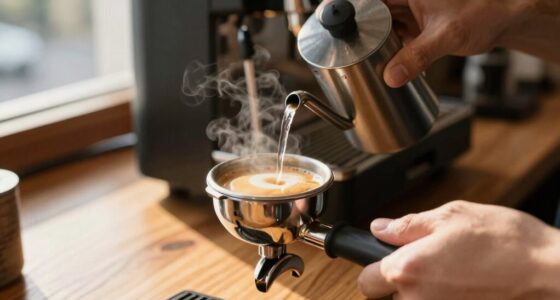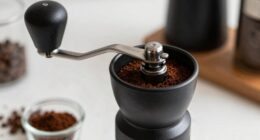
To dial in espresso for smaller baskets without guessing, start with a medium-fine grind similar to table salt. Use consistent tamp pressure around 30 pounds, leveling the coffee bed gently afterward. Watch your shot flow; aim for 25-30 seconds with steady, even flow that speeds up gradually. Make small, incremental adjustments to grind size and tamping pressure based on shot timing and flow. Continued focus on these precise tweaks will help you master your shot; keep exploring these techniques to refine your process.
Key Takeaways
- Start with a medium-fine grind and make small, incremental adjustments based on shot timing and flow.
- Tamp consistently with about 30 pounds of pressure, ensuring a level, even coffee bed.
- Observe shot flow: aim for a steady, slow start with a total time of 25-30 seconds.
- Keep detailed notes of each adjustment to replicate successful settings precisely.
- Wipe excess grounds before locking the portafilter to maintain a tight seal and consistent extraction.

Dialing in espresso can seem intimidating at first, but with a systematic approach, it becomes much easier to achieve the perfect shot. When working with smaller baskets, precision is essential because they hold less coffee, making the process more sensitive to small adjustments. Your first step is to focus on your grind adjustment, which is the foundation of a good extraction. Start with a medium-fine grind, similar to table salt, and then prepare to fine-tune from there. If your shot pulls too quickly, and the espresso runs through in under 25 seconds, you’ll want to make your grind slightly finer. Conversely, if it takes longer than 30 seconds, you should coarsen the grind a bit. Small changes are key here, especially with smaller baskets, because they react quickly to adjustments. Proper grind size directly influences extraction efficiency and overall shot quality. Tamping techniques also play a fundamental role in dialing in your espresso. Consistent tamping ensures even extraction, which is essential for smaller baskets where uneven pressure can lead to channeling or under-extraction. Use a tamper with a firm, steady motion, applying about 30 pounds of pressure, then level the coffee bed with a gentle twist to ensure an even surface. A consistent tamp creates uniform resistance during extraction, which helps you get more predictable results. Remember, it’s not just about tamping hard but about applying consistent pressure each time. Once you’ve tamped, wipe off any excess coffee grounds from the rim of the portafilter to guarantee a tight seal when locking it into the machine. With the grind adjustment and tamping techniques dialed in, your next step is to observe the shot. Watch for a steady, even flow that starts slow and then speeds up slightly, ideally finishing within 25 to 30 seconds. If the flow is too fast or too slow, make small adjustments to your grind and tamping pressure and try again. It’s a process of incremental tweaks rather than drastic changes. Keep notes on your adjustments and results so you can replicate the successful settings. Remember, patience and consistency are your best tools here. Over time, these small, deliberate adjustments will help you dial in your espresso shot more efficiently, especially when working with smaller baskets where precision truly makes the difference.
Frequently Asked Questions
Can I Use the Same Settings for Different Coffee Beans?
You shouldn’t use the same settings for different coffee beans because freshness and roast level vary. Fresh beans often require different grind sizes and extraction times to achieve consistent results. By adjusting your grind and dose, you can improve extraction consistency. Each coffee bean batch is unique, so it’s best to dial in your machine each time, ensuring ideal flavor and shot quality without guessing.
How Does Ambient Temperature Affect Dialing In?
You might think ambient temperature doesn’t matter, but it actually plays a big role in dialing in. Warmer air can cause temperature fluctuations, affecting extraction consistency. Temperature stability is key, and humidity impact can alter grind size and dose. When the environment changes, adjust your grind and dose accordingly to maintain steady espresso shots. Embrace the irony—climate control isn’t just for comfort, it’s essential for perfect espresso.
What’s the Best Way to Measure Dose Precisely?
You should use precise weighing techniques with a digital scale to measure your dose accurately. Invest in reliable dosing tools like a calibrated scoop or a dose funnel to guarantee consistency. Always tare your scale before weighing, and handle your coffee grounds carefully to avoid losing any. Regularly check your equipment for accuracy, and record your doses to refine your process for smaller baskets. This ensures consistency and perfect extraction every time.
Should I Adjust Grind Size Between Shots?
Yes, you should adjust grind size between shots to maintain ideal extraction. When you notice the shot pulling too fast or too slow, tweaking the grind consistency helps achieve the right flow. Keep tamp pressure consistent to guarantee even extraction, and make small grind adjustments rather than large changes. This approach helps you dial in your espresso, especially with smaller baskets, without guesswork.
How Often Should I Recalibrate My Grinder?
Think of your grinder like a trusted compass, guiding your shot to perfection. You should recalibrate your grinder whenever you notice inconsistencies in dose or extraction, typically every few weeks or when changing beans. Regular grinder maintenance keeps things smooth, ensuring dose consistency and flavor accuracy. By staying attentive to your machine’s signals, you prevent small issues from becoming big obstacles, ultimately ensuring every shot hits the mark.
Conclusion
Mastering smaller baskets takes patience and precision, but with these steps, you’ll find your perfect shot without guesswork. Think of it as tuning a finely crafted instrument—each adjustment brings harmony to your espresso. Don’t be discouraged by initial misfires; every attempt is a step closer to that rich, balanced crema you crave. Keep refining your process, and soon, pouring beautiful, consistent espresso will feel as natural as breathing. Your perfect shot is just a few tweaks away.