To dial in for straight espresso, focus on achieving a fine grind and a 25-30 second extraction to highlight nuanced flavors. If your shot pulls too fast, coarsen the grind; if too slow, make it finer. For milk drinks, use a slightly coarser grind to prevent over-extraction and bitterness, maintaining similar extraction times. Consistent adjustments and monitoring guarantee ideal flavor, and if you keep experimenting, you’ll discover how to perfect each drink type.

Get kitchen gear delivered free with Prime
- Fast, free delivery on millions of items
- Prime Video, Amazon Music and more included
- Member-only deals all year
Key Takeaways
- Use a finer grind and aim for 25-30 seconds extraction for straight espresso; slightly coarser for milk drinks to prevent over-extraction.
- Adjust grind size based on extraction time: finer if shot pulls too fast, coarser if too slow.
- Monitor brew ratio closely; consistent ratios ensure balanced flavor in both straight and milk-based drinks.
- For milk drinks, slightly under-extract to avoid bitterness, maintaining a smoother, more balanced flavor profile.
- Fine-tune extraction parameters considering milk’s dilution effect to optimize flavor clarity and avoid over-extraction.
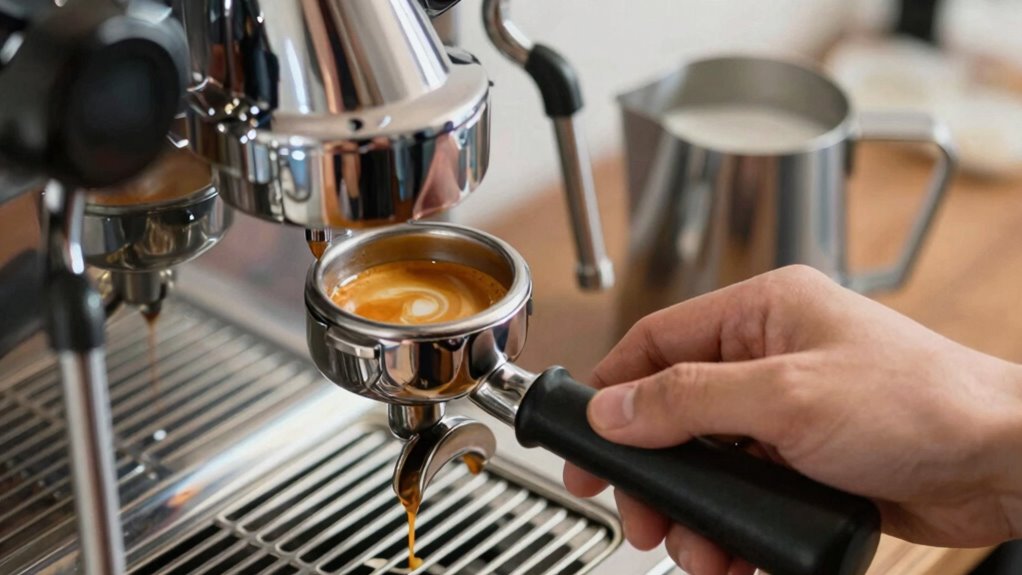
Getting your espresso shot just right requires different dialing-in adjustments depending on whether you’re aiming for a pure shot or a milk-based drink. The key to mastering this process is understanding how grind size adjustments and extraction timing influence the final result. When you’re preparing straight espresso, your goal is to extract a concentrated, balanced shot that highlights the coffee’s nuanced flavors. To do this, you need to fine-tune your grind size so the coffee grounds are just right—neither too coarse nor too fine. If your grind is too coarse, the water flows through too quickly, resulting in under-extraction that tastes sour and weak. If it’s too fine, the water struggles to pass through, leading to over-extraction that tastes bitter and harsh. Once you’ve dialed in the grind size, focus on extraction timing. For a pure shot, aim for an extraction time around 25 to 30 seconds. If the shot pulls too fast, you might need to make your grind finer; if it drags on too long, coarsen the grind slightly. This balance ensures you extract the coffee’s full spectrum of flavors without overdoing the bitterness or underwhelming with sour notes. Additionally, understanding the importance of brew ratio can further refine your results. Monitoring and adjusting extraction parameters can significantly improve your espresso quality and flavor clarity.
When you’re shifting gears to milk drinks, the process changes slightly. Milk-based beverages often benefit from a slightly different extraction profile, so you can afford to be a little more forgiving with your grind size. You might opt for a grind that’s slightly coarser than your straight espresso setting, which helps prevent over-extraction and produces a smoother, more balanced base for your milk. Extraction timing here should be similar—aim for about 25 to 30 seconds—but you may find you need a slightly longer or shorter pull depending on your taste preferences and the type of milk used. The key is consistency; once you find the right grind size and timing for milk drinks, stick with it, so your shots remain uniform. It’s also helpful to understand how different extraction parameters can impact flavor nuances, especially when combining espresso with milk. Keep in mind that milk also dilutes the espresso’s intensity, so a slightly under-extracted shot might be preferable to avoid overly bitter flavors that can become more pronounced once combined with milk.
espresso grinder for precise grind size
As an affiliate, we earn on qualifying purchases.
As an affiliate, we earn on qualifying purchases.
Frequently Asked Questions
How Does Altitude Affect Espresso Dialing?
Altitude affects espresso dialing because lower air pressure at higher elevations causes beans to extract faster, leading you to make altitude adjustments. You might need to grind slightly coarser and reduce brew time to prevent over-extraction. These changes also influence flavor profile, often making it brighter or more acidic. By adjusting your grind size and extraction time, you can maintain balanced flavor and consistency despite altitude-related flavor profile changes.
What Grinder Settings Are Best for Different Beans?
You should adjust your grinder settings based on the bean freshness and desired grind consistency. Fresher beans usually need a slightly coarser grind, while older beans may require a finer setting. Keep the grind consistent to guarantee uniform extraction, which enhances flavor. Experiment with small adjustments until you find the perfect balance for each bean type, and always grind just before brewing to preserve freshness and flavor.
How Often Should I Recalibrate My Grinder?
Like a trusty steed in a tavern tale, your grinder needs regular care. You should recalibrate it every two weeks or after changing beans, ensuring grinder maintenance and bean freshness stay ideal. This keeps your grind consistent, avoiding stale flavors or uneven extraction. Pay attention to your espresso’s taste, and if it shifts or becomes inconsistent, it’s time for a quick recalibration. Regular checks keep your coffee game strong.
Does Water Quality Impact Espresso Extraction?
Yes, water quality substantially impacts espresso extraction. Poor water can cause over or under-extraction, affecting flavor and crema. You should use water with proper filtration to remove impurities and reduce mineral content that can clog equipment. Ideally, aim for water with balanced mineral levels, like soft or filtered water, to guarantee consistent extraction, better taste, and to prolong your espresso machine’s lifespan.
Can Equipment Age Influence Dialing Accuracy?
Yes, equipment age can influence your dialing accuracy. As your machine ages, parts wear, and calibration techniques may become less effective, leading to inconsistent extraction. Regular equipment maintenance helps maintain peak performance, ensuring your grinder and espresso machine stay consistent. You should routinely calibrate your equipment to account for age-related changes, which allows you to fine-tune grind size, dose, and tamp pressure for perfect espresso every time.
As an affiliate, we earn on qualifying purchases.
Conclusion
Now that you’ve tuned your grinder and adjusted your tamping, imagine pouring that perfect shot—creamy, rich, and steaming. Whether it’s straight espresso or a milk-based drink, your beans dance to your mastery, creating a symphony of aroma and flavor. With each pull, you craft a moment of artistry in a cup, a warm embrace that awakens the senses. Keep experimenting, keep tasting, and let your barista spirit flow effortlessly into every sip.
As an affiliate, we earn on qualifying purchases.
As an affiliate, we earn on qualifying purchases.
Halloween Picks
halloween
As an affiliate, we earn on qualifying purchases.