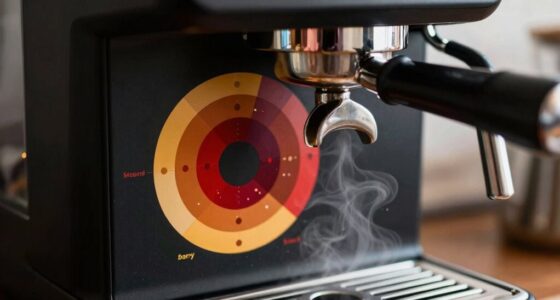
Tiny temperature swings can drastically change your espresso’s flavor because even small variations affect how flavors and aromas extract from the coffee grounds. Slight temperature increases can cause over-extraction, leading to bitter or burnt notes, while cooler shifts result in under-extraction, making your espresso sour or weak. Because espresso relies on precise temperature control, tiny fluctuations have a bigger impact than you might expect—and understanding these effects can help you improve every shot you pull.

Get kitchen gear delivered free with Prime
- Fast, free delivery on millions of items
- Prime Video, Amazon Music and more included
- Member-only deals all year
Key Takeaways
- Small temperature shifts drastically alter solubility, affecting flavor extraction and resulting in noticeable taste differences.
- Espresso extraction is highly sensitive; minor temperature changes can over or under-extract, impacting bitterness or sourness.
- Precise temperature control is crucial, as even slight fluctuations disrupt the delicate balance of flavors.
- Inconsistent machine calibration leads to subtle temperature variations that significantly influence espresso quality.
- Proper temperature stability enhances nuanced flavors, making tiny swings more impactful than expected in the final taste.
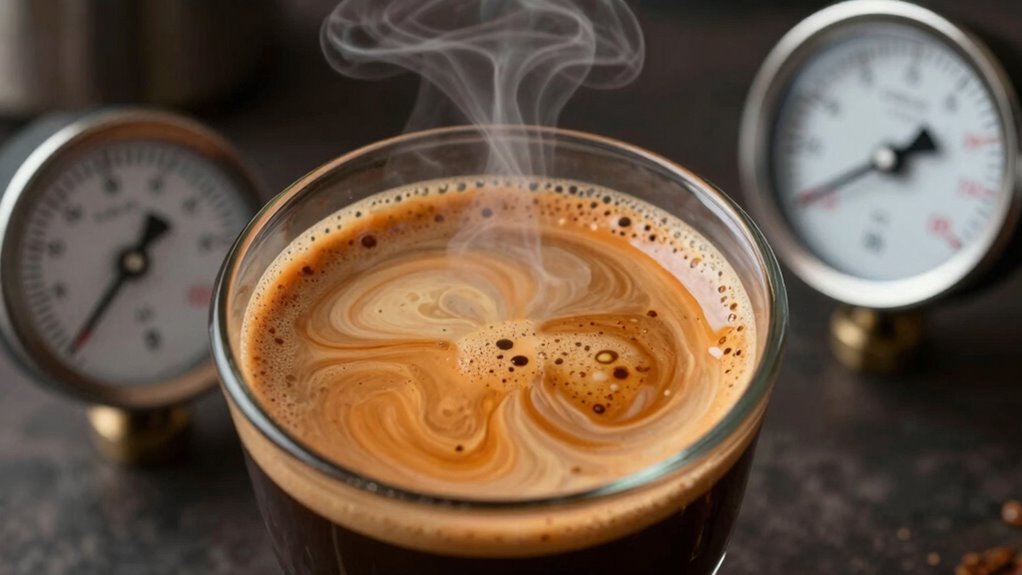
Have you ever wondered how tiny temperature swings can impact your espresso? Even the slightest fluctuation in temperature can significantly influence the flavor extraction process, which is crucial for achieving that perfect shot. When your machine isn’t precisely calibrated, or if the water temperature drifts just a few degrees, it can throw off the delicate balance needed to bring out the best flavors in your coffee beans. This is because espresso extraction is highly sensitive to temperature, and small changes can alter the chemical reactions that develop the drink’s aroma and taste.
Tiny temperature changes can dramatically affect your espresso’s flavor and aroma.
The minute variations in water temperature affect how solubles dissolve from the coffee grounds. If the water is too hot, you risk over-extraction, resulting in a bitter, burnt flavor. Conversely, if it’s too cool, under-extraction occurs, leading to a sour or weak espresso. These tiny temperature differences might seem trivial, but they drastically change the flavor profile you experience. That’s why consistent machine calibration becomes essential — it ensures your espresso machine maintains a stable temperature throughout each shot. Without proper calibration, your machine might fluctuate, pulling inconsistent shots that taste different every time, frustrating your efforts to craft a reliable brew.
Understanding the importance of machine calibration helps you see how sensitive espresso is to temperature changes. It’s not just about setting the right temperature once; it’s about maintaining that setting precisely. Regular calibration checks allow you to detect and correct any deviations, ensuring each shot is as close to perfect as possible. Small adjustments in calibration can have a huge impact on flavor extraction, enhancing or diminishing the coffee’s nuanced notes. If your machine isn’t calibrated well, even minor temperature swings can cause your espresso to taste off, despite using high-quality beans or the perfect grind. Paying attention to temperature stability is essential for consistent results. Additionally, using precision temperature controls can help minimize fluctuations and improve your overall brewing consistency. Proper maintenance and calibration practices are critical for preserving the delicate balance needed for optimal extraction.
Being aware of temperature fluctuations allows you to troubleshoot brewing issues more effectively and avoid common pitfalls that compromise flavor. Recognizing how machine calibration directly influences extraction consistency can save you time and coffee. Ultimately, mastering control over your machine’s temperature stability lets you unlock the full potential of your coffee. By paying close attention to calibration and keeping an eye on temperature fluctuations, you’ll notice your espresso tasting more consistent and vibrant. It’s a subtle yet powerful way to improve your brewing, ensuring that every shot captures the intended flavors. Tiny temperature swings might seem insignificant, but they wield more influence over your espresso than you’d expect — making precision and calibration your best tools for a truly exceptional cup.
espresso machine temperature calibration tool
As an affiliate, we earn on qualifying purchases.
As an affiliate, we earn on qualifying purchases.
Frequently Asked Questions
How Do Temperature Swings Affect Different Espresso Bean Varieties?
Temperature swings impact different espresso bean varieties by affecting bean preservation and roast consistency. You’ll notice that some beans are more sensitive to temperature fluctuations, which can cause uneven roasting and flavor shifts. When temperature varies, it disrupts the preservation of delicate aromas and oils, leading to inconsistent extraction. To maintain ideal flavor, you need to control temperature carefully, ensuring roast consistency and preserving the unique qualities of each bean variety.
Can Minor Temperature Changes Impact Espresso Flavor Over Time?
Minor temperature changes act like subtle brushstrokes on your espresso canvas, quietly shifting its flavor profile over time. These tiny shifts can disrupt flavor consistency and compromise extraction precision, making your brew taste different with each shot. Even the smallest fluctuation can turn a smooth, balanced espresso into a complex maze of unexpected flavors. Staying vigilant with temperature regulation guarantees your brew remains reliably delicious, preserving the artistry behind each perfect cup.
Are Some Espresso Machines More Sensitive to Temperature Fluctuations?
Yes, some espresso machines are more sensitive to temperature fluctuations. Machines with poor calibration or limited thermal stability tend to react more to tiny temperature swings, affecting espresso quality. You’ll notice inconsistent extraction and flavor shifts. High-end machines offer better thermal stability, maintaining consistent temperature. Ensuring proper calibration and choosing a machine with solid thermal stability help you minimize sensitivity, resulting in more stable, flavorful espresso shots every time.
How Can Baristas Detect Subtle Temperature Variations During Brewing?
You can sense subtle temperature shifts by paying close attention to your espresso’s aroma and extraction time. Keep an eye on water mineral content, which influences heat stability, and regularly calibrate your grinder to guarantee consistent grind size. Small changes in aroma or extraction flow might hint at temperature variations. Developing these sensitivities helps you fine-tune the process, ensuring each shot maintains ideal temperature and flavor balance.
What Role Does Ambient Temperature Play in Espresso Temperature Stability?
Ambient temperature plays a significant role in espresso temperature stability because it influences both ambient humidity and cup temperature. When the environment is warmer, your espresso loses heat more quickly, making it harder to maintain ideal brewing temperatures. Conversely, cooler surroundings help keep the cup and espresso hotter longer. By controlling ambient humidity and ensuring cups are preheated, you can minimize temperature fluctuations, resulting in more consistent espresso shots.
As an affiliate, we earn on qualifying purchases.
Conclusion
You might think small temperature shifts are insignificant, but they can dramatically alter your espresso’s flavor—like a tiny ripple in a vast ocean. Just as a minor gust can change the course of a boat, these subtle changes can turn a perfect shot into a bitter disappointment. So, pay attention to those minute temperature swings; they hold the power to make or break your brew, proving that in espresso, sometimes less really is more—and sometimes, just a little less can change everything.
coffee machine temperature stabilizer
As an affiliate, we earn on qualifying purchases.
As an affiliate, we earn on qualifying purchases.
espresso shot temperature controller
As an affiliate, we earn on qualifying purchases.
As an affiliate, we earn on qualifying purchases.
Halloween Picks
halloween
As an affiliate, we earn on qualifying purchases.