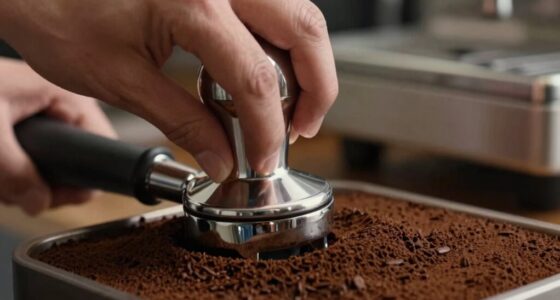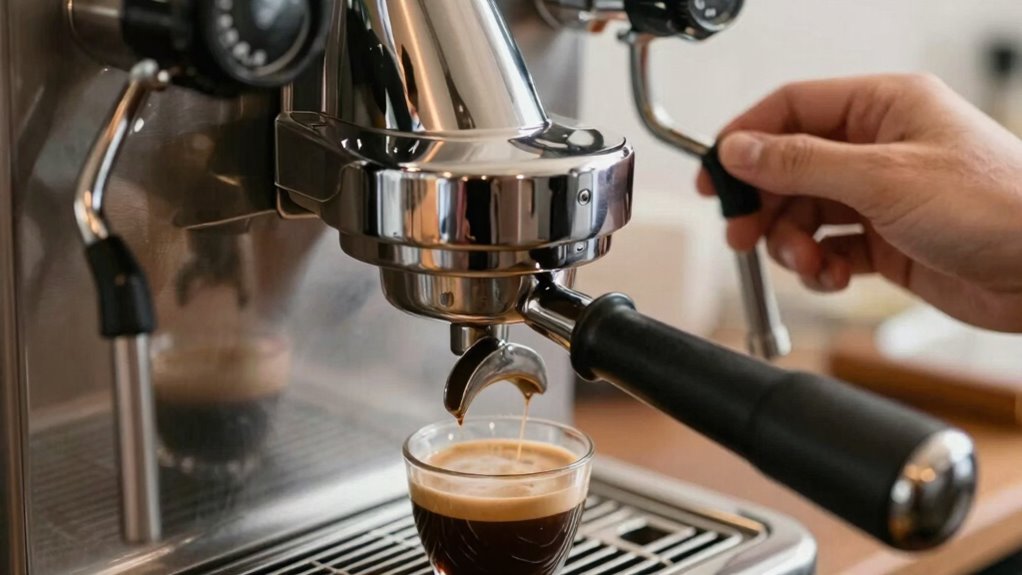

Adjusting the dose is often smarter than changing grind size because it’s more predictable, easier to control, and less sensitive to variables. When you tweak the dose, you directly influence extraction time, flavor, and strength with tangible results. It also helps avoid constant recalibration of your grinder, saving time and effort. If you want to fine-tune your espresso more effectively, understanding how dose impacts extraction can make a big difference—all the details follow next.

Get kitchen gear delivered free with Prime
- Fast, free delivery on millions of items
- Prime Video, Amazon Music and more included
- Member-only deals all year
Key Takeaways
- Dose adjustments are more predictable and easier to control than grind size, leading to consistent results.
- Changing the dose directly influences extraction variables without requiring frequent recalibration.
- Dose modifications provide measurable, tangible changes that simplify troubleshooting and flavor tuning.
- Grind size is more sensitive and less stable, making dose a more reliable parameter for adjustments.
- Focusing on dose allows for better understanding of equipment behavior and bean characteristics.
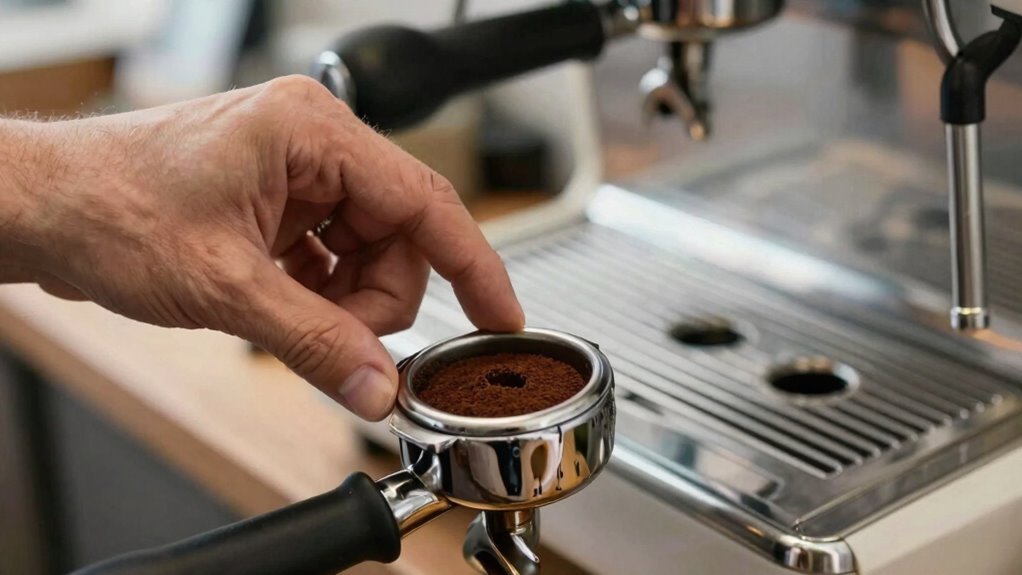
When it comes to dialing in your perfect espresso, adjusting the dose often proves more effective than simply changing the grind size. The dose—the amount of coffee you pack into your portafilter—directly influences the extraction process. By varying the dose, you can fine-tune how water interacts with the coffee grounds, impacting flavor, strength, and overall shot quality. Instead of rushing to tweak your grind size every time your espresso isn’t quite right, consider starting with a dose adjustment. This approach can lead to more predictable results because it directly affects the coffee bed’s density and surface area, which are crucial factors in extraction techniques.
Your choice of coffee bean selection also plays an essential role here. Different beans have varying densities, moisture contents, and roast levels, all of which influence how they respond to dose adjustments. Heavier or denser beans may require a slightly different dose to achieve ideal extraction, while lighter or more porous beans might need less. When you adjust the dose, you’re effectively controlling the amount of coffee solids that water must penetrate, which can help you extract more nuanced flavors and avoid over- or under-extraction.
Coffee bean density, moisture, and roast level all influence how dose adjustments affect extraction quality.
Instead of constantly changing the grind size—a variable that can be tricky to dial in perfectly—try focusing on the dose first. Increasing the dose generally results in a longer extraction time, which can deepen flavor complexity, while decreasing it can produce a brighter, lighter shot. This direct control over extraction variables often simplifies troubleshooting, especially when paired with a good understanding of your coffee bean selection. For instance, if you find your espresso too bitter or over-extracted, reducing the dose might help, rather than making more drastic adjustments to your grind size. Conversely, if your shot lacks body or intensity, increasing the dose could bring more richness without over-complicating your grind settings.
Furthermore, precise dose adjustments can enhance your understanding of your equipment’s behavior. Small changes in dose can reveal how your machine’s temperature stability and pressure profiles influence extraction, giving you a clearer picture of what tweaks are necessary. Additionally, considering the coffee bean density in your adjustments can further refine your results. Recognizing how the density impacts extraction allows you to tailor your dosing technique to different beans more effectively. Over time, this approach cultivates more consistent results because it’s rooted in tangible, measurable changes rather than trial-and-error with grind size, which can be more sensitive and less predictable.
As an affiliate, we earn on qualifying purchases.
Frequently Asked Questions
How Do Dose Changes Affect Overall Coffee Flavor?
When you adjust the dose, you directly influence the coffee’s flavor balance and consistency. Increasing the dose often results in a richer, fuller flavor, while decreasing it can highlight brighter, more delicate notes. These changes help maintain coffee consistency across brews, making your cup more predictable and enjoyable. Dose adjustments allow you to fine-tune flavor without drastically altering grind size, giving you better control over your coffee’s ultimate taste.
Are Dose Adjustments Easier to Replicate Than Grind Changes?
Yes, dose adjustments are easier to replicate than grind changes. With consistent dosing, you maintain brewing consistency and can quickly fine-tune your coffee without recalibrating your equipment. Adjusting the dose involves simple measurements, making it straightforward to replicate your results. In contrast, grind adjustments can vary due to burr wear or machine calibration, making them less predictable. So, sticking to dose tweaks helps you achieve more reliable, repeatable coffee every time.
Can Dose Modifications Compensate for Inconsistent Bean Quality?
Yes, dose modifications can help compensate for bean variability and maintain dosage consistency. When beans vary in roast level or moisture content, adjusting the dose allows you to tweak the amount of coffee used, ensuring a balanced extraction. This flexibility helps you adapt to inconsistent bean quality, keeping your brew consistent in flavor and strength. By focusing on dosage, you can better manage the effects of bean variability on your espresso.
What Tools Are Necessary to Accurately Adjust Doses?
Think of adjusting your coffee dose like tuning a musical instrument—you need precision to hit the right note. To do this, you’ll need measurement tools like a digital scale for accuracy and dosing devices that help control the amount of coffee precisely. These tools act as your tuning pegs, ensuring each dose is spot-on, allowing you to fine-tune your brew for consistent, high-quality results every time.
How Do Dose Changes Impact Extraction Time?
When you change your dose, it directly influences extraction time, affecting coffee aroma and brewing temperature. Increasing the dose can lengthen extraction, intensifying aroma but risking over-extraction if not monitored. Conversely, decreasing the dose shortens extraction, possibly resulting in underdeveloped flavors. Adjusting dose allows you to fine-tune brewing temperature and aroma development, giving you better control over your brew’s intensity and flavor profile without the complexities of grind adjustments.
As an affiliate, we earn on qualifying purchases.
Conclusion
So next time your brew isn’t quite right, remember—adjusting your dose can be the secret weapon. It’s a simple tweak that often yields bigger, more consistent results than grinding finer or coarser. Think of dose changes as the conductor of your coffee symphony, guiding every note to harmony. Why chase fleeting fixes when the answer’s in the balance? Embrace the power of dose, and your perfect cup is just a dial away.
As an affiliate, we earn on qualifying purchases.
As an affiliate, we earn on qualifying purchases.
Halloween Picks
halloween
As an affiliate, we earn on qualifying purchases.