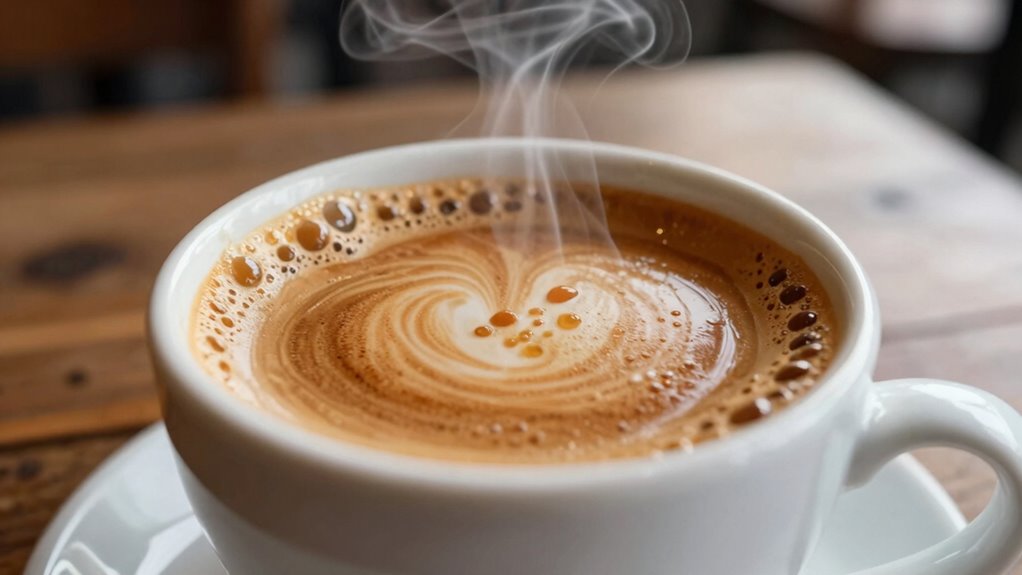

When your coffee is under-extracted, it can taste overly sweet because the water hasn’t dissolved enough of the beans’ complex flavors, oils, and sugars. This missing balance hides richer, more nuanced notes, making the brew seem brighter and sweeter than it truly is. Instead of genuine sweetness, you’re often left with flat, sour, or bitter elements. To uncover the true flavor profile, you’ll want to explore what causes under-extraction and how to fix it.

Get kitchen gear delivered free with Prime
- Fast, free delivery on millions of items
- Prime Video, Amazon Music and more included
- Member-only deals all year
Key Takeaways
- Under-extraction leaves behind unextracted soluble compounds, which can create a perception of sweetness despite lacking true flavor complexity.
- The absence of acids and oils from under-extraction masks the natural bitterness and brightness, making the cup taste deceptively sweet.
- Rushed brewing processes prevent full flavor development, causing a flat, overly smooth taste that can be mistaken for balanced sweetness.
- Under-extracted coffee often has missing sugars and soluble compounds, leading to a perceived sweetness that does not reflect true flavor richness.
- Brightness and acidity may be underdeveloped in under-extracted coffee, causing sweetness to appear more prominent than the actual flavor profile.
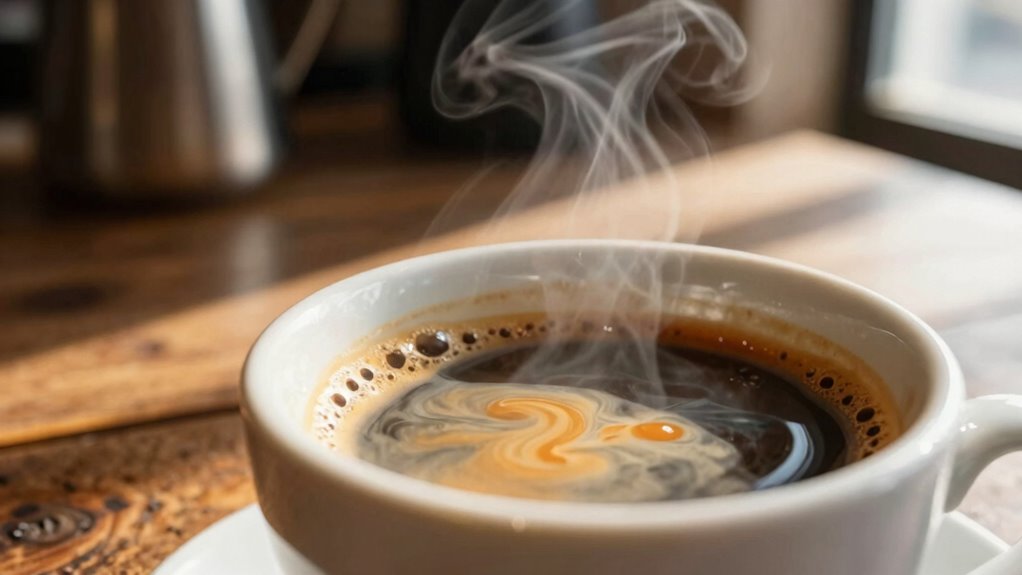
When coffee is under-extracted, it often tastes sour, flat, or overly acidic, masking the natural sweetness of the beans. This flavor imbalance can be tricky because it makes the coffee seem more complex than it really is, but in reality, it’s a sign that something’s missing in your brewing process. Under-extraction occurs when water doesn’t fully dissolve the soluble compounds in coffee grounds, leaving behind the more bitter or sour elements and skipping over the sweeter, more nuanced flavors. The result is a cup that can seem surprisingly palatable, even when it’s technically flawed. You might notice that the coffee’s perceived sweetness is more prominent, but it’s often misleading because it’s just the absence of other flavors, not genuine sweetness.
Under-extraction makes coffee taste sour and flat, masking true sweetness and hiding complex flavors.
To understand why this happens, you need to look at your brewing techniques. Factors like grind size, brewing time, water temperature, and agitation all influence extraction. For example, using a grind that’s too coarse lets water flow through too quickly, reducing contact time with the grounds. This shortens extraction and prevents the coffee from fully developing its sweetness. Similarly, brewing at too low a temperature can hinder the solubility of desirable compounds, leading to an under-extracted, sour cup. If you’re rushing the process or not allowing enough contact time, the water doesn’t have the opportunity to extract the full spectrum of flavors, resulting in that flavor imbalance. Recognizing the signs of proper extraction can help you fine-tune your brewing process for better results.
Sometimes, an overly sweet or flat taste might mask underlying issues like improper brew balance, which can be achieved through precise adjustments. You might think that a sour, flat taste signals a good thing—after all, it highlights the coffee’s brightness. But in reality, it’s a sign that you’re missing out on the complex sugars, aromatic oils, and other soluble compounds that create a balanced, sweet profile. When you adjust your brewing techniques—such as grinding finer, increasing brew time, or maintaining optimal water temperature—you allow the water to extract those missing elements. This results in a more harmonious flavor profile, where sweetness can truly shine without being overshadowed by excessive acidity or bitterness. Understanding how extraction levels influence flavor can help you better diagnose and fix brewing issues. In the end, under-extraction can hide behind sweetness because it masks the true complexity of the beans. It’s like a veil that covers the delicate balance of flavors, making you think the coffee is sweet when, in fact, it’s just lack of proper extraction that’s producing that impression.
A thorough understanding of the extraction process and how different variables interact can guide you in achieving a balanced, flavorful cup. By refining your brewing techniques, you can correct this imbalance, unlock the genuine sweetness, and enjoy a richer, more nuanced cup of coffee.
coffee grind size for optimal extraction
As an affiliate, we earn on qualifying purchases.
As an affiliate, we earn on qualifying purchases.
Frequently Asked Questions
How Does Grind Size Affect Under-Extraction and Sweetness?
Your grind size greatly impacts under-extraction and sweetness, affecting flavor balance and extraction consistency. When you use a grind that’s too fine, it can lead to over-extraction, making the coffee bitter, while a coarse grind causes under-extraction, resulting in overly sweet, bland flavors. Adjusting grind size helps you control extraction, ensuring a balanced flavor profile and consistent results. Proper grind size is key to revealing the full potential of your coffee’s sweetness without hiding under-extracted harshness.
Can Water Temperature Influence Under-Extraction Hiding Sweetness?
Around 80°C (176°F), water temperature greatly influences under-extraction, often hiding flavor imbalance and affecting brewing consistency. If water’s too hot, it over-extracts, revealing bitterness; too cold, it under-extracts, hiding sweetness. This temperature sweet spot guarantees proper extraction, balancing flavors. By controlling temperature, you prevent under-extraction from masking underlying flavors, helping you achieve a more consistent brew with the correct flavor profile.
What Role Does Brew Time Play in Under-Extraction?
Brew time directly impacts extraction balance and flavor clarity. If you brew too quickly, you risk under-extraction, leading to dull flavors and hidden sweetness. Conversely, over-brewing can cause over-extraction, resulting in bitterness. Finding the right brew time guarantees ideal extraction balance, highlighting the coffee’s nuanced flavors and maintaining clarity. By carefully timing your brew, you allow the full spectrum of flavors to emerge without masking or overpowering notes.
Are Certain Coffee Beans More Prone to Hiding Under-Extraction?
Some coffee beans, especially those from specific origins like Ethiopia or Yemen, are more prone to hiding under-extraction. Studies show that beans with complex flavor profiles can mask bitterness, making under-extraction harder to detect visually. You’ll notice that these beans often produce a sweeter, more balanced cup, but subtle flavor imbalances could still hide beneath that sweetness. Paying attention to flavor balance helps you identify under-extraction in these beans.
How Can I Tell if Sweetness Is Hiding Under-Extraction?
You can tell if sweetness is hiding under-extraction by paying attention to flavor balance and aroma nuances. If your coffee tastes overly sweet but lacks depth or complexity, under-extraction might be at play. Notice if the aroma is muted or one-dimensional, which can also signal incomplete extraction. Experiment with grind size and brewing time, aiming for a balanced flavor profile that reveals more nuanced aromas beyond just sweetness.
As an affiliate, we earn on qualifying purchases.
Conclusion
Remember, under-extraction can disguise itself as sweetness, much like a mask hiding true flavor. When you taste a sweet note in your coffee, don’t assume it signals perfection; it might just be the surface of an under-extracted brew. By paying close attention and adjusting your grind and brew time, you’ll uncover the hidden depths beneath that sweet facade. Like peeling back layers of an onion, revealing the real essence makes every sip richer and more satisfying.
As an affiliate, we earn on qualifying purchases.
As an affiliate, we earn on qualifying purchases.
Halloween Picks
halloween
As an affiliate, we earn on qualifying purchases.