
To appreciate light roast espresso, you need a different mindset that focuses on clarity, nuance, and delicate flavors rather than boldness. Unlike dark roasts, light roasts highlight the bean’s original characteristics, requiring you to adjust your brewing technique—finer grind, precise timing, and careful temperature control. Instead of expecting a punchy, intense shot, embrace the layered complexity and subtle brightness. If you keep exploring, you’ll discover how to access these vibrant flavors and elevate your espresso experience.

Get kitchen gear delivered free with Prime
- Fast, free delivery on millions of items
- Prime Video, Amazon Music and more included
- Member-only deals all year
Key Takeaways
- Light roast espresso emphasizes delicate, nuanced flavors requiring patience and a focus on clarity rather than boldness.
- Different brewing adjustments, like finer grind and precise extraction, are essential for optimal flavor development.
- Embracing subtlety and complexity shifts the mindset from seeking intensity to appreciating layered tastes.
- Freshness is crucial to unlocking the bright, vibrant characteristics unique to light roasts.
- Viewing light roast espresso as a discovery process fosters curiosity and precision, enhancing the overall experience.

If you’re used to dark roasts, switching to a light roast espresso can challenge your perception of flavor and strength. Dark roasts tend to be bold, robust, and often have a smoky or charred quality that’s immediately recognizable. Light roasts, however, offer a different experience—more nuanced, vibrant, and complex. You’ll find that their flavor profile highlights brighter, more delicate notes like citrus, floral accents, or even hints of fruit. This shift isn’t just about taste; it also requires a change in your brewing techniques and mindset to truly appreciate what a light roast espresso can deliver.
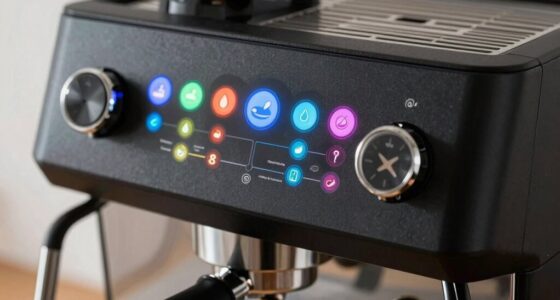
Because light roasts preserve more of the bean’s original characteristics, the way you approach brewing must adapt. Traditional espresso methods suited for dark roasts often rely on longer extraction times or higher pressure to deepen the flavor. With light roasts, you need to adjust your grind size, extraction time, and temperature. A finer grind might be necessary, but over-extraction can lead to bitterness, so you must find that sweet spot where the vibrant flavors come through without turning bitter. Additionally, brewing at a slightly higher temperature can help extract more of the delicate compounds, revealing the nuanced flavor profile that makes light roasts special. Freshness is also crucial, as it preserves those delicate flavors and aromas.
Adjust grind, temperature, and extraction to unlock light roast’s delicate, vibrant flavors without bitterness.
Your mindset must also shift from expecting a bold punch to embracing a more subtle, layered experience. Light roasts demand patience and attention, as their complexity can be easily masked if you don’t get the brewing just right. You should approach each shot with curiosity, experimenting with variables to unlock different facets of the coffee. This flexibility and willingness to refine your technique are essential. Remember, the goal isn’t to overpower the palate but to invite it to explore a spectrum of bright, lively flavors that are often overshadowed in darker roasts. Developing an understanding of coffee flavor profiles can enhance your appreciation and guide your adjustments. Recognizing the importance of coffee freshness is also key to unlocking the full potential of a light roast.
Understanding that light roast espresso isn’t weaker or less intense is crucial. It’s different. The strength lies in its clarity and depth of flavor, which requires a different mindset—one that values finesse over brute force. When you accept this, brewing becomes an engaging process of discovery rather than just a routine. You start to see that successful extraction depends on precision, and that each variable you tweak can reveal new layers of aroma and taste. Embracing these differences will transform your experience, turning your perception of espresso upside down and opening your palate to a whole new world of coffee.
As an affiliate, we earn on qualifying purchases.
Frequently Asked Questions
How Does Light Roast Espresso Affect Extraction Time?
Light roast espresso affects extraction time by requiring a shorter brew due to its lower bean density and higher caffeine content. You’ll notice that because the beans are less roasted, they’re denser and resist extraction, so you need to adjust your grind size and brewing time accordingly. This guarantees you extract the vibrant flavors without over-extracting, maintaining the bright, lively profile that light roasts offer.
What Flavor Profiles Are Unique to Light Roast Espresso?
You’ll find that light roast espresso bursts with vibrant flavor nuances and complex aroma profiles that can astonish your senses. Expect bright, citrusy notes, floral undertones, and a lively acidity that dances on your palate. Unlike darker roasts, it preserves more of the bean’s original fruitiness and delicate nuances, making each sip an invigorating experience. This unique profile creates an energetic, revitalizing, and multi-layered flavor adventure every time.
Can Light Roast Espresso Be Brewed With Traditional Espresso Machines?
Yes, you can brew light roast espresso with traditional espresso machines. The lighter roast level offers a brighter, more nuanced flavor profile, which pairs well with certain flavor pairings like citrus or floral notes. To get the best results, adjust your grind size and extraction time, since light roasts require a slightly longer pull to fully develop their complex flavors. Embrace the unique taste experience that a light roast espresso provides.
How Does Grind Size Differ for Light Roast Espresso?
For light roast espresso, you need a slightly finer grind to guarantee proper extraction. Focus on grind consistency to avoid uneven flavors, and adjust your brew ratios to account for the denser beans. A finer grind increases surface area, helping water extract more nuanced flavors. Keep in mind, small adjustments in grind size can considerably impact taste, so experiment carefully to find the perfect balance for your light roast espresso.
Are There Specific Water Temperatures Ideal for Light Roast Espresso?
You should aim for water temperatures around 190-196°F for light roast espresso. Keep in mind that water mineral content and your brewing equipment influence extraction; softer water highlights bright flavors, while mineral-rich water adds body. Adjust your temperature slightly based on taste, ensuring your equipment maintains consistent heat. Experimenting within this range helps you bring out the vibrant, nuanced qualities unique to light roast espresso.
precision espresso machine for light roasts
As an affiliate, we earn on qualifying purchases.
As an affiliate, we earn on qualifying purchases.
Conclusion
Embracing a light roast espresso mindset means you’re adjusting your expectations and sharpening your palate, much like tuning a finely crafted instrument. It’s about appreciating the delicate symphony of nuanced flavors that demand patience and a keen eye. With this shift, you’ll find each sip revealing a new layer of complexity, transforming your coffee ritual into a journey of discovery. Remember, in the world of light roasts, your mindset is the key that unlocks their full brilliance.
As an affiliate, we earn on qualifying purchases.
temperature control espresso machine
As an affiliate, we earn on qualifying purchases.
As an affiliate, we earn on qualifying purchases.
Halloween Picks
halloween
As an affiliate, we earn on qualifying purchases.