A well-structured flavor map helps you troubleshoot espresso by connecting flavor notes to their root causes. It guides you through understanding how origin, equipment, and brewing variables influence taste. By recognizing typical regional profiles and adjusting grind, temperature, or brew time, you can identify if flavors are inherent or due to brewing issues. This systematic approach simplifies troubleshooting and improves consistency. Keep exploring, and you’ll discover how each element impacts your perfect shot.

Get kitchen gear delivered free with Prime
- Fast, free delivery on millions of items
- Prime Video, Amazon Music and more included
- Member-only deals all year
Key Takeaways
- Use the flavor map to differentiate between origin-specific flavors and brewing issues.
- Identify typical flavor profiles based on bean origin to guide troubleshooting.
- Adjust brewing variables systematically to enhance or mitigate specific flavor notes.
- Recognize when flavors are inherent or caused by equipment calibration problems.
- Develop a routine of flavor analysis to streamline diagnosing and fixing espresso inconsistencies.
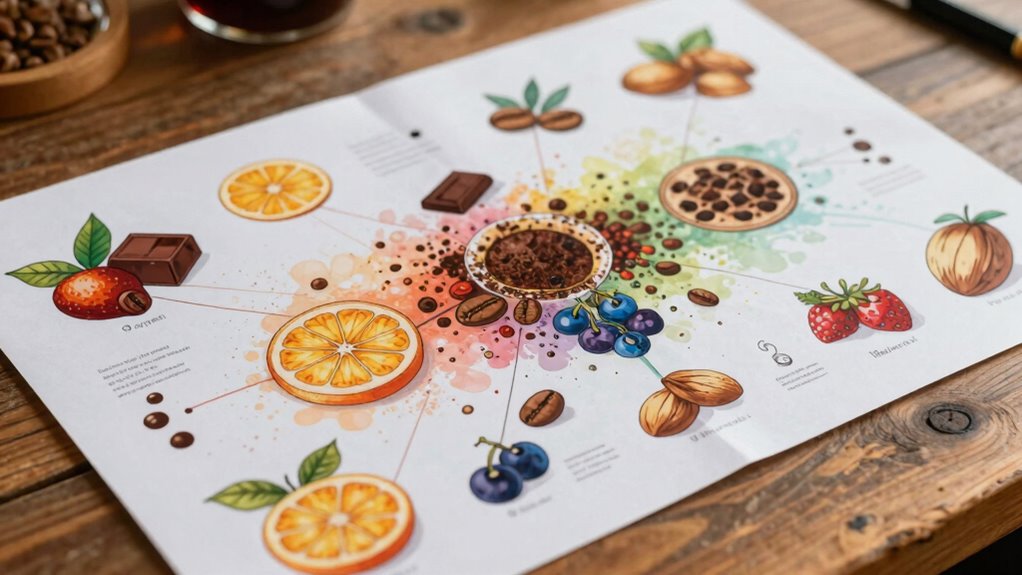
Ever wondered how to quickly identify and fix espresso issues? The key lies in understanding your flavor map, which connects the dots between various brewing factors and the resulting taste. When you start tasting off-flavors or inconsistent results, it’s a sign you need to troubleshoot. One of the first things to contemplate is the influence of coffee bean origins. Beans from different regions—Ethiopia, Colombia, Brazil—bring distinct flavor profiles, acidity levels, and body. Recognizing these nuances is vital because a flavor imbalance might not be a problem with your machine but rather a characteristic of the beans themselves. For example, if your espresso tastes overly fruity or floral, it could be due to beans from specific origins rather than a brewing flaw. Conversely, if the flavor is flat or dull, it might indicate stale beans or improper storage, requiring you to adjust your sourcing or storage practices. Additionally, understanding the origin-specific flavor profiles helps you anticipate how different beans will behave during extraction, making troubleshooting more precise. Recognizing that these profiles are part of the inherent coffee characteristics allows you to better interpret your tasting notes and adjust accordingly. Consistently noting these characteristics can also assist in developing a flavor profile memory, streamlining your troubleshooting process over time. Once you’ve reflected on the coffee’s origin, focus on equipment calibration. Your espresso machine’s grind size, tamping pressure, water temperature, and pressure all directly impact flavor extraction. If your shot is too sour or under-extracted, it could mean the grind is too coarse, or the water isn’t hot enough. Over-extraction, resulting in bitter or harsh notes, often points to a grind that’s too fine or excessive brewing time. Regular calibration ensures each parameter aligns with the beans you’re using, making troubleshooting more straightforward. For instance, if you switch to beans from a different origin with a higher acidity, you might need to adjust your grind or temperature to balance the flavor. A well-calibrated machine helps you isolate whether a flavor issue stems from the beans themselves or your brewing setup. The flavor map acts like a diagnostic chart, guiding you through a logical process: start with the origin of your beans to understand their typical flavor profile, then evaluate your equipment calibration to see if it’s optimized for those beans. Understanding how different factors interact is essential for effective troubleshooting. A systematic approach also involves paying attention to brew time, which can significantly influence the final flavor. When you taste defects or unexpected flavors, you can ask yourself whether it’s due to the beans’ inherent qualities or your brewing setup. By consistently practicing this approach, you’ll develop a sharper palate and a deeper understanding of how each element influences the final shot. Over time, this map simplifies troubleshooting, minimizes guesswork, and helps you produce consistently excellent espresso tailored to the specific beans you’re using. It’s about creating a systematic way to decode flavors, so fixing issues becomes less intimidating and more intuitive.
As an affiliate, we earn on qualifying purchases.
Frequently Asked Questions
Can the Flavor Map Be Customized for Different Coffee Beans?
Yes, you can customize the flavor map for different coffee beans. By adjusting the map, you’ll better reflect the unique taste profiles of various bean varieties. This personalization helps you identify the specific flavor notes and brewing adjustments needed for each type. As a result, you’ll troubleshoot espresso issues more effectively and craft a more consistent, enjoyable cup tailored to the distinct taste profiles of your beans.
How Often Should I Update the Flavor Map?
You should update your flavor map every time you change your roast profiling or notice a shift in flavor consistency. Think of your map as your coffee’s GPS—if you don’t update it regularly, you’re lost in a sea of unpredictable flavors. Regular updates guarantee you capture subtle changes, keep your espresso tasting perfect, and maintain consistent quality. Don’t wait for a flavor disaster—refresh your map with each roast tweak!
Does the Map Include Troubleshooting for Over-Extraction?
Yes, the map includes troubleshooting for over-extraction. If your espresso tastes bitter or harsh, you can use the map to check for issues with flavor consistency. It guides you through grind adjustments, helping you fine-tune your grind size to achieve better balance. By following these steps, you can prevent over-extraction, improve flavor, and guarantee your espresso maintains a consistently delicious profile.
Can the Flavor Map Help With Identifying Specific Roast Levels?
Did you know that 85% of baristas find flavor maps helpful for diagnosing issues? Yes, the flavor map can help you identify specific roast levels by revealing subtle differences in flavor profiles. When you analyze the map, you’ll notice variations in acidity, body, and sweetness that correspond to different roast levels. This makes troubleshooting easier, as you can adjust grind size or brewing time based on the flavor profile clues.
Is the Flavor Map Applicable to Other Brewing Methods?
Yes, the flavor map applies to other brewing methods, helping you achieve flavor consistency despite brewing variability. By understanding how different brewing techniques influence flavor, you can better troubleshoot and refine your process. Whether you’re making pour-over, French press, or AeroPress, the map guides you to identify flavor nuances and maintain quality. This makes it easier to adapt your approach and consistently produce great-tasting coffee across various brewing methods.
As an affiliate, we earn on qualifying purchases.
Conclusion
Mastering this flavor map transforms your espresso troubleshooting from a challenging puzzle into a walk in the park—no, a walk on the moon! Suddenly, every flavor glitch becomes a tiny hiccup in your perfect cup, easily fixed with a quick adjustment. With this tool, you’ll be untangling espresso mysteries faster than you can say “double shot,” elevating your brewing game to legendary status. Get ready, because your espresso journey just skyrocketed into the stratosphere!
As an affiliate, we earn on qualifying purchases.
As an affiliate, we earn on qualifying purchases.
Halloween Picks
halloween
As an affiliate, we earn on qualifying purchases.