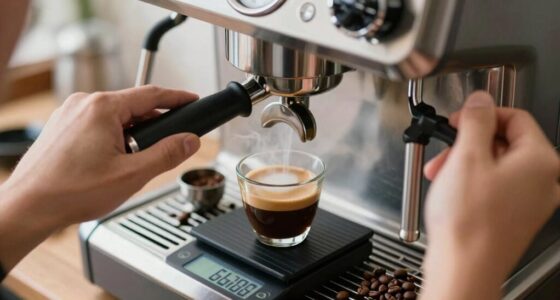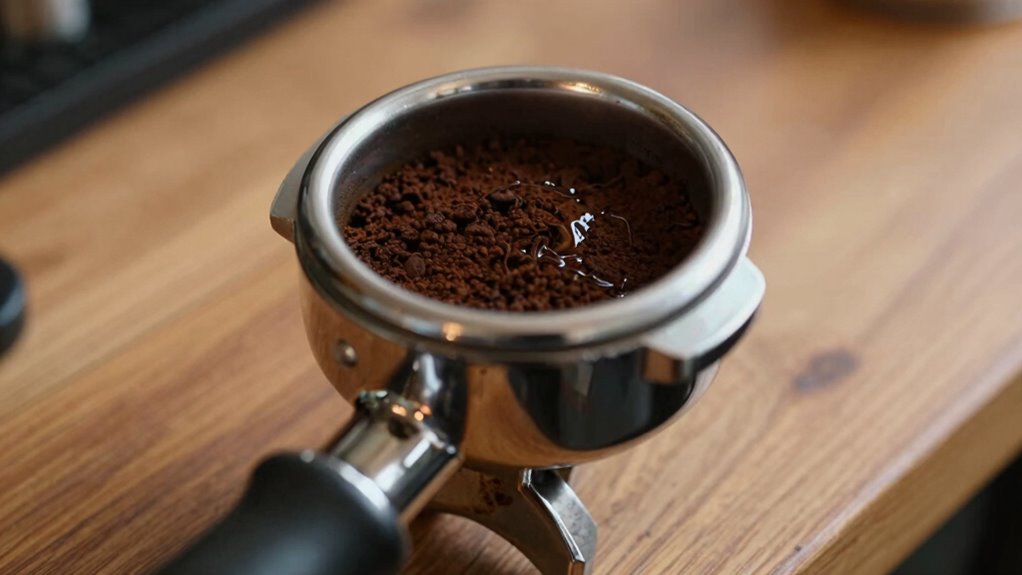

A bottomless portafilter shows you the espresso extraction process directly, helping you spot issues like channeling, uneven flow, or improper tamping. It teaches you to refine your technique by giving immediate visual feedback on shot quality, crema, and flow patterns. However, it can’t reveal details like bean freshness, roast level, or grinder accuracy. If you want to improve your skills and troubleshoot better, there’s more you can discover beyond just the pour.

Get kitchen gear delivered free with Prime
- Fast, free delivery on millions of items
- Prime Video, Amazon Music and more included
- Member-only deals all year
Key Takeaways
- Bottomless portafilters visually reveal extraction flow, aiding in technique refinement and identifying issues like channeling or uneven tamping.
- They teach shot quality assessment by showcasing crema, flow rate, and pattern, but cannot evaluate bean freshness or roast level.
- Visual cues from bottomless shots help troubleshoot grind calibration, tamping consistency, and water flow problems during brewing.
- They do not provide technical machine data, such as pressure, extraction time, or grind accuracy, limiting their diagnostic scope.
- Using bottomless portafilters enhances understanding of extraction dynamics but cannot substitute for evaluating bean quality or precise dosing.
As an affiliate, we earn on qualifying purchases.
What Is a Bottomless Portafilter and Why Do Baristas Use It?
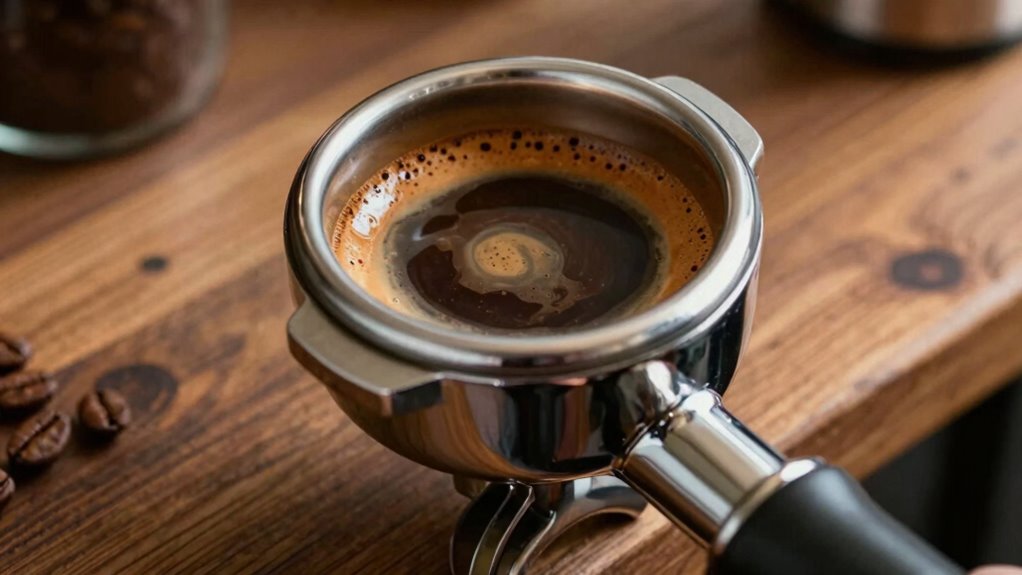
Have you ever wondered why some baristas prefer using a bottomless portafilter? It’s because it offers a clear view of your espresso extraction, helping you assess crema quality more accurately. The open design allows you to see the espresso as it flows out, revealing how well your coffee is brewing. A good crema not only enhances the visual appeal but also intensifies the espresso aroma, making each shot more aromatic and flavorful. Using a bottomless portafilter encourages you to refine your technique, as any flaws like uneven tamping or channeling become immediately visible. This direct feedback helps you improve your skills, craft better espresso, and ultimately achieve a more balanced, aromatic shot with a rich, velvety crema. Additionally, understanding the importance of color accuracy in coffee presentation can elevate the visual experience, making your espresso not just taste better but also look more appealing. Recognizing brewing process nuances can further enhance your mastery and consistency in espresso extraction, leading to a more consistent and high-quality coffee experience. Paying attention to temperature stability during extraction can also ensure optimal flavor and crema development, elevating your overall espresso craftsmanship.
As an affiliate, we earn on qualifying purchases.
How Does a Bottomless Portafilter Help You Improve Your Espresso Technique?

A bottomless portafilter provides immediate visual feedback, allowing you to see exactly how your espresso is extracting. If the stream is too thin or uneven, you know your grind size might be too fine or too coarse. Adjusting the grind size helps achieve a more even flow, resulting in better extraction. Water temperature also plays a role; too hot or too cold water can cause channeling or under-extraction. Watching the pour, you can identify signs like spurting or uneven crema, which indicate issues with grind size or temperature. This real-time insight helps you fine-tune your technique, so you can consistently produce balanced, flavorful shots. Additionally, understanding equipment maintenance can further optimize your brewing process and ensure consistent results. Incorporating proper cleaning routines helps prevent buildup that could interfere with extraction quality.
As an affiliate, we earn on qualifying purchases.
What Can You Learn About Your Extraction by Using a Bottomless Portafilter?
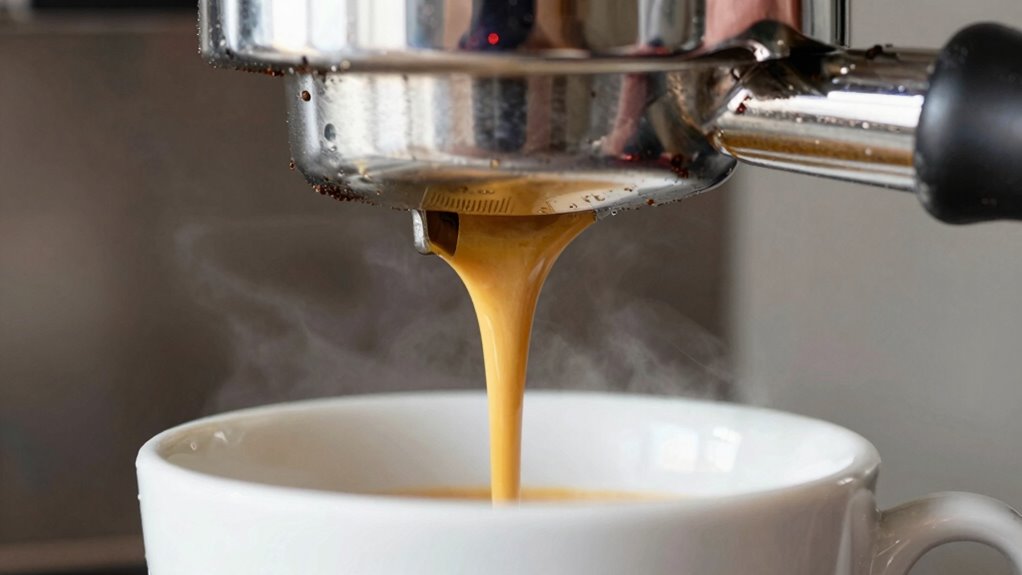
Using a bottomless portafilter reveals the true nature of your espresso extraction by exposing the stream directly into the cup. This visibility helps you assess your grinder calibration, as uneven or channeled shots indicate inconsistent grind size or tamping. You can see if water flows evenly through the coffee bed or if it escapes through weak spots, highlighting issues with your tamping technique. Water quality also plays a role; impurities or mineral content can cause uneven extraction, visible in the shot’s dispersion. By observing the stream, you learn whether your grind setting produces a uniform, balanced flow. Adjusting grinder calibration and using quality water ensures a cleaner, more even extraction, which you can verify instantly with a bottomless portafilter.
Common Mistakes You Can Spot With a Bottomless Portafilter
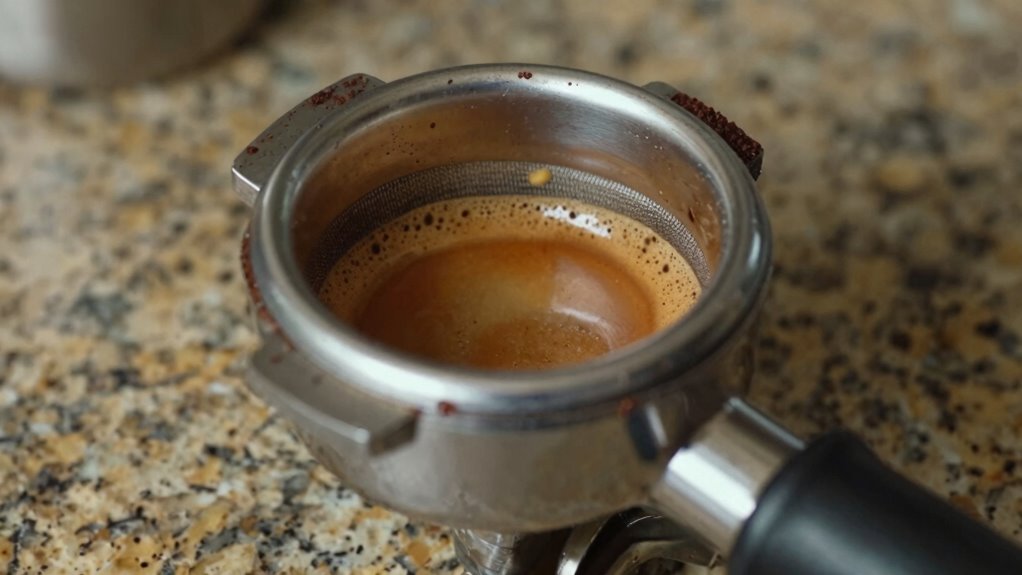
Using a bottomless portafilter reveals common mistakes like uneven extraction, channeling, and poor tamping. Spotting these issues helps you improve your technique quickly. Recognizing these errors is key to brewing a better shot every time. Additionally, understanding machine calibration can further enhance consistency and quality in your espresso.
Uneven Coffee Extraction
Uneven coffee extraction is one of the most common issues you can spot with a bottomless portafilter, and it often signals that something’s off with your grind size, tamping, or distribution. If your shot shows uneven flow or inconsistent color, check your grind consistency—if it’s too coarse or uneven, water flows unevenly. Also, uneven extraction can result from inconsistent coffee temperature; if your machine isn’t maintaining proper heat, some areas may extract faster than others. Ensure your coffee is evenly distributed before tamping and that your grind size is uniform. Monitoring your machine’s temperature stability helps create a more balanced extraction. Addressing these factors can considerably improve your shot’s evenness and overall quality.
Channeling and Spreading
Channeling and spreading are common mistakes visible with a bottomless portafilter that can ruin your shot. When grind size isn’t just right, water finds weak spots and creates narrow paths, leading to uneven extraction. If the grind is too fine, water struggles to pass through, increasing the chance of channeling; too coarse, and water flows too quickly, causing spreading. Water temperature also plays a role—if it’s too hot, it can cause uneven flow and exacerbate spreading, while too cold may slow extraction and promote channeling. You’ll notice these issues as uneven spray patterns and inconsistent coffee flow. To fix this, adjust your grind size carefully and ensure your water temperature is stable and appropriate for the roast and beans. Proper technique minimizes channeling and spreading, leading to a better espresso. Additionally, understanding how water flow dynamics influence extraction can help you troubleshoot and refine your technique more effectively. Paying attention to pressure consistency during extraction can also prevent these issues from occurring.
Poor Tamp-ing Technique
Poor tamping technique is a common mistake that becomes immediately noticeable with a bottomless portafilter. When your tamp isn’t even or consistent, it affects distribution uniformity and tamping pressure, leading to uneven extraction. You might notice:
- Uneven coffee bed, causing channeling and weak flavors
- Excessive or insufficient tamping pressure, resulting in over- or under-extraction
- Inconsistent puck density, making shot control difficult
These issues can cause visible splashes or uneven spray patterns during extraction. To avoid this, focus on applying even pressure and distributing coffee grounds uniformly before tamping. Proper technique guarantees better flow, richer flavor, and a cleaner shot. Remember, consistency in tamping pressure and distribution is key to revealing your espresso’s full potential. Consistent tamping not only improves shot quality but also helps develop a better understanding of your grinder and coffee distribution techniques.
What a Bottomless Portafilter Can’t Show You About Your Espresso
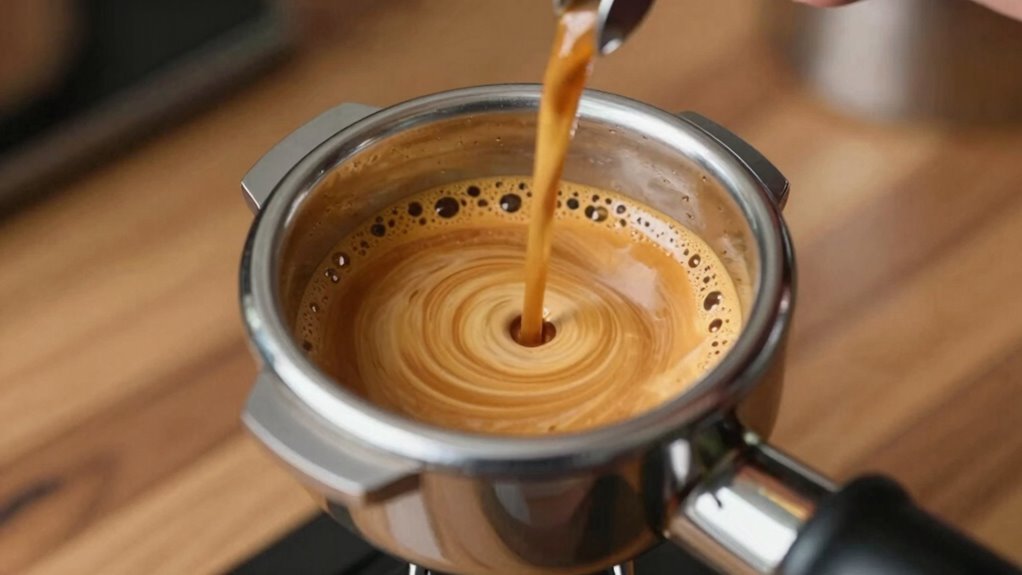
A bottomless portafilter reveals how your espresso flows but doesn’t tell you about bean freshness or quality. It also won’t show if your grinder and dose are precise or if your tamping technique is consistent. To truly improve, you need to think about these factors beyond what the shot visibly displays. Additionally, understanding proper extraction techniques can help you interpret what the flow rate and crema tell you about your brew.
Bean Freshness and Quality
While a bottomless portafilter reveals how your espresso flows and looks, it can’t tell you if your beans are fresh or of high quality. Fresh coffee beans markedly impact flavor, aroma, and overall cup complexity. A stale bean produces dull, flat shots regardless of technique. The roasting level also matters; a dark roast may appear oily but can be over-roasted, losing nuanced flavors, while a light roast preserves brightness but may need finer grind adjustment. To gauge bean quality, look beyond the portafilter and consider:
- Smell: Fresh coffee beans emit a vibrant, inviting aroma.
- Appearance: Uniform color and minimal oiliness indicate proper roasting.
- Taste: Bright, complex flavors signal freshness and good quality.
Grinder and Dose Precision
Even with a perfect pour, a bottomless portafilter can’t reveal whether you’ve ground your beans consistently or dosed precisely. Grinder calibration plays a vital role here; if your grinder isn’t calibrated correctly, your espresso can be over- or under-extracted, regardless of visual cues. Accurate dose measurement ensures you’re using the right amount of coffee for each shot, which impacts flavor and extraction. Without proper calibration and precise dosing, you might see a beautiful crema or a balanced shot, but the underlying issues remain hidden. Consistent grind size and accurate dose measurement are key to reproducible results. A bottomless portafilter alone doesn’t provide feedback on these essential details, so regular calibration and careful dosing are indispensable for truly great espresso. Natural ingredients promote overall health and wellness, making them ideal for ensuring your coffee beans are fresh and of high quality.
Tamping Technique and Consistency
Because a bottomless portafilter exposes the espresso shot as it streams, it can’t reveal inconsistencies in your tamping technique. Your tamp pressure and grind size play an essential role in achieving a balanced extraction. Small variations in tamping can cause uneven flow, leading to channeling or under-extraction. To improve, focus on:
- Applying consistent tamp pressure with steady, even force
- Adjusting grind size to control flow rate and prevent over-extraction
- Maintaining uniform tamping technique to guarantee even coffee bed density
When Should You Use a Bottomless Portafilter in Your Brewing Routine?

Knowing when to use a bottomless portafilter can substantially enhance your espresso brewing experience. You should consider using one when you’re focused on improving your shot quality and troubleshooting. It’s especially helpful if you’re experimenting with different filter baskets or portafilter sizes, as it reveals how your grind size and tamping affect extraction. Use it during routine espresso pulls once you’ve dialed in your settings, but also during practice sessions to analyze your technique. A bottomless portafilter offers visual feedback, making it easier to identify channeling or uneven extraction. If you’re aiming for consistency and precision, integrating it into your routine at key points will help you refine your process and develop a deeper understanding of your espresso machine’s behavior.
How to Read and Interpret Shots From a Bottomless Portafilter

Reading and interpreting shots from a bottomless portafilter requires keen observation of the espresso’s flow and appearance. Watch for the stream’s color, consistency, and pattern, as these reveal brewing issues. A balanced shot flows in a steady, honey-like stream, with a rich crema on top. Pay attention to:
Observe the flow’s color, consistency, and pattern to assess your espresso’s quality and brewing.
- The crema’s color and thickness, indicating extraction quality
- The flow’s uniformity, revealing grind size and tamping consistency
- The tasting notes, which reflect the shot’s overall extraction and brewing temperature
A good shot should display a smooth pour and a balanced flavor profile. If the flow looks uneven or the taste is off, it signals adjustments needed in grind, tamp, or temperature. Proper interpretation helps refine your technique and improve future pulls.
Is a Bottomless Portafilter Worth It for Home Baristas?
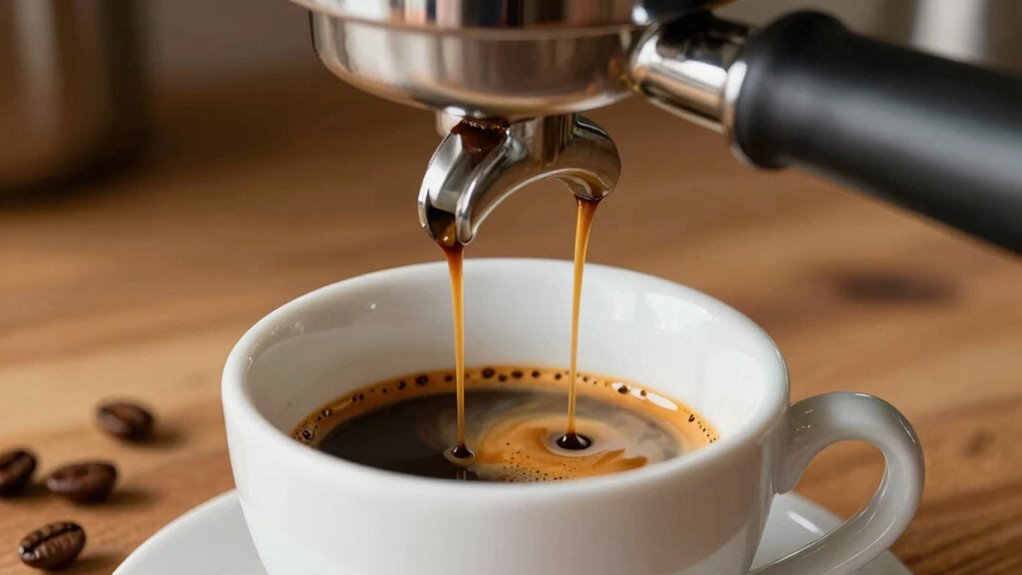
Is investing in a bottomless portafilter worth it for home baristas? If you’re serious about mastering your espresso, it can be a valuable tool. It reveals issues like uneven extraction or channeling, helping you improve brew temperature control and consistency. However, be aware that a bottomless portafilter may sometimes expose your espresso to artificial flavor transfer from nearby equipment or environmental factors, which can compromise taste. Additionally, it requires precision in tamping and grind size. While it’s not essential for every home setup, if you want to refine your technique and understand how variables affect flavor, a bottomless portafilter is a worthwhile investment. Just remember, it’s a learning tool, not a magic fix for all brewing problems. Safety considerations should also be kept in mind when handling hot equipment to prevent injury.
Frequently Asked Questions
Can a Bottomless Portafilter Improve My Overall Espresso Skills?
Yes, a bottomless portafilter can improve your espresso skills. It shows you how your grind size and tamp pressure affect extraction, allowing you to see the espresso flow directly. If your grind is too fine or tamp pressure too high, you’ll notice uneven flow or channeling. This immediate feedback helps you adjust your technique, leading to better shots and more consistent espresso-making.
How Often Should I Clean or Maintain a Bottomless Portafilter?
Consistent cleaning keeps your bottomless portafilter pristine and performing perfectly. You should clean it after every use to prevent buildup and preserve flavor. Regular maintenance tips include removing residual grounds, rinsing thoroughly, and checking for clogs or wear. By dedicating a few minutes daily to cleaning frequency and maintenance tips, you guarantee ideal extraction, improve taste, and prolong your portafilter’s lifespan—making every shot smoother, richer, and more satisfying.
Does Using a Bottomless Portafilter Affect Shot Consistency?
Using a bottomless portafilter can improve shot consistency because it reveals how your grind size and tamp pressure affect extraction. When you see the espresso flow directly into the cup, you can quickly adjust these variables. If your shot is uneven or spraying, tweaking the grind size or tamp pressure helps achieve a smoother, more consistent pour. Overall, it’s a valuable tool for refining your technique.
Are There Specific Coffee Beans Better Suited for Bottomless Brewing?
Think of your espresso as a canvas—certain beans paint a clearer picture. For bottomless brewing, single origin beans with a balanced roast profile shine brightest, revealing intricate flavors and crema. These beans allow you to see the full story of your shot, highlighting extraction nuances. Avoid overly dark roasts, which can mask details. Choose beans that complement your machine’s personality, and your espresso will tell a more vivid, expressive story.
What Accessories Can Enhance the Use of a Bottomless Portafilter?
To enhance your use of a bottomless portafilter, consider accessories like a calibrated tamping tool to maintain consistent tamp pressure, and a precision grind size adjuster for better extraction. Using a scale to measure tamp pressure and a grinder with fine adjustments helps you achieve ideal shot quality. These tools help you control grind size and tamp pressure, reducing channeling and improving flavor clarity in your espresso.
Conclusion
Using a bottomless portafilter is like having a secret weapon to perfect your espresso skills. It reveals flaws you might never notice otherwise, helping you become a true brewing expert. While it won’t solve every issue, it’s an invaluable tool that accelerates your learning curve. Embrace it, and you’ll unleash espresso mastery faster than you ever thought possible—your mornings will thank you for it!
Halloween Picks
halloween
As an affiliate, we earn on qualifying purchases.