Even if your espresso machine looks hot and ready, it still needs time to warm up internally. This guarantees all components reach the ideal temperature for consistent extraction and flavor, preventing issues like sour taste or weak shots. Skipping proper warm-up can cause uneven brewing and potential damage to your machine over time. To get the best results and keep your machine in top shape, it’s important to follow proper warm-up steps—more details await if you keep exploring.

Get kitchen gear delivered free — and shop member deals
- Fast, free delivery on millions of items
- Access to Prime Big Deal Days deals on October 6–7
- Prime Video, Amazon Music and more included
Key Takeaways
- Internal components need to reach stable temperatures for consistent extraction and flavor quality.
- Warm-up ensures boiler and group head temperature stability, preventing flavor fluctuations.
- A machine may appear ready externally but still require warm-up to optimize internal heat levels.
- Proper warm-up reduces thermal stress and extends the lifespan of internal parts.
- Indicators like steady water flow and steam pressure confirm the machine is fully warmed and ready to brew.
espresso machine warm-up thermometer
As an affiliate, we earn on qualifying purchases.
As an affiliate, we earn on qualifying purchases.
Why Do You Need to Warm Up Your Espresso Machine?
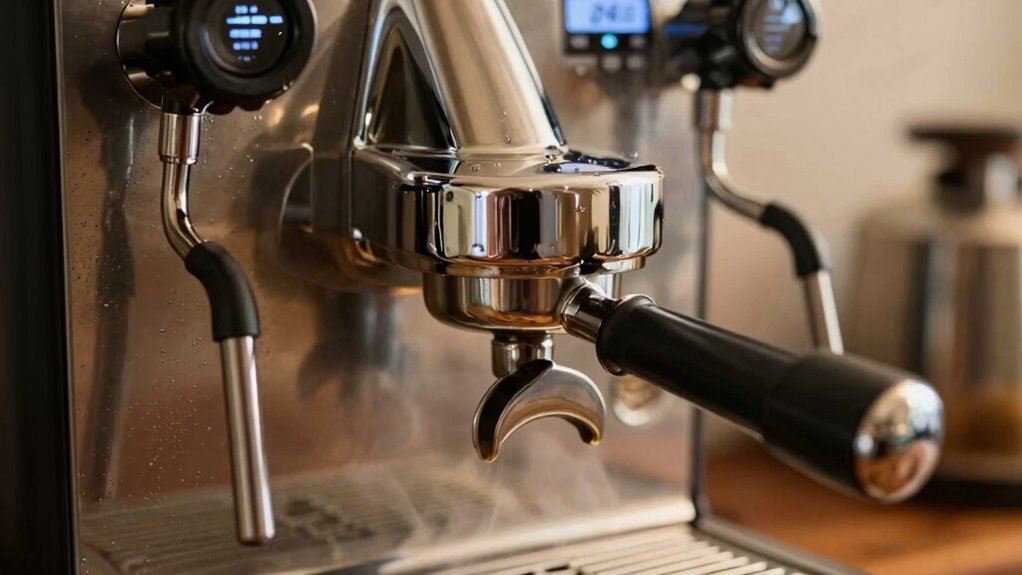
Warming up your espresso machine is essential because it guarantees all components reach the ideal temperature for brewing. When the machine heats up properly, it ensures the brew temperature stays consistent, which directly impacts flavor and extraction. If your machine isn’t ready, the water won’t reach the correct temperature, leading to under-extracted or sour espresso. Proper warm-up also helps the boiler and group head stabilize, preventing temperature fluctuations that could compromise your shot. By giving your machine enough time to warm, you ensure perfect machine readiness, allowing you to brew espresso with balanced acidity, sweetness, and body. Rushing this process risks poor quality coffee and potential damage to your equipment over time. Warming up isn’t just a step; it’s the foundation of a perfect espresso shot. Additionally, temperature stability is critical for maintaining consistent performance and avoiding fluctuations that could negatively affect your brew quality. Taking the time to properly warm your espresso machine also supports sustainable practices by reducing wear and tear on the components, extending its lifespan. Proper warm-up contributes to energy efficiency, which benefits both your environment and operational costs over the long term. Furthermore, ensuring the machine is fully warmed up helps prevent damage from thermal stress, which can occur if the machine is used prematurely.
espresso machine temperature indicator
As an affiliate, we earn on qualifying purchases.
As an affiliate, we earn on qualifying purchases.
How Can You Tell When Your Espresso Machine Is Ready?
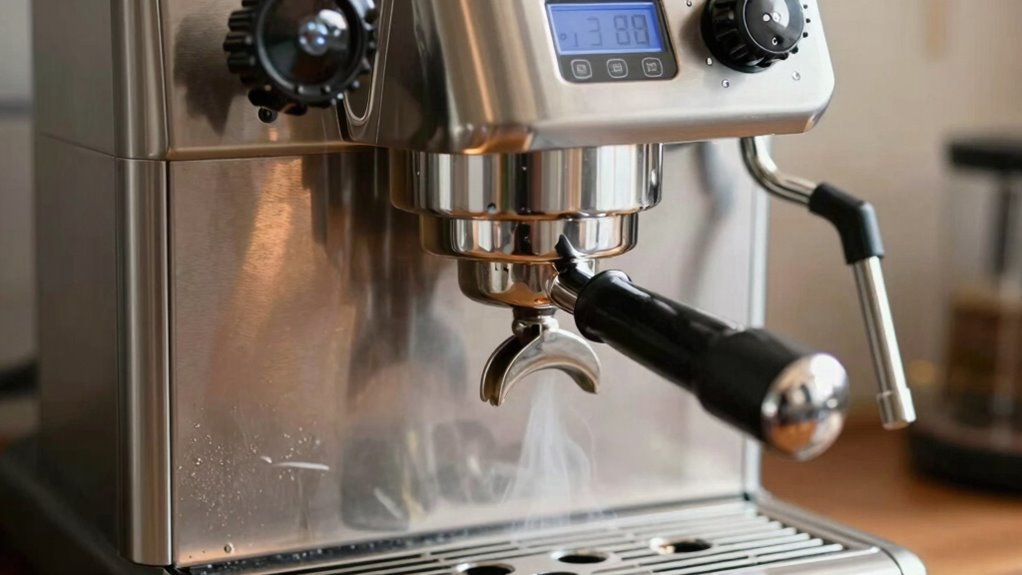
Knowing when your espresso machine is ready is crucial to guarantee your shot turns out perfect. The key indicator is the brew temperature, which should be stable and within the optimal range for extraction—usually around 195°F to 205°F. You can check the machine’s readiness by observing the temperature stability of the portafilter or the water coming out. Many machines have indicator lights or displays that signal when they’ve reached the desired temperature. Additionally, a properly heated machine will produce a steady flow of hot water without fluctuations. If your machine is still warming up or the water isn’t hot enough, your brew temperature won’t be ideal, affecting flavor and crema. Waiting for the machine to reach consistent temperature stability ensures optimal extraction conditions. It’s also helpful to understand how preheating impacts this process. Allowing the machine to fully preheat before use helps maintain a stable temperature during extraction. This preparation can significantly influence the quality of your espresso. Wait until the machine signals readiness before pulling your shot.
espresso machine boiler thermometer
As an affiliate, we earn on qualifying purchases.
As an affiliate, we earn on qualifying purchases.
How Does Warm-Up Time Affect Your Espresso’s Flavor?

When your machine warms up properly, it maintains a consistent temperature throughout the brewing process. This stability helps extract more nuanced flavors from your coffee. Rushing the warm-up can lead to inconsistent results and less vibrant espresso.
Consistent Temperature Stability
Since espresso relies heavily on precise temperature control, a warm-up time that’s too short can lead to fluctuations in temperature, affecting the consistency of your shot. Without proper boiler stabilization, the machine’s temperature can spike or drop, causing inconsistent extraction. These temperature fluctuations disrupt the delicate balance needed for ideal flavor, resulting in dull or sour shots. When your machine has adequate warm-up time, it allows the boiler to reach and maintain a steady temperature, ensuring stable conditions during brewing. This stability helps you produce more uniform shots with balanced flavor and aroma. Proper warm-up also enhances safety by reducing the risk of sudden temperature-related hazards and equipment stress. Skipping or rushing warm-up compromises boiler stabilization, leading to unpredictable results and less satisfying espresso. Proper warm-up is essential for maintaining the consistent temperature stability that defines a great shot. Additionally, a proper warm-up can extend the lifespan of your machine by preventing unnecessary wear and tear caused by temperature fluctuations.
Enhanced Flavor Extraction
A properly warmed-up espresso machine plays a crucial role in enabling the full potential of your coffee’s flavor. When the machine reaches ideal temperature, it ensures better extraction, highlighting nuanced flavors and aromas. Warm-up time allows the coffee grounds to interact properly with hot water, resulting in a richer, more balanced shot. Without sufficient warm-up, temperature stability suffers, leading to inconsistent flavor and weak extraction. Additionally, a warm-up period helps maintain temperature stability, which is vital for consistent results. Proper warm-up also reduces the risk of temperature fluctuations, which can negatively impact extraction quality. Electric heating elements are designed to provide precise temperature control, and allowing adequate warm-up time ensures they operate optimally. Investing in a quality espresso machine that heats quickly and efficiently can reduce warm-up time and improve overall results. Modern machines with rapid heat-up technology can significantly cut waiting times while maintaining temperature consistency. Key points include: – Consistent temperature improves flavor extraction – Hotter, stable water enhances aroma and taste – Proper warm-up prevents sour or bitter flavors – Ensures uniform extraction for each shot – Maximizes the espresso’s flavor profile with temperature stability In short, warm-up time directly impacts flavor consistency, elevating your espresso experience.
As an affiliate, we earn on qualifying purchases.
What Are the Risks of Skipping the Warm-Up?

Skipping the warm-up can lead to inconsistent coffee extraction, making your espresso taste off. It also heightens the risk of damaging your machine over time. Taking a few extra minutes to warm up ensures better results and longer equipment life. Additionally, proper warm-up procedures help maintain the quality of your espresso, preserving the machine’s performance and longevity. Proper warm-up practices are also recommended in luggage & bags to prevent damage during transport, showcasing the importance of preparation in all travel aspects. Implementing a warming routine allows the machine to reach optimal temperature, ensuring more stable and flavorful espresso shots. This process mirrors the importance of air quality in maintaining a healthy environment, emphasizing that proper preparation is essential. Following these steps can also prevent unexpected breakdowns and costly repairs, similar to backup power systems that require proper setup to ensure reliable operation.
Inconsistent Coffee Extraction
When you neglect to let your espresso machine warm up properly, it can lead to inconsistent coffee extraction. Temperature fluctuations during brewing cause the water to flow at uneven temperatures, affecting flavor and crema. Without proper warm-up, the machine’s internal components haven’t stabilized, leading to unpredictable brew consistency. This inconsistency can result in weak shots or overly bitter coffee. To minimize these issues, pay attention to:
- Uneven water temperature
- Fluctuating pressure levels
- Poor flavor extraction
- Variability in shot volume
- Reduced crema quality
Equipment Damage Risk
Neglecting to allow your espresso machine to warm up properly can lead to serious damage over time. When the machine isn’t fully heated, components like the boiler and heating elements aren’t calibrated correctly, which can cause inconsistent water pressure. This imbalance stresses internal parts, increasing the risk of early wear or failure. Skipping the warm-up also prevents proper machine calibration, making it harder to maintain steady temperature and pressure levels. Over time, this can damage seals, gaskets, and even the pump. Consistent warm-up helps ensure all parts operate within their designed parameters, reducing strain and extending your machine’s lifespan. Ignoring this step might seem minor, but it can lead to costly repairs and decreased performance down the line.
How to Properly Warm Up Your Espresso Machine

To guarantee your espresso tastes its best, you need to properly warm up your machine before brewing. Start by turning on your espresso machine and allowing it to reach its ideal temperature, which typically takes about 15-20 minutes. This ensures the internal components, including the boiler and group head, are fully heated, improving brewing efficiency. Proper warm-up also helps with machine calibration, ensuring water temperature and pressure are consistent. Additionally, using cutting-edge survival and camping technology can help monitor and maintain optimal machine performance during extended use or in challenging environments. Monitoring the temperature stability throughout the warm-up process is crucial for consistent results and can prevent common issues like under-extraction or bitter flavors.
Remember these key steps:
- Turn on the machine early to avoid rushing.
- Let it run without coffee for a few minutes.
- Check that the temperature stabilizes.
- Perform a blank shot to gauge heat consistency.
- Avoid brewing immediately after turning on; patience improves taste and ensures consistent extraction.
Signs Your Espresso Machine Is Fully Warmed

Knowing the right signs that your espresso machine is fully warmed guarantees you brew at the ideal temperature for the best flavor. When it’s ready, you’ll notice consistent water flow and stable steam pressure. Your brew temperature should feel steady, ensuring each shot is perfectly extracted. Steam readiness is another key indicator—if steam flows smoothly and quickly, your machine has reached top warmth.
| Sign | What to Expect | Why It Matters |
|---|---|---|
| Steady Brew Temperature | Water flows consistently at the right temperature | Ensures rich, balanced flavor |
| Quick Steam Production | Steam flows smoothly without delay | Perfect for frothing milk |
| Stable Machine Operation | No fluctuations or interruptions during use | Indicates full warm-up |
Troubleshooting Warm-Up Problems
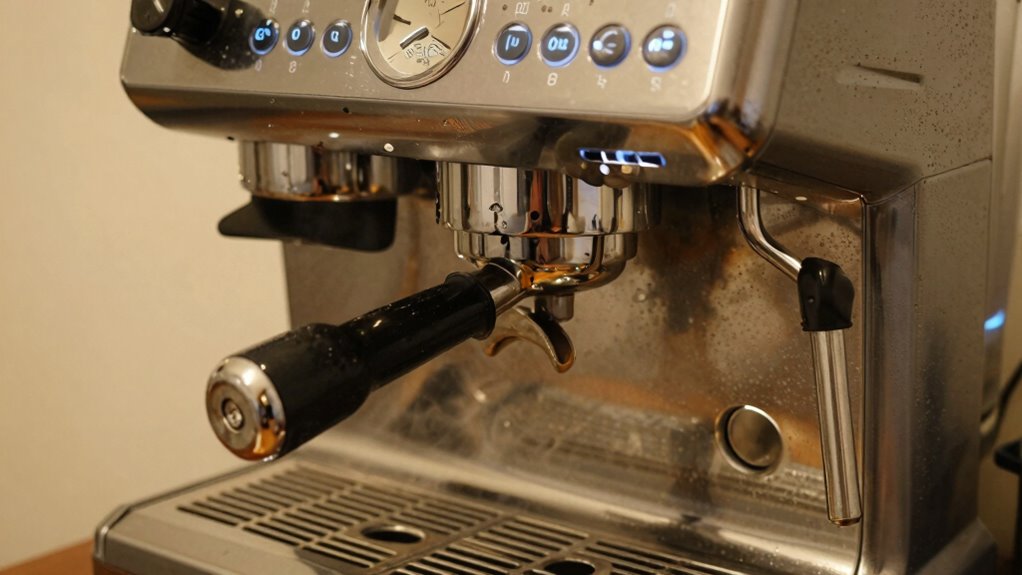
When your espresso machine isn’t warming up properly, it can disrupt your brewing process and compromise flavor. Troubleshooting these issues often involves checking the machine’s temperature regulation and boiler performance. Poor boiler performance may cause inconsistent heat, making it difficult for the machine to reach ideal temperature. To diagnose problems, consider these points:
- Ensure the thermostat is functioning correctly
- Clean or descale the boiler to prevent mineral buildup
- Verify the heating element isn’t faulty
- Check for electrical issues affecting temperature regulation
- Allow extra warm-up time if the machine is cold or has been idle
Addressing these factors helps restore proper boiler performance and consistent warm-up, ensuring your espresso machine heats reliably and produces better-tasting coffee.
Tips to Save Time Without Skipping Warm-Up
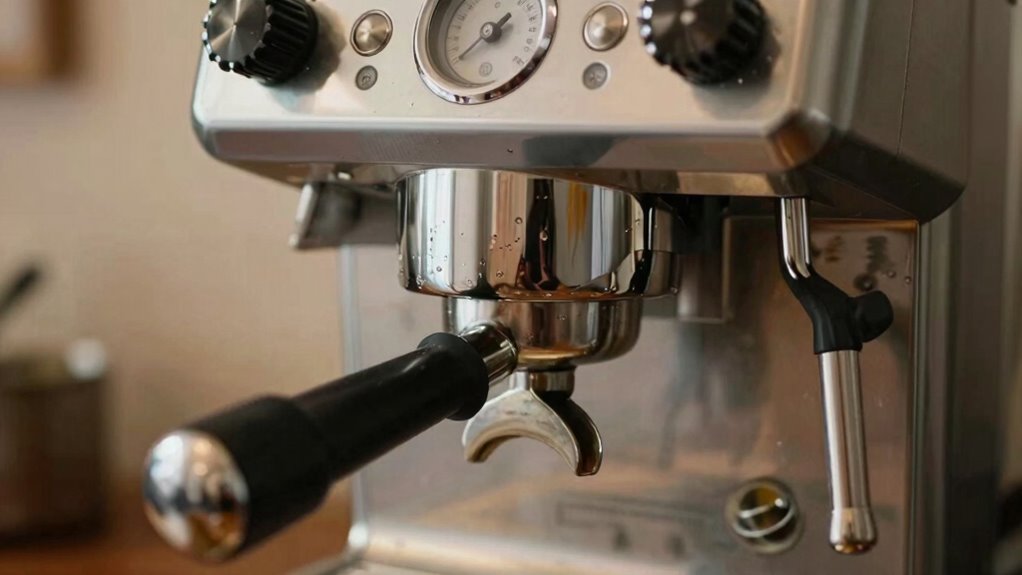
Saving time on warm-up without sacrificing quality is all about smart preparation and routine adjustments. Regular machine maintenance keeps your espresso machine in top shape, reducing warm-up time and ensuring consistent performance. Clean the boiler and group heads regularly to prevent buildup that can extend warm-up duration. Streamline your brewing techniques by preheating your cups and portafilter while the machine warms up; this minimizes waiting once it’s ready. Consider setting your machine to a slightly higher standby temperature if it’s safe and recommended, so it reaches ideal brewing conditions faster. By integrating these habits into your routine, you avoid skipping warm-up altogether while saving valuable time. Proper maintenance and efficient brewing techniques help you get your espresso ready quickly without compromising the quality of your shot.
Frequently Asked Questions
Can I Use My Espresso Machine Immediately After Turning It On?
You shouldn’t use your espresso machine immediately after turning it on. Giving it a few minutes for warm-up ensures proper machine maintenance and helps achieve consistent brewing results. Rushing this process can lead to uneven temperatures, affecting flavor and shot quality. Always wait until the machine reaches the ideal temperature before brewing — this small step guarantees the best taste and prolongs your machine’s lifespan.
How Long Should the Warm-Up Process Typically Take?
Typically, your espresso machine needs about 15-20 minutes to warm up properly. This allows the brew cycle to reach ideal temperature stability, ensuring consistent extraction and flavor. Rushing the process might result in uneven heat, affecting your espresso’s quality. So, trust the warm-up time, and you’ll enjoy better-tasting coffee with each shot. Patience pays off when it comes to achieving the perfect espresso.
Does Ambient Temperature Affect the Warm-Up Time?
Yes, ambient temperature affects the warm-up time of your espresso machine. When the room’s temperature fluctuates, it can slow down or speed up the heating process because the machine’s components respond to ambient effects. In cooler environments, expect longer warm-up times as the machine works harder to reach ideal temperature. Conversely, warmer rooms help the machine heat up faster, ensuring consistent brewing temperatures and better espresso quality.
Are There Specific Indicators That Show When the Machine Is Fully Warmed?
Think of your espresso machine like a race car waiting at the pit stop; it’s not ready until the engine’s fully warmed. You’ll notice the indicator lights stabilize, signaling the machine temperature has reached ideal levels. These lights act as your cue that the internal components are heated enough for consistent shots. Don’t rush; waiting ensures your espresso’s flavor is rich and perfectly extracted.
Is It Necessary to Warm up Every Type of Espresso Machine?
No, it’s not necessary to warm up every type of espresso machine. However, proper warm-up routines are essential for machine maintenance and achieving brewing consistency. Traditional espresso machines with boilers benefit from warm-up time to stabilize temperature, while newer models with rapid heating may need less. Regular warm-up helps maintain ideal performance, prevents damage, and ensures your espresso tastes consistent every time, regardless of the machine’s design.
Conclusion
So, next time you brew, remember that a proper warm-up isn’t just a slow start—it’s key to great espresso. Rushing it might save time, but it can compromise flavor and damage your machine. Are you willing to sacrifice that perfect shot just to skip a few minutes? Take the time to warm up your espresso machine properly, and you’ll always enjoy rich, balanced coffee that’s worth the wait.
Fall Picks
fall essentials
As an affiliate, we earn on qualifying purchases.