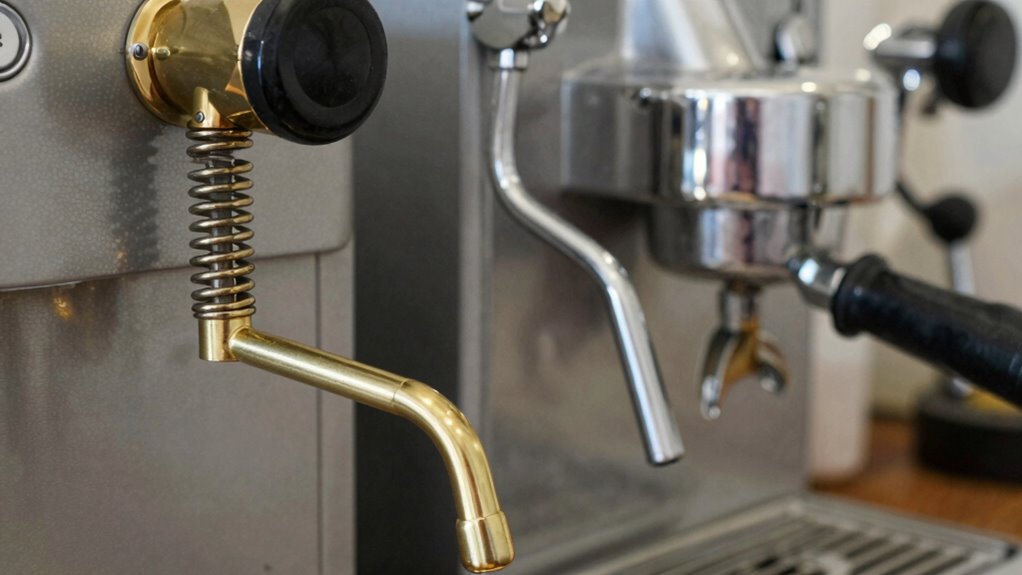

Spring lever machines use a spring to store energy as you pull back the lever, providing stable, consistent pressure during extraction, which often results in balanced flavors. Direct lever machines rely on your manual force, giving you full control but requiring skill to maintain steady pressure. This mechanical difference impacts taste, extraction quality, and ease of use. Want to explore how these mechanics influence your brew? Keep going to discover more.

Get kitchen gear delivered free — and shop member deals
- Fast, free delivery on millions of items
- Access to Prime Big Deal Days deals on October 6–7
- Prime Video, Amazon Music and more included
Key Takeaways
- Spring levers generate consistent pressure via stored energy, promoting balanced extraction and richer flavor profiles.
- Direct levers require manual force control, allowing for precise pressure adjustments that influence taste nuances.
- Spring mechanisms provide smoother operation and easier learning curves, leading to more uniform flavor extraction.
- Direct levers demand skillful technique, enabling experimentation but risking variability that affects taste consistency.
- Mechanical differences in pressure stability and control directly impact shot quality, extraction, and ultimately, flavor development.
As an affiliate, we earn on qualifying purchases.
How Spring and Direct Lever Espresso Machines Work

Have you ever wondered how spring and direct lever espresso machines generate the pressure needed to brew espresso? In these machines, the mechanism relies on manual force, but their designs differ. Spring lever machines use a spring to store energy when you pull the lever back. As you release, the spring pushes the piston down, creating consistent pressure. The spring mechanism allows for a more controlled and smoother operation, which can influence the final shot quality. This design also enables pressure profiling, giving you more control over extraction variables. Additionally, the mechanical advantage of the lever system impacts how much force you need to apply, affecting your overall control and comfort. The lever system design influences how efficiently force is transferred during operation, impacting the shot quality and user experience. Direct lever machines, on the other hand, depend solely on your arm strength; you manually apply force directly to the piston without any spring assistance. For maximum user experience, regular lever maintenance is essential to ensure smooth operation and consistent pressure. Understanding these differences helps you control extraction better, making the process more intuitive and enjoyable. Both types demand skill, but their mechanical distinctions shape your overall espresso experience. Proper maintenance is key to keeping these systems functioning optimally and maintaining your desired pressure levels.
As an affiliate, we earn on qualifying purchases.
How Mechanical Differences Affect Espresso Extraction and Flavor
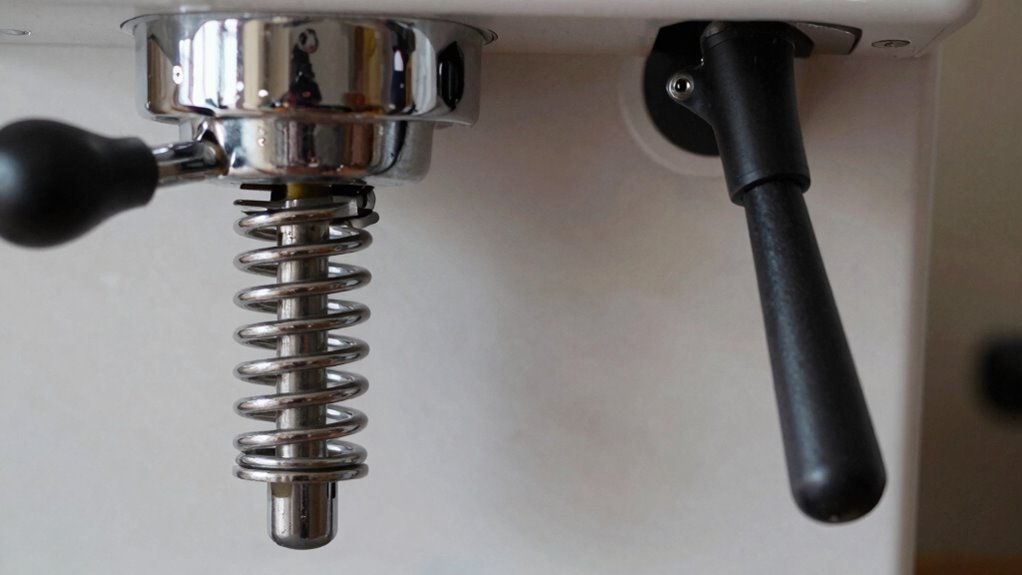
Your choice between spring and direct lever machines directly influences pressure consistency during extraction. This consistency affects how well flavors develop and how balanced your espresso turns out. Precise control over extraction parameters can make a noticeable difference in your final shot. Additionally, easy cleanup with water-based paints can enhance the sustainability of your equipment usage. Implementing color accuracy in your setup ensures that the visual cues for perfect extraction are more reliable, leading to better tasting espresso. Understanding the mechanical differences can help you optimize your brewing process for consistently better results. Recognizing the importance of pressure stability can further refine your technique and improve overall extraction quality.
Pressure Consistency Impact
Mechanical differences between spring and direct levers markedly influence pressure consistency during espresso extraction. With a spring lever, you often experience more stable pressure, as the spring helps regulate force, leading to better pressure stability. This pressure regulation ensures your extraction remains uniform, resulting in a more balanced flavor profile. Additionally, the mechanical design of spring levers often incorporates pressure stability features that contribute to consistent results over multiple pulls. On the other hand, direct levers demand more skill, as you control pressure manually without assistance, which can challenge user friendliness. If you’re new to espresso making, spring levers offer an advantage by providing steadier pressure, reducing the chance of under- or over-extraction. Overall, the mechanical design directly impacts how reliably you can maintain ideal pressure, ultimately affecting shot quality and flavor. Understanding these differences helps you choose a lever type that matches your experience level and taste preferences.
Extraction Control Precision
The design of the lever mechanism directly influences how precisely you can control extraction, which in turn affects flavor development. With a spring lever, you can fine-tune the brew temperature by adjusting the pressure curve, leading to more consistent results. In contrast, a direct lever offers immediate feedback, allowing you to adapt quickly during extraction. Precision control impacts how well you manage steam power for steaming milk, influencing sweetness and texture. Being able to control extraction parameters helps you optimize shot timing and pressure, ensuring balanced flavor. Additionally, incorporating connected equipment can help monitor and adjust parameters in real-time for even greater consistency. Understanding the mechanical design of your espresso device is essential for achieving the desired flavor profile. Recognizing the importance of pressure profiling can further enhance extraction precision and flavor outcomes. Moreover, familiarizing yourself with mechanical differences can help you select the best lever system for your brewing style.
As an affiliate, we earn on qualifying purchases.
Which Lever Type Is Easier to Use at Home?

When choosing a lever type for home use, you’ll notice differences in how easy they are to operate. Spring levers often require less effort to learn and maintain, while direct levers might have a steeper learning curve. Considering these factors can help you pick the right machine that fits your experience level and maintenance preferences. Additionally, the versatility of Suprem fabric makes it a popular choice for various applications, which can influence your decision based on the mechanical design and intended use. Moreover, understanding the auditory processing involved in some mechanisms can enhance your overall experience with these tools.
Ease of Operation
Choosing between spring levers and direct levers often comes down to ease of use at home. Spring levers generally require less effort for operation, making it simpler to control brew temperature and steam power. They’re designed for quick, consistent results, ideal if you want straightforward brewing without a steep learning curve. Direct levers, on the other hand, demand more skill and finesse, which might be intimidating for beginners.
Consider these points:
- Spring levers offer smoother, more intuitive operation
- Less physical effort needed for each shot
- Easier to maintain consistent brew temperature
- Better control over steam power with minimal adjustments
- Faster to learn and operate effectively
Learning Curve
If you’re new to espresso making, you’ll likely find spring levers easier to master since they require less finesse and offer more forgiving operation. Their operating complexity is lower, making the user learning process smoother. Spring levers often have built-in mechanisms that assist with the extraction, reducing the need for precise timing and pressure control. This means you won’t need extensive practice to get consistent results, which is ideal for beginners. In contrast, direct levers demand more skill and a steeper learning curve because you control the entire process manually. You must develop a feel for the correct pressure and timing, which takes time and experience. Overall, spring levers are generally more accessible for home users starting their espresso journey. Additionally, understanding water chemistry can help optimize extraction quality and consistency for both types of levers. Developing a technique that suits your machine and style is crucial for achieving the best flavor, especially with direct lever machines. Furthermore, practicing consistent pressure application can significantly improve your results over time.
Maintenance Needs
Spring levers tend to be easier to maintain at home because their built-in mechanisms and simpler design require less frequent adjustments and cleaning. You’ll find that cleaning routines are straightforward, often involving just wiping down the external parts. The component durability of spring levers is generally higher, meaning fewer replacements or repairs.
- Fewer moving parts mean less chance of wear and tear
- Routine cleaning keeps mechanisms functioning smoothly
- Components are designed for long-term durability
- Less frequent calibration needed
- Simple disassembly simplifies maintenance tasks
pressure profiling espresso machine
As an affiliate, we earn on qualifying purchases.
As an affiliate, we earn on qualifying purchases.
How Spring Levers Provide Consistent Pressure and Impact Taste
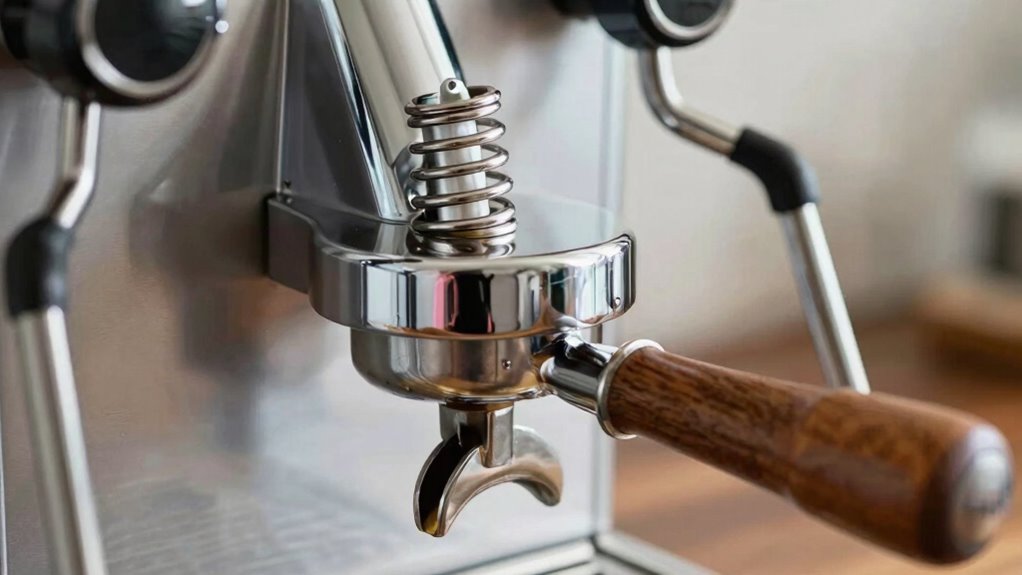
Spring levers are designed to deliver steady, reliable pressure during extraction, which helps maintain a consistent flavor profile. This stability guarantees that variables like brew temperature and grind size stay balanced, reducing fluctuations that can alter taste. Because the spring provides a uniform force, you don’t need to constantly adjust pressure as you pull the lever, leading to a more predictable extraction. A consistent pressure prevents over-extraction or under-extraction, resulting in a smoother, more nuanced flavor. When your grind size is optimized for the machine’s pressure, the spring’s steady force ensures even extraction across the coffee bed. This mechanical advantage means you get a balanced, flavorful shot every time, with less concern about minor variations affecting overall quality.
How Direct Levers Offer Manual Control and Unique Flavor Outcomes

Unlike spring levers that rely on mechanical stability, direct levers put you in full control of the extraction process. You can adjust pressure and timing precisely, giving you the power to influence flavor outcomes. With manual control, you have the flexibility to experiment and tailor each shot to your taste preferences. This direct interaction allows for nuanced adjustments that can highlight unique flavor notes.
- Fine-tune pressure during extraction
- Modify timing for ideal flavor extraction
- Experience a hands-on approach to brewing
- Achieve personalized flavor profiles
- Respond instantly to coffee characteristics
Troubleshooting Common Issues With Spring and Direct Lever Machines

While both spring and direct lever machines offer precise control over brewing, they can present common issues that challenge even experienced baristas. Diving into design reveals that problems like inconsistent pressure, stuck levers, or slow response often stem from worn or misaligned components. Troubleshooting techniques include checking for leaks, cleaning valves, and inspecting springs or seals for damage. If the lever sticks or feels uneven, it might be due to debris or tension issues. Regular maintenance helps prevent these issues, ensuring smooth operation. Understanding each machine’s mechanical intricacies allows you to diagnose problems quickly. By focusing on these troubleshooting techniques, you can resolve common mechanical hiccups and keep your lever machine performing at its best, preserving the quality of your brew.
Choosing the Right Lever Machine for Your Needs
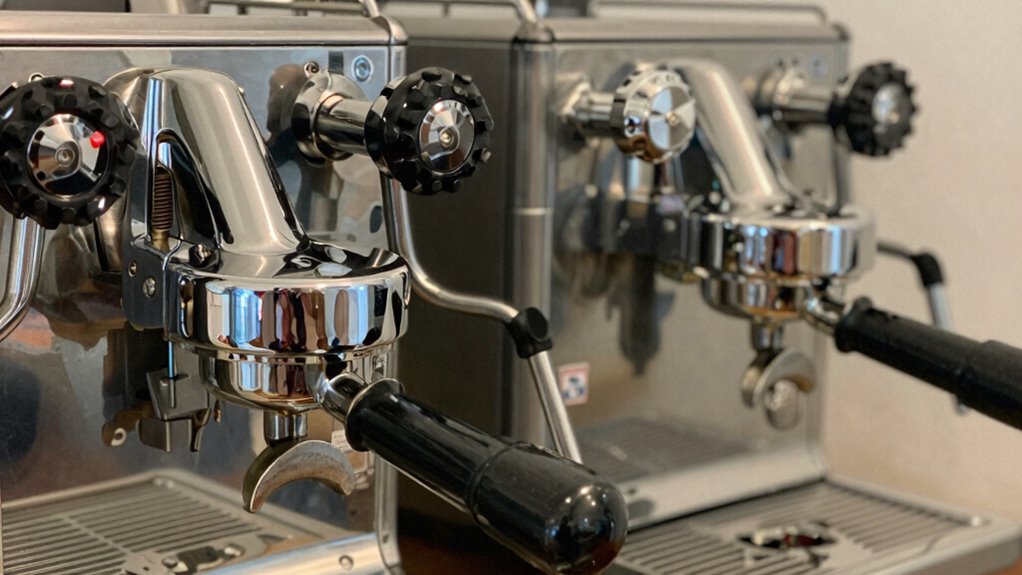
Choosing the right lever machine depends on your specific brewing needs and skill level. Consider how much control you want over extraction, your comfort with maintenance, and your overall user experience. Spring lever machines often offer smoother operation and easier maintenance, making them ideal for beginners. Direct lever machines require more skill but give you greater control over pressure and extraction. To make the best choice, keep these tips in mind:
Choose a lever machine that matches your skill level and brewing preferences for optimal espresso results.
- Assess your familiarity with espresso brewing
- Think about your willingness to perform regular maintenance
- Determine if you prefer a machine with simple or advanced controls
- Consider the space available for your setup
- Read reviews focused on user experience and durability
Matching these factors ensures you select a lever machine that enhances your brewing journey.
Final Tips for Getting the Best Espresso With Your Lever Machine
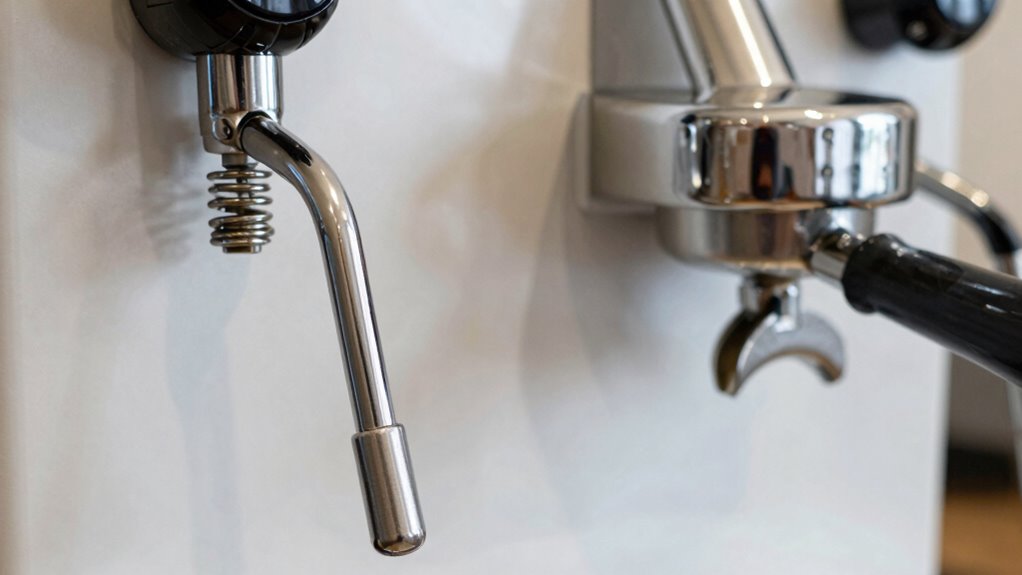
To get the best espresso from your lever machine, focus on mastering your technique and paying close attention to detail. Ensure your brewing temperature stays consistent for ideal extraction; too hot or cold can alter flavor. Verify that your grinder is compatible with your machine, providing a fine, uniform grind. Proper grind size prevents channeling and under or over-extraction. Use the following tips:
| Tip | Explanation |
|---|---|
| Maintain consistent brewing temperature | Use a thermometer or machine settings to control heat |
| Check grinder compatibility | Choose a grinder that produces a uniform, fine grind |
| Practice steady pressure | Develop a smooth, even lever pull for balanced extraction |
Consistent practice combined with attention to these factors will elevate your espresso quality.
Frequently Asked Questions
Can Spring and Direct Lever Machines Be Used for Other Beverages Besides Espresso?
Yes, spring and direct lever machines can be used for other beverages besides espresso. Their machine versatility allows you to craft alternative beverages like Americanos, lungo, or even tea with proper attachments. You simply need to adjust the brewing process accordingly. This flexibility makes these machines great for exploring different drinks, so you’re not limited to just espresso shots. Plus, their mechanical design offers precise control over extraction, enhancing your overall experience.
How Does Maintenance Differ Between Spring and Direct Lever Machines?
You’ll find maintenance differs mainly in pressure stability and component wear. Spring lever machines require more frequent checks of the spring and seals, as they experience more pressure fluctuations, which can cause faster wear. Direct lever machines offer better pressure stability, reducing component stress and wear over time. Regular lubrication and inspection are essential for both, but spring levers demand more attention to keep performance ideal and prevent leaks.
Are Spring Lever Machines More Durable Than Direct Lever Models?
Spring lever machines are generally more durable than direct lever models due to their robust mechanisms and sturdy materials. You’ll find that their material longevity withstands frequent use better, making them a reliable choice over time. The durability comparison favors spring lever machines, especially if you prioritize long-term performance. Proper maintenance also enhances their lifespan, ensuring you enjoy consistent quality without worrying about early wear or mechanical failure.
What Are the Initial Costs of Spring Versus Direct Lever Espresso Machines?
Are you wondering about the initial costs of spring versus direct lever espresso machines? The purchase price for spring lever models tends to be higher, reflecting their advanced mechanics and craftsmanship. You might spend more upfront on a spring lever, but many find the investment worthwhile for the superior control and taste. Direct lever machines are generally more affordable initially, making them a good choice if you’re budget-conscious but still want quality espresso.
Do Lever Machines Require Special Training to Operate Effectively?
You’ll need some barista training to operate lever machines effectively, especially since they require precise machine calibration and technique. Unlike automatic machines, levers demand a good understanding of pressure control and timing, so investing time to learn these skills guarantees consistent results. With proper training, you’ll master the nuances of pulling shots, ultimately elevating your coffee quality and taste.
Conclusion
Choosing between spring and direct lever machines is like selecting the right brush for a masterpiece—you’ll craft better espresso when it suits your style. Spring levers offer steady control, while direct levers give you hands-on mastery. Think of your machine as an extension of your artistry; with the right choice and practice, you’ll open flavors as rich and vibrant as a sunrise. Trust your instincts and enjoy every shot as a work of art.
Fall Picks
fall essentials
As an affiliate, we earn on qualifying purchases.


![Dove Mangiare A Milano: Le Nuove Aperture [In Aggiornamento]](https://ashgrind.com/wp-content/uploads/2026/09/dove-mangiare-a-milano-le-nuove-aperture-in-aggiornamento-featured-260x140.jpg)