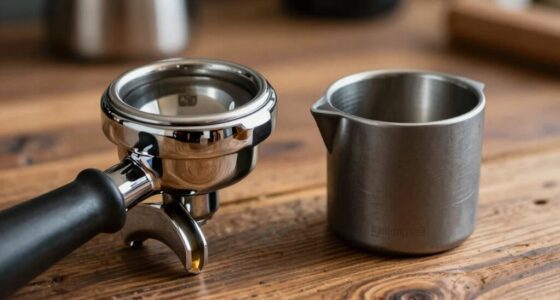
For your espresso, a 1:1 ratio produces a bold, concentrated shot with intense flavor and rich crema, perfect if you love strong coffee. The 1:2 ratio balances strength and drinkability, making it versatile for most preferences and pairing well with milk or alternatives. The 1:3 ratio creates a lighter, milder beverage that highlights subtle nuances and origin flavors. Choosing the right ratio depends on your taste and brewing style—discover more tips if you continue.

Get kitchen gear delivered free with Prime
- Fast, free delivery on millions of items
- Prime Video, Amazon Music and more included
- Member-only deals all year
Key Takeaways
- Use 1:1 ratio for bold, concentrated espresso with rich crema, ideal for straight shots.
- Opt for 1:2 ratio for balanced flavor, smooth body, and versatility with milk-based drinks.
- Choose 1:3 ratio for milder, lighter espresso highlighting subtle flavors and origin notes.
- Adjust ratios based on roast level, coffee origin, and personal taste preferences for optimal extraction.
- Match the ratio to your brewing style: stronger (1:1), balanced (1:2), or lighter (1:3).
As an affiliate, we earn on qualifying purchases.
What Do 1:1, 1:2, and 1:3 Ratios Mean for Your Espresso?
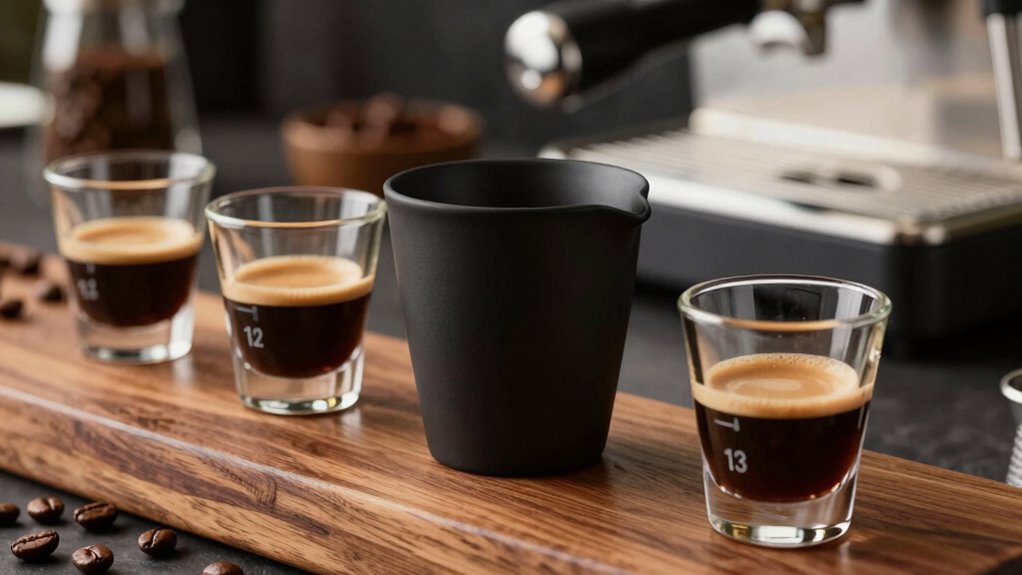
Ever wondered what those ratios like 1:1, 1:2, and 1:3 actually mean for your espresso? These espresso ratios describe the relationship between the amount of coffee grounds and the final liquid shot. A 1:1 ratio means equal parts coffee to water, resulting in a very concentrated shot with a bold flavor. A 1:2 ratio doubles the water, balancing strength and drinkability, while 1:3 further dilutes the espresso, producing a milder, more fluid beverage. Understanding these ratios helps you control the flavor balance of your espresso. Using the right ratio depends on your taste preferences and the type of coffee you’re brewing. Adjusting ratios allows you to fine-tune your espresso’s strength, body, and overall flavor profile for a better drinking experience. Proper ratio selection is essential for achieving the desired taste and consistency in your espresso.
As an affiliate, we earn on qualifying purchases.
How to Prepare a Perfect Espresso Shot at Different Ratios: Step-by-Step

To prepare a perfect espresso shot at different ratios, you need to start with the right amount of coffee grounds and adjust the water volume accordingly. Begin by choosing the correct grind size; a fine grind ensures proper extraction. Place the grounds in the filter basket and apply consistent tamp pressure—about 30 pounds—to create an even, firm puck. For a 1:1 ratio, use less water, so your shot is shorter and more concentrated; for 1:2 or 1:3 ratios, increase water volume gradually. Maintain consistent tamp pressure to avoid channeling, which can affect extraction. Adjust the grind size if you notice over- or under-extraction. Ensuring optimal extraction involves understanding contrast ratio, which affects the clarity and depth of the espresso’s flavor profile. Following these steps ensures each shot matches your desired ratio, delivering ideal flavor and body.
As an affiliate, we earn on qualifying purchases.
How Do These Ratios Affect Flavor and Body? Comparing 1:1, 1:2, and 1:3
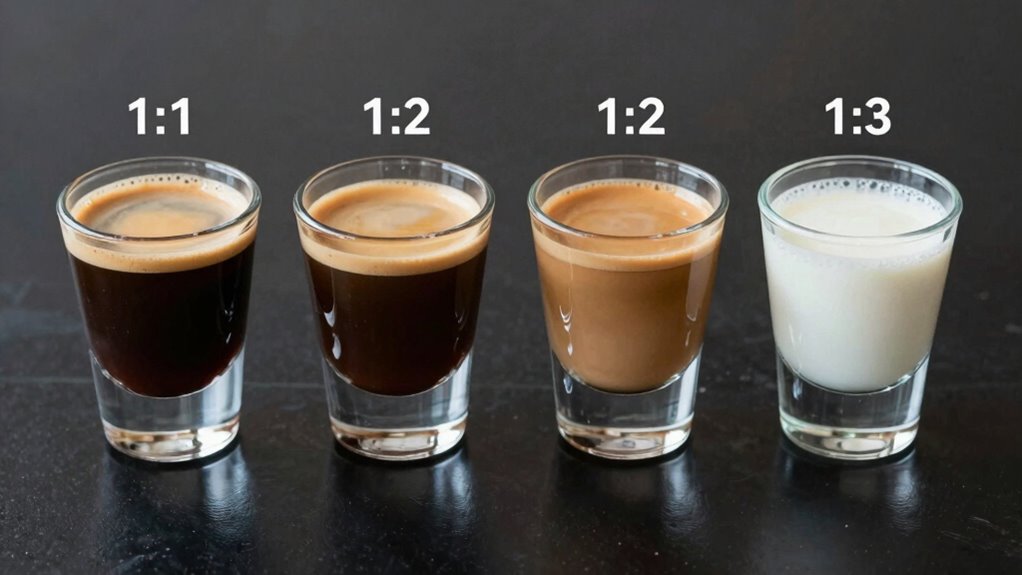
Different espresso ratios markedly influence the drink’s flavor and body. A 1:1 ratio results in a bold, intense shot with a rich, full body, ideal for those who prefer a strong taste. Increasing the ratio to 1:2 softens the flavor, balancing acidity and sweetness, making it versatile for milk alternatives like oat or almond milk. A 1:3 ratio produces a lighter, more delicate shot with less body, suitable for milder preferences or blending with milk. Keep in mind, grind size adjustments are essential to optimize extraction at each ratio. The table below compares key aspects:
| Ratio | Flavor Profile | Suitable Milk Alternatives |
|---|---|---|
| 1:1 | Bold, intense | Rich milk, creamers |
| 1:2 | Balanced, smooth | Oat, almond, soy |
| 1:3 | Light, subtle | Very mild milk alternatives |
As an affiliate, we earn on qualifying purchases.
When Should You Use Each Espresso Ratio for Best Results?

Choosing the right espresso ratio depends on your brew strength preferences and the flavor profile you want to achieve. If your beans are fresh, you might adjust the ratio to highlight their brightness or richness. Considering these factors helps you decide when to use each ratio for the best results.
Brew Strength Preferences
Understanding when to use each espresso ratio can substantially enhance your brewing results. Your brew strength preferences guide ratio adjustments, allowing you to tailor the shot’s intensity and flavor profile. A 1:1 ratio produces a bold, concentrated shot, ideal for those who prefer a rich, full-bodied taste. The 1:2 ratio offers a balanced flavor, providing a smooth yet robust experience suitable for most palates. A 1:3 ratio yields a lighter, more delicate shot, perfect for highlighting subtle flavor nuances or for a milder caffeine boost. Consider your desired flavor strength and the drink you’re preparing. By adjusting your ratio thoughtfully, you can achieve ideal flavor balancing, ensuring each espresso shot matches your personal taste preferences and the specific brewing context.
Bean Freshness Impact
Freshly roasted beans deliver vibrant flavors and ideal extraction, making them optimal for standard espresso ratios like 1:2 or 1:3. When your beans are fresh, they have high moisture and aromatic oils that can lead to over-extraction if the ratio isn’t adjusted. Proper bean storage helps maintain freshness and prevents staling, ensuring consistent results. If your beans aren’t as fresh, consider using a more concentrated ratio, like 1:1, to compensate for diminished flavor. Additionally, grinder calibration is crucial; a properly calibrated grinder ensures uniform grind size, which is vital for ideal extraction, especially with fresh beans. Using the right ratio with freshly roasted beans maximizes flavor and aroma, while adjusting ratios based on bean freshness can improve your espresso experience.
Desired Flavor Profile
The flavor profile you desire should guide your choice of espresso ratio. If you prefer a bold, intense flavor with a strong body, a lower ratio like 1:1 emphasizes flavor intensity and provides a richer, more concentrated shot. For a balanced cup with moderate strength and smoothness, a 1:2 ratio offers a good blend of flavor and body. If you aim for a lighter, more delicate espresso with subtle nuances, a 1:3 ratio creates a milder profile with less intensity but a brighter, more aromatic experience. Your choice depends on whether you prioritize flavor strength, body balance, or a more nuanced taste. Adjusting ratios allows you to tailor each shot to match your preferred flavor profile and the specific brewing context. Understanding espresso ratios can help you refine your brewing technique for optimal results.
What Are the Benefits of a 1:3 Ratio for Light, Nuanced Brews?
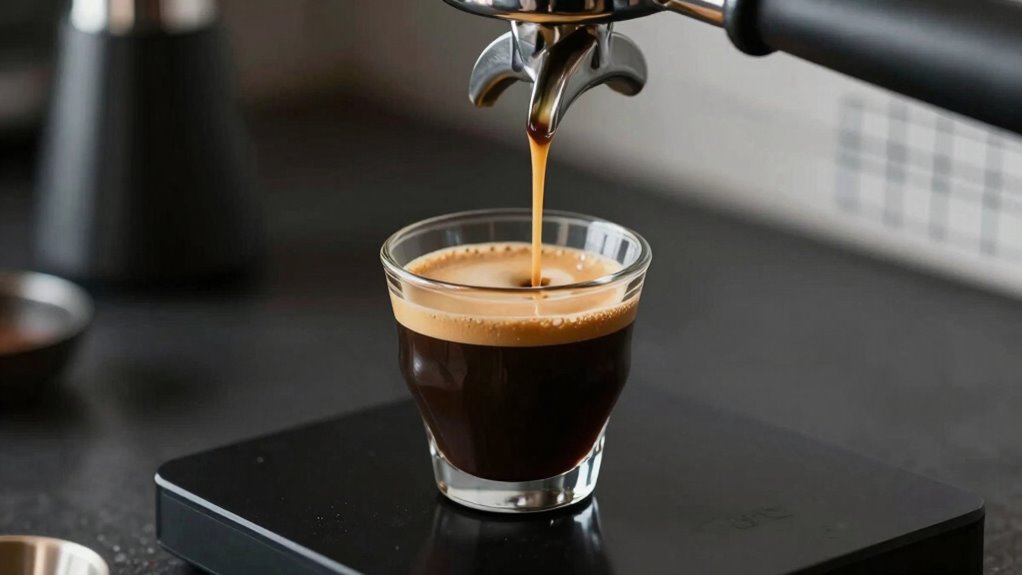
A 1:3 espresso ratio is ideal for highlighting the delicate, nuanced flavors of lighter roasts. When you use this ratio, you allow more water to extract subtle notes that might be overwhelmed in a stronger brew. This approach produces a lighter, more vibrant espresso that emphasizes the coffee’s complexity. It also reduces the risk of over-extraction, which can mask the delicate flavors of light roasts. By extending the brew time slightly, you release more nuanced aromas and taste profiles without sacrificing clarity or brightness. This ratio is perfect when you want your espresso to showcase the unique characteristics of the beans, making each sip a balanced, flavorful experience that highlights the coffee’s light, nuanced qualities. Additionally, understanding the concept of Free Floating can help in adjusting your brewing process to achieve optimal extraction.
Tips for Adjusting Ratios Based on Roast Level and Coffee Type

Your espresso ratio can vary depending on the roast level and coffee origin, as lighter roasts often need different extraction times than darker ones. Knowing the characteristics of your coffee helps you fine-tune the ratio to highlight its unique flavors. Ultimately, your personal taste preferences should guide adjustments to achieve your ideal shot. Additionally, understanding extraction techniques and proper brewing equipment can further enhance your espresso experience.
Roast Level Impact
Roast level considerably influences how you should adjust your espresso ratios, as darker roasts tend to extract more quickly and can sometimes lead to over-extraction if not managed carefully. When working with darker roasts, you might need a coarser grind size to slow down extraction time, preventing over-extraction and bitterness. Conversely, lighter roasts often require a finer grind to achieve ideal extraction. Adjusting the ratio can also help balance flavor; for darker roasts, a shorter brew (like 1:1 or 1:2) can highlight the boldness without over-extracting. Pay close attention to extraction time, aiming for about 25-30 seconds, and tweak your grind size and ratio accordingly to match the roast level and maintain the desired flavor profile.
Coffee Origin Characteristics
Coffee origin influences how you should adjust your espresso ratios alongside roast level considerations. Different coffee plants from regions like Africa, Central America, or Southeast Asia develop unique flavor profiles that respond differently to extraction. Light roasts highlight origin characteristics, so a higher ratio (like 1:3) can enhance clarity, while darker roasts may benefit from a more concentrated ratio (like 1:1 or 1:2). Understanding the coffee’s origin helps you optimize balance and complexity.
- Recognize how specific flavor notes, such as acidity or earthiness, affect extraction preferences
- Adjust ratios based on the coffee plant’s natural flavor profile
- Consider that beans with bright, fruity notes may need a different ratio than those with chocolate or nutty profiles
- Use origin insights to refine your espresso for maximum expression of the coffee’s character
Personal Flavor Preferences
Adjusting espresso ratios to match your personal flavor preferences involves understanding how roast level and coffee type influence extraction. Lighter roasts tend to have higher coffee acidity and require a slightly lower brewing temperature to avoid over-extraction, while darker roasts are more forgiving and can handle higher temperatures. To enhance flavor, consider this guide:
| Roast Level | Coffee Acidity | Optimal Brewing Temperature |
|---|---|---|
| Light | High | 90-92°C |
| Medium | Balanced | 92-94°C |
| Dark | Low | 94-96°C |
Adjust ratios accordingly: a 1:1 ratio accentuates brightness in light roasts, while a 1:3 ratio smooths out dark roasts’ fuller body. Understanding candy varieties and innovations can help you explore different flavor profiles and brewing techniques to find your perfect cup.
Troubleshooting Common Extraction and Flavor Issues With Different Ratios
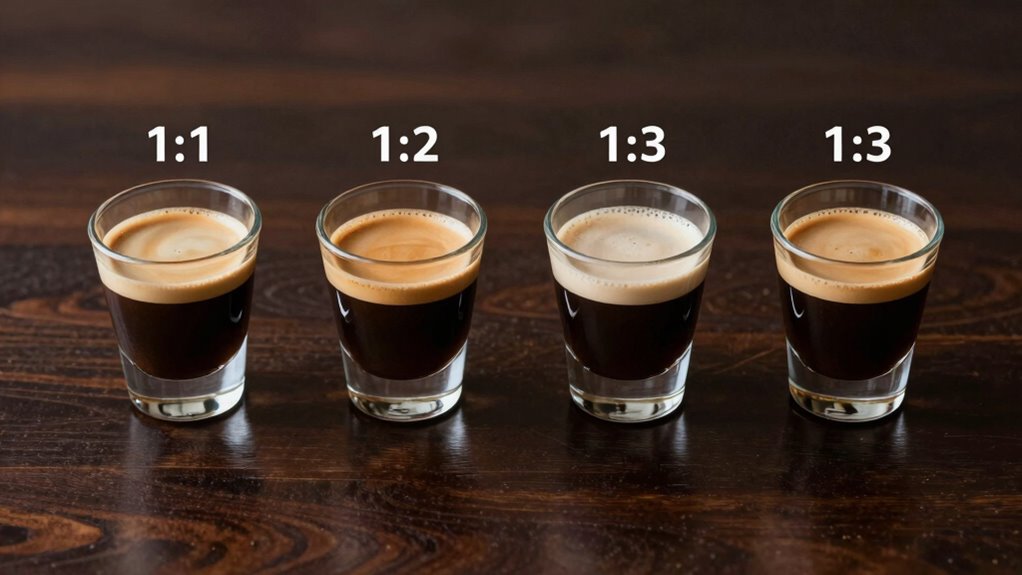
When your espresso shots taste sour, bitter, or lack balance, tweaking the brew ratio can often help you troubleshoot these issues. Adjusting the ratio influences extraction time, affecting flavor complexity. If your shot is sour, consider increasing the brew ratio with a slightly coarser grind or higher brew temperature to encourage fuller extraction. Conversely, a bitter shot might need a lower ratio, finer grind size, or reduced brew temperature to prevent over-extraction. Keep in mind that grind size and brew temperature directly impact extraction and flavor. Experimenting with these variables alongside ratio adjustments allows you to fine-tune your espresso for ideal flavor.
- Verify your brew temperature for consistent heat transfer during extraction
- Adjust grind size to optimize extraction without over- or under-extracting
- Modify the ratio based on flavor balance and extraction time
- Monitor shot duration to prevent undesirable taste profiles
- Remember that navigation and mapping principles can help you understand your espresso machine’s flow and optimize your extraction process.
Which Espresso Ratio Fits Your Brewing Style? A Quick Guide
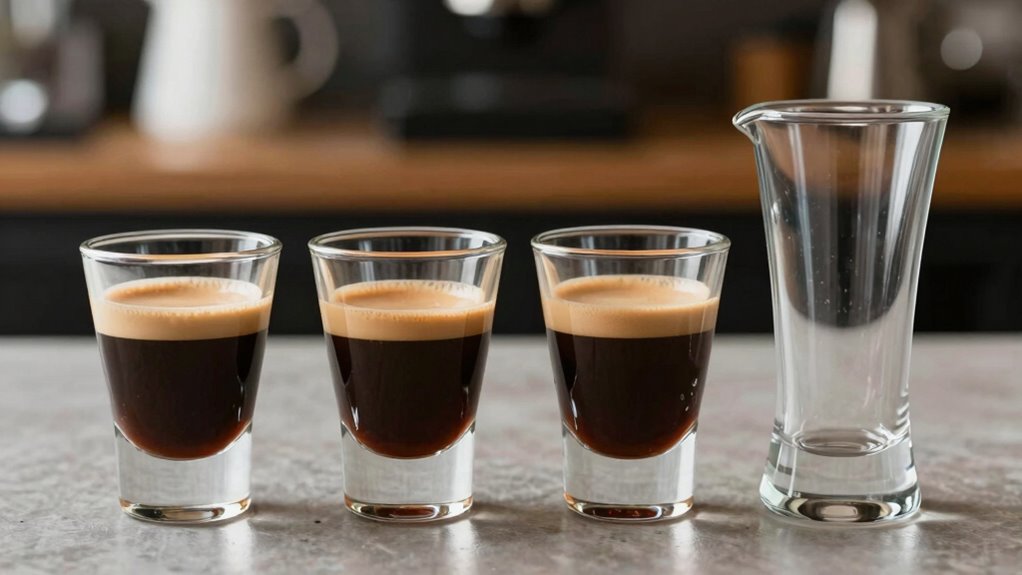
Choosing the right espresso ratio depends on your brewing style and flavor preferences. If you prefer a bold, intense shot with a rich crema, a 1:1 ratio is ideal, promoting a quick espresso extraction that highlights strength. For a balanced, sweeter flavor with more body, a 1:2 ratio works well, allowing for longer extraction and better extraction of nuanced flavors. A 1:3 ratio produces a lighter, more diluted espresso, suitable for milder tastes or as a base for drinks like Americanos. Your coffee grind size influences these ratios: a finer grind generally requires a shorter extraction, aligning with lower ratios, while a coarser grind suits higher ratios. Understanding extraction is essential to mastering how different ratios influence flavor and texture. Adjusting your brew ratio allows you to customize the intensity and complexity of your espresso, helping you develop a personalized brewing technique. Experiment to find which ratio complements your brewing style and desired flavor profile, and consider brew ratio adjustments to fine-tune your results. Recognizing how extraction time interacts with these ratios can further refine your espresso to match your taste preferences. Additionally, being aware of consistency in measurement can help you replicate your ideal results each time.
Frequently Asked Questions
How Do Grind Size Adjustments Influence Different Espresso Ratios?
Adjusting your grind size directly impacts extraction time and your espresso ratio. A finer grind increases resistance, leading to longer extraction and a richer, more balanced shot, ideal for 1:1 ratios. Conversely, a coarser grind reduces extraction time, making it perfect for higher ratios like 1:3. Keep your grind consistency steady; small changes can markedly influence flavor and overall shot quality. Always monitor extraction and tweak accordingly.
Can Ratios Be Customized for Specific Coffee Bean Origins?
Yes, you can customize ratios for specific coffee bean origins. Imagine each origin as a unique landscape—bright, fruity, or earthy—that demands a tailored approach. Adjusting ratios enhances their natural flavor profiles, highlighting delicate notes or balancing boldness. By experimenting with ratios, you create a brew that reflects the bean’s character, ensuring each shot captures its true essence and delivers a personalized espresso experience.
How Does Water Temperature Impact Extraction at Various Ratios?
You’ll find that water temperature considerably impacts extraction at different ratios, influencing water chemistry and flavor profiles. Cooler water extracts more delicate, nuanced flavors, especially at higher ratios like 1:3, while hotter water enhances solubility, emphasizing bold, intense notes in lower ratios like 1:1. Adjusting temperature allows you to fine-tune flavor extraction, ensuring your espresso highlights the desired characteristics based on your chosen ratio and coffee origin.
What Equipment Settings Are Optimal for Each Ratio?
While precise equipment settings vary, focus on adjusting grind size, tamp pressure, and extraction time to suit each ratio. For a 1:1 shot, use a fine grind and shorter extraction to emphasize bold flavors. For higher ratios like 1:3, slightly coarser grind and longer extraction develop balanced, nuanced profiles. Mastering brewing techniques guarantees each ratio releases its optimal flavor potential, making your espresso consistently delicious.
Are There Health Considerations When Using Different Espresso Ratios?
You should consider health concerns and nutritional impact when choosing espresso ratios. Higher ratios like 1:3 tend to have less caffeine per ounce, which might be better if you’re sensitive to caffeine or trying to reduce intake. Lower ratios like 1:1 or 1:2 deliver more caffeine and antioxidants, but could cause jitters or sleep issues if consumed excessively. Balance your choice based on your health needs and caffeine tolerance.
Conclusion
Choosing the right espresso ratio depends on your taste and brewing style. For instance, if you prefer a bold, intense shot, a 1:1 ratio might suit you best. Imagine Sarah experimenting with her roast levels—she found that a 1:3 ratio highlighted her coffee’s subtle notes. By understanding these ratios and adjusting them to your beans, you can craft the perfect espresso every time. Keep experimenting, and enjoy discovering your ideal brew!
Halloween Picks
halloween
As an affiliate, we earn on qualifying purchases.