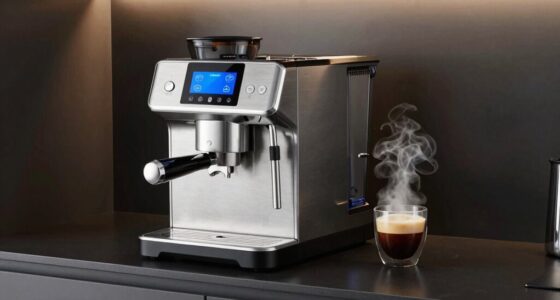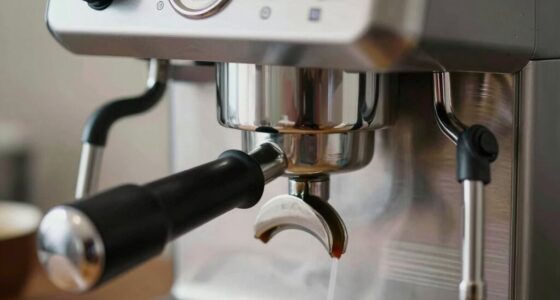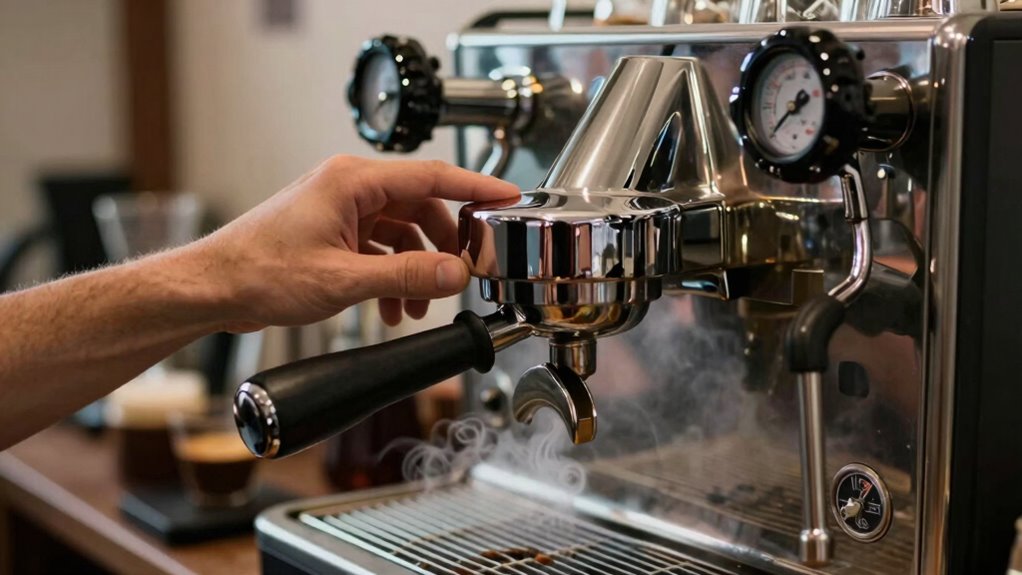

Your grouphead temperature directly impacts your espresso’s taste. Too hot, and you’ll extract bitter, burnt flavors; too cold, and your shot may taste sour or weak. Maintaining a stable brew temperature helps highlight the coffee’s aroma, body, and nuances, avoiding over- or under-extraction. Small adjustments and consistent preheating can make a big difference. If you want to keep your espresso tasting its best, understanding these effects will help you improve your technique over time.

Get kitchen gear delivered free — and shop member deals
- Fast, free delivery on millions of items
- Access to Prime Big Deal Days deals on October 6–7
- Prime Video, Amazon Music and more included
Key Takeaways
- Proper grouphead temperature ensures balanced extraction, highlighting coffee’s aroma, body, and nuanced flavors.
- Over-heated groupheads cause over-extraction, resulting in bitterness and burnt tastes.
- Cold groupheads lead to under-extraction, producing sour, weak, or flat espresso.
- Fluctuations in temperature can cause inconsistent flavor, acidity, and overall shot quality.
- Maintaining stable temperature through preheating and consistent workflow preserves flavor clarity and balance.
espresso machine grouphead thermometer
As an affiliate, we earn on qualifying purchases.
As an affiliate, we earn on qualifying purchases.
How Grouphead Temperature Affects Espresso Flavor and Extraction
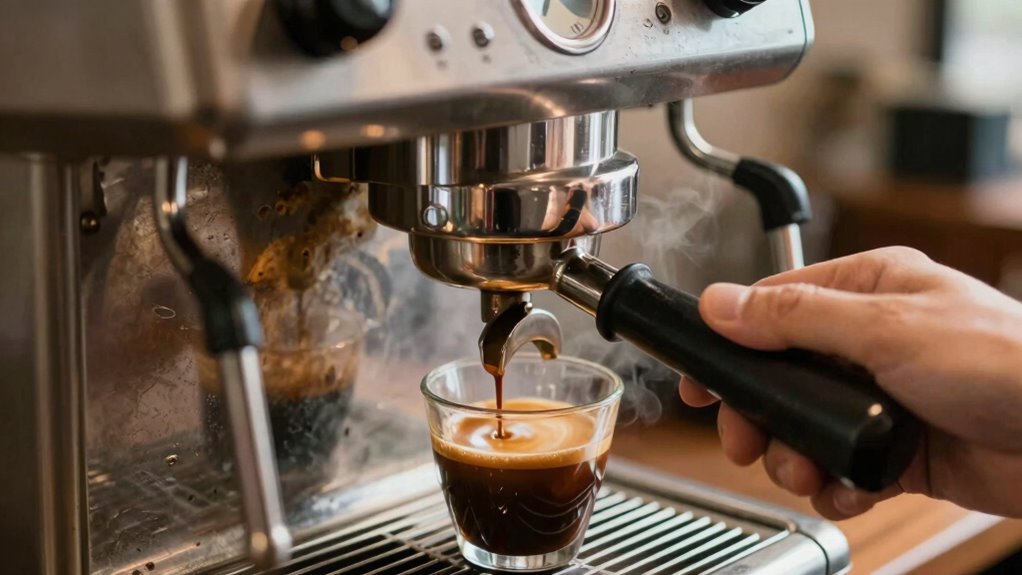
The temperature of the grouphead plays a essential role in determining the flavor and extraction quality of your espresso. When the brew temperature is just right, it guarantees a proper extraction balance, highlighting the nuanced flavors of your coffee. If the grouphead is too hot, you risk over-extraction, which can cause bitterness and a burnt taste. Conversely, if it’s too cold, under-extraction may occur, resulting in sour or weak flavors. Maintaining a consistent temperature helps you achieve ideal brew temperature, allowing the hot water to extract the coffee solubles evenly. Proper temperature stability is crucial to prevent fluctuations that could negatively impact the taste. This balance is indispensable for a well-rounded espresso, as it directly influences aroma, body, and overall taste. Regular temperature calibration can help maintain optimal brewing conditions and improve your espresso quality over time. Additionally, understanding the impact of thermal stability can assist you in troubleshooting common extraction issues effectively. Ensuring your espresso machine has reliable temperature control systems can make a significant difference in maintaining consistent results.
coffee machine temperature calibration tools
As an affiliate, we earn on qualifying purchases.
As an affiliate, we earn on qualifying purchases.
Signs Your Espresso Is Under- or Over-Extracted Due to Temperature
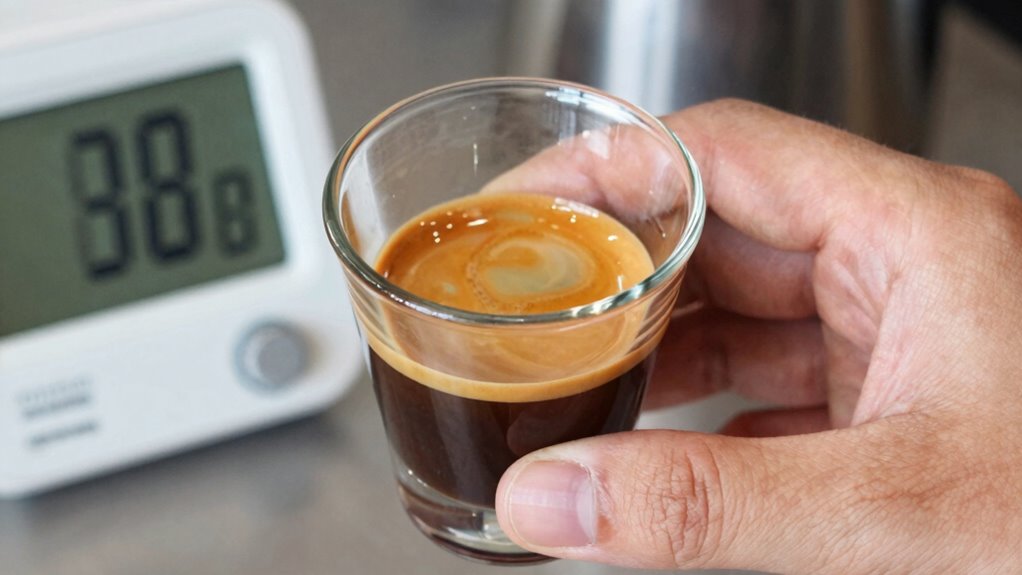
When your espresso tastes off, it often signals temperature-related extraction issues. An improper brew temperature can lead to under- or over-extraction, disrupting the extraction balance. If your shot tastes sour or has a sharp acidity, it might be under-extracted, often caused by too low a brew temperature. Conversely, a bitter or harsh flavor suggests over-extraction from excessively high brew temperature. Additionally, if your espresso lacks body or sweetness, it could be under-extracted, while a muddy or burnt taste indicates over-extraction. Pay attention to these signs, as they reveal how your brew temperature impacts extraction balance. Adjusting the temperature can help you achieve a more balanced, flavorful shot without needing new equipment, ensuring you get the best taste from your current setup. Proper temperature control is key to mastering your espresso extraction and getting consistent results. Understanding how grouphead temperature influences extraction can help you fine-tune your process for optimal flavor. Maintaining consistent temperature stability is also essential, as fluctuations can lead to unpredictable extraction outcomes. Moreover, monitoring your brewing environment and machine calibration can help sustain ideal brew temperature, preventing flavor inconsistencies. Being aware of temperature fluctuations can help you troubleshoot and maintain optimal extraction conditions.
As an affiliate, we earn on qualifying purchases.
Easy Ways to Monitor Grouphead Temperature at Home
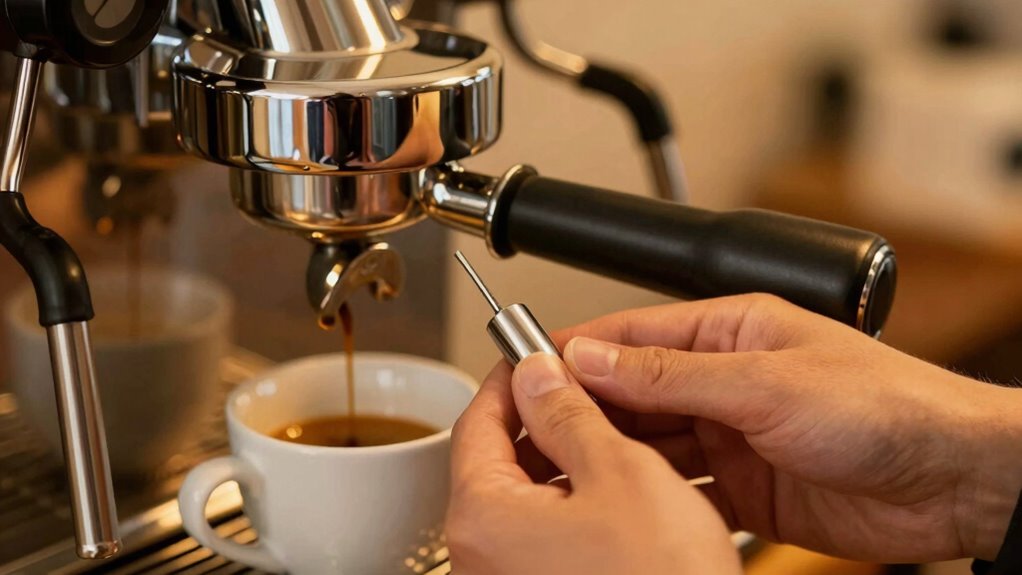
You can easily keep an eye on your grouphead temperature with simple thermometer methods, like a basic probe thermometer. These tools give you quick, accurate readings to guarantee ideal brewing conditions. Additionally, visual temperature indicators, such as color-changing stickers or strips, can provide a straightforward way to monitor temperature at a glance. For optimal results, choosing accurate thermometers ensures consistent brewing quality. To maintain proper temperature, regularly checking your equipment for proper airflow can prevent overheating or underheating issues. Incorporating connected monitoring devices can further enhance your ability to track temperature trends over time and optimize your brewing process, especially when considering factors like temperature stability for better extraction.
Simple Thermometer Methods
Monitoring grouphead temperature at home doesn’t have to be complicated. One simple method involves using a basic thermometer to gauge the temperature during operation. You can do this by feeling the grouphead surface—if it’s too hot to touch comfortably, it’s likely over 200°F. For more accuracy, a thermometer with a probe can measure the thermal expansion of water or a heat-sensitive strip placed nearby, which responds to temperature changes. Maintaining pressure balance within the machine helps guarantee consistent temperature readings without fancy gear. Checking these simple indicators regularly allows you to spot temperature fluctuations early, helping you fine-tune your espresso process. These methods are affordable, straightforward, and effective, giving you better control over your brew without complex equipment.
Visual Temperature Indicators
Ever wondered if there’s an easy way to check your grouphead’s temperature without a thermometer? Color changing strips offer a simple solution. These strips provide clear visual cues by changing color when exposed to specific temperatures, giving you instant feedback on your machine’s heat. To use them, place a strip on or near your grouphead during operation. As the temperature fluctuates, the strip’s color shifts, indicating whether your machine is within the ideal range. This method requires no special tools and is perfect for quick, at-a-glance monitoring at home. By paying attention to these visual cues, you can better maintain consistent temperature control, ensuring your espresso always tastes its best without investing in new gear. visual temperature indicators can help you quickly identify when adjustments are needed, preventing issues caused by incorrect temperatures. Additionally, understanding how grouphead temperature impacts extraction can lead to more consistent and flavorful espresso shots. Proper equipment maintenance, including monitoring temperature, is essential for optimal brewing results. Being aware of temperature stability helps preserve your machine’s performance over time.
grouphead temperature control accessories
As an affiliate, we earn on qualifying purchases.
As an affiliate, we earn on qualifying purchases.
How to Adjust and Stabilize Your Grouphead Temperature Without New Equipment

You can improve your grouphead temperature stability by preheating your machine thoroughly before brewing. Stick to consistent roasts to reduce temperature fluctuations, and time your pulls carefully to maintain ideal heat. These simple adjustments help you achieve more stable results without needing extra equipment. Additionally, maintaining a calm, organized home environment can help reduce distractions that might interfere with your brewing routine, supporting more consistent outcomes. Being aware of thermal stability principles from nanotechnology research can also inform your approach to maintaining even heat distribution in your machine, especially when considering smart home automation features that optimize your equipment’s performance. Incorporating temperature regulation techniques inspired by scientific advances can further enhance your consistency, as understanding heat transfer mechanisms allows for more precise control of your brewing process.
Preheat Your Machine
Preheating your espresso machine effectively guarantees a stable grouphead temperature, which is essential for consistent extraction. Start by running a blank shot or hot water through your brew head to warm up the group. This process helps stabilize the temperature before pulling your shot. Be mindful of your grind size and tamp pressure, as they influence extraction and can be affected by temperature fluctuations. A properly preheated machine ensures your grind size remains consistent and tamp pressure produces even contact, reducing the risk of under- or over-extraction. Regular preheating minimizes temperature swings during brewing, giving you better control over taste. Remember, a warm machine is your best tool for achieving ideal espresso flavor without the need for additional equipment.
Use Consistent Roasts
Using consistent roasts helps stabilize your grouphead temperature because different roast levels can cause fluctuations during extraction. When you stick to the same roast, your machine’s temperature responds more predictably, leading to better flavor control. Freshness of coffee beans and maintaining grind size consistency also play a role in stable extractions. To keep your process steady, consider using beans roasted within a similar time frame and adjusting grind size as needed. Here’s a quick comparison:
| Roast Level | Coffee Freshness | Grind Consistency |
|---|---|---|
| Light | Most recent | Slight adjustments |
| Medium | Moderate | Maintain steady |
| Dark | Slightly older | Consistent size |
| Very Dark | Older | Uniform grind |
Sticking to these variables minimizes temperature swings, ensuring consistent, flavorful shots.
Optimize Pull Timing
Ever wonder how to fine-tune your pull timing to stabilize your grouphead temperature? Adjusting when you pull your shot can make a big difference. Start by paying attention to your grind size—finer grounds hold heat longer, while coarser ones cool faster. Consistent tamp pressure ensures even extraction and maintains temperature stability. Timing your shot immediately after the machine warms up helps keep things steady. Also, avoid rushing; a well-timed pull reduces temperature fluctuations. Finally, monitor your machine’s heat cycle to find the best window for pulling shots.
- Use a consistent grind size for each shot
- Apply steady tamp pressure every time
- Pull shots at the same point in your machine’s heat cycle
- Keep your portafilter preheated
- Practice a smooth, deliberate pull to control timing
How Temperature Fluctuations Impact Espresso Aroma and Taste
Temperature fluctuations can substantially alter the delicate balance of aroma and flavor in your espresso. When water temperature isn’t consistent, it impacts extraction, reducing the vividness of aroma and causing off-flavors. Fresh beans respond better to stable temperatures, preserving their nuanced notes. If the grouphead runs too hot or cool, you might notice dull or overly sharp tastes. Maintaining a steady temperature ensures ideal aroma release and flavor clarity.
| Temperature Effect | Aroma Impact | Taste Result |
|---|---|---|
| Too hot | Overly roasted aroma | Bitter, burnt flavors |
| Too cool | Flat, dull aroma | Underdeveloped flavors |
| Stable | Rich, vibrant aroma | Balanced, nuanced taste |
| Fluctuating | Inconsistent aroma | Unpredictable flavors |
Common Temperature Problems During Brewing and How to Fix Them
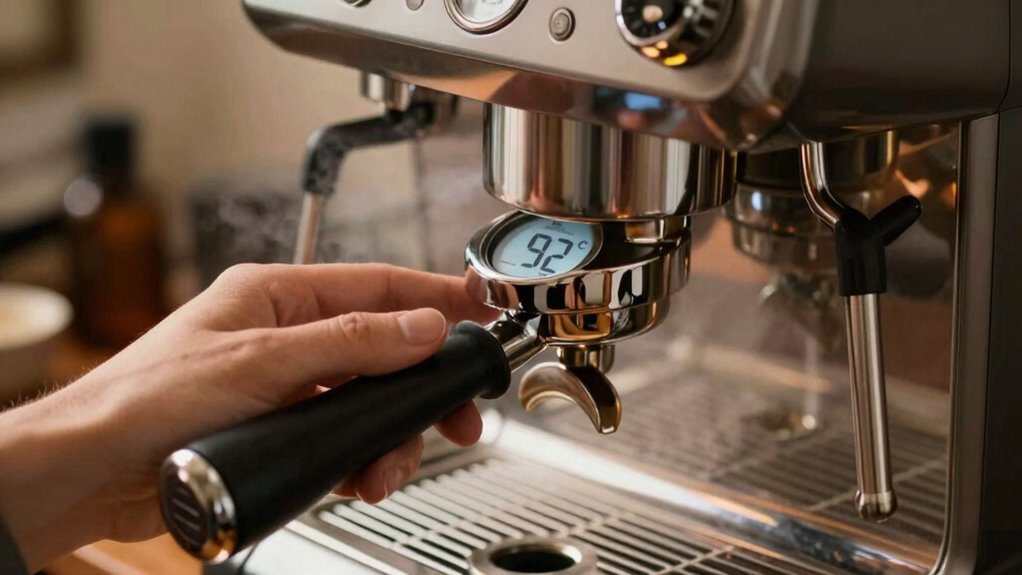
When brewing espresso, inconsistent grouphead temperature can lead to unpredictable results, affecting both flavor and aroma. Common problems include temperature swings caused by poor water quality or improper machine calibration. These issues can cause over-extraction or under-extraction, resulting in sour or bitter shots. To fix these problems, check your water quality—use filtered water to prevent mineral buildup. Adjust your grind size; a finer grind can help stabilize temperature, while a coarser grind might cause fluctuations. Regularly clean your grouphead and ensure your machine is properly maintained. Also, preheat your portafilter and brew basket to minimize temperature loss. By controlling these factors, you’ll enjoy more consistent espresso shots without investing in new equipment.
Tips to Keep Your Grouphead Temperature Consistent Over Time

Maintaining a stable grouphead temperature requires consistent machine practices and regular checks. To do this, start by paying attention to your coffee grind size; a uniform grind helps ensure even extraction and temperature stability. Avoid overly fine or coarse grinds, which can cause pressure fluctuations affecting temperature. Adjust tamp pressure consistently; applying even pressure reduces channeling and maintains water flow, helping to keep the temperature steady. Also, stay mindful of your workflow—pre-warm your portafilter and ensure your machine is properly heated before brewing. Regularly monitor your machine’s temperature settings and perform routine maintenance. By controlling grind size, tamp pressure, and machine readiness, you’ll create a more consistent environment for your espresso, ultimately improving taste without needing new gear.
Frequently Asked Questions
Can Ambient Room Temperature Influence Grouphead Temperature Stability?
Yes, ambient influence and room variability can impact your grouphead temperature stability. Fluctuations in room temperature cause the espresso machine’s temperature to shift, making it harder to maintain a consistent brew. You might notice changes in extraction quality or flavor. To minimize this, keep your machine in a stable environment, use a heat-insulating mat, or allow your machine to warm up properly before brewing.
How Long Does It Take for Temperature Changes to Affect Espresso Flavor?
Think of your espresso shot like a symphony—temperature changes create a flavor delay, often taking around 20-30 seconds to influence taste. Your brew timing plays a vital role: if the grouphead cools or warms, you’ll notice flavor shifts in your shot’s first few sips. So, be mindful of temperature stability, as even small fluctuations can lead to noticeable differences in flavor, affecting your overall espresso experience.
Are There Specific Types of Coffee That Are More Sensitive to Temperature Shifts?
Certain coffee beans, like light roasts or delicate single-origin varieties, are more sensitive to brew temperature variance. You’ll notice that their flavor profiles change more noticeably with slight temperature shifts, affecting acidity and aroma. To optimize taste, pay close attention to how your beans respond to temperature changes, and aim for consistent brew temperatures. This way, you preserve their unique qualities despite natural coffee bean sensitivity.
Does the Age or Wear of My Espresso Machine Impact Temperature Consistency?
Your espresso machine’s age and wear can definitely throw a wrench in temperature consistency. Over time, parts may drift from their original calibration, making it harder to maintain stable pressure and heat. Regular maintenance and calibration are your best bet to keep things dialed in, ensuring that your shots taste as good as they should. Don’t let aging equipment be a thorn in your side—stay vigilant and keep it in top shape.
Can Temperature Fluctuations Occur During Different Times of the Day?
Yes, temperature fluctuations can happen at different times of the day due to timing variations and daily fluctuations. You might notice your espresso machine’s temperature is slightly different in the morning compared to later in the day. These variations are influenced by factors like room temperature, machine warm-up time, and usage patterns. Staying aware of these timing variations helps you adjust brewing routines for consistent taste without needing new gear.
Conclusion
So, there you have it—mastering your grouphead temperature without fancy gadgets is totally doable. Just keep an eye on those numbers, stay consistent, and resist the urge to turn your espresso into a science experiment. After all, who needs precision when you can just blame the weather or your “vintage” machine? Now go ahead, impress your friends with perfectly brewed espresso—no extra gear required. Cheers to tastier sips and fewer caffeine-induced panic attacks!
Fall Picks
fall essentials
As an affiliate, we earn on qualifying purchases.