Choosing between reservoir and plumbed-in espresso machines impacts your routine and maintenance. Reservoir models need regular refills and can experience pressure fluctuations, while plumbed-in machines connect directly to water lines for steady pressure and convenience. Maintenance for both involves cleaning and descaling, but plumbed-ins often require installing a water line. Space, cost, and brew quality also differ. To optimize your setup and enjoy consistent results, explore how each option fits your lifestyle.
Key Takeaways
- Plumbed-in machines provide consistent water pressure and temperature, improving brew stability compared to reservoir models.
- Reservoir machines require regular refilling and maintenance, while plumbed-in units operate continuously with less manual intervention.
- Space and installation considerations differ; plumbed-in systems need water line setup, whereas reservoir machines are portable.
- Long-term durability favors plumbed-in machines due to continuous water flow and reduced mineral buildup.
- User convenience varies; plumbed-in models offer faster setup and fewer daily tasks, while reservoir machines offer flexibility and portability.
What Are the Main Differences Between Reservoir and Plumbed-In Espresso Machines?
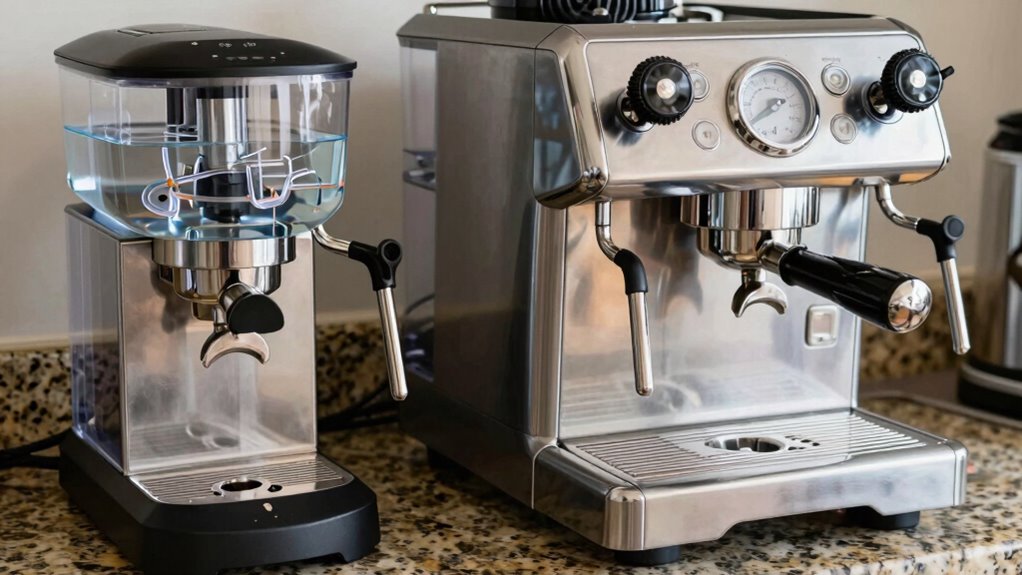
The main difference between reservoir and plumbed-in espresso machines lies in their water supply methods. Reservoir machines have a built-in water tank you fill manually, which can influence water pressure consistency. This often means you might experience slight fluctuations in pressure, impacting shot quality. Plumbed-in models connect directly to your water line, providing a steady, reliable water flow. This setup ensures consistent water pressure, leading to more uniform espresso extraction. Additionally, reservoir machines tend to have a shorter lifespan because their components are designed for less frequent use, making them potentially less durable. In contrast, plumbed-in machines are built for continuous operation, often offering greater machine durability. This makes them a better choice for high-volume settings or those seeking long-term reliability. Moreover, maintaining a consistent water supply is crucial for optimal espresso quality and machine longevity. Proper filtration and regular maintenance of the water source can significantly extend the lifespan of plumbed-in units. Ensuring a clean water source can also help prevent mineral buildup, which can affect performance over time. Regularly checking and maintaining water connections can prevent leaks and ensure consistent operation.
How Does Water Supply Impact Ease of Setup and Daily Use?

Your choice of water supply affects how easy it is to set up and maintain your espresso machine. Reservoir models usually require frequent refilling, which can slow you down, while plumbed-in units connect directly to water lines for quicker setup. Consider how much effort you’re willing to invest in daily refilling and ongoing maintenance to find the best fit for your routine. Additionally, understanding the comparative advantage of each system can help you make a more informed decision aligned with your needs.
Setup Convenience and Speed
Water supply plays an essential role in how quickly and easily you can set up and operate an espresso machine daily. With a water tank, you simply fill it and move on, but it adds time when refilling regularly. A plumbing connection, on the other hand, offers instant access to water, streamlining your routine. Additionally, considering outdoor wisdom can help you adapt these setups for more efficient and reliable use in different environments. Incorporating natural elements into your setup can further enhance performance and sustainability in outdoor or eco-friendly spaces. Understanding the physical properties of water flow can also influence your choice, especially in varying environmental conditions. Moreover, being aware of appliance compatibility ensures your espresso machine functions safely and efficiently with your home’s existing water system. Recognizing system maintenance requirements can help you keep your setup in optimal condition over time.
Maintenance and Refilling Ease
Since water supply directly affects how easy it is to maintain and refill your espresso machine, choosing between a tank and plumbing impacts your daily routine. With a reservoir, you’ll need to regularly refill and monitor water levels, but it allows flexibility in water filtration choices. You’ll also need to perform descaling procedures periodically to prevent mineral buildup. A plumbed-in machine, however, offers a continuous water supply, reducing refilling time and minimizing maintenance. However, it might require installing a water filtration system on the line to ensure water quality, and descaling remains essential to keep your machine in top shape. Additionally, understanding the legal and operational considerations of water systems can help ensure compliance and optimal performance. Proper water line installation is crucial to prevent leaks and ensure consistent water pressure, which can influence the machine’s longevity and performance. Regular maintenance of water filtration systems is also important to maintain water quality and prevent clogs. Ensuring proper water pressure management can help prevent damage and improve overall espresso quality. In some cases, the vetted water and wind standards may influence the selection of water sources for optimal performance. Overall, plumbed-in setups simplify daily use, but both options demand attention to water quality and routine descaling.
What Maintenance and Cleaning Do Each Machine Type Require?
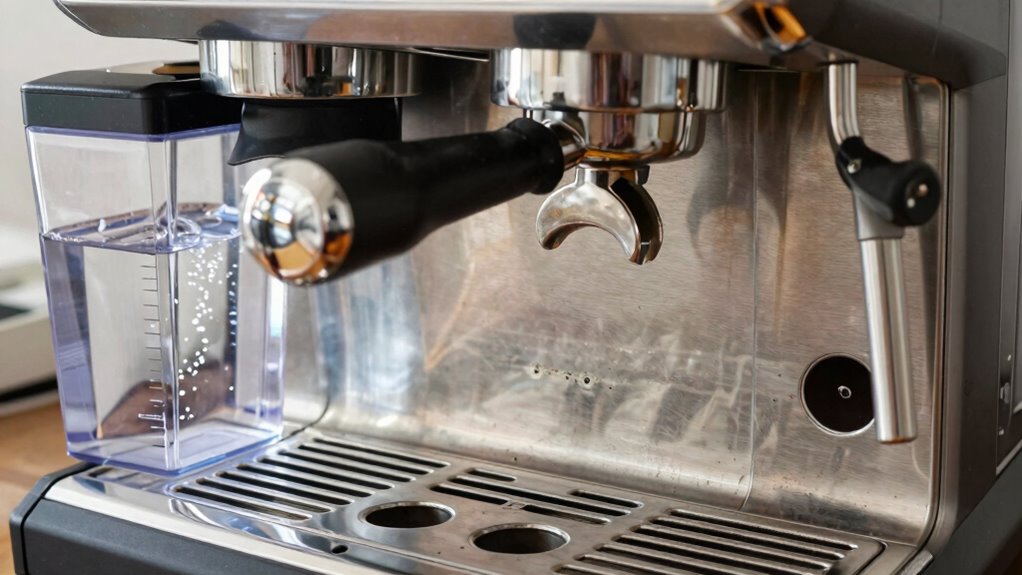
Reservoir and plumbed-in espresso machines each require regular maintenance to keep them functioning at their best, but the tasks differ based on their design. With reservoir machines, you’ll need to frequently refill water, replace filters, and perform descaling routines to prevent mineral buildup. For plumbed-in models, maintenance involves checking water connections and ensuring filters stay clean. Both types benefit from routine descaling to maintain *ideal* extraction, but reservoir machines often require more frequent filter replacements. Cleaning the brew group and wiping down surfaces are common tasks for both. Regularly descaling routines help prevent clogs, while filter replacements ensure water quality. Additionally, understanding ventilation considerations can help prevent mold and ensure safe operation. Proper ventilation and air circulation are essential for preventing excess humidity buildup, which can lead to mold growth. Ensuring your machine is kept in a well-ventilated space can also extend its lifespan and improve overall performance. Maintaining water quality through proper filtration is crucial for both types of machines, as it directly impacts flavor and longevity. Adequate airflow can reduce the risk of mold and bacteria growth inside the machine. Staying on top of these maintenance steps guarantees consistent flavor and prolongs your machine’s lifespan.
How Much Space Do Reservoir and Plumbed Machines Need?
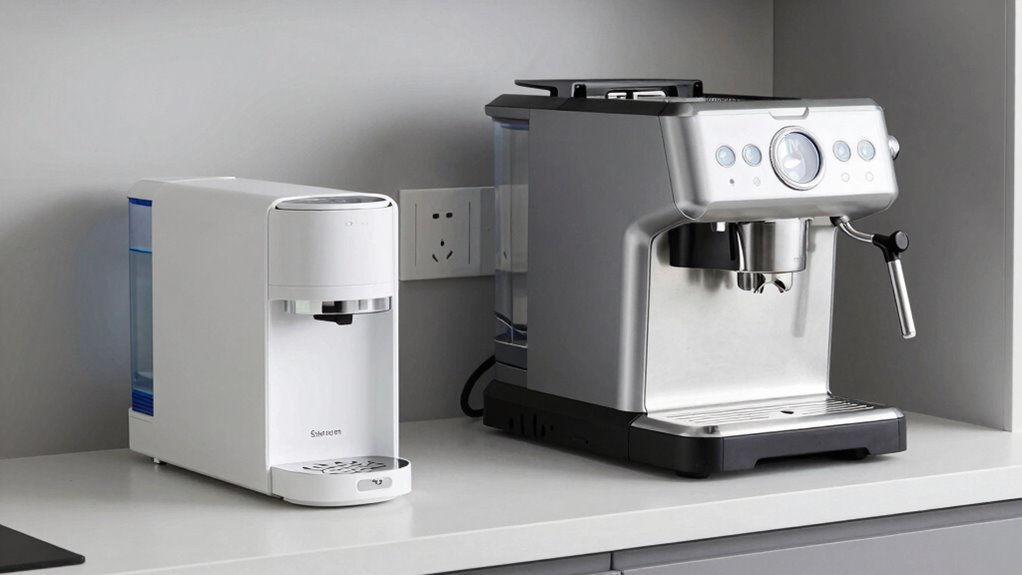
Choosing the right espresso machine often depends on the space you have available, as reservoir and plumbed-in models vary in their installation footprint. Reservoir machines typically need extra space nearby for water refilling, so consider their overall footprint, including the water tank. Plumbed-in systems have a smaller installation footprint since they connect directly to water lines, saving space on storage. Measure your available area carefully to ensure the machine fits comfortably without crowding your kitchen. Keep in mind that some models require additional clearance for maintenance or access to water connections. If space is limited, a plumbed-in machine might be ideal due to its compact setup. Conversely, if you prefer flexibility and portability, a reservoir machine could be more suitable despite its larger footprint. Additionally, consider the space requirements for maintenance, which can influence your choice depending on the accessibility of your kitchen layout. Being aware of installation considerations can help you select a machine that seamlessly fits your kitchen’s design and usage habits. It’s also helpful to assess the long-term maintenance needs to ensure the machine remains functional and accessible over time.
Does Brew Quality Differ Between Reservoir and Plumbed Systems?

You’ll want to evaluate whether the water source affects brew quality, especially regarding temperature consistency and water purity. Reservoir and plumbed systems can deliver different levels of water clarity and stability, which impact flavor. Understanding these differences helps guarantee your espresso always tastes its best. Additionally, consider the relationship rewind that occurs when switching between systems, as it may influence your brewing routine and maintenance.
Consistent Water Temperature
Maintaining a consistent water temperature is essential for achieving ideal espresso extraction, and the type of water source can considerably influence this stability. With a plumbed-in system, you typically experience better water stability and temperature consistency because the water is supplied directly from the mains, reducing fluctuations. In contrast, reservoir machines may face temperature inconsistencies due to water volume changes during brewing.
Consider these factors:
- Mains water supply offers steady pressure and temperature
- Reservoirs can experience temperature drops as water heats or cools
- Pump quality impacts water flow and stability
- External factors like ambient temperature can influence reservoir systems
Water Quality and Clarity
Water quality and clarity play a pivotal role in determining the overall brew quality, and the type of water source can influence these factors. With reservoir systems, you have more control over water purity, allowing you to filter and adjust mineral content to optimize taste. Conversely, plumbed-in machines often rely on municipal water, which can vary in mineral levels and impurities, potentially affecting clarity and flavor consistency. High mineral content can lead to mineral buildup and cloudy brews, while poor water purity introduces unwanted flavors. Regular maintenance and water filtration are essential regardless of the system. Ultimately, ensuring clean, well-filtered water maintains clarity and enhances your espresso’s flavor, whether you choose a reservoir or plumbed-in setup.
What Are the Cost and Long-Term Investment Factors?
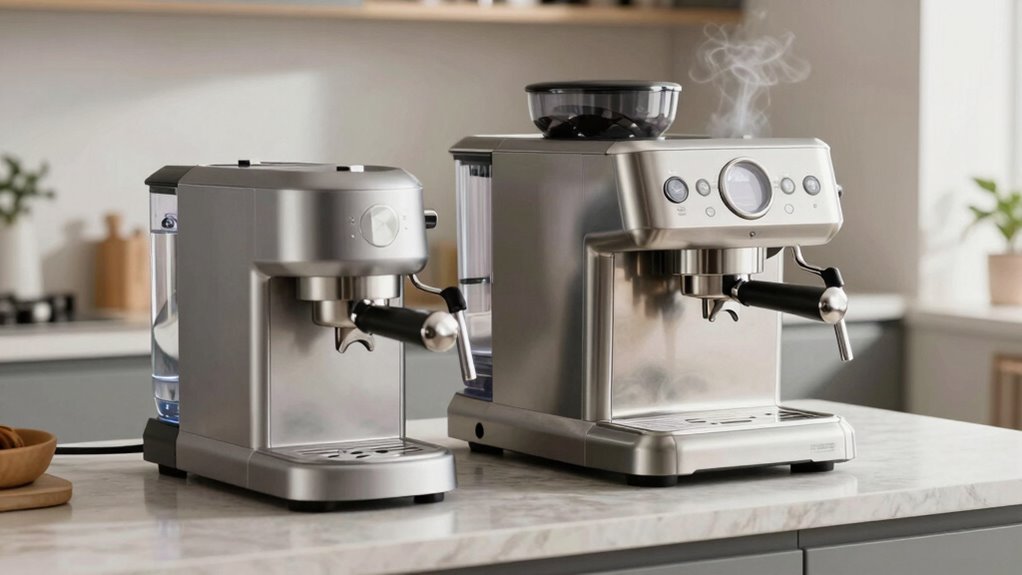
When evaluating reservoir and plumbed-in espresso machines, understanding their cost and long-term investment factors is essential. Your initial purchase price is just the start; consider ongoing expenses and potential savings. A thorough cost analysis reveals that plumbed-in machines often have higher upfront costs but may lead to long-term savings through reduced water refilling and maintenance. Reservoir machines typically cost less initially but could incur higher costs over time due to frequent refilling and cleaning. Factors like durability, energy efficiency, and maintenance requirements influence overall value. Think about how often you’ll use the machine and your willingness to invest upfront for convenience. Balancing these aspects helps you make an informed decision that aligns with both your budget and your long-term goals.
Which Espresso Machine Is Right for Your Lifestyle?
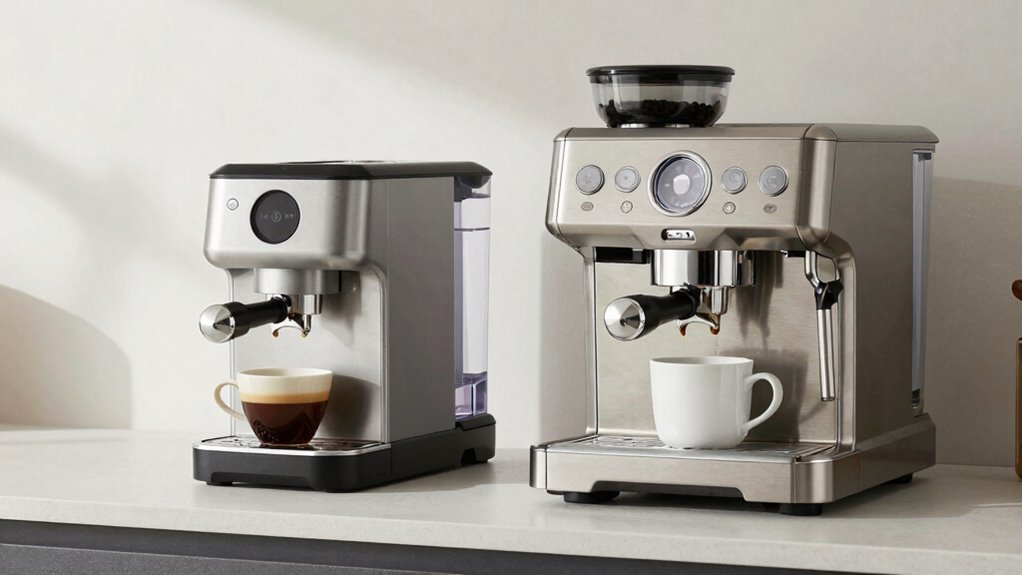
Choosing the right espresso machine depends on how you live and how often you enjoy your coffee. If you value convenience and consistency, a plumbed-in machine with water filtration and energy-efficient features might suit you best. It minimizes refilling and guarantees pure water for better flavor. On the other hand, if you prefer flexibility and simplicity, a reservoir machine works well, though you’ll need to refill it regularly. Consider your daily routine and space constraints.
| Lifestyle Aspect | Ideal Machine Type |
|---|---|
| Frequent Use | Plumbed-in, energy-efficient machine |
| Convenience | Reservoir machine with water filtration |
| Space & Flexibility | Compact reservoir model |
Frequently Asked Questions
Can Reservoir Machines Handle High-Volume Brewing Effectively?
Reservoir machines can handle high-volume brewing effectively, but water pressure and brewing speed may be limited compared to plumbed-in models. As you increase volume, you might notice a slowdown in brewing speed because the reservoir’s water supply needs time to refill. To guarantee consistent quality, keep an eye on water pressure, and consider a larger reservoir or a plumbed-in machine if you frequently brew large quantities quickly.
Are Plumbed-In Machines Suitable for Small Kitchen Spaces?
Yes, plumbed-in machines are suitable for small kitchens due to their compact design, saving counter space. However, keep in mind that installation complexity can be higher, requiring plumbing connections and professional setup. If you want a sleek, integrated look without sacrificing space, these machines work well. Just make certain you’re prepared for the installation process, and you’ll enjoy consistent, high-quality espresso right in your small kitchen.
How Do Water Filtration Options Differ Between the Two Types?
Your water filtration options differ significantly between reservoir and plumbed-in machines. With reservoir machines, you typically need to manually refill and install a filtration system yourself, which can improve water quality. Plumbed-in machines usually connect directly to your water supply, often featuring built-in filtration systems that continuously guarantee water quality. This means less maintenance and consistent water filtration, but you’ll want to verify the filtration system’s effectiveness for ideal espresso flavor.
Do Maintenance Costs Vary Significantly Over the Machine’s Lifespan?
You might find maintenance costs vary more with reservoir machines over time, mainly due to water quality and the need for regular replacement parts like filters and seals. Plumbed-in machines often have higher initial costs but tend to need less frequent upkeep, saving you money in the long run. Don’t forget, keeping up with routine maintenance helps prevent costly repairs and keeps your espresso tasting exceptional.
Which Machine Type Offers Better Energy Efficiency?
Plumbed-in espresso machines generally offer better energy efficiency because they maintain consistent water temperature and don’t rely on a reservoir that needs constant heating. This reduces energy consumption and minimizes environmental impact over time. You’ll notice lower electricity bills and a more eco-friendly setup. Reservoir machines, while convenient, tend to use more energy due to frequent heating cycles, making them less efficient in the long run.
Conclusion
Choosing between a reservoir and plumbed-in espresso machine is like selecting a vessel or a river for your coffee journey. If you value independence and simplicity, the reservoir is your trusty boat, easy to maneuver. For a seamless flow and minimal upkeep, the plumbed-in is your steady stream. Whichever path you choose, remember it’s about finding the flow that best complements your daily rhythm and elevates your coffee experience.