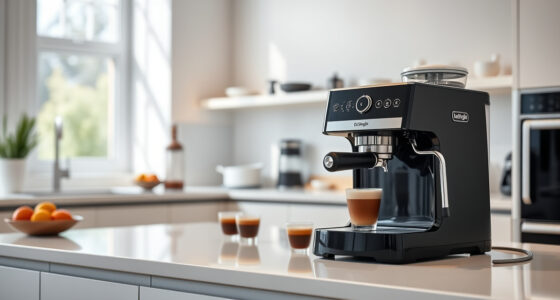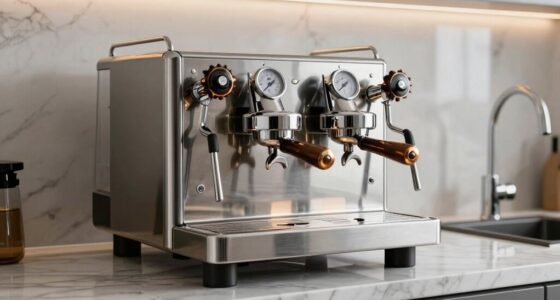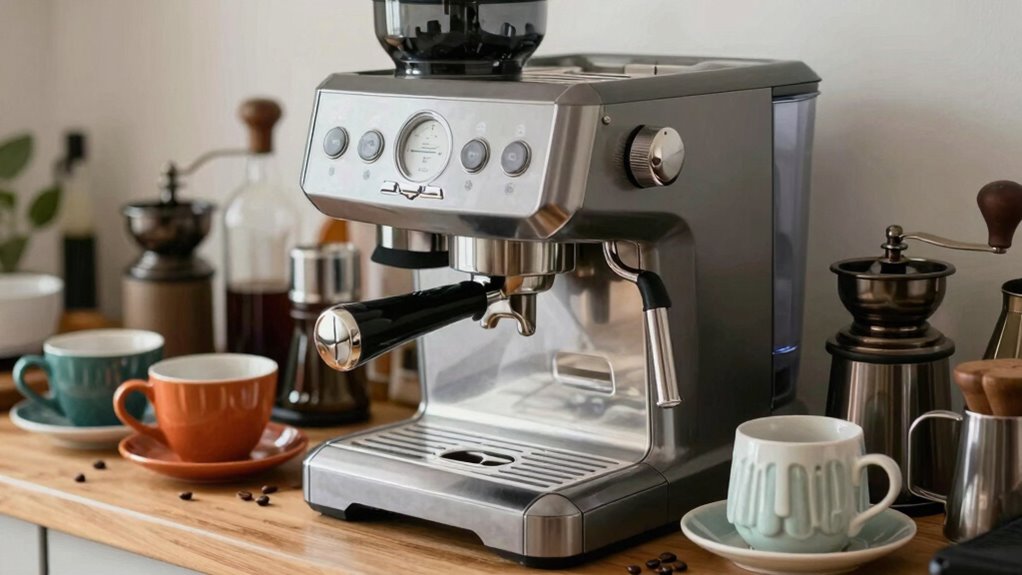
All-in-one espresso machines might seem perfect for beginners, but they often come with complex mechanisms and high maintenance. You might find yourself spending a lot of time cleaning and troubleshooting, which can be frustrating. Limited customization options also restrict your skill development. While these machines prioritize convenience, they may lead to higher long-term costs or dissatisfaction if they break down. Stay tuned to discover why exploring other options could be a smarter choice initially.

Get kitchen gear delivered free — and shop member deals
- Fast, free delivery on millions of items
- Access to Prime Big Deal Days deals on October 6–7
- Prime Video, Amazon Music and more included
Key Takeaways
- All-in-one machines can be complex to maintain, leading to higher long-term upkeep and potential repairs.
- Limited customization restricts skill development and experimentation for aspiring baristas.
- The complexity may overwhelm beginners, delaying confidence and mastery in espresso making.
- Initial convenience might mask ongoing maintenance challenges, resulting in frustration and dissatisfaction.
- They often come with a higher upfront cost and potential future expenses, making them less cost-effective for novices.
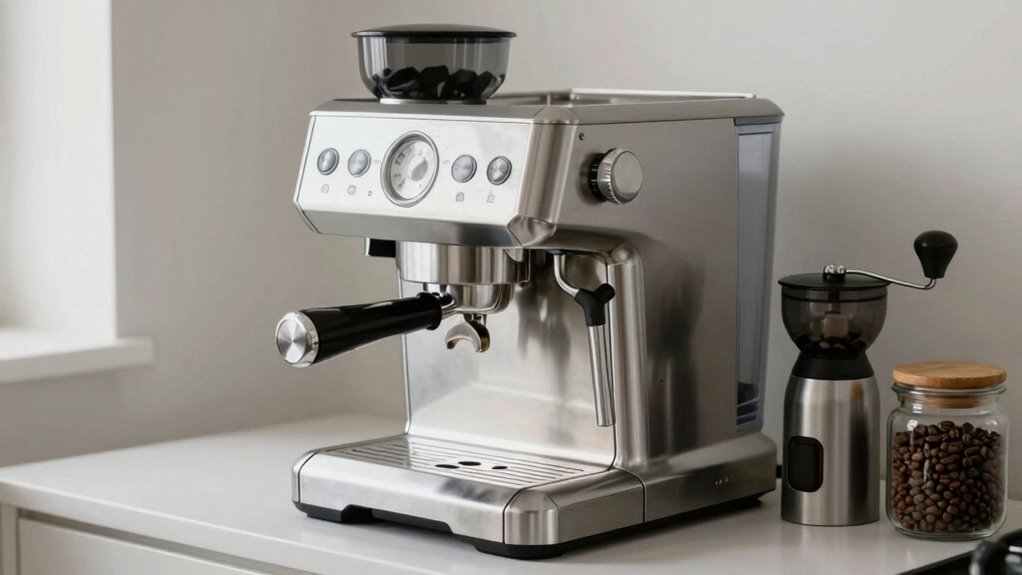
If you’re new to home brewing and want a straightforward way to enjoy quality espresso without multiple gadgets, an all-in-one espresso setup might seem like the perfect solution. It promises convenience: a single machine that grinds, tamp, brews, and even froths milk. But before you take the plunge, it’s worth considering whether this all-in-one approach is truly the best first investment. One key factor is maintenance frequency. These machines often have more complex mechanisms, combining several functions into one unit. Over time, this can lead to more frequent cleaning and maintenance, especially since different components—like grinders, boilers, and steam wands—require regular attention. If you’re just starting out, you might find yourself spending more time troubleshooting or cleaning than actually brewing. This ongoing maintenance can be frustrating if you’re *enthusiastic* to enjoy your coffee without hassle. Additionally, it’s important to consider the mechanics of espresso making and how different setups impact your learning curve. Some all-in-one machines also have limited customization options, which can hinder your ability to refine your brewing skills as you learn more about espresso techniques.
As an affiliate, we earn on qualifying purchases.
Frequently Asked Questions
How Long Does an All-In-One Espresso Machine Typically Last?
An all-in-one espresso machine usually lasts around 5 to 10 years, depending on usage and maintenance. You can enjoy consistent brew strength and some customization options, but over time, parts may wear out or become less effective. Regular cleaning and proper care can extend its lifespan, ensuring you keep enjoying quality espresso. Keep in mind, investing in maintenance helps preserve your machine’s performance and longevity.
Can I Upgrade Individual Components in an All-In-One Setup?
Think of your all-in-one espresso setup as a symphony, where each instrument must harmonize perfectly. Upgrading individual components isn’t always straightforward; modular flexibility can be limited, and component compatibility might be a tightrope walk. You may find yourself constrained by the original design, making upgrades feel like trying to tune a complex orchestra. So, consider whether the system’s design allows for easy upgrades before investing, or you might be stuck with a less adaptable brew.
Are All-In-One Machines Suitable for Commercial Use?
All-in-one machines generally aren’t suitable for commercial use because they prioritize home convenience over machine versatility. These setups are designed for casual, everyday brewing and lack the durability and customization options needed for high-volume, professional environments. If you’re running a coffee shop, you’ll need equipment that can handle continuous use, whereas all-in-one machines are better suited for personal use where convenience is key.
What Maintenance Is Required for These Machines?
Like tending a garden, maintaining your all-in-one espresso machine involves regular cleaning routines and descaling procedures. You’ll need to wipe down surfaces daily, clean the brew group, and descale every few months to prevent mineral buildup. These steps keep the machine functioning smoothly and guarantee your coffee tastes fresh. While straightforward, consistent maintenance is essential to prolong its lifespan, much like nurturing a well-loved plant.
Do All-In-One Espresso Setups Offer Consistent Quality?
All-in-one espresso setups can sometimes struggle with consistent quality, especially in flavor and brewing precision. You might notice variations in taste or pressure, which can affect your espresso’s richness. While these machines are convenient, they often lack the fine control needed for perfect extraction every time. If you’re aiming for superior flavor consistency and precise brewing, investing in dedicated equipment or upgrading later might serve you better.
As an affiliate, we earn on qualifying purchases.
Conclusion
While an all-in-one espresso machine might seem like the easiest choice, it’s not always the smartest first buy—you might end up paying for features you don’t need or sacrificing quality. Did you know that 60% of new coffee enthusiasts upgrade their equipment within the first year? Starting smaller with a grinder or a manual espresso maker can save you money and help you develop your skills. Sometimes, building your setup gradually yields better espresso and more satisfaction in the long run.
espresso machine maintenance kit
As an affiliate, we earn on qualifying purchases.
As an affiliate, we earn on qualifying purchases.
As an affiliate, we earn on qualifying purchases.
Fall Picks
fall essentials
As an affiliate, we earn on qualifying purchases.