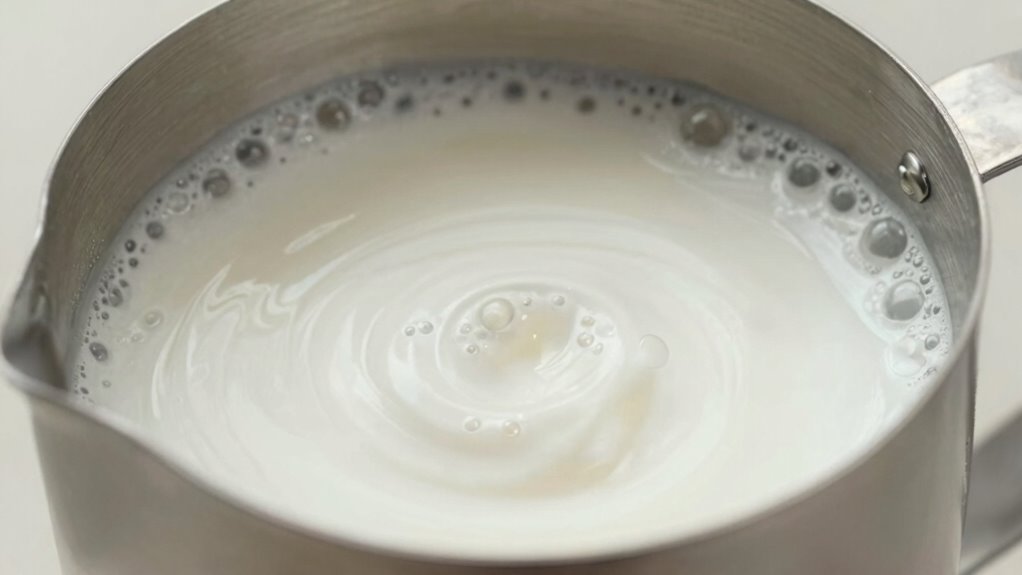

Good steamed milk feels smooth, thick, and velvety when you run your fingers across the pitcher’s side. It should have a glossy, paint-like surface and a microfoam texture that clings gently and evenly. When you swirl the pitcher, the microfoam stays glossy and shiny, showing a silky feel. If you pay attention to these cues, you’ll get closer to perfect latte art and creamy texture—there’s more to master if you keep exploring.

Get kitchen gear delivered free with Prime
- Fast, free delivery on millions of items
- Prime Video, Amazon Music and more included
- Member-only deals all year
Key Takeaways
- The milk should feel smooth, thick, and velvety when run across your fingers, indicating proper microfoam texture.
- It should maintain a glossy, paint-like surface that remains intact during steaming.
- The pitcher’s surface should feel warm but not hot to the touch, around 150°F to 155°F.
- Swirling the pitcher reveals a silky, clingy microfoam with tiny, uniform bubbles.
- The milk should respond with gentle resistance, not overly stiff or watery, as you develop your technique.
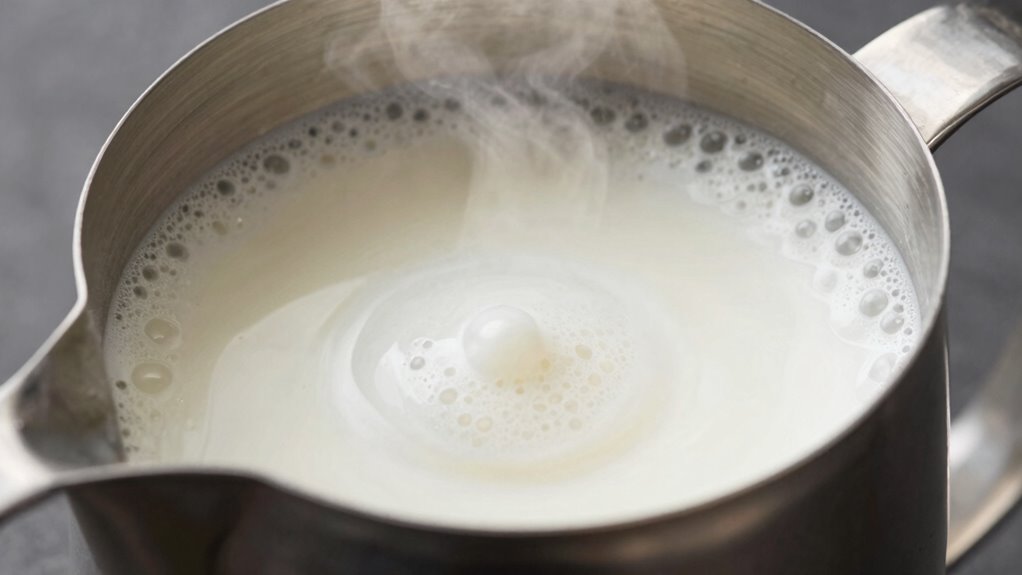
When steaming milk, understanding what good textured milk feels like in the pitcher is essential for creating the perfect cup. The key is to pay attention to both milk temperature and microfoam texture, as these factors directly influence the quality and presentation of your beverage. As you steam, you’ll want the milk to reach a specific temperature—usually between 150°F and 155°F—without overheating. If it gets too hot, the milk can taste burnt or develop a skin, which will ruin the smoothness you’re aiming for. Using a thermometer helps you monitor this precisely, but with practice, you’ll develop a sense for when the milk is at the right warmth just by feel and sound.
The microfoam texture is what truly makes steamed milk stand out. It should be velvety and glossy, with tiny, uniform bubbles that make the milk silky to the touch. When you insert the steam wand, you want to create a whirlpool in the milk, which helps break down larger bubbles and incorporate air evenly. As you do this, you’ll notice the milk expanding slightly—this aeration is crucial for developing the microfoam. The goal is to produce a smooth, paint-like consistency that isn’t frothy or bubbly but creamy and dense. When you swirl the pitcher afterward, the microfoam should cling to the sides and form a shiny surface, indicating a well-textured milk. Additionally, the texture development process plays a vital role in achieving the ideal microfoam, so understanding how the milk responds during steaming can improve your technique. Developing a good steam technique involves paying attention to how the milk feels and responds, which can significantly enhance your results.
The sensation of good textured milk in the pitcher is also about how it feels when you run your finger across the surface, or when you gently swirl the pitcher. It should feel smooth and thick, not watery or overly stiff. If you’re able to produce microfoam with a fine, consistent texture, it’ll pour easily and integrate seamlessly with espresso, creating that perfect latte art and a balanced taste. Pay attention to how the milk responds as you steam; it should feel warm but not hot to the touch, and the surface should remain glossy and intact throughout the process. This balance of temperature and microfoam texture is what distinguishes professional-quality steamed milk from the rest. Developing a good microfoam texture involves not only visual cues but also tactile feedback, which can be cultivated through consistent practice. Recognizing the subtle differences in milk feel can help you fine-tune your steaming technique and consistently produce high-quality microfoam. With practice, you’ll develop a keen sense of these tactile qualities, ensuring every cup you make has that rich, creamy consistency that elevates your coffee experience.
milk steaming pitcher for latte art
As an affiliate, we earn on qualifying purchases.
As an affiliate, we earn on qualifying purchases.
Frequently Asked Questions
How Do I Prevent My Steamed Milk From Frothing Excessively?
To prevent your steamed milk from frothing excessively, focus on proper milk frothing techniques and pitcher handling. Keep the steam wand just below the surface to control foam formation, and avoid over-foaming by not immersing the wand too deep. Use a steady, gentle motion, and tilt the pitcher slightly to maintain consistent temperature and texture. These steps help you manage frothing and achieve smooth, creamy milk every time.
What Temperature Should Steamed Milk Ideally Reach?
Think of steamed milk as a gentle dance — it should reach around 150°F to 155°F, the perfect balance point. Use temperature control to keep your milk from overheating, which can ruin its texture and taste. As you steam, keep an eye on the thermometer, ensuring the milk’s warmth is just right. When it hits that sweet spot, you’ll create a velvety, luscious milk that enhances your coffee experience.
How Can I Fix Over-Foamed or Under-Foamed Milk?
To fix over-foamed milk, gently tap the pitcher and swirl it to break down large bubbles, then reheat slightly if needed. For under-foamed milk, reposition your steam wand to introduce more air, creating better milk texture and steamed foam. Always listen for a gentle hissing sound and aim for a silky, velvety texture. Adjust your technique based on the milk’s response, ensuring the steamed foam is smooth and consistent.
Does Milk Type Affect the Feel of Steamed Milk?
You’re right—milk type definitely influences the feel of steamed milk. Dairy composition varies: whole milk creates a creamy, velvety texture, while skim milk feels lighter and frothier. Notably, dairy alternatives like almond or oat milk often produce different textures due to their unique compositions, affecting how they steam and feel. So, choosing the right milk depends on your desired texture and flavor, making it essential to experiment with different types.
How Do I Maintain Consistency in Steamed Milk Texture?
To maintain consistency in steamed milk texture, focus on your milk frothing techniques and pitcher handling. Use steady, controlled motions to create uniform microfoam, and keep your pitcher at a consistent angle. Practice your frothing rhythm, ensuring your steam wand stays submerged just below the surface. Regularly monitor your pitcher’s temperature, and develop a routine that helps you produce smooth, velvety milk each time.
digital milk thermometer for espresso
As an affiliate, we earn on qualifying purchases.
As an affiliate, we earn on qualifying purchases.
Conclusion
When you master the feel of steamed milk in the pitcher, it’s like nurturing a delicate dance—each movement guides you closer to silky perfection. I once watched a barista tame a stubborn froth, transforming it into a creamy cloud, much like calming a restless horse. That moment reminded me: good steamed milk isn’t just about technique, but about listening to its subtle cues. With patience and practice, you’ll find that sweet spot where texture and temperature harmonize perfectly.
As an affiliate, we earn on qualifying purchases.
As an affiliate, we earn on qualifying purchases.
Halloween Picks
halloween
As an affiliate, we earn on qualifying purchases.