As you improve your barista skills, you’ll notice built-in grinders fall short in precision and consistency, making it hard to tweak grind size or achieve even extraction. Maintenance becomes more challenging, and the limited control over settings can frustrate your progress. Cheaper units tend to wear out faster, forcing upgrades for durability. If you want better control, easier upkeep, and stronger performance, switching to a dedicated grinder is a smart move—keep exploring to learn more.

Get kitchen gear delivered free with Prime
- Fast, free delivery on millions of items
- Prime Video, Amazon Music and more included
- Member-only deals all year
Key Takeaways
- Built-in grinders often lack precise grind control, limiting skill development and prompting users to seek better equipment.
- Inconsistent grind quality affects extraction, encouraging upgrades as users improve their brewing techniques.
- Maintenance challenges and rapid wear reduce performance, motivating users to switch to dedicated, more durable grinders.
- Limited customization prevents fine-tuning for different brewing methods, leading to early dissatisfaction and equipment upgrades.
- Dedicated grinders offer better control, consistency, and longevity, appealing to beginners aiming to refine their coffee skills.

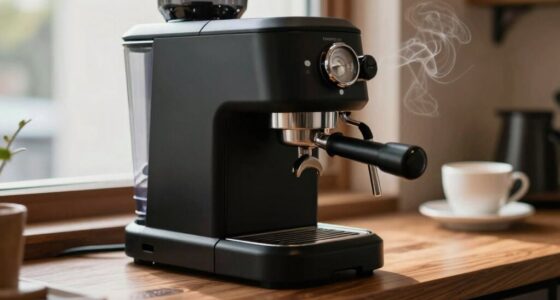
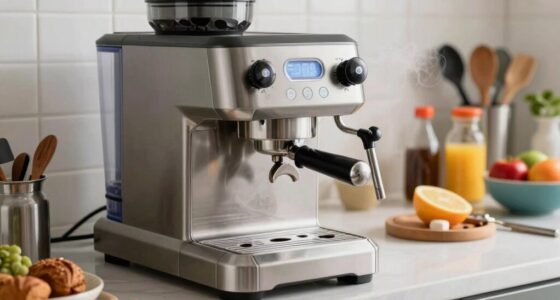
Many beginners start with built-in grinder machines because they seem convenient and cost-effective, but as your skills improve, you’ll likely find these machines limiting. While they’re easy to use initially, their design often prioritizes simplicity over precision. As you learn more about coffee brewing, you’ll notice that the quality of your grind directly impacts your final cup. Built-in grinders usually lack consistency, which can hinder your ability to fine-tune your brewing parameters. Over time, you might find yourself frustrated with uneven grounds or inconsistent extraction, prompting you to contemplate upgrading.
One reason you outgrow these machines is their limited grinder maintenance. Built-in grinders often have fewer adjustable settings, and their internal components are harder to access for cleaning. Residue from coffee oils can accumulate quickly, affecting grind quality and machine durability. If you neglect proper grinder maintenance, the machine’s performance deteriorates faster, leading to clogs or mechanical issues. As you gain experience, you’ll want a grinder that’s easier to clean and maintain, so you can keep it running smoothly and produce consistent grounds. This need for regular upkeep reveals the shortcomings of built-in units, which aren’t always designed with user-friendly maintenance in mind. Recognizing the importance of grinder maintenance can help you extend your equipment’s lifespan and ensure optimal performance. Additionally, many built-in grinders lack adjustable settings, limiting your ability to customize the grind size for different brewing methods.
Another factor is machine durability. Built-in grinders are typically designed to be integrated into a larger coffee machine, which means they often compromise on robustness to save space or cost. As your skills grow, you’ll likely experiment with different grind sizes, doses, and brewing methods. This experimentation puts extra strain on the grinder’s components, and cheaper or less durable units may wear out faster. You’ll discover that a more durable, standalone grinder provides better longevity and resilience under frequent use, making it a worthwhile investment. When considering grinder quality, it’s important to look for units made with durable components that can withstand regular use. Recognizing the importance of grinder durability can guide you toward better equipment choices as you advance. Moreover, choosing a grinder with adjustable grind settings can significantly impact your ability to perfect your brewing technique, especially as you explore different coffee styles.
Ultimately, as you improve your coffee-making skills, you’ll realize that a dedicated grinder offers better control, easier maintenance, and longer-lasting durability. Built-in grinders serve well during initial exploration, but they often fall short when it comes to the precision and consistency needed for advanced brewing. Upgrading to a high-quality grinder allows you to refine your craft, troubleshoot issues more effectively, and enjoy a more satisfying coffee experience. So, while starting with a built-in grinder makes sense at first, you’ll soon find that investing in a dedicated grinder is the logical next step to elevate your coffee game.
Products Worth Considering

De’Longhi Rivelia Fully Automatic Espresso Machine with Grinder and Milk Frother, Beige
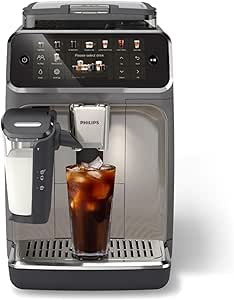
Philips 5500 Series Fully Automatic Espresso Machine with LatteGo Milk System

Ninja CM371 Hot & Iced XL Coffee Maker with Rapid Cold Brew
As an affiliate, we earn on qualifying purchases.
Frequently Asked Questions
How Do I Know When to Upgrade My Grinder?
You should consider upgrading your grinder when you notice it lacks durability or adjustment precision. If it starts to wear out quickly or you struggle to achieve consistent grind sizes, it’s time for an upgrade. A more durable machine with precise adjustments helps you maintain quality and efficiency. As your skills improve, investing in a higher-quality grinder guarantees you get the best flavor extraction and a better brewing experience.
Are Built-In Grinders Suitable for Commercial Use?
Built-in grinders aren’t ideal for commercial use because they often lack the durability and precision needed for high-volume coffee making. They might struggle with maintaining coffee consistency during busy hours, and their grinder ergonomics can make quick adjustments difficult. If you’re running a busy café or need consistent quality, investing in a commercial-grade grinder is smarter, ensuring better grind uniformity and durability to handle your demands efficiently.
What Are the Long-Term Maintenance Costs?
Did you know that maintenance costs for built-in grinders can add up over time? You’ll need to regularly clean the machine, typically every few weeks, to prevent clogs and guarantee peak performance. Replacement parts like burrs and motors can be costly if used heavily, and frequent replacements may be necessary as the machine ages. Planning for these ongoing costs helps you keep your grinder running smoothly without surprises.
Can I Customize Grind Settings Easily?
Yes, you can easily customize grind settings with most built-in grinder machines. They often feature adjustable settings that allow you to fine-tune the grind size for different brewing methods. Many models come with multiple customization options, giving you control over grind consistency and coarseness. This flexibility helps you achieve the perfect brew and adapt quickly to your preferences, making the machine more versatile and user-friendly as you grow in your coffee journey.
Do Built-In Grinders Affect Coffee Flavor Over Time?
It’s like a tech relic, but built-in grinders can impact flavor stability over time. You might notice inconsistent grinds, which affect extraction and taste. As the grinder wears, its longevity diminishes, leading to potential flavor degradation. Regular maintenance helps, but if flavor consistency is your goal, consider upgrading to a dedicated grinder. This guarantees your coffee remains fresh and flavorful, even after many brewing sessions.
Conclusion
So, you’ve outgrown your built-in grinder faster than you outgrew that questionable hairstyle in high school? Don’t worry—it’s not a flaw, just a sign you’re serious about your coffee game. Soon, you’ll realize that mastering a real grinder isn’t just about better flavor; it’s about finally upgrading from the childhood comfort zone of built-in machines. Embrace the upgrade—you’ll wonder why you ever settled for less when real coffee perfection is just a grind away.