controlling water flow is key to making consistent, flavorful espresso at home. It affects extraction time, flavor balance, and shot quality. Managing flow, whether through grind size adjustments or machine features, helps prevent over- or under-extraction. Regular maintenance and understanding your equipment also boost control. By mastering flow, you can improve your espresso’s richness and clarity. Keep going to discover how to optimize your setup and elevate your brewing game even further.

Get kitchen gear delivered free with Prime
- Fast, free delivery on millions of items
- Prime Video, Amazon Music and more included
- Member-only deals all year
Key Takeaways
- Flow control impacts extraction time, flavor balance, and shot consistency in home espresso brewing.
- Proper grind size adjustment is essential for managing flow rate when machine lacks advanced control features.
- Regular maintenance ensures stable pressure and flow, preventing blockages and inconsistent extraction.
- Machines with dedicated flow control features offer more precise adjustments, improving shot quality.
- Long-term upkeep, including cleaning and part replacement, maintains optimal flow and espresso consistency over time.
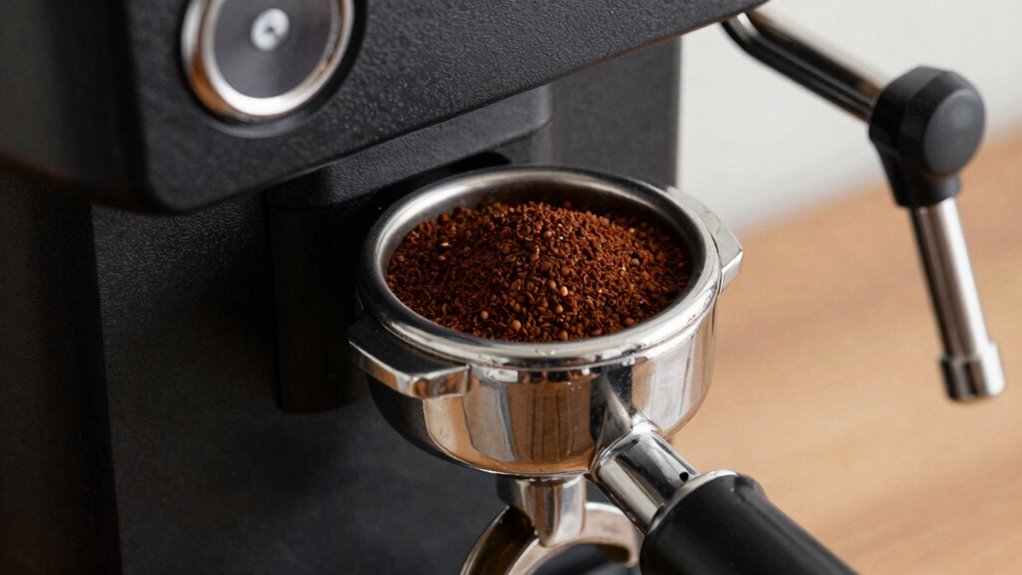
Controlling the flow of water during espresso extraction can considerably impact the quality and consistency of your brew. When you focus on flow control, you’re effectively managing how water interacts with your coffee grounds, influencing extraction time, flavor, and overall espresso profile. One vital aspect often overlooked is grind size, which directly affects flow rate. If your grind is too fine, water struggles to pass through, causing over-extraction and bitter notes. Conversely, if it’s too coarse, water flows too quickly, leading to under-extraction and weak flavors. Adjusting grind size helps fine-tune the flow, guaranteeing ideal extraction for your specific machine and preferences. Proper machine calibration ensures your espresso shot remains consistent and predictable, making flow control more effective.
Adjusting grind size is key to controlling water flow and achieving perfect espresso extraction.
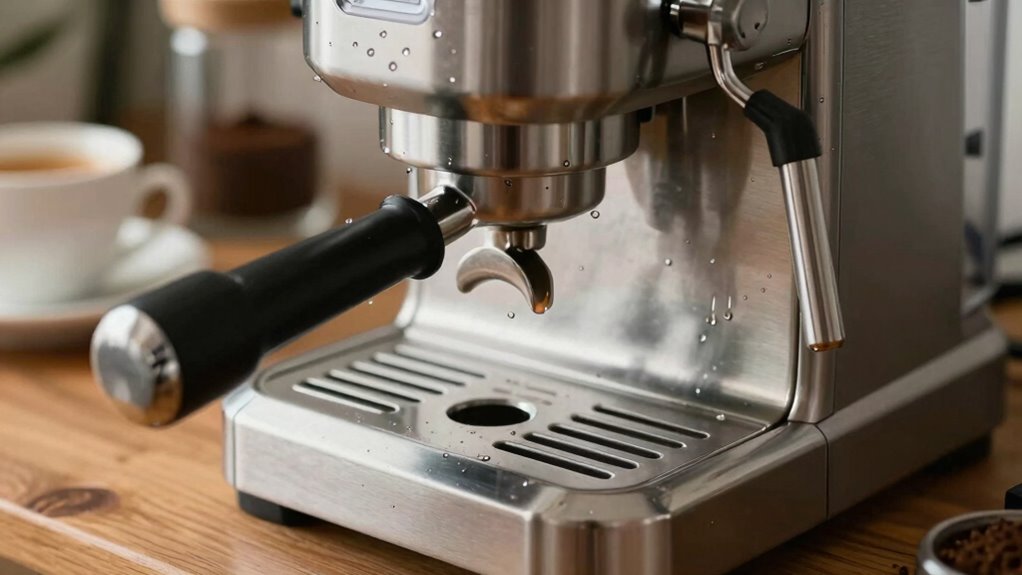
Flow control isn’t solely about hardware; maintaining your machine properly is equally essential. Regular machine maintenance, like cleaning the group head and replacing worn seals, guarantees water flows smoothly without leaks or blockages. A well-maintained machine minimizes irregularities that can distort flow and extraction. When your machine operates efficiently, you have more reliable control over water flow, which allows you to experiment with different flow rates confidently. This consistency becomes especially important when dialing in your espresso, as small variations in flow can drastically alter taste and texture. Additionally, understanding how the machine’s internal pressure and flow settings interact can help you optimize your brewing process. A well-maintained machine also reduces the risk of unexpected pressure fluctuations that can compromise your shot quality. Regularly checking and adjusting these internal settings can further enhance your ability to control flow precisely.
While some espresso machines come with dedicated flow control devices or pressure profiling features, others rely more on manual adjustments. If your machine lacks advanced flow control, focusing on grind size becomes even more critical. The grind acts as a natural regulator of flow, so experimenting with it can help you replicate some of the benefits of more sophisticated systems. Remember, changing the grind size isn’t just about achieving a certain texture; it’s about managing how water moves through the coffee bed, which directly influences flavor extraction. Proper machine maintenance ensures your equipment remains capable of delivering consistent flow, making it easier to focus on the variables you can control.
In addition to adjusting grind size, monitor your machine’s maintenance schedule diligently. Regular descaling, cleaning, and replacing parts as needed prevent buildup and blockages that could impede flow. Over time, mineral deposits or worn-out components can cause inconsistent flow, undermining your efforts to control extraction. Keeping your machine in top shape means you can focus more on refining your grind and flow adjustments without worrying about mechanical hiccups. Implementing a routine maintenance schedule based on your usage frequency can significantly improve overall performance. Regularly inspecting and cleaning your machine helps you identify and address potential issues early, ensuring your flow remains steady and predictable. Developing a maintenance routine tailored to your usage guarantees long-term consistency in your espresso quality.
Ultimately, mastering flow control involves understanding how grind size and machine maintenance intersect. When you keep your equipment in prime condition and fine-tune your grind, you gain more precise control over the extraction process. This control unlocks the full potential of your home espresso setup, allowing you to craft consistently excellent shots tailored to your taste.
Products Worth Considering

De'Longhi Rivelia Automatic Espresso Machine with Grinder and Milk Frother, Beige

Breville Bambino Espresso Machine, Brushed Stainless Steel

Instant Pot RIO Wide 7.5-Quart 7-in-1 Electric Pressure Cooker
As an affiliate, we earn on qualifying purchases.
Frequently Asked Questions
Does Flow Control Affect Espresso Shot Temperature?
Flow control can influence your espresso shot temperature by allowing you to adjust the brew pressure, which impacts the brew temperature. When you fine-tune flow, you improve extraction consistency, leading to more stable temperatures throughout the shot. This control helps prevent over-extraction or under-extraction, ensuring your brew temperature stays essential and your espresso tastes better. So, yes, flow control plays a vital role in maintaining consistent shot temperature.
Can Flow Control Be Added to Existing Espresso Machines?
They say “where there’s a will, there’s a way,” and yes, you can add flow control to existing espresso machines through retrofit modifications or DIY adjustments. While it takes some skill and patience, customizing your machine allows you to fine-tune extraction and achieve your perfect shot. Just be cautious, follow detailed guides, and make certain safety. With effort, you can enhance your espresso experience without buying a new machine.
Is Flow Control Necessary for All Brewing Methods?
Flow control isn’t necessary for all brewing methods, but it can enhance your coffee experience, especially with alternative brewing techniques like pour-over or AeroPress. If you enjoy experimenting, equipment upgrade options that include flow control features can give you more precision. However, traditional methods like drip brewing or French press don’t require flow control, so it’s more about your personal preferences and how much control you want over your extraction process.
How Does Flow Control Impact Espresso Flavor Profile?
Flow control profoundly impacts your espresso’s flavor profile by allowing you to fine-tune flavor extraction and enhance texture. When you adjust flow, you influence how water interacts with the coffee grounds, which can bring out more nuanced flavors or create a richer mouthfeel. Proper flow control helps you achieve a balanced shot, providing a smoother, more complex espresso with improved texture and depth.
What Are the Common Mistakes When Using Flow Control?
Did you know that over 60% of espresso enthusiasts struggle with flow control mistakes? You might be guilty of using inconsistent grind size or uneven tamp pressure, which can cause uneven extraction. These errors lead to sour or bitter flavors. To avoid this, make sure your grind size is uniform and apply steady tamp pressure. Proper flow control depends on mastering these basics to achieve a balanced, flavorful shot every time.
Conclusion
Mastering flow control is like holding the reins to your perfect espresso journey. It might seem intimidating at first, but with patience and practice, you’ll reveal flavors you never knew existed. Think of it as tuning a symphony—every adjustment brings harmony to your cup. So don’t be discouraged by the learning curve; every shot gets you closer to that magical, barista-quality brew. Your espresso adventure is just beginning—enjoy the ride!