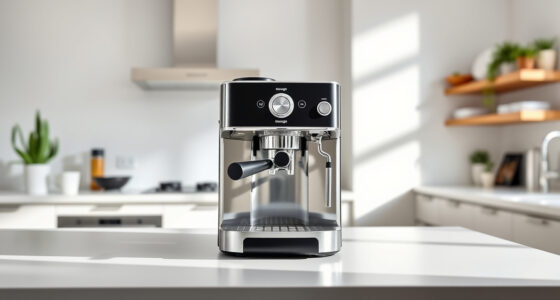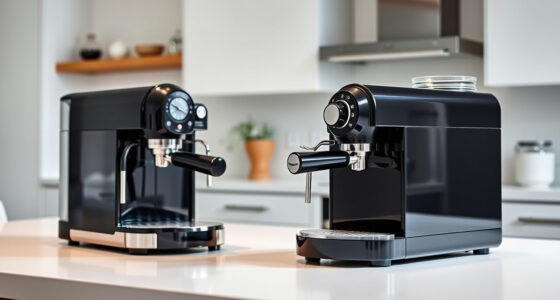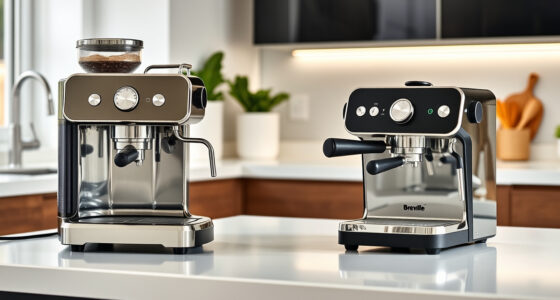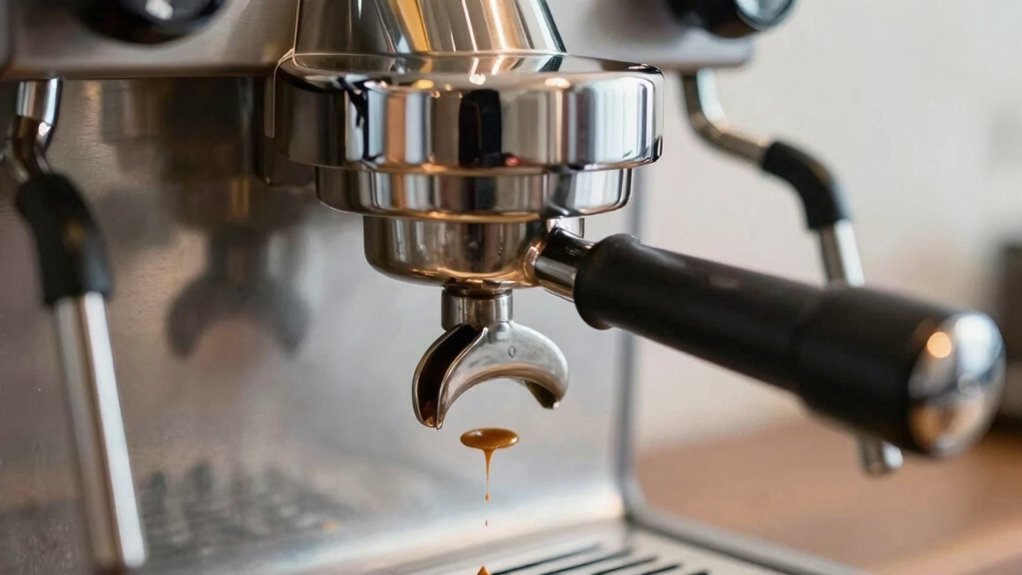

Pre-infusion often sounds impressive as a fancy feature, but it rarely makes a noticeable difference in your espresso’s flavor or aroma. It involves soaking the grounds briefly before applying full pressure, but this step doesn’t compensate for poor technique or stale beans. Instead, focusing on fresh beans, proper grind size, and consistent tamping has a much bigger impact on your shot quality. Keep exploring to discover more simple ways to improve your espresso experience.

Get kitchen gear delivered free — and shop member deals
- Fast, free delivery on millions of items
- Access to Prime Big Deal Days deals on October 6–7
- Prime Video, Amazon Music and more included
Key Takeaways
- Pre-infusion is often marketed as a premium feature but has minimal impact on final espresso quality.
- Its benefits are subtle and overshadowed by proper grind, tamp, and bean freshness.
- Pre-infusion cannot compensate for poor bean quality or improper technique.
- Focusing on fresh beans and correct brewing practices yields better results than pre-infusion.
- Pre-infusion is more of a marketing feature than a crucial element for great espresso.

Many espresso machines come with a feature that sounds impressive—pre-infusion—but in reality, it rarely makes a noticeable difference in your shot’s quality. Pre-infusion involves soaking the coffee grounds with a small amount of water before the full pressure is applied, supposedly revealing more flavor and improving extraction. While it sounds like a sophisticated touch, its actual impact on the final espresso is often minimal, especially if your beans aren’t fresh or if your brewing process isn’t already optimized.
Pre-infusion sounds impressive but often has minimal impact without fresh beans and proper technique.
When you focus on coffee aroma, you’ll find that the scent is often the first indicator of good coffee. Fresh beans release a rich, inviting aroma that’s difficult to replicate with pre-infusion alone. If your beans aren’t fresh, no amount of pre-infusion will greatly boost the flavor. Bean freshness is key to capturing the full spectrum of aromas that make espresso so appealing. Old or stale beans tend to produce a flat, dull cup regardless of whether your machine includes pre-infusion or not. So, rather than relying on this fancy feature, you should prioritize using freshly roasted beans. Grind them just before brewing and aim to use a consistent tamp to guarantee even extraction.
Pre-infusion may help in some specific scenarios, such as when working with particularly dense or oily beans, but for most home baristas, its benefits are subtle. Instead, focus on maintaining consistent grind size, dose, and tamp pressure. These factors have a more direct impact on extracting the coffee’s aroma and flavors. When you start with coffee freshness, your espresso will naturally have a more vibrant and complex aroma, making pre-infusion unnecessary for most practical purposes. Paying attention to coffee aroma can also help you better judge the quality of your beans before brewing. In addition, understanding the importance of grind size and how it affects extraction can significantly improve your results. In truth, the best way to improve your espresso is to prioritize bean freshness and proper technique over flashy features like pre-infusion. Fresh beans preserve the coffee’s natural aroma, which is what ultimately makes your espresso memorable. The nuanced flavors and enticing scent come from high-quality beans, not from pre-infusion cycles. So, while it might sound like a high-tech upgrade, pre-infusion is rarely the game-changer it’s often made out to be. Focus on sourcing fresh beans and perfecting your grind and tamp, and you’ll notice a much more notable improvement in your espresso’s aroma and overall quality.
As an affiliate, we earn on qualifying purchases.
Frequently Asked Questions
Does the Feature Improve Espresso Flavor Significantly?
The feature doesn’t considerably improve espresso flavor for most users. While it may offer some flavor enhancement, its impact is often subtle and depends heavily on equipment compatibility. If your equipment isn’t optimized, you might not notice a difference. Instead, focus on proper grind size, tamping, and water temperature to truly boost flavor. This feature might sound fancy, but it rarely makes a meaningful difference in your espresso experience.
Is This Feature Worth the Extra Cost?
This feature isn’t worth the extra cost, especially when you consider the cost comparison and user convenience. It adds little to no improvement in your espresso quality, and you might find better value in investing elsewhere. Instead, focus on features that genuinely enhance your brewing experience, like precise temperature control or quality beans. Saving money while boosting convenience makes more sense than paying for a flashy upgrade that doesn’t deliver significant benefits.
How Often Should I Use This Feature?
You should use this feature sparingly, mainly when experimenting with different brewing techniques or adjusting your coffee grind. It’s not necessary for every shot, so reserve it for times when you want to fine-tune your espresso or explore new flavors. Overusing it won’t improve your results and may complicate your process. Focus on consistent grinding and brewing techniques first, and use this feature as a helpful, but optional, tool.
Does It Require Special Equipment or Maintenance?
You don’t need special equipment or frequent maintenance for automatic frothing and tamping consistency. Think of it like a car with cruise control—use it regularly, and it runs smoothly without extra fuss. Most espresso machines with automatic frothing have built-in features that keep maintenance minimal. Just clean the steam wand and check the tamping mechanism occasionally, and you’ll enjoy consistent results without extra effort or costly upgrades.
Are There Any Drawbacks to Using This Feature?
Using this feature can negatively impact your user experience because it might introduce complexity without meaningful benefits. You could face cost implications from additional maintenance or upgrades needed to keep it functioning smoothly. Plus, it may slow down your workflow or cause frustration if it doesn’t deliver the expected results. Overall, weigh these drawbacks carefully before deciding to rely on this feature, as it might not be worth the extra expense or effort.
As an affiliate, we earn on qualifying purchases.
Conclusion
So, while the espresso feature may seem like a fancy upgrade, it often doesn’t deliver the boost you expect. Don’t put all your eggs in that basket; sometimes, simplicity wins the race. Instead of chasing after features that sound impressive but fall flat, focus on the core experience that truly makes a difference. Remember, a well-rounded foundation often outshines a shiny, superficial fix. Keep your eyes on what truly matters, and your efforts won’t go to waste.
As an affiliate, we earn on qualifying purchases.
espresso machine with adjustable grind
As an affiliate, we earn on qualifying purchases.
As an affiliate, we earn on qualifying purchases.
Fall Picks
fall essentials
As an affiliate, we earn on qualifying purchases.