TL;DR

Get kitchen gear delivered free with Prime
- Fast, free delivery on millions of items
- Prime Video, Amazon Music and more included
- Member-only deals all year
A House Beautiful report says secondhand shoppers across generations tend to seek different kinds of home goods. Its expert interviews describe Gen Z as drawn to distinctive, playful finds; Millennials to midcentury design, original art and projects with resale or makeover potential; and Boomers to nostalgic pieces such as vintage Pyrex and Depression glass. The report does not provide a single, comparable survey of all four generations’ buying habits.
House Beautiful’s report describes different secondhand-shopping preferences among Gen Z, Millennials and Baby Boomers, based on interviews with design and antiques experts. It says Gen Z shoppers often look for unusual, playful pieces, Millennials are drawn to midcentury design and items they can remake, and Boomers seek objects tied to earlier eras and childhood memories; the article offers no equivalent detailed profile for Gen X.
The report presents these patterns as observations from people familiar with home thrifting, rather than findings from a single study comparing every generation. Antiques dealer and author Virginia Chamlee says the appeal includes the excitement of finding a distinctive item and the possibility that some pieces may later gain resale value. That possibility is not a guarantee of profit, and the report does not attach prices or returns to the items discussed.
For Gen Z, designer Phoenix Grey describes the draw as personality and individuality more than investment. The report lists 1970s- and 1980s-inspired details such as chrome, bold colors and sculptural shapes, as well as floral prints, ruffled lampshades and kitschy ceramics associated with “grandmacore.” House Beautiful also reports that 62 percent of Gen Z shopped thrifted or consignment goods during the previous year, while 58 percent browsed pre-owned goods before considering new purchases. The supplied material does not identify the underlying survey, sample size or field dates.
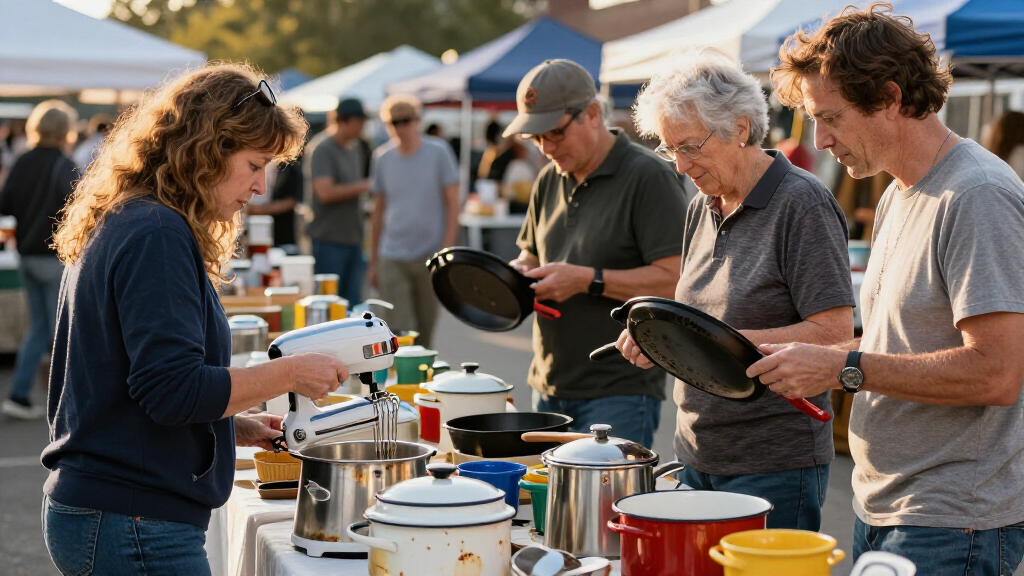
Millennials are described as attentive to value and potential resale, while also interested in the creative work of adapting secondhand finds. Design influencer Katie Zamprioli points to furniture flips and DIY changes such as repainting, reupholstering or replacing hardware. The article says midcentury modern pieces, Victorian-era-inspired designs and original art are among the styles this generation seeks. For Boomers, Chamlee cites childhood associations and perceived practical value, naming hot-air-balloon-embossed Pyrex, candy-colored Depression glass and cast-iron kitchenware.
Different Tastes Shape Secondhand Demand
The report offers readers a practical guide to the kinds of home goods that may attract different shoppers at thrift stores, estate sales and consignment shops. For buyers, the distinctions can help focus a search: a shopper looking for expressive accents might scan for unusual ceramics or sculptural lighting, while someone interested in vintage kitchenware might seek Pyrex, colored glass or cast iron.
The findings also point to several reasons people shop secondhand: individual style, lower-cost purchases, nostalgia and the chance to modify an item. Those motivations matter to sellers and retailers because a piece’s appeal can extend beyond its age or condition. But the article’s examples should not be read as firm rules about an entire generation: individual tastes vary, and the reported figures and expert observations do not establish why every shopper buys used goods.
As an affiliate, we earn on qualifying purchases.
How the Report Groups Buyers
House Beautiful frames its article around an expanding supply of secondhand home goods, including possessions that reach estate sales and antique shops as households downsize. That is the report’s framing, not a measured estimate of how much inventory is entering the market. Its central material is a set of interviews with antiques and design voices, including Chamlee, Grey and Zamprioli.
The article also connects generational shopping to broader style cues. It associates Gen Z with social-media-visible thrift hauls and an interest in less uniform, more personal interiors. It describes Millennials as using secondhand shopping and DIY to pursue design without paying full retail prices, and Boomers as recognizing items from their own past. Gen X appears in the headline, but the supplied article text does not offer a separate account of what that generation tends to buy.
““Thrifting is one of the rare types of shopping that feels like a sport, and it really does feel like you’ve ‘won’ when you find that special piece.””
— Virginia Chamlee, antiques dealer and author of Big Thrift Energy
As an affiliate, we earn on qualifying purchases.
What the Generational Data Leaves Open
The source material does not specify the date, sample size, or methodology behind the figures that 62 percent of Gen Z shopped thrifted or consignment goods in the previous year and 58 percent browsed pre-owned pieces before considering new ones. Those numbers should be treated as figures reported by House Beautiful, not as independently verified results here. The article also does not state the survey’s geographic coverage or define the age ranges used for each generation.
Its descriptions of generational preferences come from expert interviews and examples, not a representative head-to-head study. The supplied text gives no distinct list of Gen X preferences, despite naming Gen X in the headline. It also does not establish how common the listed tastes are, whether they have changed over time, or whether any vintage item will appreciate in value.
As an affiliate, we earn on qualifying purchases.
What Shoppers Can Watch For
The report does not announce a follow-up survey, market forecast or new retail initiative. Readers can use its examples as search ideas rather than buying rules, while checking an item’s condition, authenticity and price before purchasing. The source describes some shoppers as considering resale potential, but it provides no appraisal guidance or evidence that the named items are reliable investments.
A clearer picture of how preferences compare would require additional reporting with transparent survey methods and coverage of all four generations, particularly Gen X. Until then, the confirmed takeaway is limited: House Beautiful’s experts identify several recurring styles and motivations, but the report does not measure how widely those preferences are shared.
As an affiliate, we earn on qualifying purchases.
Key Questions
What does the report say Gen Z shoppers look for secondhand?
Designer Phoenix Grey says Gen Z shoppers are often drawn to distinctive, playful pieces, including bold colors, chrome, sculptural shapes, floral prints and kitschy ceramics. The report presents this as an expert observation, not a rule for every shopper.
Which secondhand items does the report associate with Millennials?
House Beautiful names midcentury modern designs, Victorian-era-inspired pieces and original art. It also describes Millennials as interested in furniture and decor they can update through painting, reupholstery or hardware changes.
What are Boomers said to seek at thrift and antique shops?
Antiques dealer Virginia Chamlee cites hot-air-balloon-embossed Pyrex, candy-colored Depression glass and cast-iron kitchenware, linking these choices to childhood memories and familiar products.
Does the report explain what Gen X is hunting for?
Not in the supplied article text. Although Gen X appears in the headline, the report does not provide a separate list or expert profile of that generation’s secondhand preferences.
Are the listed vintage items guaranteed to increase in value?
No. Chamlee says some secondhand pieces may later have resale value, but the article provides no guarantee, price data or investment analysis. A particular item’s value depends on factors the report does not assess.
Source: rss
Halloween Picks
halloween
As an affiliate, we earn on qualifying purchases.