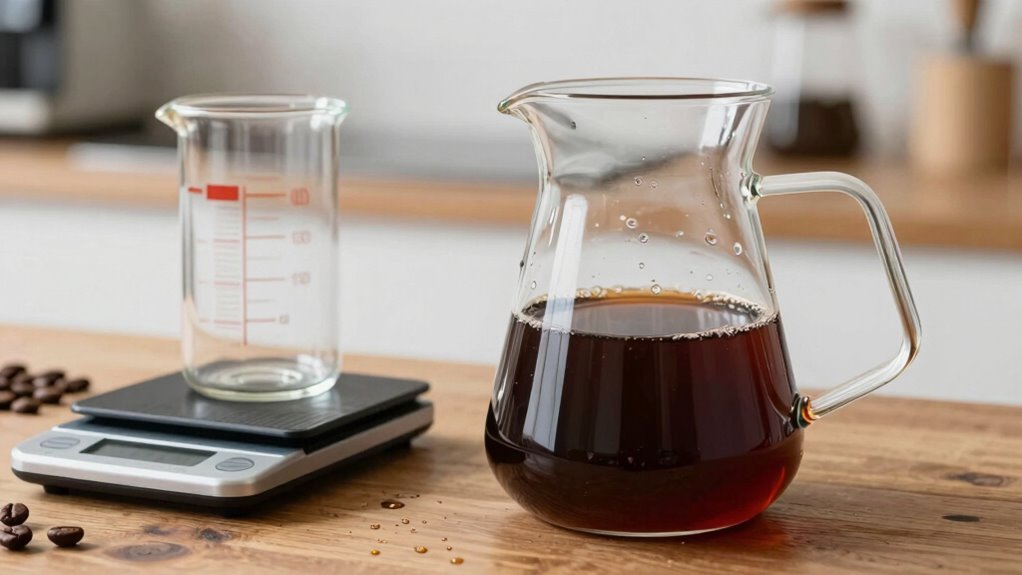

To dilute cold brew precisely, start by measuring its current concentration using tools like a refractometer or the coffee-to-water ratio. Decide on your target strength, then use simple formulas—like adjusting the ratio from 1:4 for strong to 1:8 for lighter versions—adding water gradually and tasting as you go. Keep track of your adjustments for consistency, and if you want detailed steps, you’ll find helpful tips below.

Get kitchen gear delivered free with Prime
- Fast, free delivery on millions of items
- Prime Video, Amazon Music and more included
- Member-only deals all year
Key Takeaways
- Measure the original cold brew concentration using tools like a refractometer or coffee-to-water ratio tests.
- Use precise ratios (e.g., 1:4, 1:6) to dilute cold brew gradually, tasting at each step for desired strength.
- Calculate dilution adjustments with formulas: (Target ratio / Current ratio) × current volume for accurate scaling.
- Add water incrementally, stirring gently, to prevent over-dilution and flavor imbalance.
- Keep detailed records of ratios and adjustments to ensure consistent results over time.
As an affiliate, we earn on qualifying purchases.
Why Getting Your Cold Brew Strength Right Matters
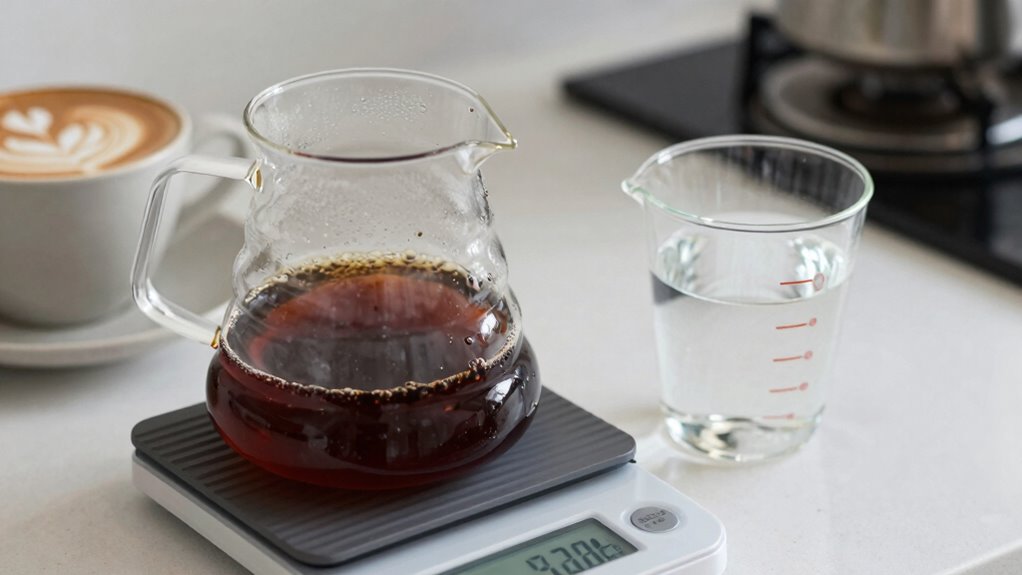
Getting your cold brew strength right is essential because it directly affects the flavor and overall experience. When your coffee isn’t balanced, the flavor can become too weak or overly bitter, diminishing enjoyment. Proper strength guarantees you preserve the coffee’s rich, nuanced flavors, which are influenced by brewing temperature. If the brewing temperature is too high, it can extract unwanted bitter compounds, overpowering the delicate coffee flavor. Conversely, too low a temperature might result in a flat or underdeveloped taste. By mastering the right strength, you optimize extraction, allowing the true essence of your beans to shine through. Accurate measurements help ensure your cold brew is consistently balanced. This balance creates a smooth, satisfying cold brew that’s neither too weak nor too intense, elevating your coffee-drinking experience. Additionally, understanding how to dilute correctly allows you to customize your brew to your preferred strength without guesswork. Developing an understanding of brewing temperature is crucial for achieving consistent results and optimal flavor. Knowing about home brewing techniques can also help you refine your process for perfect results every time.
As an affiliate, we earn on qualifying purchases.
The Basics of Cold Brew Concentration and How to Dilute It
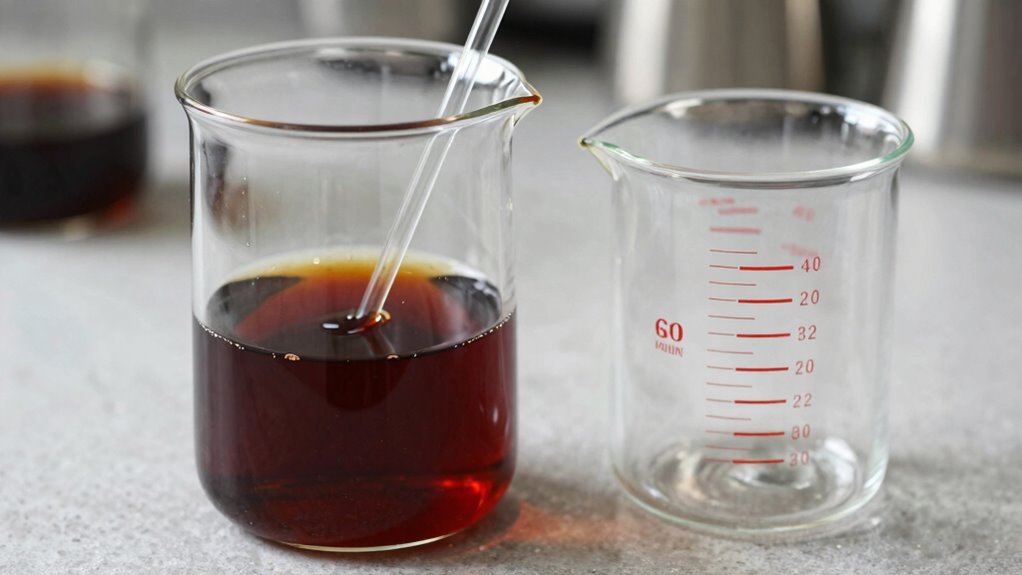
Cold brew concentration refers to how strong or diluted your coffee is before any adjustments. It results from the coffee extraction process, where the coffee grounds release flavors, oils, and solids into water over time. A higher concentration means more coffee solids, producing a richer, more intense flavor. To dilute cold brew effectively, you need to understand its initial strength to balance flavor and achieve your desired taste profile. Dilution involves adding water or milk to reduce the concentration without compromising flavor quality. Properly managing cold brew concentration ensures you maximize flavor while controlling strength, making it easier to customize your brew for different preferences. Understanding coffee extraction is key to mastering cold brew strength adjustments. Additionally, knowing the ideal brew ratio can help you consistently create the perfect balance for your taste. Recognizing concentration levels can further refine your process for optimal flavor.
As an affiliate, we earn on qualifying purchases.
How to Measure Your Cold Brew’s Original Strength
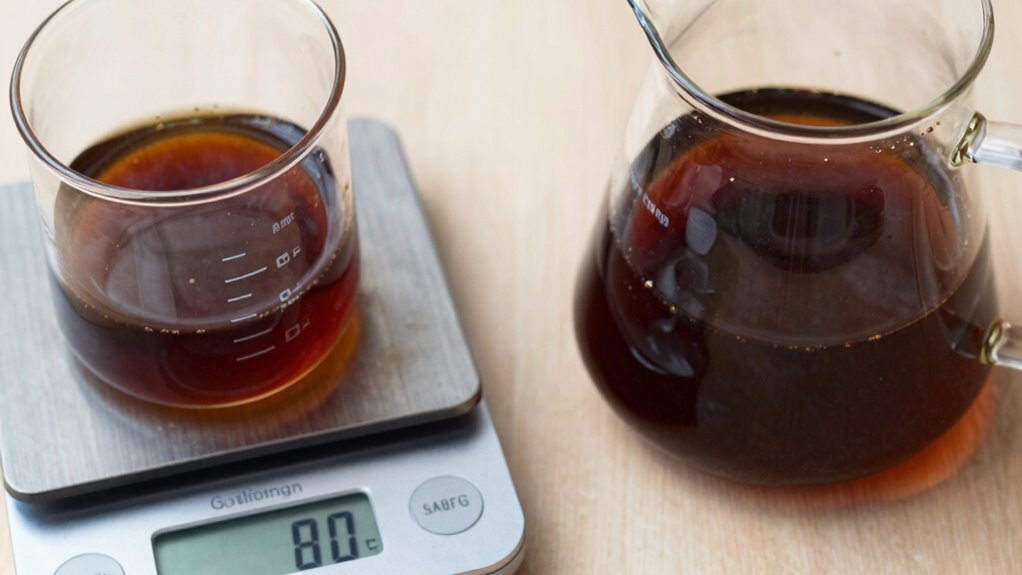
Measuring your cold brew’s original strength is essential for consistent results and proper dilution. To do this accurately, consider the coffee bean’s grind size, the brewing temperature, and brew time, which all influence concentration. Use a refractometer or a simple coffee-to-water ratio test to determine your cold brew’s strength. Keep in mind that brewing temperature affects extraction; higher temperatures usually produce a stronger concentrate. Extraction efficiency plays a crucial role in the final strength of your cold brew, impacting how much dilution is needed. Properly understanding brewing variables can help optimize your coffee’s concentration from the start. When adjusting your dilution, it’s also helpful to know the desired flavor profile you aim for, as this guides how much you should dilute the concentrate. Here’s a quick reference:
| Coffee Bean Type | Brewing Temperature | Strength (Brix) |
|---|---|---|
| Arabica | Cold (4°C) | 2-3 |
| Robusta | Cold (4°C) | 3-4 |
| Blend | Cold (4°C) | 2.5-3.5 |
| Arabica | Room Temperature | 3-4 |
| Robusta | Room Temperature | 4-5 |
This helps you gauge your concentrate’s baseline. Proper measurement techniques are vital to achieving the desired dilution and flavor balance.
As an affiliate, we earn on qualifying purchases.
Finding the Perfect Dilution Ratio for Your Taste
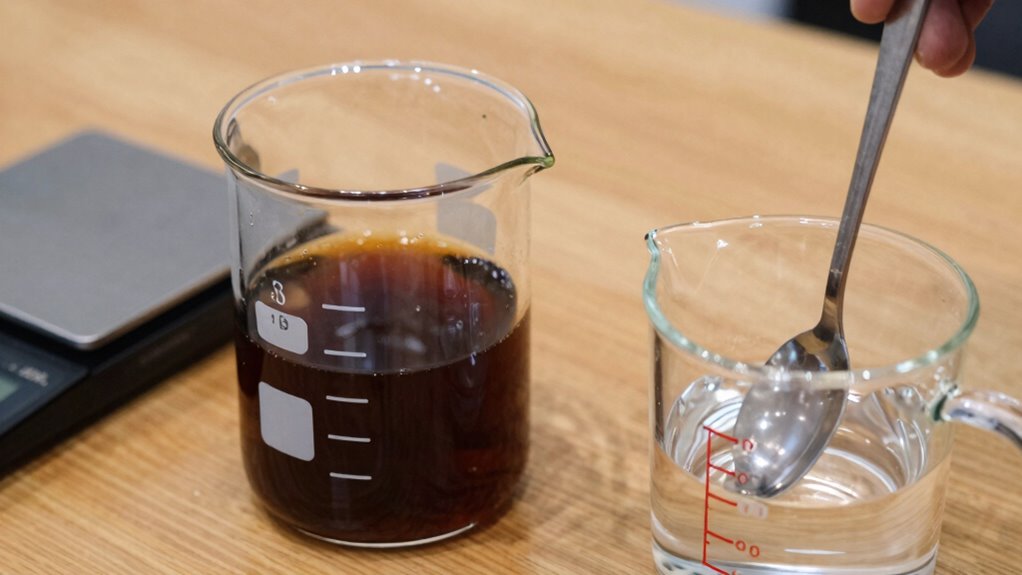
Finding the perfect dilution ratio for your taste involves experimenting with different water-to-coffee concentrations until you reach your ideal flavor balance. Start by adjusting the amount of water added to your cold brew concentrate, noting how each change affects flavor and strength. Flavor balancing is key—you want it strong enough to enjoy but not overwhelming. Keep track of your adjustments to maintain brewing consistency, ensuring each batch matches your preferred profile. Taste-testing at various ratios helps you identify what works best for your palate. Remember, personal preferences vary, so patience is essential. Once you find the right balance, you can replicate it confidently, enjoying a delicious cold brew that’s tailored precisely to your taste. Additionally, understanding credit card insights can help you manage your finances better while enjoying your favorite beverages. Incorporating precise measurements ensures your dilution process remains consistent over time. Being aware of consistent brewing techniques can also improve the overall quality and flavor consistency of your cold brew. Knowing about personal preferences can further guide you in customizing your brew to suit your unique taste. Exploring eco-friendly practices in your brewing process can also contribute to a more sustainable routine.
How to Dilute Cold Brew Step-by-Step for Best Flavor
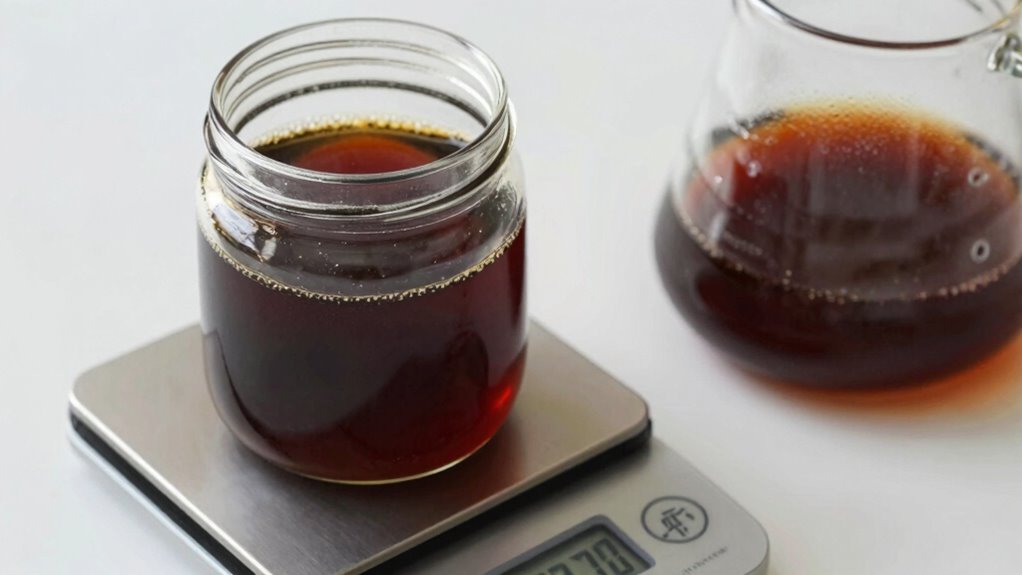
Start by measuring your coffee concentrate carefully to guarantee consistency. Then, add water gradually, tasting as you go, until you reach your preferred strength. Adjust the ratio as needed for the perfect balance of flavor and dilution. Remember that proper dilution can enhance the overall experience and prevent overpowering bitterness. Using accurate measurements ensures a reliable process, making it easier to replicate your ideal cold brew every time.
Measure Coffee Concentrate
To achieve the perfect balance of flavor, you need to measure your coffee concentrate accurately before diluting it. Start by understanding that coffee extraction influences concentration—over-extraction can lead to bitterness, while under-extraction results in weak flavor. Use a reliable scale to measure your concentrate precisely, rather than guessing. When brewing, pay attention to the brewing temperature, as higher temperatures can increase extraction speed, affecting strength. Once your cold brew is prepared, measure the concentrate with care, considering how much you plan to dilute it to reach your desired flavor profile. Accurate measurement guarantees consistency and allows you to fine-tune your dilution process, delivering a balanced, flavorful cold brew every time. Proper extraction is essential for achieving the desired strength and flavor in your cold brew. Additionally, understanding the coffee-to-water ratio helps in controlling the final concentration and flavor intensity. Being aware of brew strength can also guide you in adjusting your recipe for different preferences. Incorporating precise measurement tools can further improve your consistency and flavor control.
Adjust With Water
Adjusting your cold brew with water is a simple way to tailor the flavor to your preference. To do this accurately, consider the coffee density of your concentrate. Knowing the correct ratio ensures precise dilution, preventing under- or over-dilution that can compromise flavor. Start by measuring your cold brew concentrate, then gradually add water in small increments, stirring gently after each addition. This step-by-step approach improves dilution accuracy and helps you achieve your desired strength. Keep in mind that adding too much water too quickly can lead to inconsistent results, so patience is key. By understanding your coffee density and adjusting gradually, you’ll enjoy a perfectly balanced cold brew every time without guessing.
Common Mistakes When Diluting Cold Brew: and How to Avoid Them
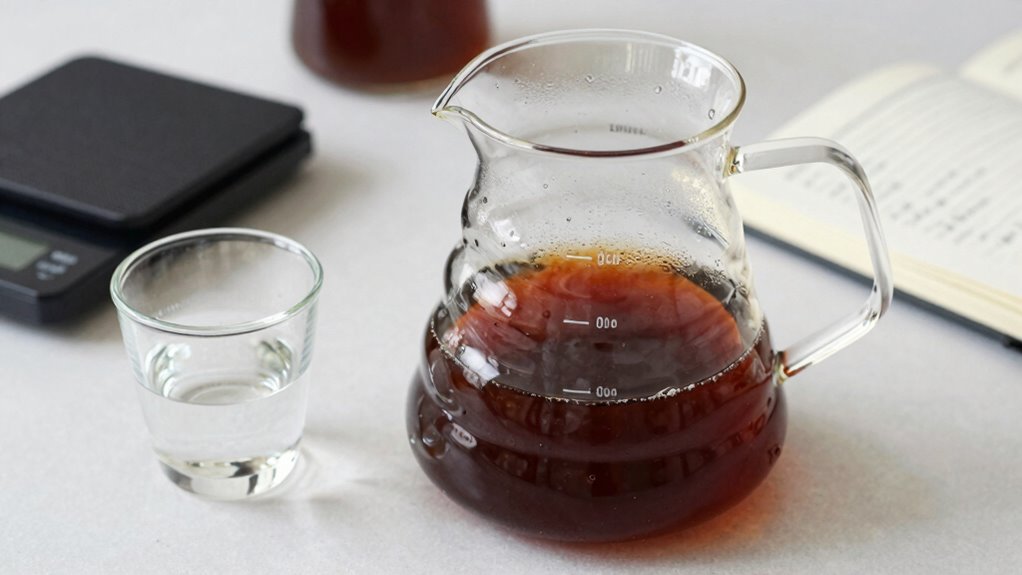
One common mistake when diluting cold brew is adding too much water at once, which can weaken the flavor and ruin the balance you’re aiming for. Over dilution mistakes often lead to a flavor imbalance, making your cold brew taste watered-down and dull. To avoid this, add water gradually and taste as you go, rather than pouring in large amounts all at once. Rushing this step can cause you to overshoot the ideal strength, requiring more adjustments later. Remember, cold brew is concentrated for a reason—you want to preserve its boldness while adjusting to your preferred strength. By being cautious and deliberate, you’ll prevent over dilution mistakes and maintain the rich, nuanced flavor profile you want in your final cup.
Easy Formulas to Adjust Cold Brew Strength on the Fly

When you need to tweak your cold brew’s strength quickly, using simple formulas can save you time and guesswork. These formulas help you adjust the flavor balancing by controlling the dilution level, all while respecting your preferred brewing techniques. Here’s a quick reference:
| Desired Strength | Coffee to Water Ratio | Adjustment Formula |
|---|---|---|
| Strong | 1:4 | Add more coffee or reduce water |
| Medium | 1:6 | Mix equal parts of concentrate and water |
| Light | 1:8 | Increase water or dilute with ice |
| Custom | Use ratio calculation | (Target ratio / Current ratio) × current amount |
| Very Light | 1:10 | Dilute with a larger amount of water |
These formulas give you control over flavor balancing, making brewing techniques more adaptable on the fly.
Tips for Consistently Achieving the Perfect Cold Brew Flavor
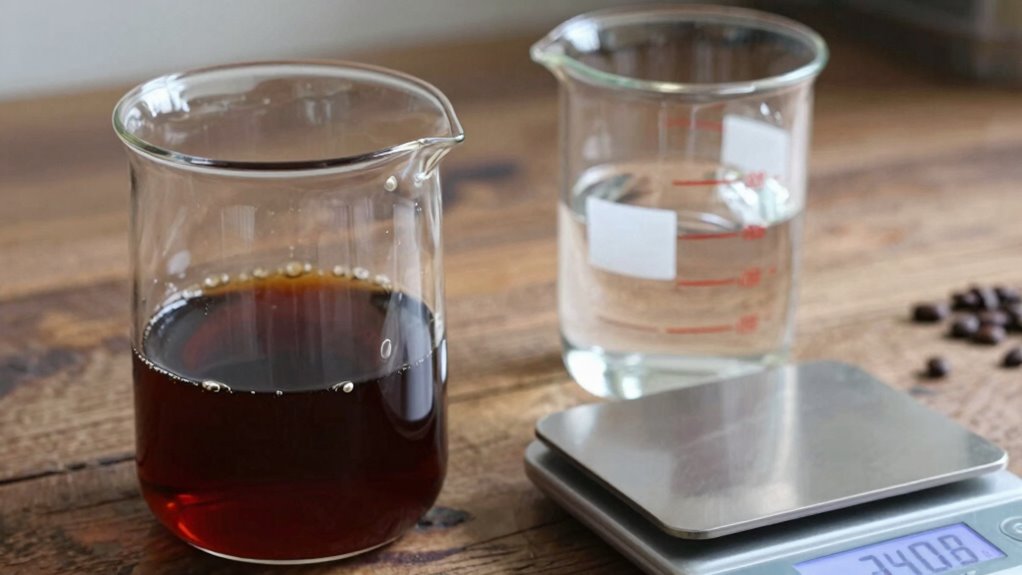
Achieving a consistently perfect cold brew flavor requires attention to detail and careful process control. Start by monitoring brew acidity, which greatly influences flavor balance. Too acidic, and your cold brew will taste sharp; too flat, and it’ll lack brightness. Adjust grind size to control extraction; a coarser grind slows extraction, reducing acidity, while a finer grind increases it. Consistency begins with precise measurements of coffee and water, maintaining the same grind size and brew time each batch. Regularly taste-test during brewing to catch subtle flavor shifts. Keep your equipment clean to prevent off-flavors. By paying close attention to grind size and brew acidity, you guarantee each batch delivers that perfect, balanced cold brew flavor you seek.
Customizing Dilution for Different Cold Brew Recipes
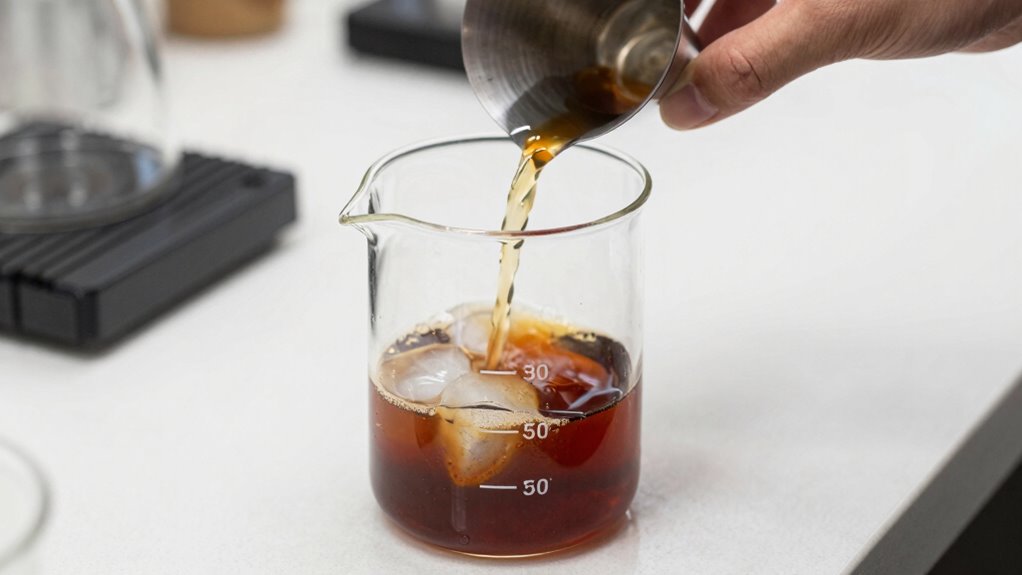
You can customize your cold brew by adjusting the coffee-to-water ratio to match your preferred strength. Tailoring this ratio allows you to create a more concentrated or lighter brew based on your taste. Experimenting with these adjustments helps you find the perfect balance for each recipe.
Adjusting Coffee-to-Water Ratios
Adjusting the coffee-to-water ratio is the key to customizing your cold brew’s strength and flavor profile. A higher ratio results in a richer coffee flavor, while a lower ratio produces a lighter, more invigorating drink. When adjusting ratios, consider your brewing temperature: colder temperatures slow extraction, so you might need a slightly higher coffee amount to achieve desired flavor intensity. Conversely, warmer brewing temps extract flavors more quickly, allowing for a lower coffee-to-water ratio without sacrificing richness. Experiment with small adjustments to find the perfect balance for your taste. Keep in mind that changing the ratio also influences strength, so if you prefer a more concentrated brew, increase the coffee amount; for milder flavors, reduce it accordingly.
Tailoring Strength to Taste
Once you’ve settled on a coffee-to-water ratio, tailoring the strength of your cold brew to match your taste preferences involves customizing how much you dilute the concentrate. This process allows you to achieve your ideal flavor balance, whether you prefer a milder or more robust brew. Keep in mind that brewing temperature impacts extraction, influencing flavor and strength. To refine your brew:
- Adjust dilution based on desired flavor intensity, adding more water for lighter profiles or less for stronger ones.
- Consider the brewing temperature; colder temperatures may require a slightly longer brew to extract desired flavors without bitterness.
- Taste test at different dilution levels, noting how the flavor balance shifts, and find the perfect compromise for your palate.
Troubleshooting Cold Brew Dilution Problems
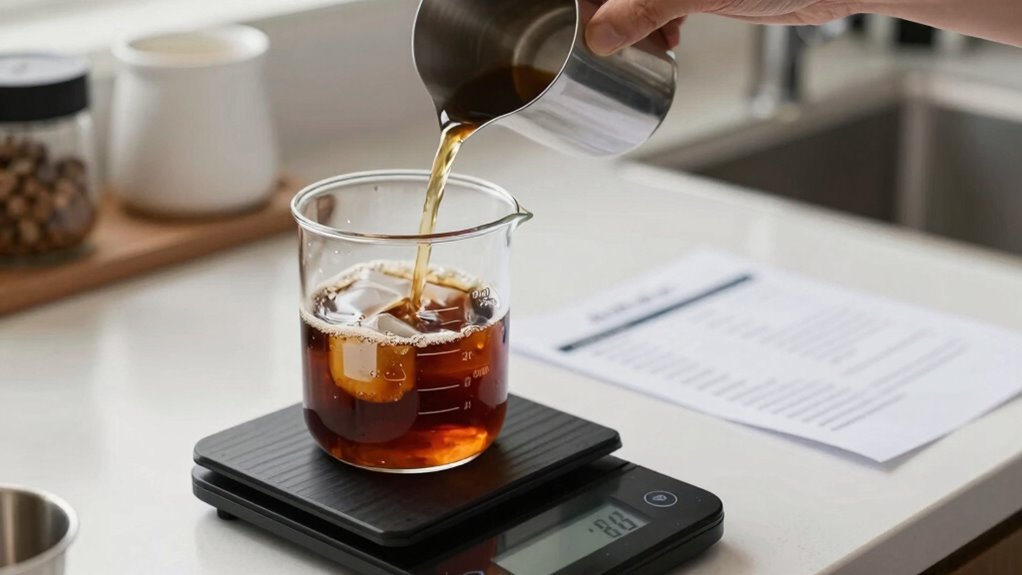
When cold brew ends up too diluted, it usually indicates an imbalance in the brewing process or ingredient ratios. One common cause is improper brewing temperatures; brewing at too high a temperature can extract more water-soluble compounds, weakening the final strength. Additionally, inadequate storage methods can lead to dilution over time, especially if the concentrate is exposed to air or temperature fluctuations. To troubleshoot, guarantee you’re brewing at the ideal temperature, typically around 37–40°F (3–4°C), and store your concentrate in airtight containers in the fridge. Also, double-check your coffee-to-water ratio during brewing. These adjustments help maintain the desired strength and prevent unintended dilution, making your cold brew more consistent and flavorful.
Frequently Asked Questions
Can I Dilute Cold Brew With Milk or Just Water?
Yes, you can dilute cold brew with milk or water, depending on your preference. Adding milk creates a creamier, richer flavor, perfect for a smoother taste, while water thins the brew without altering its flavor much. To get the right strength, start by adding small amounts of milk or water, then taste as you go. This way, you control the dilution and enjoy your ideal cold brew strength.
How Does Temperature Affect Cold Brew Dilution and Strength?
You’re right to wonder how temperature impact affects cold brew dilution and strength. As temperature increases, dilution effects become more pronounced because warmer liquids thin out faster, reducing strength. Conversely, colder temperatures help maintain that rich, concentrated flavor. Keep in mind, if you warm up your cold brew, it’ll dilute more quickly and lose some of its boldness. So, don’t put all your eggs in one basket—adjust with temperature carefully.
Are There Specific Tools to Measure Cold Brew Concentration Accurately?
Yes, you can use precision tools like refractometers or digital hydrometers to measure cold brew concentration accurately. These measurement techniques give you reliable readings of soluble solids or specific gravity, helping you determine the brew’s strength precisely. Investing in such tools allows you to dilute your cold brew confidently without guesswork, ensuring consistent taste and strength every time. They’re essential for baristas and home brewers aiming for perfect cold brew consistency.
How Long Can I Store Diluted Cold Brew Without Losing Flavor?
Think of your diluted cold brew as a delicate flower; it needs proper care to stay fresh. You can store it in the fridge for up to two weeks, but for the best flavor preservation, aim to enjoy it within one week. After that, it may start to lose its rich taste and aroma. Keep it sealed tightly and stored at a consistent temperature to maximize freshness.
What’s the Best Way to Re-Concentrate Cold Brew if It’s Too Weak?
To re-concentrate weak cold brew, use gentle evaporation or simmering to reduce its volume, carefully monitoring to preserve flavor. Concentration techniques like low heat and slow reduction help maintain flavor preservation while intensifying strength. Alternatively, add a small amount of strong, freshly brewed coffee to boost concentration without risking over-extraction. Always taste as you go to ensure the flavor remains balanced and vibrant.
Conclusion
Now that you know the math behind cold brew dilution, you can confidently adjust its strength without guesswork. With a little practice, you’ll find the perfect balance that suits your taste every time. Remember, patience is a virtue—don’t rush the process. When in doubt, measure twice and pour once. Soon, you’ll be brewing and diluting like a pro, turning a simple cup into a delightful masterpiece.
Halloween Picks
halloween
As an affiliate, we earn on qualifying purchases.