If your French press produces a muddy cup, the most common fix is to adjust your grind size. Switch from a fine grind to a medium-coarse one, which helps prevent fines from slipping through the filter and causing sediment. This change improves clarity and reduces muddiness while preserving flavor. If you want to discover more tips for a cleaner, better cup, keep exploring how small adjustments make a big difference.
Key Takeaways
- Switch to a medium-coarse grind to reduce fines and sediment, improving clarity and preventing muddiness.
- Use a burr grinder for consistent grind size, ensuring even extraction and fewer muddy particles.
- Avoid overly fine grounds, which can cause over-extraction and murky, bitter coffee.
- Adjust your grind size incrementally until the brew is clear and flavorful.
- Combine the correct grind with proper brewing temperature and timing for the best clarity and taste.
Why Does Your French Press Coffee Turn Out Muddy?
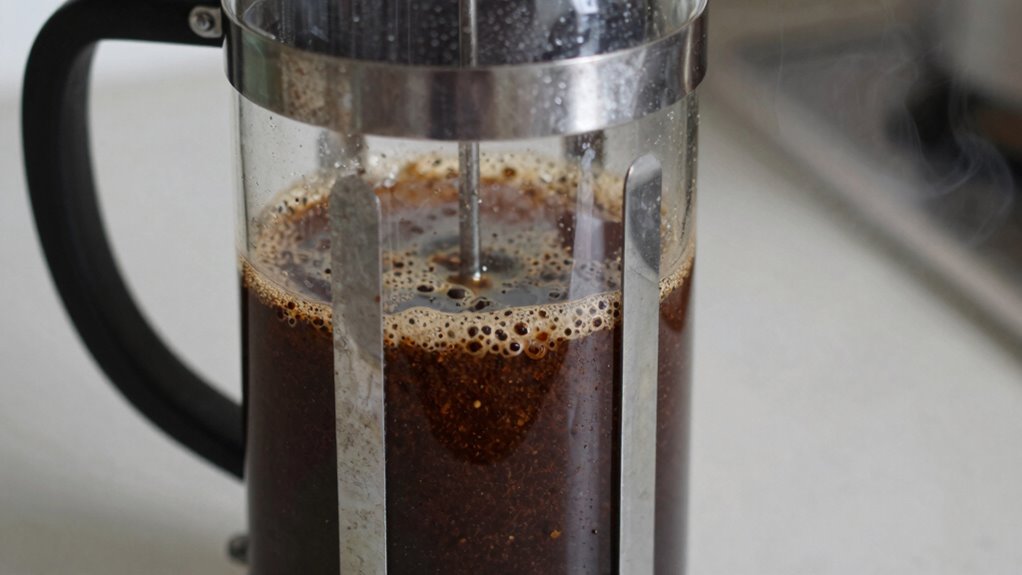
If your French press coffee turns out muddy, it’s usually because the grounds weren’t properly filtered or too many fine particles escaped into the brew. During the blooming phase, hot water is released from the coffee grounds, releasing gases and enhancing flavor. If your brewing temperature is too high, it can cause excessive extraction, leading to more fines and sediment in your cup. This creates a murky, muddy appearance. To avoid this, verify your water is at the right temperature—around 200°F (93°C)—and give your coffee time to bloom before pouring the remaining water. Proper temperature control minimizes the release of unwanted fines, leading to a clearer, cleaner brew. Paying attention to these factors helps keep your French press coffee vibrant and free of muddiness. Additionally, choosing a coarse grind helps prevent too many fine particles from passing through the filter.
How Grind Size Impacts Clarity and Flavor in Your French Press

The size of your coffee grounds directly influences both the clarity and flavor of your French press brew. A consistent grind ensures even extraction, preventing over- or under-extraction that can muddy your cup. When your grind is too coarse, the water flows quickly, resulting in weak flavor and reduced clarity. Conversely, too fine a grind can lead to over-extraction, making your coffee bitter and murky. Additionally, controlling brewing temperature helps optimize extraction, but the grind size plays the key role in achieving clarity. Consider these points:
- Use a consistent grind size for even extraction
- Adjust grind size for your brewing temperature
- Coarser grounds improve clarity, finer grounds deepen flavor
- Proper grind size prevents muddy, overly bitter cups
- High contrast ratios in projectors enhance image depth and clarity, similar to how a proper grind enhances coffee clarity.
Getting the grind right enhances both clarity and flavor in your French press.
How to Find the Right Grind Size for a Clear French Press Brew

Choosing the right grind size directly affects the clarity of your French press coffee. If your brew is cloudy, adjusting the grind can make a big difference. Experimenting with different sizes helps you find the perfect balance for a clean, flavorful cup. Additionally, understanding grind consistency is key to achieving optimal extraction and clarity.
Grind Size and Clarity
Finding the right grind size is essential for achieving a clear French Press brew. The key is to find a consistency that allows water to extract evenly without over- or under-extracting. A too-fine grind can cause over-extraction and muddy results, while too-coarse results in weak flavor. Keep these tips in mind:
- Aim for a medium-coarse grind to balance clarity and flavor.
- Guarantee grind consistency for uniform extraction.
- Adjust your brew temperature around 195–205°F for optimal extraction.
- Use a burr grinder for more precise, consistent grind size.
- Consider grind size and clarity as crucial factors in the overall brewing process to avoid muddy cups and enhance flavor.
Adjusting for Optimal Brew
Ever wonder how to dial in the perfect grind size for a crystal-clear French Press? The key is balancing your grind with the right brewing temperature. A slightly coarser grind allows water to flow smoothly, reducing sediment and muddy cups. When your grind is too fine, coffee particles can slip through the mesh, muddying the brew and dulling the coffee aroma. Adjust your grind and pay attention to brewing temperature—ideally around 200°F. Too hot, and it can over-extract, making the coffee bitter; too cool, and the extraction is weak, dulling aroma and flavor. Experiment with small adjustments, and you’ll find that just right grind size enhances aroma, ensures clarity, and produces a clean, satisfying French Press brew every time. Additionally, understanding the local coffee culture can help you select beans that are best suited for your preferred brewing method.
Step-by-Step: Adjusting Your Coffee Grind for Better Results
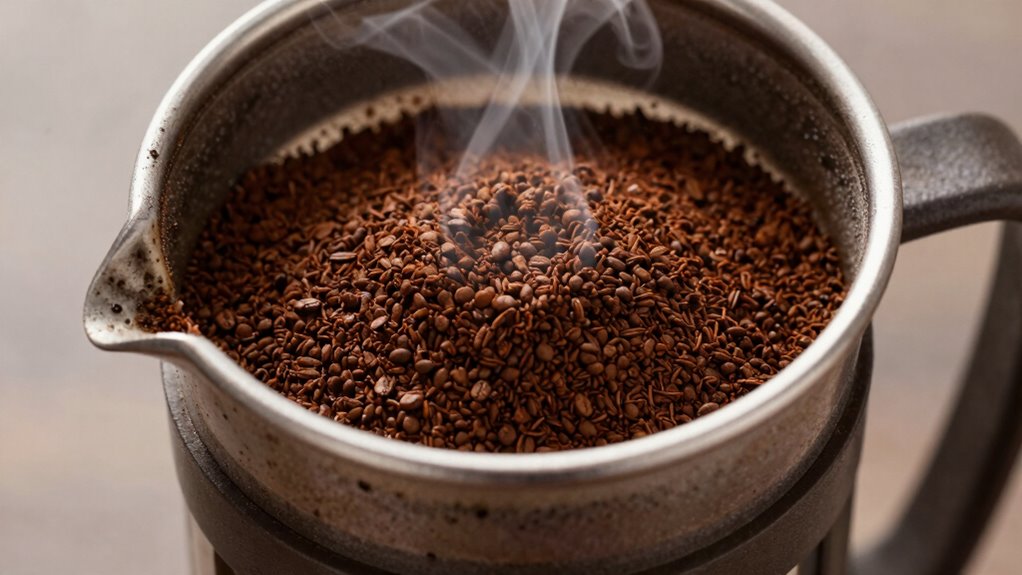
Start by identifying what’s causing your brewing issue, like a muddy cup or weak flavor. Then, choose the right grind size based on that problem, whether coarser or finer. To ensure optimal extraction and flavor, consider using energy-efficient cloud solutions that support your brewing setup and sustainability goals. Finally, test your adjustments gradually until you find a perfect balance for a cleaner, better-tasting brew.
Identify Your Brewing Issue
When your French press coffee doesn’t turn out as expected, the first step is to identify the brewing issue. Start by evaluating what’s going wrong: is it too muddy, weak, or bitter? Common causes include stale bean freshness, incorrect water temperature, or over-extraction. To pinpoint the problem, consider these factors:
- Bean freshness: Are your beans fresh or old? Stale beans can lead to dull flavors.
- Water temperature: Is your water too hot or too cold? Ideal is around 200°F for proper extraction.
- Grind size: Is your grind too fine or coarse? This affects extraction and muddiness.
- Brewing time: Are you steeping too long or too short? Adjusting time impacts flavor and clarity.
Choose Correct Grind Size
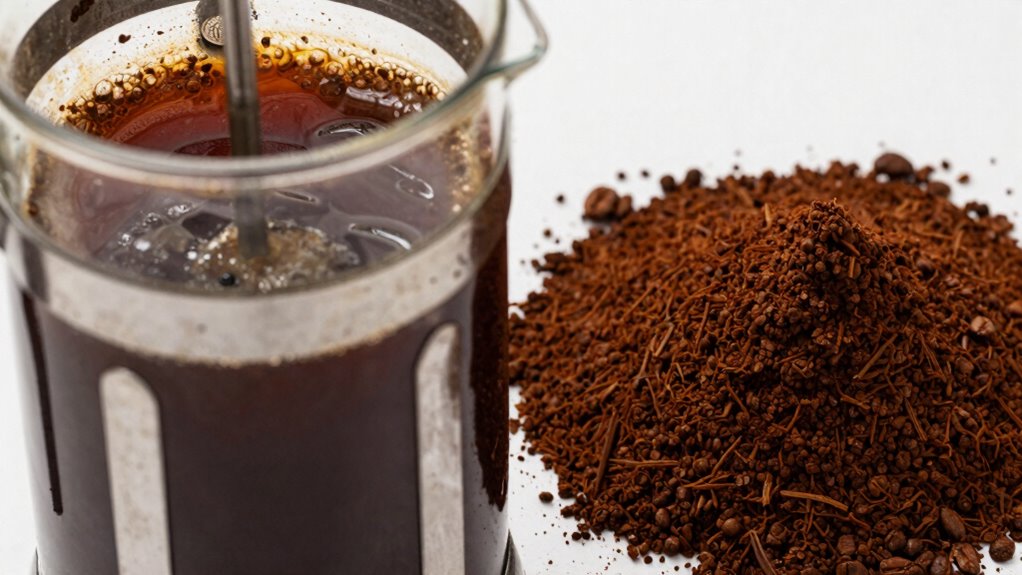
Choosing the right grind size is essential for a clean, balanced French press brew. Consistent grind size guarantees even extraction and helps prevent over- or under-extraction. For a better brew, aim for a coarse grind, with larger particle size, similar to breadcrumbs. If your grind is too fine, it can cause excessive sediment and muddy coffee. Conversely, a grind that’s too coarse might lead to weak, under-extracted flavor. Focus on grind consistency—uniform particle size is key to achieving an even extraction. Use a burr grinder if possible, as it provides more precise control over particle size and consistency. Adjust your grinder until you find a coarse, uniform grind, and you’ll notice a significant improvement in clarity and balance in your French press coffee. Additionally, grind size directly influences extraction time, so experimenting with small adjustments can help you dial in the perfect brew.
Test and Adjust Gradually
To improve your French press results, it’s important to test your grind and make adjustments gradually. Consistent grind size helps ensure even extraction, reducing muddiness. Also, pay attention to water temperature—ideally between 195-205°F—to optimize extraction without overdoing it.
When tweaking, consider:
- Adjusting grind size in small steps rather than drastic changes
- Brewing a new batch each time to gauge effects accurately
- Monitoring grind consistency to prevent uneven extraction
- Keeping water temperature steady for reliable comparisons
Making incremental changes allows you to find the perfect balance without overcorrecting. Patience is key; small adjustments lead to better control over flavor and clarity, helping you avoid that muddy cup every time.
Tips for Cleaner, Richer French Press Coffee Every Time
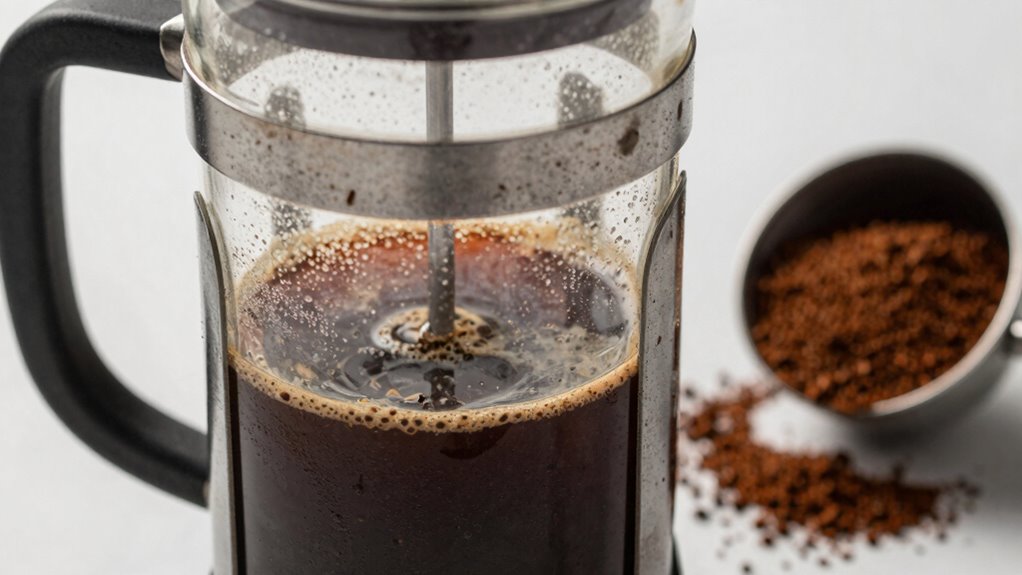
Achieving cleaner, richer French press coffee starts with proper technique and attention to detail. First, choose high-quality coffee bean varieties that suit your flavor preferences—fresh, whole beans ground just before brewing make a noticeable difference. Use a consistent grind size, ideally a coarse grind, to prevent over-extraction and sediment. Pay close attention to brewing temperature; aim for around 200°F (93°C), just below boiling, as this optimizes extraction without causing bitterness. Stir gently after adding hot water to ensure even saturation. Timing also matters—let the coffee steep for about four minutes, then press slowly. These small adjustments help you avoid muddy cups and achieve a cleaner, richer brew every time. Additionally, selecting the right luggage & bags can help keep your brewing equipment organized and fresh during travel.
Troubleshooting Common French Press Problems: Over-Silt, Over-Extraction, and More
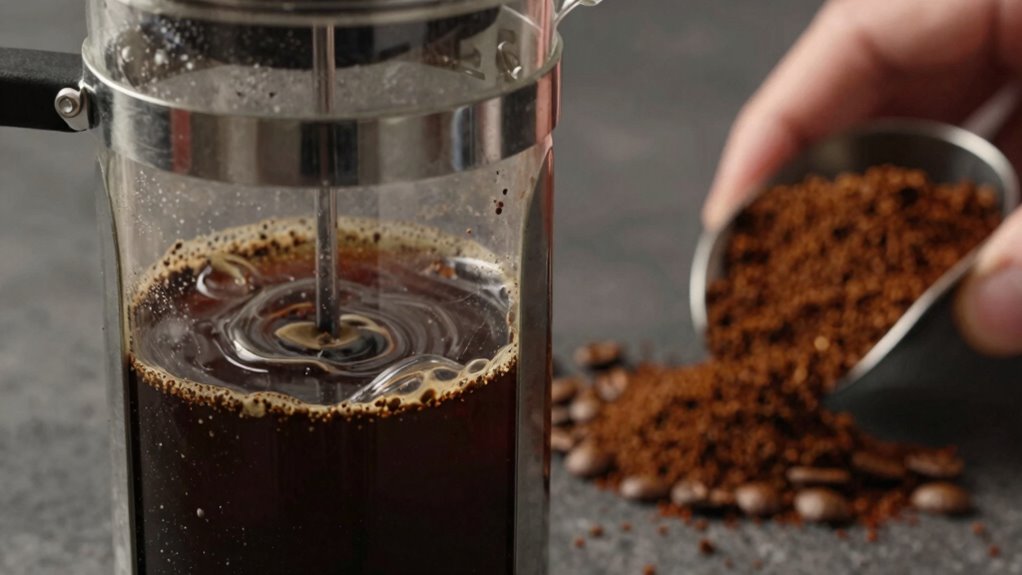
When your French press results in a muddy cup or overly bitter brew, it’s time to troubleshoot common issues. Over-silt and over-extraction often originate from water temperature and brew time. To fix these problems:
- Use water just below boiling (195–205°F) to prevent over-extraction.
- Keep brew time around 4 minutes; longer steeping can cause bitterness.
- Grind your coffee to a coarse consistency to minimize silt.
- Stir gently after adding water to ensure even extraction without overdoing it.
- Incorporate connected equipment like temperature-controlled kettles or smart timers to precisely manage brewing variables.
Adjusting these factors helps you control extraction and clarity. Remember, too hot water or too long brew time can lead to muddiness and bitterness. Fine-tuning your water temperature and brew time allows for a cleaner, more balanced cup.
Other Factors That Affect Your French Press Coffee Quality
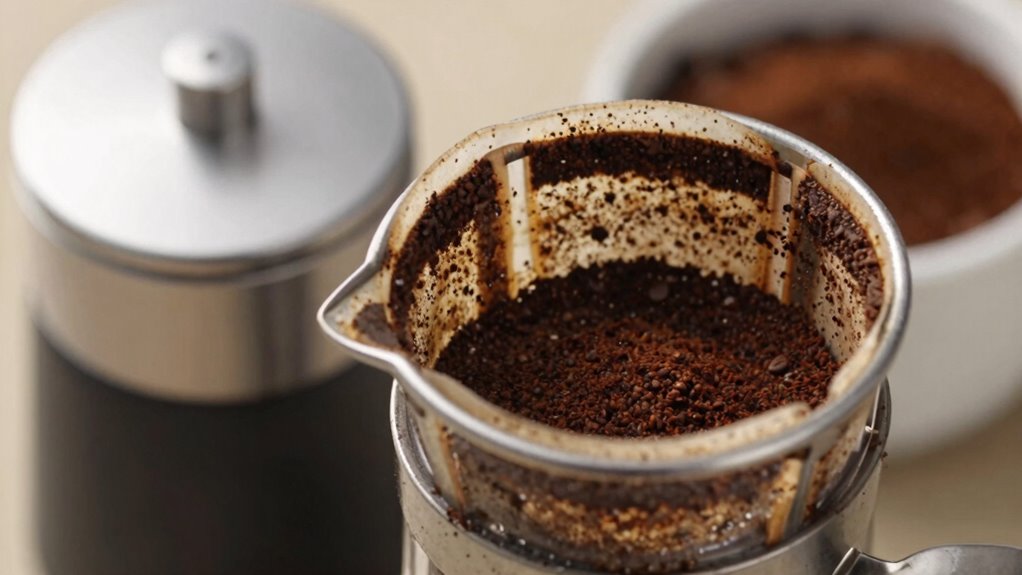
Beyond water temperature and brew time, several other factors can influence your French press coffee quality. One key element is grind size; too fine a grind can cause over-extraction and muddy cups, while too coarse may lead to under-extraction. Consistency in your grind guarantees even extraction. Water quality also matters—use filtered water to avoid mineral deposits that can affect flavor. Additionally, the timing of your brew impacts strength and clarity; too long, and you risk over-extraction, resulting in bitterness. Keep your water temperature steady—around 200°F—to optimize extraction without scalding the coffee. Finally, pre-warming your French press helps maintain consistent brewing temperatures, ensuring your coffee isn’t affected by sudden temperature drops. Grind consistency is essential for achieving a balanced and clean cup. All these factors work together to produce a clean, flavorful cup.
Frequently Asked Questions
Can Water Temperature Influence the Muddiness of My French Press Coffee?
Yes, water temperature can influence the muddiness of your French press coffee. If the water’s too hot, it extracts more fines and sediment from the beans, making your brew murkier. Using slightly cooler water helps prevent over-extraction of these tiny particles. Additionally, fresh beans tend to produce cleaner coffee, so guarantee your water temperature is just right, around 195-205°F, to optimize flavor without increasing muddiness.
How Does Brew Time Affect the Clarity of My French Press Coffee?
Your brew time directly affects the clarity of your French press coffee. If you steep too long, the coffee becomes over-extracted, resulting in muddiness, even with the right grind size. To prevent this, stick to a brew time of about 4 minutes. Using a consistent, medium-coarse grind helps guarantee clarity. Shortening or lengthening the brew time slightly can improve the overall flavor and reduce sediment at the bottom.
Are There Specific Types of Coffee Beans That Reduce Mud in My French Press?
Think of your beans as the cast in a play—select the right one to prevent muddy cups. Opt for beans from higher elevations or specific bean origin regions like Ethiopia or Colombia, which often have cleaner flavors. Light to medium roast levels are better because they produce less sediment. These choices help create a clearer French press brew, ensuring your coffee’s flavor shines without the muddy mess.
What Role Does Stirring or Agitation Play in Coffee Muddiness?
Stirring or agitation markedly impacts your coffee’s muddiness. When you stir too vigorously or too early, it releases fine grounds, causing more agitation effects and resulting in a murky brew. Use gentle, slow stirring techniques after adding hot water, and avoid excessive agitation. This helps keep the grounds settled, reducing muddiness and ensuring a cleaner, smoother cup. Proper stirring technique is key to avoiding a muddy French press.
Does the Age or Freshness of Coffee Beans Impact the Sediment in My Brew?
Think of your coffee like a fine wine—freshness matters. Older beans tend to create more sediment because they break down and release particles more easily. To minimize this, use fresh beans and store them properly in an airtight container away from light and moisture. Regularly buying fresh beans and practicing good storage techniques can markedly reduce sediment, giving you a cleaner, smoother brew every time.
Conclusion
By adjusting your grind size, you can avoid that muddy French press and enjoy a clearer, richer brew. Did you know that coffee grounds of the right size can improve clarity by up to 50%? Experiment with your grind, follow the tips, and troubleshoot issues to perfect your cup. Remember, small changes make a big difference in flavor and texture—so take control and enjoy every sip!