Grind size charts can mislead you because they oversimplify brewing variables like beans, equipment, and environmental factors. Instead, rely on sensory cues such as brew time, flavor, and texture to find the right setting faster. Adjust gradually based on these clues, and pay attention to how your coffee tastes and looks. If you want to master your perfect grind, pay close attention to these practical tips—more insights await to help you perfect your brew.
Key Takeaways
- Grind size charts oversimplify brewing variables; use sensory feedback and extraction times instead.
- Adjust grind based on brew clarity, taste, and extraction speed rather than fixed chart recommendations.
- Equipment type, bean origin, and freshness significantly affect ideal grind size; customize accordingly.
- Establish a consistent routine with measurements and environment control for more accurate grind calibration.
- Rely on visual and flavor cues to fine-tune grind settings, avoiding reliance solely on generic charts.
Why Grind Size Charts Can Mislead Coffee Lovers
While grind size charts may seem like a helpful guide, they often oversimplify the complexities of brewing coffee. Coffee freshness greatly impacts how your brew turns out, and relying solely on a chart ignores this factor. Freshly ground coffee needs precise grinder calibration to achieve the right extraction, but a chart can’t account for variations in beans or equipment. If your grinder isn’t calibrated properly, even the perfect grind size on a chart might produce an underwhelming cup. Instead of blindly following a chart, focus on understanding your coffee’s freshness and adjusting your grinder accordingly. This personalized approach ensures you get the best flavor extraction, rather than just matching a generic grind size. Additionally, understanding feature Buddies can help you better grasp how different variables affect your brewing process, leading to more consistent results. Ultimately, coffee brewing is a nuanced process that charts alone can’t fully capture.
How to Recognize If Your Coffee Grind Is Too Fine or Too Coarse
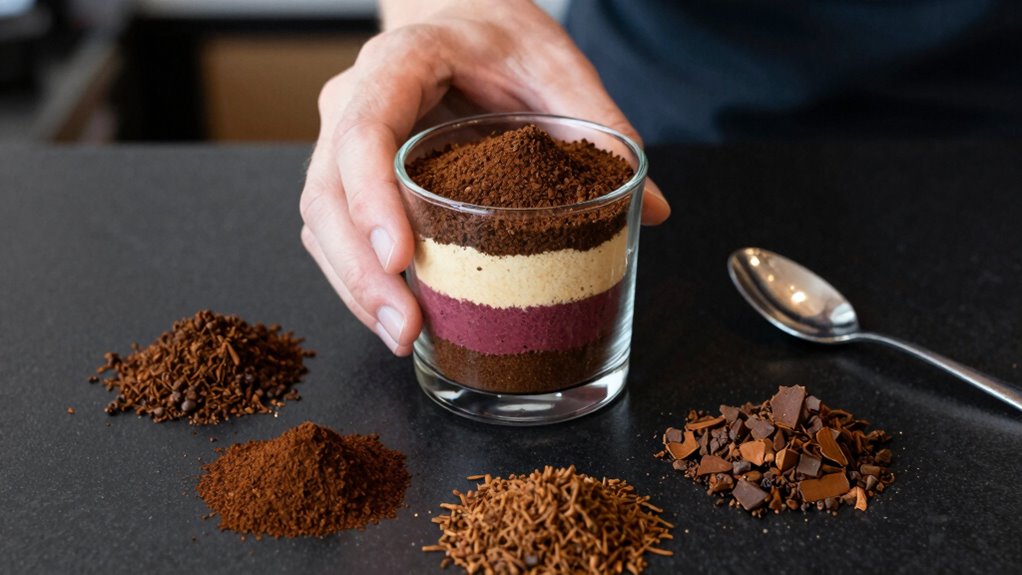
You can tell if your grind is too fine or coarse by watching how long your coffee takes to extract and how clear or cloudy the brew looks. A too-fine grind often results in over-extraction, making your coffee bitter, while a too-coarse grind may cause under-extraction and weak flavor. Pay attention to the texture of your grounds and the taste differences to make adjustments for a better cup. Additionally, experimenting with different grind sizes can help you find the optimal setting for your specific brewing method, especially in Free Floating systems where precision is key.
Extraction Time Variations
Extraction time is a key indicator of whether your coffee grind is just right or needs adjustment. If your brew extracts too quickly, your particle size is likely too coarse, causing water to flow too fast and under-extract. Conversely, if extraction takes too long, the grind might be too fine, restricting water flow and over-extracting. Proper color accuracy impacts the overall appeal of your brewed coffee, just as it does in home cinema projectors.
| Extraction Time | What It Means |
|---|---|
| Short | Particle size too coarse, water flows quickly |
| Long | Particle size too fine, water flows slowly |
| Ideal | Proper particle size, water flows evenly |
| Inconsistent | Uneven grind, inconsistent extraction |
Adjust your grind based on this, aiming for balanced extraction times to optimize flavor.
Brew Clarity and Taste
The clarity and taste of your brewed coffee often reveal whether your grind size is on target. If your coffee looks cloudy or murky, it’s a sign the grind might be too fine, causing over-extraction and muddled flavors. Conversely, if the brew is overly clear but weak or sour, your grind could be too coarse, leading to under-extraction. Pay attention to coffee aesthetics—how the brew’s clarity and color balance—and how the flavors unfold on your palate. Understanding grind size history helps you recognize these signs more easily, as it shows how different textures influence extraction. Proper grind size guarantees your coffee’s clarity isn’t compromised, letting the true taste shine through and giving you a more satisfying cup every time. Incorporating grain size considerations from reliable brewing guides can help you fine-tune your process for consistent results.
Visual Grind Texture
Recognizing whether your coffee grind is too fine or too coarse becomes easier when you observe its visual texture. Your grind appearance reveals a lot about its suitability for your brewing method. Here’s how to evaluate it:
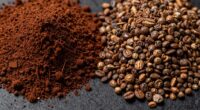
- Too Fine: The grind looks powdery or silky, almost like flour, with a smooth, uniform texture.
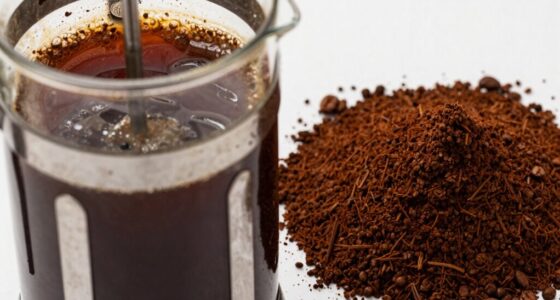
- Too Coarse: The particles are large and uneven, resembling small stones or sea salt.
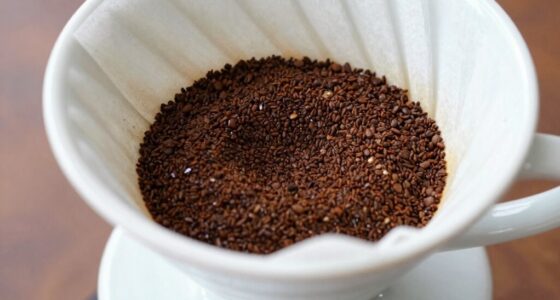
- Just Right: The visual texture shows consistency, with particles that are uniform but not overly powdery.
- Inconsistent Grind: The mixture has a variety of particle sizes, indicating uneven grinding.
What Affects Your Coffee Grind Size? Key Variables to Know
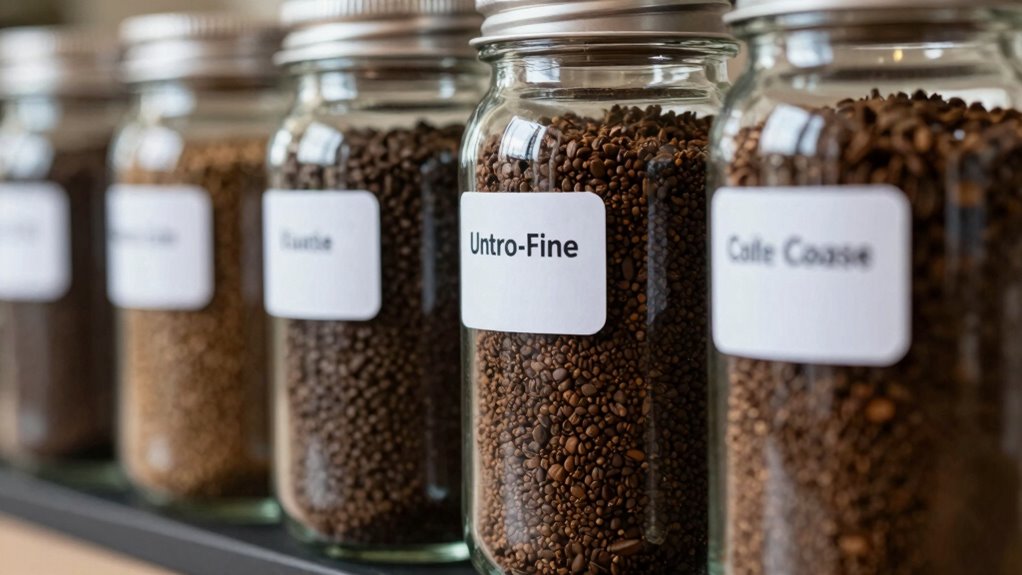
Several key variables influence your coffee grind size, and understanding them can substantially improve your brewing results. One major factor is grinding precision—high-quality grinders produce more consistent grinds, helping you hit that perfect size every time. Bean freshness also plays a vital role; fresher beans tend to be denser and may require adjustments in grind size to optimize extraction. Additionally, roast level impacts grind size needs—darker roasts are often easier to grind evenly, while lighter roasts may demand finer settings. Altitude and humidity can affect how beans grind and how they behave during brewing, so you might need to tweak your grind accordingly. Being aware of grind size variables allows you to fine-tune your process and achieve a better cup of coffee. By considering these variables, you gain better control over your grind size, leading to better-tasting coffee.
Common Myths About Standard Grind Charts: And What Really Matters
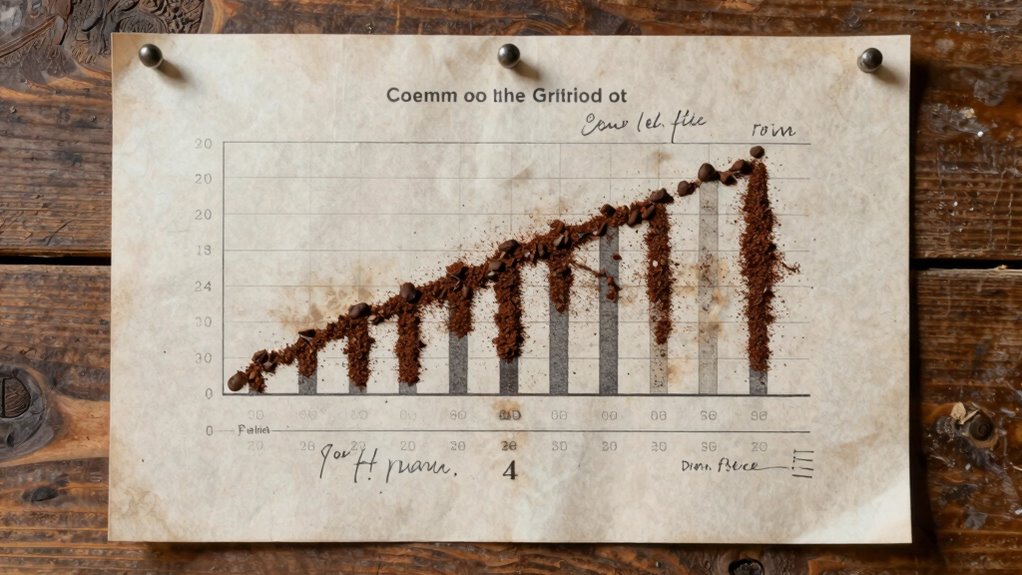
Many coffee enthusiasts rely on standard grind charts, but these guides often mislead and oversimplify the complexities of brewing. Grind size myths often suggest a one-size-fits-all approach, which isn’t accurate. The limitations of these charts mean they don’t account for variables like bean origin, roast level, or equipment differences. To cut through the hype:
Standard grind charts oversimplify brewing, ignoring variables like bean origin, roast, and equipment.
- They ignore the influence of coffee freshness.
- They overlook machine-specific adjustments.
- They assume a universal grind size for every brewing method.
- They underestimate the importance of personal taste and extraction preferences.
- They often fail to detect passive voice effortlessly, which can obscure clarity and precision in your writing.
Understanding these standard chart limitations helps you move beyond myths. Focus on actual brewing results and tweak accordingly rather than relying solely on generic guides. Your perfect grind depends on more than just a chart—it’s about fine-tuning for your unique setup.
Quick Tricks to Test and Dial in Your Perfect Coffee Grind
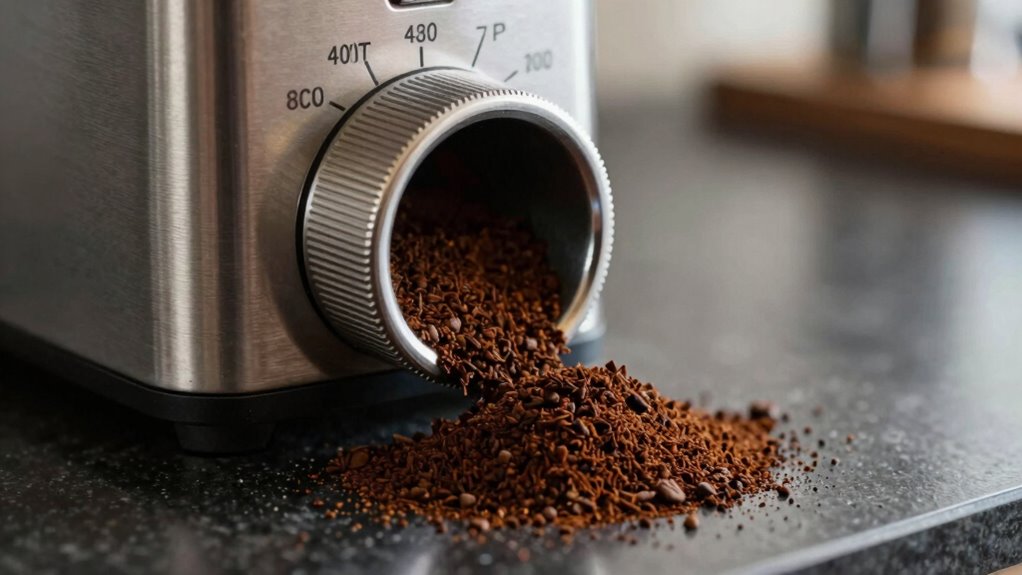
To find your ideal coffee grind, start with quick, systematic tests that reveal how small adjustments impact flavor and extraction. Use fresh coffee beans, as coffee freshness directly influences grind consistency and flavor clarity. Begin with a baseline grind and brew a small test shot or pour-over. Taste and note the extraction time—if it’s too quick, your grind may be too coarse; if it’s too slow, it might be too fine. Make minor changes, one step at a time. Regular grinder maintenance ensures consistent particle size and prevents clogging, which can skew results. Keep track of each adjustment and its effect. This approach helps you rapidly identify the right grind, saving you time and frustration while guaranteeing *suitable* flavor extraction. Additionally, understanding cryptid mysteries can sometimes influence perceptions of folklore and cultural stories associated with haunted locations, highlighting how stories and beliefs shape our understanding of the mysterious.
Fine-Tuning Your Grind Using Equipment and Bean Choices

Your brewing equipment and bean type play vital roles in fine-tuning your grind. Different machines require specific grind sizes to perform ideally, and each bean variety responds uniquely to adjustments. By understanding these factors, you can better tailor your grind for the perfect cup every time. Additionally, consulting equipment specifications can help identify optimal settings for your specific setup, ensuring consistent results.
Equipment Impact on Grind
The type of equipment you use can markedly influence your grind consistency and overall coffee flavor. To optimize your results, focus on these key factors:
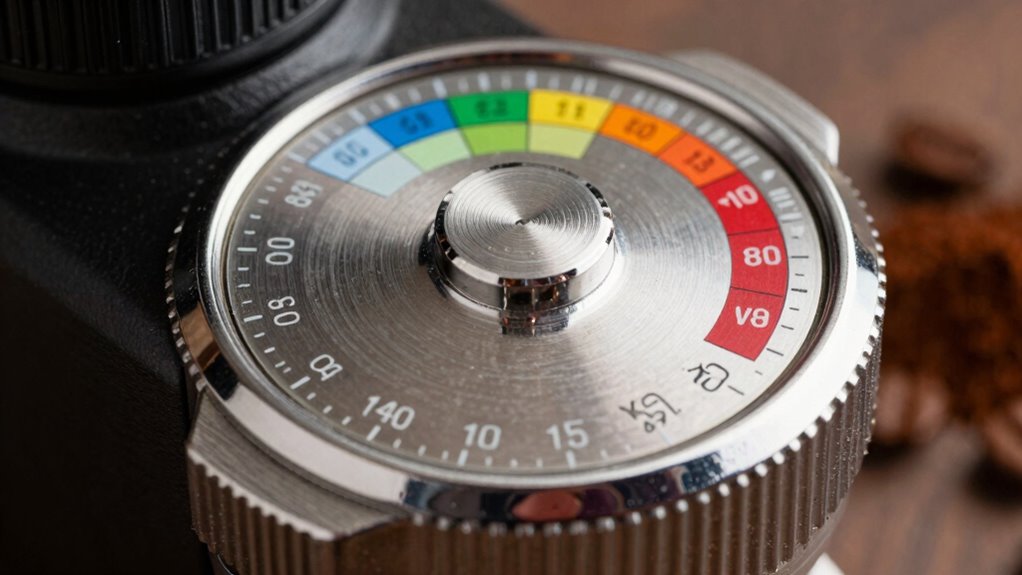
- Regularly perform grinder calibration to maintain precise grind sizes.
- Ensure your grinder is compatible with your brewing method for consistent results.
- Recognize that different machines may require adjustments in grind fineness or coarseness.
- Use high-quality equipment designed for your specific brewing needs to minimize variability.
- Incorporate European cloud solutions to support precise and reliable coffee grinding technology and data management.
Bean Type Influence
Choosing the right bean type considerably influences how you should adjust your grind. Single origin beans often have unique particle sizes and consistency, meaning you might need to tweak your grind to optimize extraction. Freshness also plays a vital role; fresher beans tend to be more oily and sticky, requiring a slightly coarser grind to prevent clogging or over-extraction. Conversely, older beans may need a finer grind to extract enough flavor. Different beans, such as those from Ethiopia or Colombia, have distinct characteristics that demand adjustments in grind size. By understanding your bean type—its origin and freshness—you can fine-tune your grind more accurately, ensuring a better brew. This knowledge helps you avoid the pitfalls of relying solely on generic grind size charts. Additionally, detecting passive voice in your writing can help make your instructions clearer and more direct, improving overall communication.
Developing a Routine to Keep Your Coffee Grind Consistent
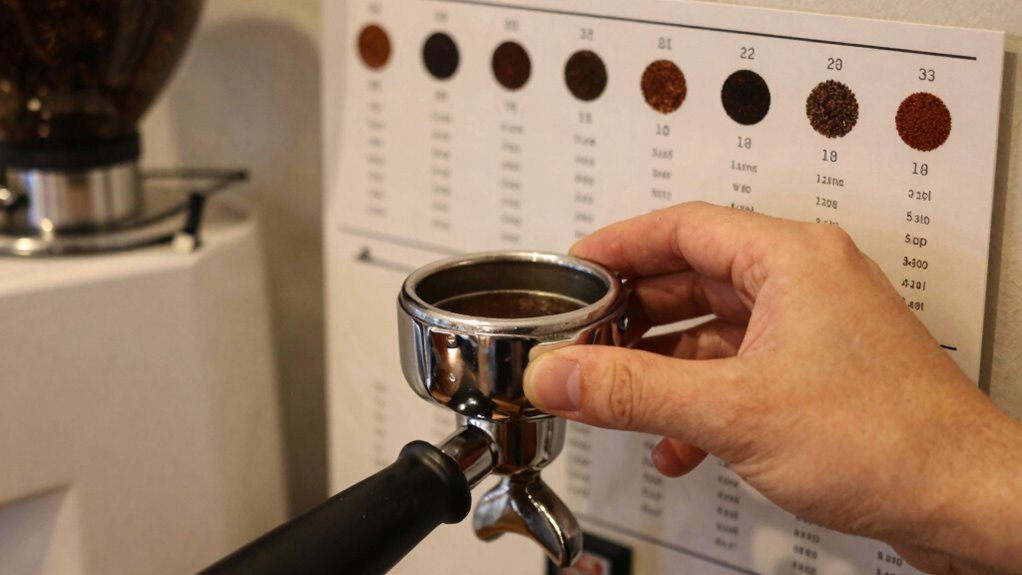
Maintaining a consistent coffee grind starts with establishing a reliable routine. To do this effectively, focus on these key steps:
Establish a routine with consistent measurements, cleaning, and water quality checks for reliable coffee grind results.
- Measure your beans and grind size every time to ensure consistency.
- Use the same brew temperature to prevent flavor variation.
- Check water mineral content, as mineral levels affect extraction and grind perception.
- Clean your grinder regularly to avoid residue buildup that alters grind size.
- Incorporate sound healing techniques to create a calming environment that enhances your focus and consistency during grinding routines.
Should You Trust or Question Grind Size Recommendations? When to Decide
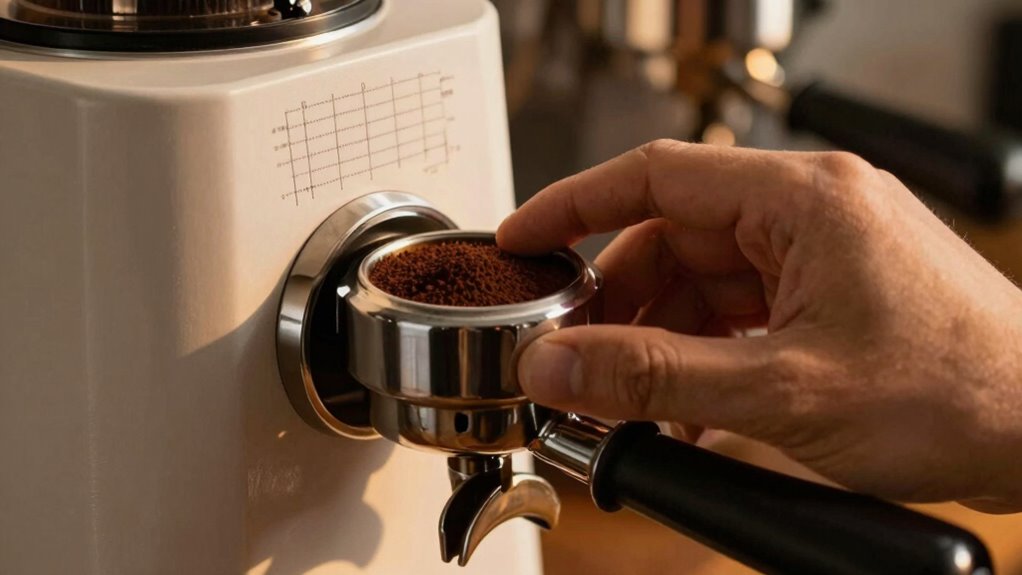
While grind size recommendations can serve as helpful starting points, it’s important to question their accuracy and relevance to your specific equipment and preferences. Your personal taste plays a significant role in determining the ideal grind, so don’t rely solely on generic charts. If your brew tastes flat or overly bitter, it might be time to adjust beyond the recommendations. Also, consider grind aesthetics: a slightly coarser or finer setting can dramatically impact flavor extraction. Trust your senses and experience, not just the numbers. When your espresso shots are too sour or your French press is too weak, it’s a sign to tweak your grind. Ultimately, use recommendations as a baseline, but always be ready to question and customize based on your taste and brewing setup. Understanding extraction can help you fine-tune your grind size more effectively.
Troubleshooting Your Coffee Grind: Practical Tips for Better Brews
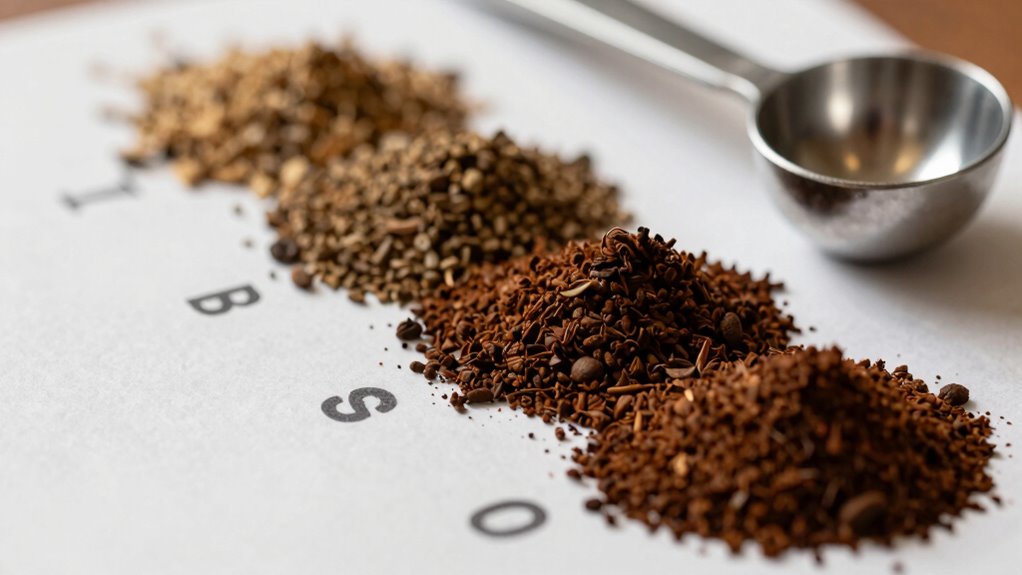
If your coffee isn’t tasting quite right, troubleshooting your grind can make a significant difference. First, check your brewing temperature; if it’s too cold or hot, it can cause under- or over-extraction. Second, consider coffee freshness—stale beans need a different grind to compensate for reduced solubility. Third, adjust your grind size in small increments, since even minor changes can improve flavor. Fourth, verify your grind matches your brewing method; a French press needs a coarse grind, while espresso requires fine. Always experiment with these factors, and don’t forget to taste test after each adjustment. Proper troubleshooting helps you fine-tune your grind for ideal extraction, resulting in a richer, more balanced brew every time.
Frequently Asked Questions
Can Grind Size Affect the Flavor Extraction of My Coffee?
Yes, grind size markedly affects your coffee’s flavor profile by influencing extraction efficiency. A finer grind increases surface area, leading to more thorough extraction and a richer flavor, while a coarser grind results in faster extraction with potentially weaker flavors. Adjusting your grind size helps you control how much flavor gets extracted, ensuring your coffee tastes just right. Experimenting with different settings allows you to find the perfect balance for your preferred flavor profile.
How Often Should I Adjust My Coffee Grinder for Optimal Results?
You should adjust your grind size whenever you notice changes in flavor or extraction time. Regular grind adjustments help maintain flavor consistency, especially if you switch beans or brewing methods. Start by making small tweaks, tasting the results, and recording your settings. This proactive approach ensures you keep your coffee’s flavor profile ideal and consistent, avoiding over-extraction or under-extraction that can spoil the experience.
Does Water Temperature Influence the Ideal Grind Size?
Have you ever wondered if water temperature affects your grind size? It does! Warmer water extracts flavors faster, so you might need a slightly coarser grind to prevent over-extraction. Conversely, colder water requires a finer grind for ideal flavor. Adjusting your grind size based on water temperature guarantees your coffee brews perfectly every time, delivering the best taste without bitterness or sourness. Keep experimenting to find what works best for your setup.
Are Manual Grinders More Accurate Than Electric Ones for Grind Consistency?
Manual grinders generally offer better manual precision, allowing you to fine-tune each grind for consistency. Electric grinders tend to exhibit electric inconsistency, which can lead to uneven grounds and affect your brew quality. If you prioritize precise control and uniformity, a manual grinder is your best choice. You’ll enjoy more consistent results, especially when dialing in your perfect coffee, compared to the variability often found with electric models.
How Do Different Brewing Methods Require Different Grind Sizes?
Different brew methods demand different grind sizes, affecting your brew method, extraction, and flavor. For espresso, use a fine grind for quick extraction; for French press, opt for a coarse grind to prevent over-extraction; and for drip brewing, choose a medium grind for balanced flavor. Consistent grind size ensures grind consistency, which is key to good coffee. Adjust your grind based on your brew method to reveal the perfect cup every time.
Conclusion
Don’t let grind size charts be your final compass—they’re just rough maps on your brewing journey. Think of your grinder as a musical instrument; with a little tuning and experimentation, you’ll hit the perfect note every time. Trust your taste buds and tweak your settings like a seasoned barista. Remember, the right grind isn’t found in a chart, but in your hands and palate—so keep exploring, and brew your masterpiece.