
TL;DR

Get kitchen gear delivered free with Prime
- Fast, free delivery on millions of items
- Prime Video, Amazon Music and more included
- Member-only deals all year
A House Beautiful report outlines five expert-backed ways to make a home feel more restful through autumn and winter: organize everyday items, spend time near a bright window, bring in natural elements, use familiar evening scents and make the bedroom inviting. The suggestions are practical design ideas, not evidence that these changes treat seasonal mood or sleep problems.
House Beautiful has published five expert-backed suggestions for making homes feel calmer during the colder months, from storing everyday clutter to creating a brighter morning spot and a more inviting bedroom. The report draws on comments from wellness and interiors professionals; its recommendations are practical ideas for comfort, not clinical guidance or proven treatments for seasonal mood or sleep conditions.
The first suggestion is to reduce visible clutter by giving frequently used items a designated place. Wellness expert Adrienne Herbert, speaking in collaboration with Homesense, said organized storage can make rooms feel more relaxing and easier to unwind in. Max Wilson, co-founder of Pocket Storage, said moving out-of-season belongings aside may be enough to make a space feel less crowded. Baskets, boxes and hooks are among the options suggested.
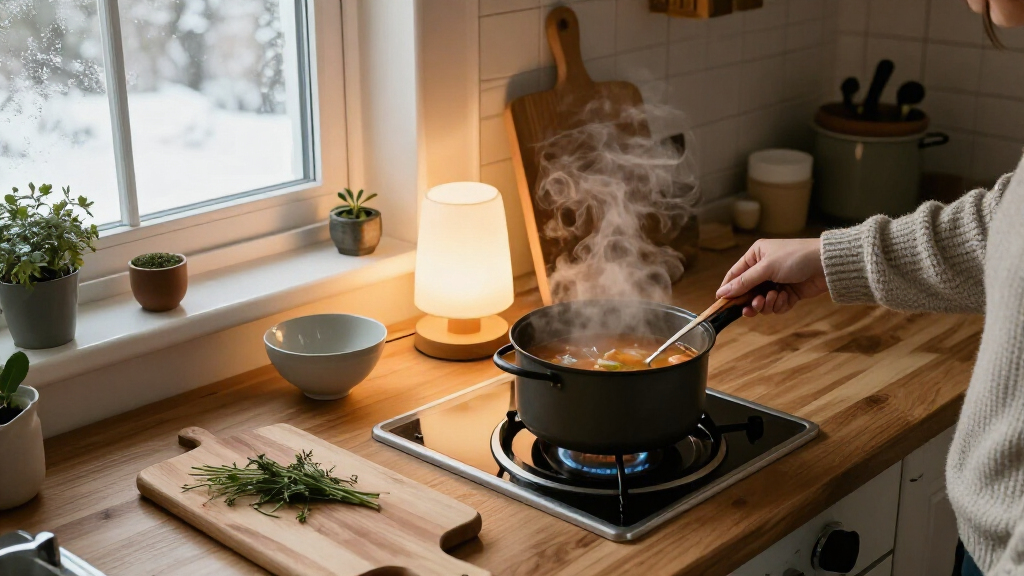
For darker mornings, Herbert recommends making a spot near a bright window for breakfast or a morning coffee. The report also suggests bringing nature indoors through houseplants, seasonal foliage, flowers or materials such as wood and stone. These are framed as ways to make indoor spaces feel more connected to the outdoors while people spend more time at home.
The remaining ideas focus on evening routines and the bedroom. Herbert says familiar scents can act as cues to relax; the report mentions warmer notes such as orange, cinnamon and cedarwood. Johanna Constantinou, an interiors trends expert at Tapi Carpets and Floors, suggests swapping lighter fragrances for spiced or woody ones. For bedrooms, furniture and interiors expert Josh Branigan recommends soft textures, warm lighting and keeping calming items such as a book or blanket nearby.
Small Changes for Darker Days
The suggestions address a familiar seasonal shift: shorter days and colder weather can mean more time spent indoors, when the comfort and feel of a home become more noticeable. The report offers low-effort adjustments that do not require a major renovation, such as clearing a surface, moving a chair or changing an evening routine.
Readers should treat the advice as general home and lifestyle guidance. The source does not provide studies showing that these specific changes improve mood or sleep, nor does it claim that interior adjustments replace professional care. Their value is in offering simple ways to shape daily routines and surroundings around the season.
home organization baskets and storage boxes
As an affiliate, we earn on qualifying purchases.
As an affiliate, we earn on qualifying purchases.
Five Ideas From the Report
The report presents the recommendations as a seasonal refresh rather than a redesign. Its five areas are storage, natural light, nature, fragrance and bedroom comfort. Several require little more than repositioning objects or setting aside a small area for a particular activity.
For example, the morning-light suggestion could mean choosing a chair by a window rather than adding new furniture. The nature idea could be a single plant or natural material, while the bedroom advice emphasizes layering and warm lighting. The fragrance suggestion is similarly presented as an optional cue for an evening routine, not a requirement.
“A calmer home can help create a calmer mind.”
— Adrienne Herbert, wellness expert, in collaboration with Homesense
As an affiliate, we earn on qualifying purchases.
Evidence Behind the Advice
The source report does not cite controlled studies or quantify the effects of the five suggestions. It also does not establish that natural light, plants, scents or bedroom changes will improve everyone’s mood or sleep. The experts offer professional opinions and practical recommendations; individual responses may differ.
The report’s opening refers generally to Americans’ views and habits around preparing their homes for winter, but the supplied material gives no survey details, figures, dates or research methodology. That claim cannot be independently evaluated from the information provided.
indoor houseplants for living room
As an affiliate, we earn on qualifying purchases.
As an affiliate, we earn on qualifying purchases.
Try Changes at Home
The report does not announce a formal follow-up or a specific next milestone. Readers can try one or more suggestions and decide whether they suit their space and routine: clear a frequently used area, spend a few minutes near a window in the morning, add a natural element, or make the bedroom more comfortable for winding down.
Any claims about personal effects should remain individual observations rather than proof of a health benefit. The source provides no guidance for treating persistent low mood, sleep difficulties or other health concerns; those issues may warrant advice from a qualified professional.
warm scent candles cinnamon cedarwood
As an affiliate, we earn on qualifying purchases.
As an affiliate, we earn on qualifying purchases.
Key Questions
What are the five ways to make a home feel calmer?
The report recommends organizing everyday clutter, creating a spot near a bright window, bringing nature indoors, using familiar evening scents and making the bedroom more inviting.
Do these suggestions require buying new furniture?
No. Several ideas involve using what is already at home, such as moving a chair near a window, storing items in baskets or setting aside summer belongings. The report presents these as small adjustments, not a full redesign.
Does the report show that these changes treat seasonal mood or sleep problems?
No. The report offers expert opinions and home-comfort suggestions but does not provide study results demonstrating that they treat mood or sleep conditions.
What scents does the report suggest for colder months?
It mentions warmer notes such as orange, cinnamon and cedarwood, and suggests that some people may prefer spiced or woody fragrances in autumn and winter.
Source: rss
Fall Picks
fall essentials
As an affiliate, we earn on qualifying purchases.