
TL;DR

Get kitchen gear delivered free with Prime
- Fast, free delivery on millions of items
- Prime Video, Amazon Music and more included
- Member-only deals all year
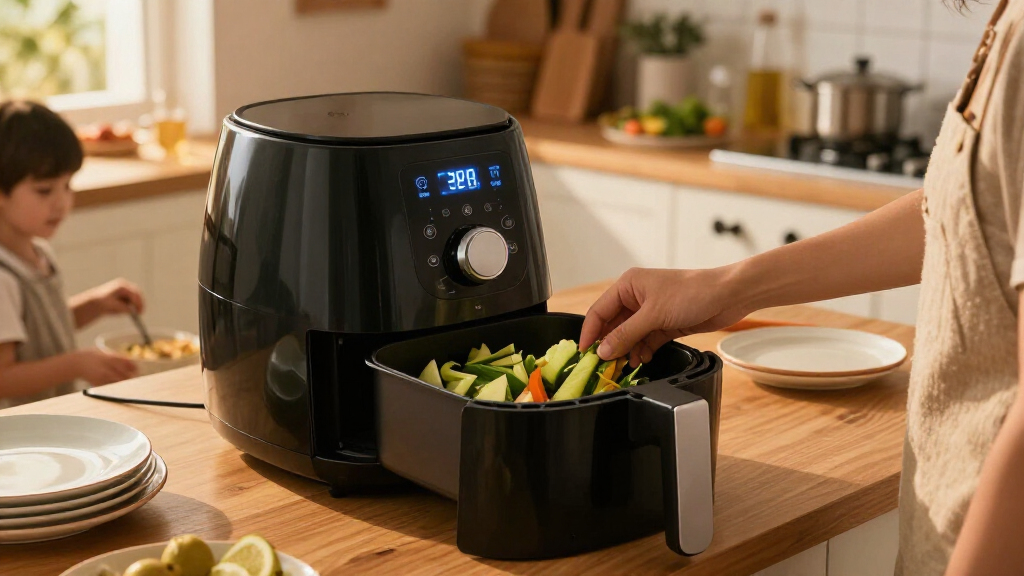
Air fryers with digital displays use electronic controls to set time and temperature, and may add presets, reminders, or automatic shutoff. Those features make routine cooking easier, but presets are estimates: food thickness, load size, and airflow still shape the result. Compare usable basket area, cleaning, controls, and counter space before you buy.
A screen can count down every second and still leave you with limp fries. Air fryers with digital displays make temperature, time, and cooking status easier to see, but they cannot fix an overloaded basket or guess how thick your chicken is.
This guide explains what the controls actually do, how presets compare with dials, and which features matter when you use the appliance day to day. You’ll also get practical checks for crispier food, safer placement, and easier cleanup—so the screen helps you cook instead of just looking impressive on the counter.
Think of an air fryer as a small convection oven: it moves hot air around food, often with little or no added oil. The display helps you manage the cooking; the basket and airflow do the actual work.
The display shows settings and may offer presets or reminders; it does not tell you whether food is safely cooked through.
Keep food in a loose layer when possible. Crowded baskets can block airflow and soften results.
Compare usable basket shape and counter footprint, not just the capacity printed on a product listing.
Pick digital controls, dials, and smart functions based on what feels easy during your normal cooking routine.
Unplug and cool the fryer before cleaning, and follow the manual for the basket, coating, and control panel.
What Does a Digital Air Fryer Display Actually Tell You?
An air fryer with a digital display uses electronic controls to set cooking time and temperature, then shows those settings or the remaining time. Depending on the model, the screen may also offer food presets, status indicators, or a reminder to shake or turn the food.
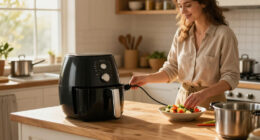
That makes routine cooking easier to follow. If you put a tray of frozen fries in after work, a visible countdown lets you see at a glance whether dinner needs three minutes or twelve. Some models let you change the temperature in smaller steps than a basic dial, which helps when you want to adjust a recipe gradually.
The display is a control interface, not a sensor that knows whether the center of a chicken breast is done. Presets estimate a time and temperature; they cannot see the food’s thickness, starting temperature, or how tightly it sits in the basket. Use a food thermometer when appropriate, and treat the screen’s timer as a prompt to check.
Some air fryers with digital displays use buttons, others use touchscreens, and some pair a dial with a screen. A bright panel is handy in a dim kitchen, but tiny labels or smudgy touch controls can become annoying when your hands are greasy. Before buying, imagine changing a setting while cooking—not just admiring the display in a product photo.
Products Worth Considering

Cuisinart 7-in-1 Air Fryer Toaster Oven Combo, 1800W, TOA-55

Ninja Foodi Air Fryer 8 Qt DualZone 6-in-1 Grey DZ201

Ninja DualZone Air Fryer 10 Qt Smart 6-in-1 Grey
As an affiliate, we earn on qualifying purchases.
Digital Controls or Dials: Which Will Feel Easier in Your Kitchen?
Digital controls suit cooks who want readable settings and repeatable adjustments; manual dials suit cooks who prefer a simple interface with fewer features. Neither control style guarantees better food, because the basket design, load, and cooking method still matter.
Here’s the tradeoff in a quick comparison:
| Feature | Digital controls | Manual dials |
|---|---|---|
| Reading the setting | Often displays time and temperature | Position may be less exact to read |
| Adjusting a cook | Can offer finer steps and a countdown | Quick to turn, but markings may be broad |
| Extra functions | May include presets and reminders | Usually focused on time and temperature |
| Cleaning and usability | Touch panels may show fingerprints | Simple controls may be easier to use with messy hands |
Say you make roasted vegetables most evenings and adjust the cook after checking a small batch. A screen with a clear timer can make that routine more consistent. If you cook the same simple snacks occasionally, a dial may feel faster: turn it, start cooking, and get on with your evening.
Try the controls before you commit, if you can. Are the labels easy to read? Can you change time without cycling through a long menu? A sleek touchscreen that frustrates you every time you add two minutes is less useful than a plain dial you can operate without thinking.
How Can You Get Crispy Food from the First Batch?
For crispier air-fried food, give hot air room to move around each piece and check the food before the programmed time ends. A display can make adjustments easy, but food packed edge to edge may still cook unevenly.
- Dry wet ingredients. Pat fresh potatoes or vegetables dry so surface moisture does not slow browning.
- Leave space. Arrange food in a loose layer, or cook in batches if the basket is crowded.
- Add oil only if it helps. A small amount can improve browning on some fresh foods. Frozen products may already contain oil.
- Check and turn. Shake smaller pieces or turn larger ones partway through when the recipe and appliance allow it.
- Judge the food, not just the timer. Add a little time if needed, and check that food is safely cooked through.
For example, a heap of frozen fries might look pale and soft even after its preset cycle because the fries block one another’s airflow. Spread them out, cook a second batch if needed, and shake halfway through. That gives hot air more access to the surfaces that need browning.
Times in recipes and presets are starting estimates, not promises. A thin piece of fish and a thick fillet need different attention, even if their total weight looks similar. Follow your appliance manual, especially for preheating: some recipes benefit from it, while some models do not require it.
Which Extra Features Will You Actually Use?
Choose extra functions and smart features based on meals you cook often, because more buttons do not automatically make an air fryer more useful. Current models may offer baking, roasting, reheating, broiling, or dehydrating alongside air frying, while some add app control or recipe guidance.
If you often cook two different foods at once, a dual-basket design may save time. Some models can coordinate their finish times, so chicken and vegetables reach the table together. That can be useful on a busy weeknight, though it adds controls and takes up more space than a compact single-basket appliance.
Oven-style models with racks can suit a household that wants several cooking levels or accessories such as a rotisserie. But listed capacity alone does not tell you how much useful cooking area you get. Check the basket or rack shape: a broad, shallow cooking surface can fit a single layer of food more comfortably than a taller space with the same stated volume.
App connection may help if you want remote status checks or guided recipes, but basic air frying does not require Wi-Fi. Imagine getting home to reheat leftovers: a clear timer and a basket that cleans easily might matter more to you than recipe alerts. Compare usable space, footprint, and cleanup with the functions you will truly reach for.
What Should You Check Before You Buy or Cook?
Compare how the appliance fits your real kitchen and routine: usable basket area, counter space, control readability, and cleaning matter alongside its preset count. These key points for air fryers with digital displays help you avoid paying for features that look good on a box but sit unused.
- Capacity and shape: Consider how many people you cook for and whether you usually make fries, vegetables, or larger pieces of food.
- Counter and storage space: Measure the spot where you plan to use or store it, including room around the appliance for ventilation.
- Controls: Look for a readable screen and settings you can adjust without a confusing menu.
- Basket cleanup: Check whether removable parts are easy to wash and follow the manufacturer’s care instructions for nonstick coatings.
- Safety and support: Read the manual, warranty, and any instructions for safe placement and operation.
At home, put the fryer on a stable, heat-resistant surface with the clear space its manual calls for. Hot air and steam can escape during cooking, so avoid positioning the vent where it blows toward your hand, wall, or loose items. These everyday steps matter even when you are only heating a small snack.
After cooking, unplug the appliance and let it cool before cleaning. Wash the basket and tray as directed, then wipe the control panel with a suitable damp cloth; keep water out of the appliance. A quick cleanup after chicken or seasoned fries helps stop old residue and smells from lingering the next time you cook.
When Does an Air Fryer Make a Meal Healthier?
Air frying can reduce added oil compared with deep frying, but it does not make every food healthy by itself. Nutrition still depends on ingredients, preparation, and portion size, so the useful question is what you are cooking and how you season it.
For example, a home cook can roast fresh zucchini with a light coating of oil instead of deep-frying battered slices. The result uses less added oil, but a generous amount of salt or a very large portion still affects the meal. Likewise, a bag of frozen snacks may already contain oil; adding more is not always needed for browning.
The appliance is best understood as a convenient way to cook with moving hot air. It does not reproduce deep frying exactly, and a crisp exterior depends on the food, basket, temperature, and amount you load. If you want a more balanced dinner, pair air-fried vegetables or protein with other foods you enjoy, rather than expecting a cooking method to do all the work.
Digital controls may help you repeat a setting you like, but they do not measure calories or improve ingredients. Start with the food you want to eat, use a reasonable amount of oil where it helps, and check the texture along the way. That keeps health claims specific and your expectations grounded.
Frequently Asked Questions
Do presets cook food perfectly?
No—presets are starting points. Quantity, thickness, and airflow can change the cooking time. Check the food as it cooks and adjust the time or temperature to suit the batch.
Can I use an air fryer without oil?
Often, yes. Some foods brown well without added oil, and many frozen products already contain some. A small amount can help fresh vegetables or potatoes brown, so follow the recipe and your taste.
Why is my air-fried food not crispy?
A crowded basket is a common cause because packed food can block airflow. Try smaller batches, dry wet ingredients, and shake or turn food when the recipe calls for it.
How large an air fryer should I buy?
Choose by the meals you cook and the space you have. Consider how many people you serve, the shape of the usable basket area, and whether you can store or leave the appliance on your counter. A larger model may be inconvenient if it is awkward to clean or fit in your kitchen.
Are app-connected air fryers worth it?
Only if the connected features suit your routine. Remote monitoring or guided recipes may help some cooks, but basic air frying works without an app. A readable timer and easy cleanup may matter more.
How do I clean the digital panel and basket?
Unplug the appliance and let it cool first. Clean removable parts according to the manual, especially if they have a nonstick coating, and wipe the panel with a suitable damp cloth. Keep water out of the appliance.
Conclusion
Choose an air fryer whose basket fits your usual meals and whose controls feel clear when dinner is underway. Presets can save a few steps, but airflow and a quick food check still decide whether the fries come out golden or limp.
Give food room, follow the manual, and use the screen as a helpful guide. The best display is the one that helps you get back to the table while the kitchen smells like crisp potatoes and warm seasoning.