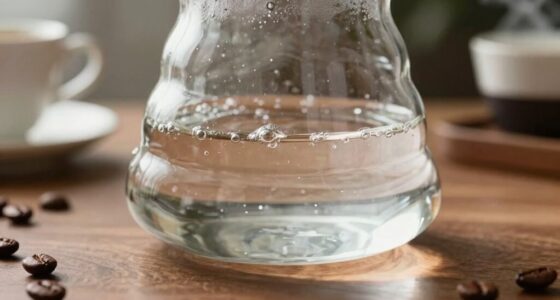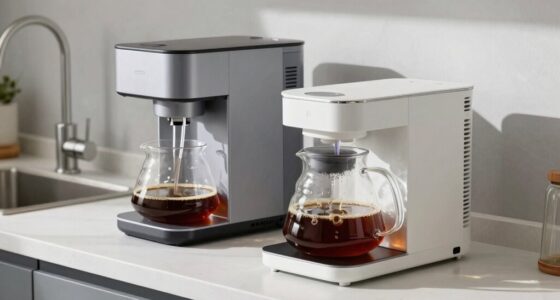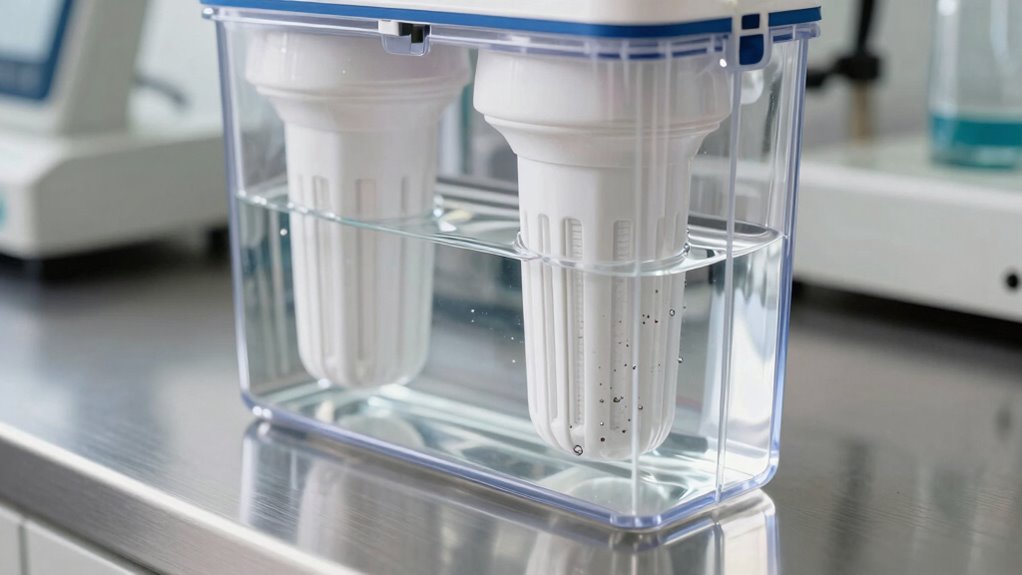

To protect your machines and guarantee great-tasting water, start by selecting the right filtration media like activated carbon for taste and sediment filters for debris. Install the system properly, following manufacturer instructions and sealing all connections tightly. Regularly inspect and maintain your filter, checking for clogs or pressure issues. Proper setup and upkeep keep your appliances safe from damage and your water fresh. Keep going to discover expert tips on maintaining an effective filtration system.

Get kitchen gear delivered free with Prime
- Fast, free delivery on millions of items
- Prime Video, Amazon Music and more included
- Member-only deals all year
Key Takeaways
- Use appropriate filtration media like activated carbon and sediment filters to improve taste and remove contaminants.
- Properly install filters with secure connections and shut-off valves for maintenance and leak prevention.
- Regularly inspect and replace filters to maintain optimal flow, taste, and protection for appliances.
- Match filtration media to specific water issues, such as heavy metals or high mineral content.
- Monitor system pressure and flow rates to prevent damage and ensure consistent filtration performance.
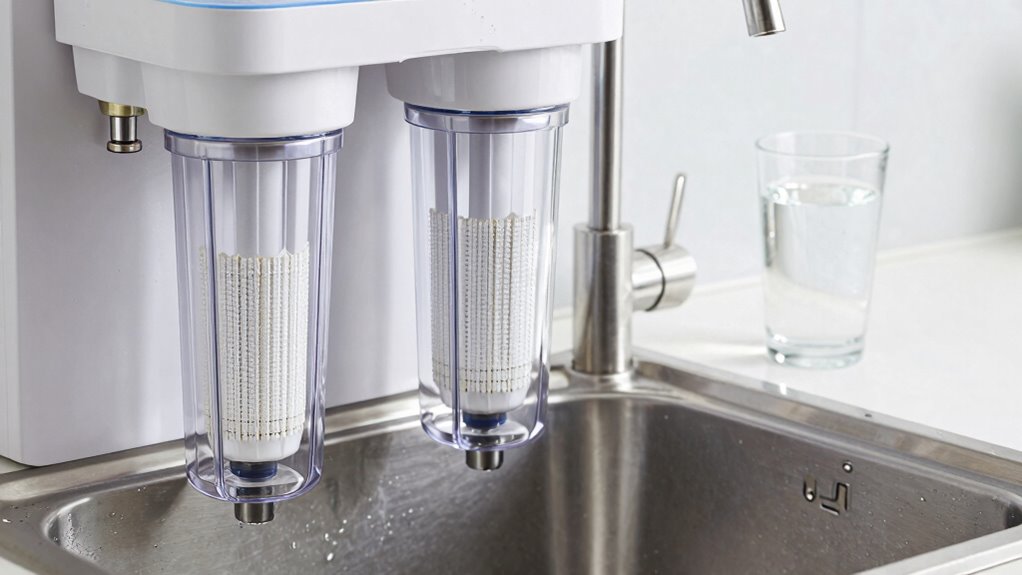
Are you ready to enjoy cleaner, healthier water? Setting up a water filter isn’t just about improving taste; it’s about protecting your appliances and guaranteeing the water you drink is free from harmful contaminants. To achieve this, you need to pay attention to the filtration materials you choose and the installation techniques you employ. The right combination guarantees your system works efficiently and lasts longer.
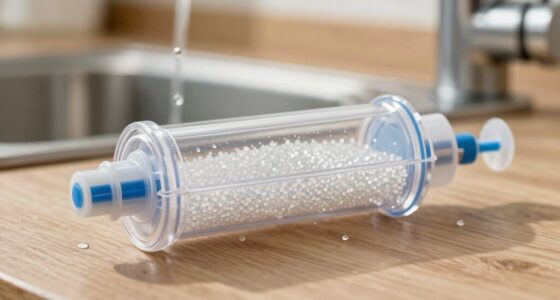
First, selecting quality filtration materials is key. These materials—such as activated carbon, ion exchange resins, or sediment filters—work together to remove impurities. Activated carbon is excellent at eliminating chlorine, bad odors, and organic compounds, greatly enhancing taste. Sediment filters catch larger particles like dirt and rust, preventing damage to your plumbing and appliances. Ion exchange resins soften water by removing minerals like calcium and magnesium that can cause scale buildup. When you choose filtration materials, consider your water’s specific issues, so you can combine them appropriately. For example, if your water contains high levels of heavy metals, look for filters with specialized media designed to target those contaminants.
Choose quality filtration materials like activated carbon, sediment filters, and ion exchange resins tailored to your water’s specific contaminants.
Next, proper installation techniques are vital for the system’s effectiveness. You want to make sure your filter setup is secure, correctly positioned, and accessible for maintenance. Start by turning off your main water supply and relieving pressure from the system. Follow the manufacturer’s instructions precisely—using the right tools and fittings—to connect the filter housing to your existing pipes. Make sure all connections are tight to prevent leaks, and use plumber’s tape or sealant where necessary. Position the filter in a location that’s easy to reach for regular cartridge replacements, but also protected from extreme temperatures or direct sunlight that could degrade the materials. Installing a shut-off valve before and after the filter can make future maintenance easier without shutting off the entire water supply. Additionally, understanding the importance of filtration materials can help you choose the most effective setup for your needs. Regularly inspecting your system for contaminant buildup and ensuring proper flow rates can further extend the lifespan of your setup. Being aware of system capacity and the filter lifespan ensures you don’t overload the filter, which can reduce its effectiveness and lifespan. Properly managing flow rates and monitoring for pressure issues can also prevent damage to your system and maintain consistent filtration performance.
Proper installation and diligent upkeep guarantee your water filter not only improves taste but also acts as a safeguard for your plumbing and appliances by removing harmful particles before they cause damage. With the right filtration materials and correct installation techniques, you create a reliable system that provides clean, great-tasting water while extending the lifespan of your machines.
Products Worth Considering

Le Creuset Stoneware Covered Rectangular Casserole, 12 x 9 in, Peche

Ninja Foodi Air Fryer 8 Qt DualZone 6-in-1 Grey DZ201

Weber Spirit E-425 4-Burner Propane Gas Grill, Black
As an affiliate, we earn on qualifying purchases.
Frequently Asked Questions
How Often Should I Replace the Water Filter?
You should replace your water filter every 6 to 12 months, depending on your water quality and filter lifespan. Regularly check for signs of reduced flow or bad taste, which indicate it’s time for a change. If your water quality worsens or you notice a decline in filter performance, replace it sooner. Maintaining your filter guarantees fresh taste and protects your machines from mineral buildup and contaminants.
Can I Install the Filter Myself?
Did you know that over 70% of homeowners successfully install water filters themselves? Yes, you can definitely do a DIY installation! Just follow clear instructions, and if you run into issues, troubleshooting tips like checking connections or replacing faulty parts can help. With some patience and careful steps, you’ll have your filter set up in no time, saving money and ensuring clean, great-tasting water.
What Maintenance Is Required for the Filter?
You need to regularly replace your filter based on its lifespan, usually every 6 to 12 months, depending on usage. Follow the manufacturer’s cleaning procedures, which often involve rinsing or replacing filter components to prevent buildup and maintain water quality. Keep an eye on water flow rates and taste changes as signs it’s time for a replacement. Regular maintenance guarantees your filter continues protecting your machines and delivering great-tasting water.
Will the Filter Affect Water Pressure?
Like a gentle hand guiding a stream, a filter can influence water pressure. Typically, the pressure impact depends on the filter’s design and lifespan; a new filter might slightly reduce pressure, but as it nears the end of its lifespan, pressure drops more noticeably. Regularly replacing your filter helps maintain *ideal* water pressure, ensuring your machines work smoothly and your taste stays fresh.
Is the Filter Compatible With All Machines?
Yes, your water filter is compatible with most machines, but it’s crucial to check the specific model’s requirements. Keep in mind the filter lifespan, as a filter nearing the end of its cycle may impact performance or machine compatibility. Always refer to the manufacturer’s guidelines to guarantee your machine works effectively with the filter, and replace it as recommended to preserve ideal taste and protection.
Conclusion
Now, imagine your machines running smoothly, shielded by a water filter that acts like an invisible barrier, blocking out impurities and bad tastes. It’s as if you’ve set up a secret fortress around your equipment, ensuring every drop is pure and fresh. This simple setup doesn’t just protect your machines—it transforms your water into a revitalizing force, making every sip and every operation feel like a step into a cleaner, more reliable world.