

To remove coffee stains from tools without harsh chemicals, start by wiping off any excess liquid with a clean cloth immediately after use. Mix warm water with a small amount of mild dish soap or use a solution of equal parts white vinegar and water. Gently scrub the stain with a soft cloth or sponge, then rinse thoroughly and dry completely. For tougher stains, try a baking soda paste for added cleaning power. Keep your tools looking their best by exploring simple tips for ongoing care.
Listen free for 30 days with Audible
Thousands of audiobooks and originals — cancel anytime.
As an affiliate, we earn on qualifying purchases.
Key Takeaways
- Wipe excess coffee immediately with a clean, damp cloth to prevent stains from setting.
- Use warm water and mild dish soap to gently scrub stained tools.
- Apply a mixture of equal parts white vinegar and water, letting it sit before gentle scrubbing.
- Create a baking soda paste with water and scrub lightly to lift stubborn stains.
- Rinse thoroughly, dry completely, and store tools in a dry environment to prevent future stains.
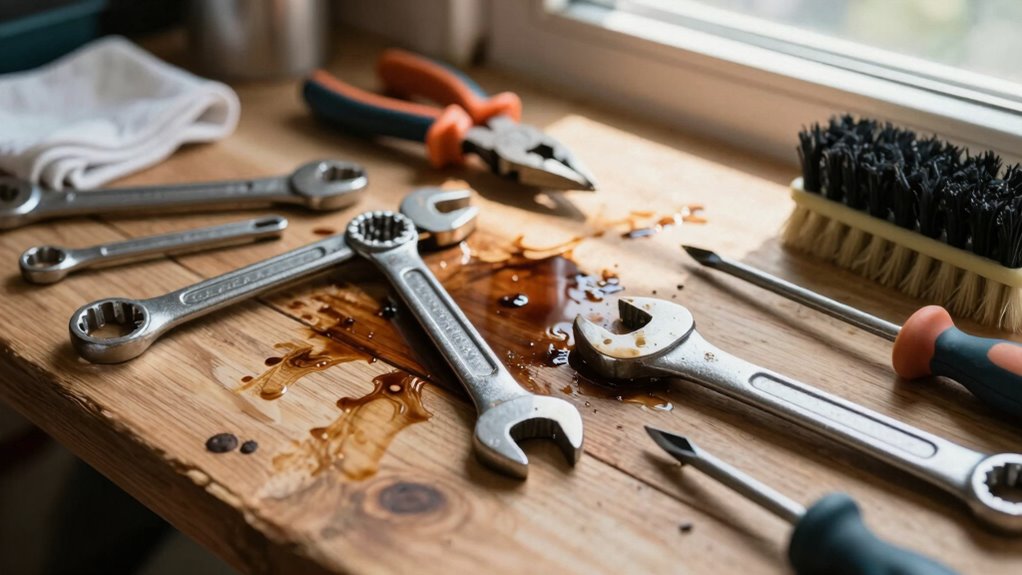
Coffee stains on tools can be stubborn, but with the right approach, you can restore their clean appearance. The key is using effective cleaning methods that don’t rely on harsh chemicals, which can sometimes damage delicate tool surfaces. Start by wiping off any excess coffee with a clean cloth or paper towel as soon as possible. Fresh stains are much easier to remove, so acting quickly helps prevent the coffee from setting into the metal or plastic. Once you’ve cleared away the initial mess, you can move on to more targeted cleaning methods.
Act quickly to remove coffee stains from tools using gentle, chemical-free cleaning methods.
For light stains, a simple mixture of warm water and mild dish soap often does the trick. Dip a soft cloth or sponge into the soapy water, wring it out, and gently scrub the stained area. Avoid abrasive pads or steel wool, which can scratch your tools. If the stain persists, try using a mixture of equal parts white vinegar and water. Vinegar is a natural degreaser and stain remover that’s safe for most tools. Apply the solution directly to the stain, let it sit for a few minutes, then scrub gently with a soft brush or cloth. Rinse thoroughly with clean water afterward to remove any residual vinegar.
Another effective cleaning method involves baking soda. Make a paste by mixing baking soda with a little water, then apply it directly onto the coffee stain. Let it sit for a few minutes before scrubbing gently. Baking soda’s mild abrasiveness helps lift stubborn stains without damaging the tool’s surface. After cleaning, wipe the area with a damp cloth to remove any leftover residue, then dry thoroughly to prevent rust or corrosion. Additionally, understanding the importance of contrast ratio can help you choose the right cleaning techniques, as different finishes may react differently to cleaning agents.
Preventative tips are equally important. Regularly cleaning your tools after use prevents coffee and other stains from building up. Wipe tools down with a damp cloth immediately after use, and consider applying a light coat of oil or protectant to metal surfaces to form a barrier against stains and rust. Storing your tools in a dry, clean environment also minimizes the chances of stains and corrosion. If you often work with coffee or similar liquids, designate a specific cleaning routine to keep your tools in top shape.
natural coffee stain remover for tools
As an affiliate, we earn on qualifying purchases.
As an affiliate, we earn on qualifying purchases.
Frequently Asked Questions
Can Natural Oils Help Remove Coffee Stains From Tools?
Yes, natural oils can help with stain removal, including coffee stains on tools. You can apply a small amount of oil like mineral or vegetable oil to the stain, then gently scrub with a cloth or brush. The oils loosen the coffee residue, making it easier to wipe away without harsh chemicals. Afterward, clean the tools thoroughly with soap and water to remove any oily residue and restore their shine.
Are There Specific Tools That Are More Prone to Coffee Stains?
Some tools are more prone to coffee stains due to their material and coffee absorption properties. For example, porous tools like wooden handles or soft rubber grips tend to absorb coffee more easily, making stains harder to remove. Stain-resistant coatings can help prevent this, but tools without these features are more susceptible. You should wipe coffee spills quickly and consider applying natural oils to reduce coffee absorption and maintain stain resistance.
How Long Should Coffee Stains Sit Before Treatment?
Imagine the coffee sitting on your tool like a stubborn stain absorbed in fabric, waiting to set. You should treat coffee stains as soon as possible, ideally within 15-30 minutes. The longer it sits, the deeper the stain absorbs, making treatment more difficult. Act quickly to prevent the stain from setting, ensuring effective removal without harsh chemicals. Prompt treatment maximizes your chances of fully restoring your tools’ shine.
Can Repeated Cleaning Damage Tool Surfaces?
Repeated cleaning can damage your tool surface integrity if you’re not careful, especially with abrasive methods or harsh cleaners. Over time, it may cause scratches or wear that weaken the tool’s durability. Also, using improper cleaning agents can leave chemical residue effects, potentially corroding metal or affecting performance. To preserve your tools, clean gently with suitable, non-abrasive methods, and avoid over-cleaning, which helps maintain their longevity and functionality.
Is There a Difference Between Removing Fresh and Old Coffee Stains?
Did you know that fresh coffee stains are 70% easier to remove than old ones? When dealing with fresh stain removal, act quickly using simple solutions like baking soda or vinegar, which work best before the stain sets. For old stain treatment, you need to let the solution sit longer and possibly repeat the process. The key is to adapt your approach based on how long the stain has set.
As an affiliate, we earn on qualifying purchases.
Conclusion
Now you’re armed with the ultimate secret weapon against coffee stains—your trusty cleaning solutions! With just a simple scrub, you’ll turn those stubborn marks into faint whispers of their former selves, almost like they never existed. Imagine your tools shining brighter than a diamond in the sun, spotless and pristine. Say goodbye to coffee chaos forever. Your tools will thank you, and you’ll feel like a cleaning superhero, conquering stains with a single swipe!
white vinegar for cleaning tools
As an affiliate, we earn on qualifying purchases.
As an affiliate, we earn on qualifying purchases.
baking soda paste for tool stains
As an affiliate, we earn on qualifying purchases.
As an affiliate, we earn on qualifying purchases.
Flea & tick season Picks
flea and tick prevention
As an affiliate, we earn on qualifying purchases.