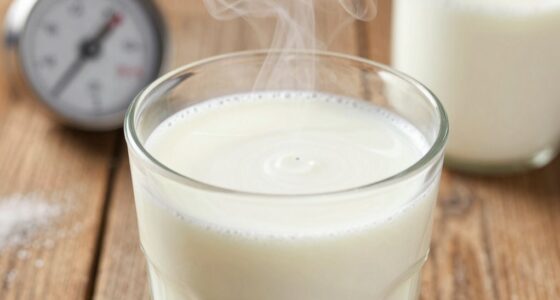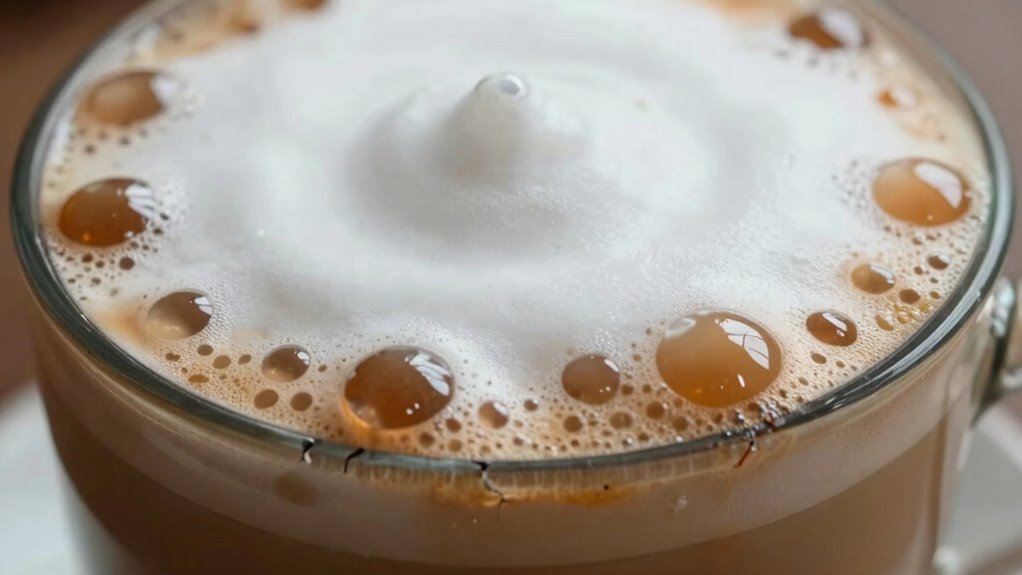

Your milk foam may look perfect but still pour poorly if the temperature isn’t right. Overheated milk becomes dense and hard to pour, while underheated milk produces runny, unstable foam that breaks apart easily. Even if the foam looks good, improper temperature control can cause it to collapse or not integrate well with the liquid. Mastering temperature and foam stability is key to a smooth, seamless pour—if you want to discover more, keep going.
Key Takeaways
- Proper foam appearance doesn’t guarantee stability; the foam may collapse during pouring if not properly stabilized.
- Overheated milk creates dense, stringy foam that pours poorly despite looking fine initially.
- Insufficient heating results in runny, unstable foam that can’t pour smoothly.
- Artificial foam with stabilizers may look perfect but lacks natural stability, affecting pour quality.
- Inadequate steaming technique prevents optimal protein stabilization, leading to poor pouring despite good-looking foam.

Even if your milk foam looks perfect—smooth, glossy, and well-textured—it might still pour poorly. The issue often lies in how the foam was created, especially when considering artificial vs. natural foam and temperature control. Natural foam, made from steamed milk, relies on the proteins within the milk to create a stable, velvety texture. Artificial foam, on the other hand, is often produced using stabilizers or additives that can mimic the appearance but don’t behave the same way when poured. If your foam is artificial, it might hold up in the cup initially but collapse or separate quickly once poured, leading to a poor pour despite an impressive surface.
Artificial foam may look perfect but collapses quickly; natural foam relies on milk proteins for a stable pour.
Temperature control plays a pivotal role in whether your foam pours well or not. Milk heated too quickly or to too high a temperature can create a foam that’s dense, overly thick, or even stringy, making it difficult to pour smoothly. Conversely, if the milk isn’t heated enough, the foam may not be sufficiently stabilized, causing it to be runny or break apart upon pouring. Ideally, you want your milk to reach around 150°F (65°C), a temperature that supports optimal protein stabilization for natural foam. This temperature ensures the foam maintains its structure during pouring, resulting in a silky, consistent flow. Maintaining the right temperature also helps prevent the formation of artificial foam that can interfere with pouring if not properly stabilized. Proper temperature control is essential to achieve a balanced and stable foam that pours seamlessly.
The key to a good pour isn’t just about the look of your foam but also about how well it integrates with the liquid milk. Even with a beautifully textured, glossy foam, poor temperature control can cause the foam to be too dense or too fragile, making it difficult to pour smoothly. When you’re aware of the differences between artificial and natural foam, you understand that natural foam depends heavily on the milk’s inherent properties. Proper steaming at the right temperature allows the proteins to stretch and trap air, creating a stable foam that pours with ease. Artificial foams, lacking this natural protein structure, often require additional stabilizers, but these can sometimes interfere with the pouring process. Understanding foam stability and how it relates to temperature and milk quality can help you troubleshoot issues more effectively.
In essence, mastering temperature control is essential. Keep your milk at the right temperature, and you’ll find that natural foam pours beautifully, creating that perfect, velvety flow you’re aiming for. Avoid rushing the steaming process or overheating, and pay attention to the quality of your milk. By understanding the importance of natural versus artificial foam and maintaining precise temperature control, you can turn a foam that looks fine into one that pours flawlessly every time.
milk frother with temperature control
As an affiliate, we earn on qualifying purchases.
As an affiliate, we earn on qualifying purchases.
Frequently Asked Questions
Can Milk Type Affect Pouring Quality Despite Good Foam?
Yes, milk type can affect pouring quality despite good foam. Different milk compositions, like fat and protein levels, influence foam stability, which impacts how well the milk pours. For example, whole milk usually creates more stable foam than skim milk, making pouring smoother. Even if your foam looks fine, choosing the right milk with ideal composition guarantees better pourability and a consistent texture, enhancing your overall coffee experience.
Does the Temperature of Milk Impact How It Pours?
Like a river’s flow, milk temperature greatly affects pouring consistency. When your milk is too hot or too cold, its texture changes, making it difficult to pour smoothly. Cold milk tends to be thicker, while hot milk can be more fluid but may scald easily, disrupting the pour. For the best pour, aim for a warm, steady temperature to maintain ideal milk texture and achieve a smooth, controlled flow.
How Does the Freshness of Milk Influence Pouring Behavior?
Freshness greatly impacts how milk pours. When milk spoils, its consistency changes, making it thicker or lumpy, which disrupts a smooth pour. You can spot spoilage through freshness indicators like sour smell, off taste, or curdling. If your milk isn’t fresh, it won’t flow smoothly, causing poor pouring despite good foam. Always check for spoilage signs to guarantee your milk pours well and maintains quality.
Is There a Specific Technique for Pouring to Avoid Bad Flow?
Imagine guiding a gentle stream of milk into your cup; you want a smooth, steady flow. To achieve this, focus on your pouring angle—keep it slightly tilted and steady. Use wrist movement to control the stream, avoiding sudden drops or splashes. Practice maintaining a consistent angle and fluid wrist motion, ensuring the milk pours evenly without breaking the flow, resulting in a perfect, controlled pour every time.
Do Cup Shape and Size Affect the Pouring Result?
Yes, cup shape and size greatly affect your pouring results. A wider cup allows for smoother pouring and better latte art, while narrower cups can make control harder. The cup design influences how your milk flows, and choosing the right pouring angles is essential for consistent results. Use a cup with a stable base and a shape that matches your pouring technique to improve flow and achieve a clean, even pour.
automatic milk steamer for coffee
As an affiliate, we earn on qualifying purchases.
As an affiliate, we earn on qualifying purchases.
Conclusion
Think of your milk foam as a delicate dance partner—looking flawless on the surface but stumbling during the main performance. When your foam looks perfect but pours badly, it’s like a beautiful dance that loses its rhythm. By adjusting your steaming technique and paying attention to temperature and consistency, you’ll help your foam glide smoothly into your coffee. Soon, your milk will pour as gracefully as a dancer in perfect sync, elevating your coffee experience.
As an affiliate, we earn on qualifying purchases.
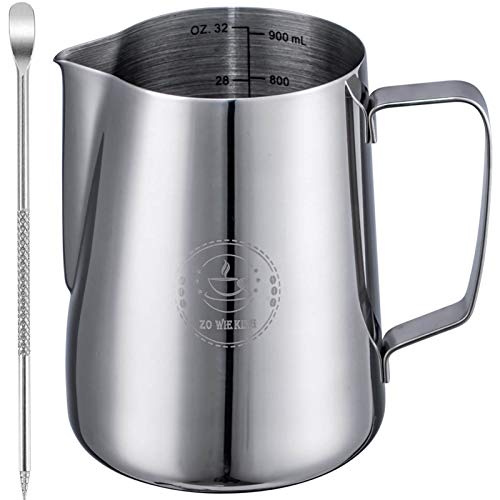
32oz Milk Frothing Pitcher for Coffee Shops, Large Stainless Steel Cup
- Material: High-quality 304 stainless steel
- Capacity: 32oz with engraved measurement marks
- Design: Narrow mouth for precise pouring
As an affiliate, we earn on qualifying purchases.
As an affiliate, we earn on qualifying purchases.