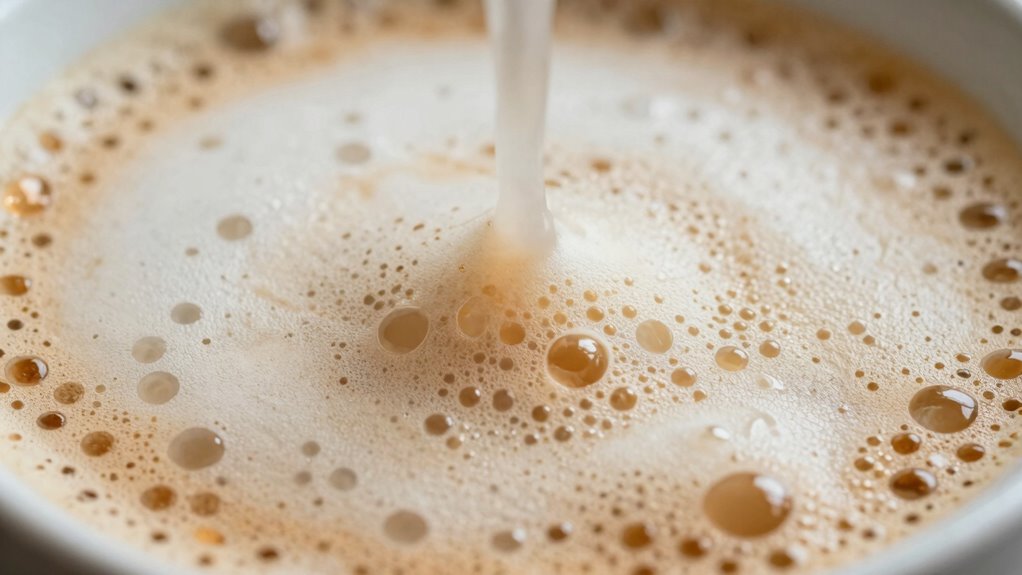

Non-dairy foams fall apart faster because they lack the natural proteins and fats found in dairy milk, which are key for creating stable, long-lasting foam. Without enough proteins, the air bubbles in your froth are less stable and collapse quickly. Thinner textures and different fat content in plant-based milks also make it harder for the foam to hold its shape. If you keep exploring, you’ll discover ways to improve your frothing results.
Key Takeaways
- Non-dairy milks lack natural proteins needed to stabilize air bubbles in foam.
- Thinner, more watery textures produce less resilient and short-lived foam.
- Reduced fat content in plant-based milks offers less structural support for foam stability.
- Additives and stabilizers in commercial plant-based milks can weaken foam strength.
- Processing techniques and temperature improvements have limited ability to compensate for compositional differences.
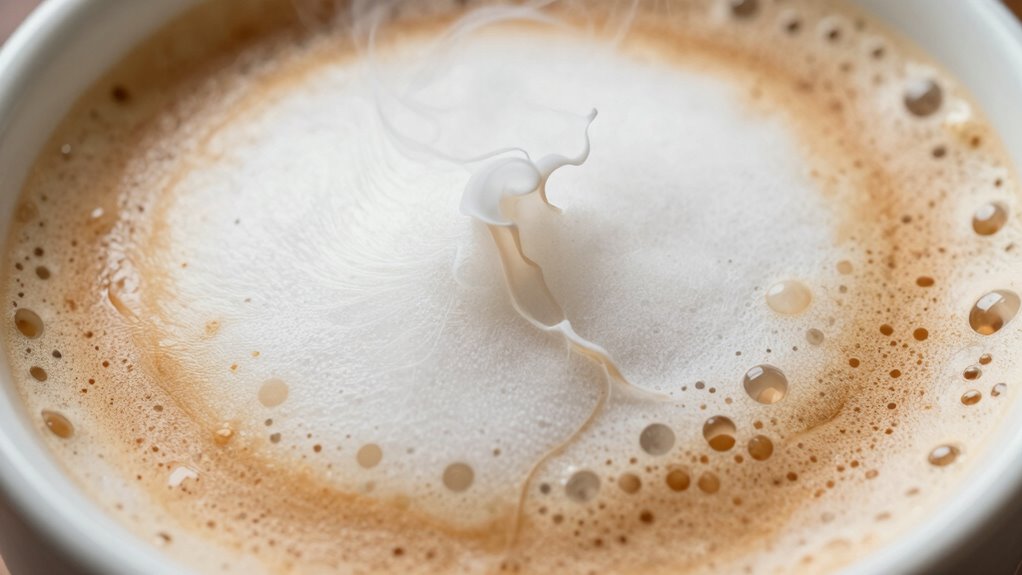
If you’ve ever whipped non-dairy milk into foam and noticed it deflates faster than dairy options, you’re not alone. This happens because plant-based alternatives often lack the natural proteins and fats found in dairy milk, which are key to creating stable, long-lasting foam. Dairy free textures tend to be lighter and less cohesive, making it harder to achieve the same airy, firm foam that dairy milk provides. When you’re working with non-dairy options, you’re fundamentally dealing with a different chemistry, which influences how well the foam holds up over time.
Most plant-based milks, like almond, soy, oat, or coconut, contain fewer proteins, which serve as the backbone for stable foam formation. Proteins latch onto air bubbles and trap them, giving you that nice, velvety foam. Without enough protein, those bubbles are more fragile and break down quickly. Additionally, many dairy free textures are thinner and more watery, meaning the foam you create isn’t as dense or resilient. When you whip these milks, you might see a good initial rise, but it’s often short-lived because the foam lacks the structure to sustain itself. A better understanding of these structural differences can help in selecting the most suitable plant-based milk for frothing. Improving your frothed milk stability can make a noticeable difference in your coffee experience. Moreover, some brands now add plant-based stabilizers to enhance foam longevity, which can be a game-changer for baristas and home brewers alike.
Plant-based milks lack proteins, making their foam less dense and short-lived.
Another factor is the fat content. Dairy milk naturally contains cream and fats that help stabilize foam. Many plant-based milks have less fat or different types of fats that don’t provide the same stabilizing effect. Coconut milk, for example, has higher fat content, which can produce better foam, but it still may not match the longevity of dairy foam. Furthermore, some commercial non-dairy milks are processed with additives or stabilizers that can impact foam stability, either by thinning out the structure or interfering with foam formation altogether. Understanding ingredient composition can help you choose options that are better suited for frothing.
Temperature also plays a role. Non-dairy milks often need to be heated to achieve better foam, but they still lag behind dairy milk in maintaining that foam once it’s formed. The key is understanding that plant-based alternatives are inherently different in their composition. So, if you’re aiming for long-lasting foam, you might need to switch to certain brands or formulations designed specifically for baristas, which often include added proteins or stabilizers to mimic dairy’s properties.
In essence, the reason non-dairy foam falls apart faster boils down to the fundamental differences in ingredients. Dairy free textures and plant-based alternatives don’t naturally have the same structural components, making it trickier to create foam that stays fluffy for long. But with the right choice of milk and some technique tweaks, you can improve your chances of getting a more resilient foam, even if it might still not match traditional dairy. Understanding the ingredients can help you select the best options for frothing.
non-dairy milk frothing stabilizer
As an affiliate, we earn on qualifying purchases.
As an affiliate, we earn on qualifying purchases.
Frequently Asked Questions
Can Certain Non-Dairy Milks Create More Stable Foam?
Yes, certain non-dairy milks create more stable foam because they often contain added stabilizers or emulsifiers that enhance foam quality. You’ll find that oat or soy milk, with their natural proteins, provide better foam stability, helping with flavor enhancement and nutritional modifications. By choosing these options, you guarantee your foam stays fluffy longer, giving your drinks a smoother texture and richer flavor experience.
Does the Temperature of the Milk Affect Foam Longevity?
Yes, the temperature of the milk considerably affects foam longevity. When you heat non-dairy milk, its composition changes, causing proteins and fats to denature or separate, which weakens the foam structure. Cooler milk tends to create more stable foam because its composition remains intact, allowing bubbles to hold longer. So, paying attention to temperature effects helps you achieve a creamier, longer-lasting foam for your beverages.
Are There Additives That Help Non-Dairy Foam Last Longer?
Yes, certain additives can help non-dairy foam last longer. Stabilizers like lecithin or xanthan gum improve the foam’s structure, preventing it from collapsing quickly. These additives also enhance flavor and provide nutritional benefits, making your beverage tastier and healthier. By incorporating these ingredients, you guarantee your non-dairy foam stays fluffy longer, giving you a better coffee experience. Just be sure to add them in moderation for ideal results.
How Does the Type of Frothing Tool Influence Foam Stability?
Imagine you’re frothing almond milk with a handheld frother; its design creates smaller, more uniform bubbles, resulting in more stable foam. The type of frothing tool greatly influences foam stability because different designs, like steam wands versus manual frothers, generate varying bubble sizes and textures. Effective frothing techniques, combined with appropriate tool design, promote longer-lasting foam, especially important for non-dairy options that naturally tend to be less stable.
Can Storage Methods Extend Non-Dairy Foam’s Lifespan?
Yes, proper storage techniques can extend the shelf life of non-dairy foam. Keep your foam refrigerated in an airtight container to prevent it from absorbing odors and losing moisture. Avoid freezing, as it can cause destabilization. Using a clean, sealed container helps maintain freshness and stability longer. By following these storage methods, you can enjoy your non-dairy foam with better consistency and a longer lifespan.
plant-based milk frothing pitcher
As an affiliate, we earn on qualifying purchases.
As an affiliate, we earn on qualifying purchases.
Conclusion
So, next time your non-dairy foam starts to fall apart quickly, remember it’s often due to its lower fat and protein content compared to dairy options. This makes it less stable and more prone to breaking down. Surprisingly, studies show that dairy-based foams last about 30% longer than their non-dairy counterparts, giving you a visual idea of how much more fragile non-dairy options can be. With this in mind, you can better choose and handle your foam for perfect results.
As an affiliate, we earn on qualifying purchases.
best non-dairy milk for frothing
As an affiliate, we earn on qualifying purchases.
As an affiliate, we earn on qualifying purchases.