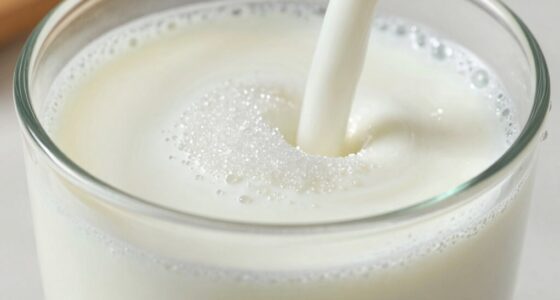
Your pitcher size affects foam quality because it influences how milk moves and heats during frothing. A smaller pitcher gives you better control, helping you create fine, velvety microfoam, while a larger one can diffuse heat unevenly and make it harder to control foam texture. Overfilling or using an ill-fitting size can lead to inconsistent results. Keep watching for tips that will help you master the perfect foam with the right pitcher for your needs.
Key Takeaways
- Smaller pitchers allow for better control, resulting in finer, more velvety microfoam.
- Overfilled pitchers hinder proper milk movement, reducing foam texture quality.
- Larger pitchers can cause uneven heating, negatively impacting foam consistency.
- Properly sized pitchers help maintain optimal milk temperature for stable, rich foam.
- Shape and material of the pitcher influence steam direction and heat retention, affecting foam quality.
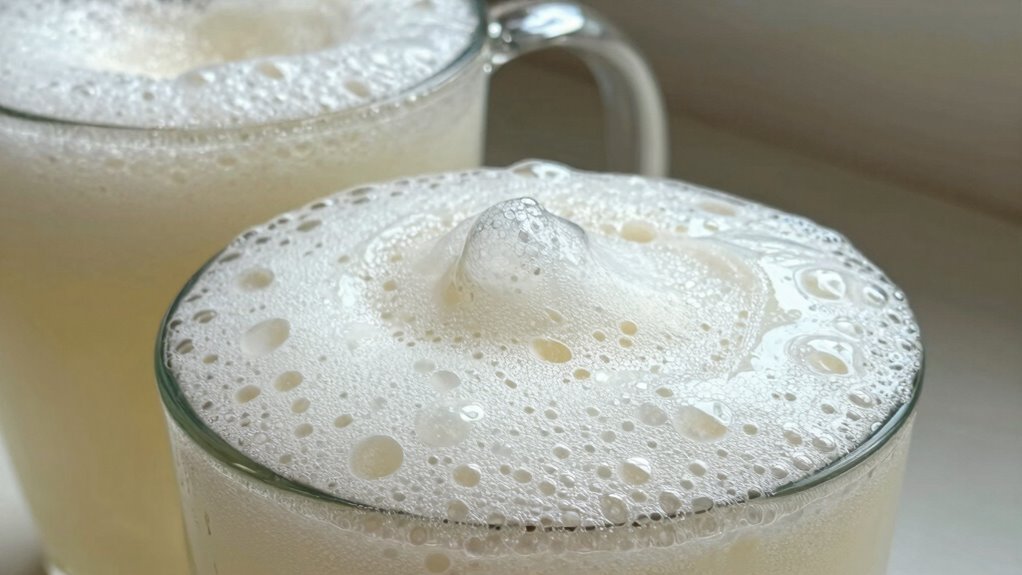
Have you ever wondered how the size of your pitcher influences the quality of foam you get? It’s a question that often goes unnoticed, but the answer can significantly improve your coffee experience. The size you choose affects not just how much milk you can froth at once, but also the way you handle your milk frothing techniques, which directly impacts foam texture and consistency. When you select the right pitcher size, you’re better able to control the process, resulting in richer, creamier foam that elevates your espresso drinks.
Choosing the right pitcher size enhances frothing control, resulting in richer, creamier espresso foam.
One of the key factors is how you manage coffee storage. Properly storing your coffee beans and milk is essential, but equally important is how you handle the milk during frothing. Using a pitcher that’s too small can make it tricky to achieve good foam because it limits your movement and control. Conversely, a pitcher that’s too large may lead to overfilling, which can cause uneven heating and inconsistent frothing. When you pick a pitcher that fits your typical frothing volume, you can focus more on mastering milk frothing techniques—such as positioning the steam wand, controlling the swirl, and maintaining the right temperature—without struggling with overcrowding or spillage. Additionally, understanding pitcher shape can significantly influence your ability to create microfoam and achieve the desired texture. Paying attention to milk temperature is also crucial, as it impacts the foam’s stability and richness. Proper milk steaming techniques are essential for producing optimal foam, especially when working with different pitcher sizes. Moreover, selecting the correct pitcher material can help with heat retention, ensuring your milk stays at an ideal temperature during frothing.
Smaller pitchers, usually between 12 to 16 ounces, are ideal for single servings or when you want to practice your technique. They give you better control over the milk, making it easier to achieve fine, velvety foam. Larger pitchers, 20 ounces or more, are better suited when you’re preparing multiple drinks or need more foam for drinks like lattes or cappuccinos. However, with larger pitchers, you need to be more attentive to your milk frothing techniques, ensuring you don’t overfill or overheat the milk, which can compromise foam quality. Using a proper pitcher size is essential for developing consistency and confidence in your frothing skills, especially as you learn how different volumes affect your technique and results.
The shape of the pitcher also plays a role. A narrower spout helps you direct steam more precisely, while a wider opening offers more room for milk movement, which is essential for creating microfoam. When you understand how pitcher size influences your ability to control the frothing process, you’ll find it easier to produce consistent, high-quality foam. So, choosing the right pitcher size isn’t just about capacity; it’s about giving yourself the best chance to refine your milk frothing techniques and keep your coffee storage habits in check, ultimately leading to better-tasting, more satisfying drinks.
As an affiliate, we earn on qualifying purchases.
Frequently Asked Questions
How Does Pitcher Material Affect Foam Quality?
Your pitcher material directly impacts foam quality by influencing foam texture. For example, stainless steel pitchers usually produce finer, more stable foam because their smooth surface promotes aeration and consistent milk flow. Conversely, plastic pitchers might cause larger bubbles and less stable foam due to their rougher texture. Choosing the right pitcher material helps you create smoother, creamier foam, enhancing your overall coffee experience.
What Role Does Water Temperature Play in Foam Consistency?
Water temperature effects foam consistency markedly. When you use hot water, the foam tends to be creamier and more stable because heat helps dissolve gases better, creating finer bubbles. Conversely, cold water produces larger, less stable bubbles, resulting in thinner foam. Foam consistency factors are directly influenced by water temperature, so adjusting it allows you to control the foam’s texture and longevity, enhancing your overall experience.
Can Pitcher Design Influence Foam Stability?
You might notice that pitcher design can influence foam stability, almost like it’s a coincidence. When you choose a pitcher with good ergonomics, it helps you pour more controlled, consistent foam, enhancing its texture and longevity. A well-designed pitcher minimizes splashing and uneven flows, keeping the foam’s texture smooth and stable longer. So, your choice of pitcher isn’t just about looks—it directly affects how good your foam turns out.
Does Pitcher Age Impact Foam Production?
Yes, pitcher aging can impact foam production. Over time, the material of your pitcher may degrade or become less effective at aerating liquids, leading to less stable foam. As your pitcher ages, its surface might develop scratches or residues that hinder foam formation. Regular maintenance and timely replacement help preserve foam quality, ensuring you get the best frothy texture every time. Keep an eye on your pitcher’s condition for ideal foam production.
Are There Specific Cleaning Methods That Improve Foam Quality?
You can improve foam quality by using proper cleaning methods. Start by selecting effective cleaning agents that remove residue thoroughly, preventing buildup that affects foam production. Regularly clean your pitcher with warm water and a gentle brush, ensuring all residues are eliminated. Proper cleaning not only maintains the pitcher’s condition but also enhances foam quality, making your beverages consistently frothy and appealing.
stainless steel milk frothing pitcher 20 oz
As an affiliate, we earn on qualifying purchases.
As an affiliate, we earn on qualifying purchases.
Conclusion
So, next time you’re pouring that perfect espresso, remember that pitcher size isn’t just a detail—it’s your secret weapon for foam that’s as smooth as silk and as luscious as whipped cream. Small adjustments can turn a good shot into a masterpiece, transforming your coffee experience into a symphony of flavors. Don’t underestimate the power of the right pitcher size; it’s your ticket to barista-level perfection, elevating every sip to an extraordinary level.
barista milk pitcher for espresso
As an affiliate, we earn on qualifying purchases.
As an affiliate, we earn on qualifying purchases.
As an affiliate, we earn on qualifying purchases.