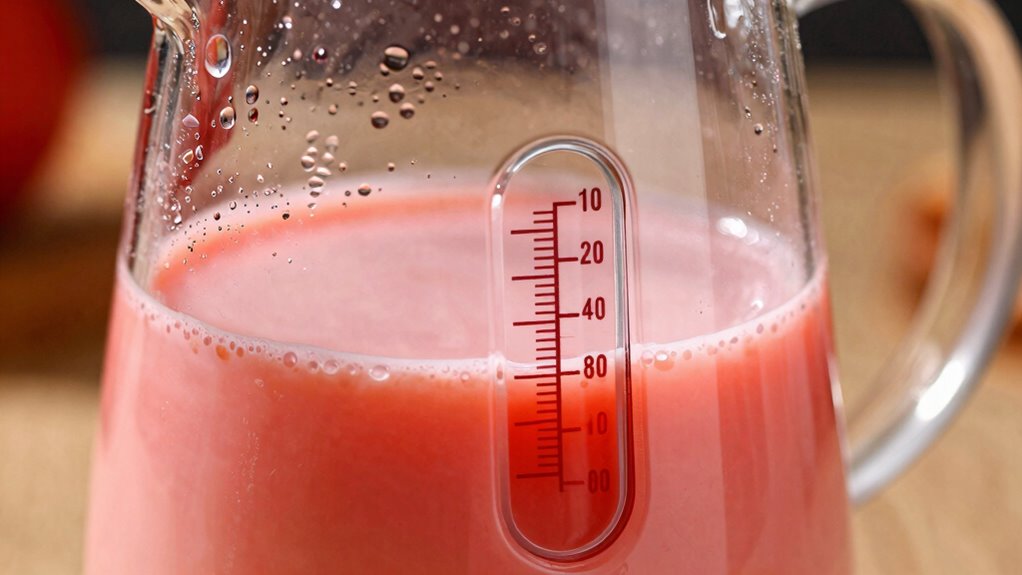

To get perfect frothed milk, keep the temperature between 140°F and 150°F. Heating it below this range can lead to thin, unstable foam, while going above can scorch the milk, losing sweetness and creating a weak texture. Many machines have built-in controls, but using a thermometer helps you stay precise. Mastering this temperature window guarantees rich, velvety microfoam for your drinks. Stick around—there’s more to help you perfect your technique.
Key Takeaways
- Maintain milk temperature between 140°F and 150°F for optimal frothing and microfoam stability.
- Use a thermometer to monitor and stop heating once the desired temperature is reached.
- Avoid overheating beyond 150°F to prevent scorching, thin foam, and loss of sweetness.
- Cold milk won’t froth well; warm milk within the ideal window for best results.
- Consistent temperature control ensures rich, velvety foam every time.
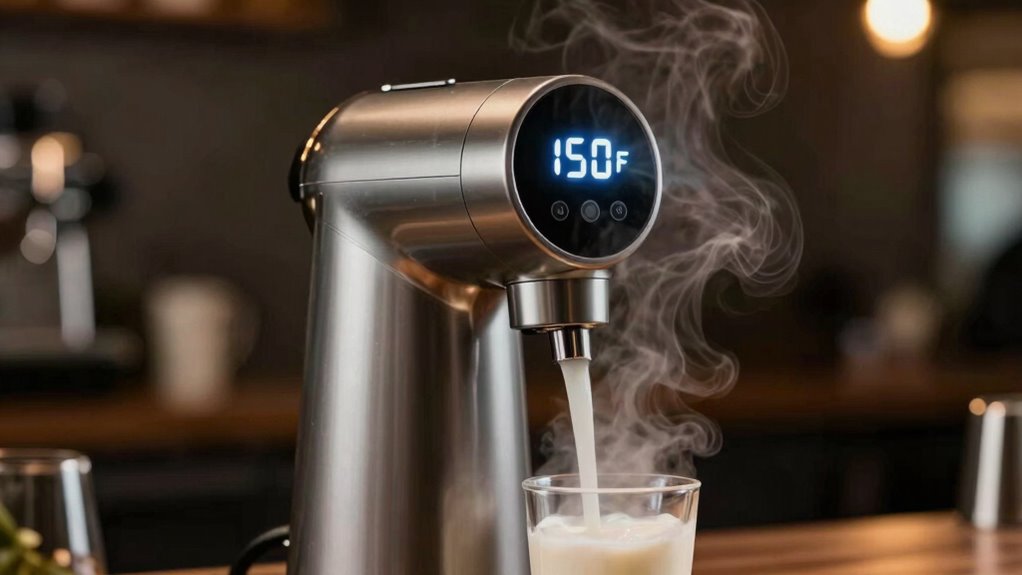
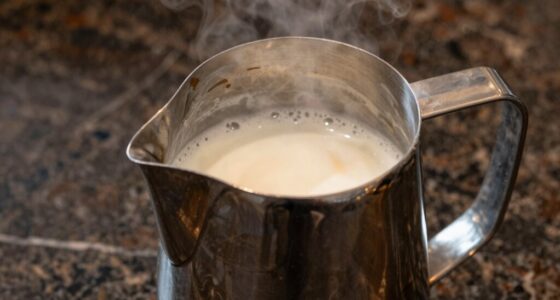
Getting the perfect cup of frothed milk depends largely on hitting the right temperature window. When you’re milk frothing, temperature control becomes your best friend. If the milk’s too cold, it won’t whip up into that creamy, velvety texture you’re aiming for. If it gets too hot, the milk can scorch, lose its sweetness, and produce a thin, lifeless foam. Finding that sweet spot—generally between 140°F and 150°F—is essential for creating rich, stable foam that elevates your coffee experience.
Achieving perfect frothed milk requires precise temperature control between 140°F and 150°F for rich, stable foam.
To master this, you need to pay close attention to your tools and process. Many espresso machines have built-in temperature control, which makes things easier. But if you’re using a stovetop or microwave, you’ll want to monitor the milk’s temperature with a thermometer. This isn’t about being obsessive; it’s about consistency. When you know exactly when to stop heating, you prevent overheating and preserve the milk’s natural sweetness and texture. Remember, milk frothing isn’t just about getting the milk hot; it’s about controlling that heat to develop the ideal microfoam. Understanding temperature control is crucial for achieving the perfect froth every time. Proper technique and temperature regulation work hand in hand to produce the best results.
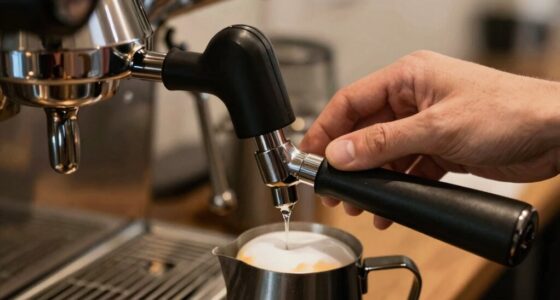
In terms of technique, once you’ve heated your milk within the right temperature range, it’s time to froth. Using a steam wand or frother, you should focus on creating a whirlpool effect. Proper temperature control during this step ensures your milk develops tiny, uniform bubbles, giving you that creamy consistency. If you notice the milk isn’t frothing well or the foam looks airy and unstable, it might be a sign that the temperature is off. Adjust your heat source accordingly—sometimes, just a slight reduction in power makes a big difference. Developing an understanding of thermal equilibrium can help you better anticipate how your milk will behave during frothing. Consistent practice helps you develop an intuitive sense of when to stop heating and how to achieve the ideal microfoam. Additionally, temperature stability during the process can make a significant difference in the final texture of your milk.
A steady temperature helps maintain the microfoam quality, making your coffee look and taste professional. Keep in mind, patience is key. Rushing the process can cause the milk to overheat or not reach the right temperature at all. As you practice, you’ll become more intuitive about when to stop heating and how long to froth. Over time, you’ll learn to modify your temperature control methods effortlessly, resulting in consistently perfect frothed milk. Remember, the goal isn’t just hot milk—it’s the right temperature, textured perfectly, to turn your coffee into a smooth, indulgent treat. By focusing on precise temperature control, you’ll reveal the secret to a barista-quality milk foam every single time. Developing frothed milk skills through careful attention to temperature can significantly elevate your home coffee game.
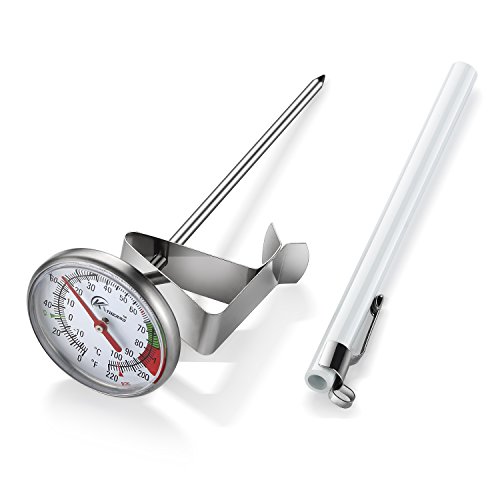
KT THERMO Instand Read 2-Inch Dial Thermometer,Best for The Coffee Drinks,Chocolate Milk Foam
- Multi-stage clip design: Adjusts for easy temperature reading
- Safe, simple measurement: Accurately measures coffee and milk foam
- Wide temperature range: 0°F to 220°F for boiling or freezing
As an affiliate, we earn on qualifying purchases.
As an affiliate, we earn on qualifying purchases.
Frequently Asked Questions
How Does Milk Temperature Affect Espresso Extraction?
You’ll find that milk temperature directly impacts espresso extraction, especially when milk frothing. If the milk’s too hot, it can alter the brew’s flavor, making it bitter or over-extracted. Maintaining temperature stability guarantees consistent results, preventing uneven extraction. Properly steamed milk at the right temperature enhances your espresso, balancing the flavors and creating a smooth, rich taste. Focus on temperature control during frothing to optimize both your milk and espresso quality.
What Tools Can Help Monitor Milk Temperature Accurately?
Ever wondered how to keep milk at the perfect steaming temperature? You can use a digital thermometer or infrared thermometer for accurate monitoring. These tools help you guarantee proper milk storage and precise temperature calibration, preventing overheating or underheating. By consistently checking milk temperature with reliable tools, you maintain quality and consistency in your espresso drinks, making every cup perfect. Isn’t it worth investing in tools that guarantee ideal milk texture and flavor?
Does Milk Type Influence the Ideal Temperature Range?
Yes, milk type influences the ideal temperature range for storage. For example, raw milk needs colder temperatures to prevent spoilage, while processed milk might tolerate slightly higher temps. You should always monitor milk storage temperatures carefully, as improper temps can lead to milk spoilage. Using accurate tools helps you stay within the correct temperature window, ensuring freshness and safety. Adjust your storage practices based on the specific milk type to keep it safe longer.
How Long Can Milk Stay Within the Optimal Temperature Window?
You can usually keep milk within the ideal temperature window for about two hours if stored properly. Don’t let temperature fluctuations sneak in, or the milk’s freshness could suffer. Milk storage is essential—once it’s outside the safe range, bacteria can multiply quickly. To stay on the safe side, refrigerate milk promptly after use and avoid leaving it out, because a little goes a long way when it comes to quality.
Are There Health Risks Associated With Overheating Milk?
Overheating milk during storage or the pasteurization process can pose health risks by destroying beneficial bacteria and altering nutrient content. When milk gets too hot, it may also develop off-flavors and spoil faster, increasing the chance of bacterial growth. To stay safe, keep milk within the recommended temperature range, avoid overheating during pasteurization, and store it properly. Proper temperature control guarantees milk remains safe, nutritious, and fresh.

Breville BES003 Temp Control Milk Jug Espresso Accessory, Stainless Steel
- Integrated thermometer indicator: Helps texture milk to optimal temperature
- Dual temperature markings: Displays in Celsius and Fahrenheit 130-170°F
- Premium stainless steel: Durable, long-lasting construction
As an affiliate, we earn on qualifying purchases.
As an affiliate, we earn on qualifying purchases.
Conclusion
Now that you know the milk temperature window, you’re like a skilled alchemist, transforming simple milk into a velvety masterpiece. With each perfect sip, you craft a symphony of warmth and froth that dances on your palate. Remember, mastering this delicate dance is like tuning a fine instrument—every degree matters. So, keep your thermometer close, and let your barista magic turn everyday milk into a warm, creamy canvas of comfort.

Philips Barista Brew Milk Jug, Integrated Temperature Indicator, 450 ml
- Precise Milk Frothing: Integrated temperature strip for perfect microfoam
- Effortless Temperature Monitoring: Built-in indicator for easy control
- Durable Stainless Steel: Resistant to stains and odors
As an affiliate, we earn on qualifying purchases.
As an affiliate, we earn on qualifying purchases.

Ecoflarix 350ml Electric Milk Frother: 4-in-1 Hot & Cold,120s Fast Frothing
- Professional Frothing Power: 450W motor, 120s silky foam
- Fast, Café-Quality Results: Creates velvety foam quickly
- Smart Temperature Control: Maintains 65-70°C automatically
As an affiliate, we earn on qualifying purchases.
As an affiliate, we earn on qualifying purchases.