

If your milk isn’t swirling properly, check your wand angle—hold it slightly below the surface and align it with the pitcher’s side. Avoid pointing it too vertical or flat, and keep movements smooth and steady. In just 10 seconds, make small adjustments until you see a steady whirlpool and glossy surface, indicating a good vortex. Keep practicing, and you’ll master the perfect wand position for silky microfoam and great latte art.
Key Takeaways
- Ensure the wand tip is just below the milk surface to create proper vortex and swirl.
- Slightly angle the wand away from vertical to promote smooth circulation and microfoam formation.
- Use visual cues like steady whirlpool and glossy surface to adjust the wand angle quickly.
- Keep the wand steady with a consistent depth, avoiding sudden movements or tilting too flat or too vertical.
- Make small, deliberate adjustments within 10 seconds to restore proper circulation and achieve milk swirl.
Why Your Milk Won’t Swirl: The Importance of Wand Angle

If your milk isn’t swirling or creating a smooth, velvety texture, the most common culprit is your wand angle. Understanding milk chemistry helps you recognize how steam and air interact during frothing, influencing foam quality. Proper frothing techniques require positioning the wand at the right angle to break down milk’s proteins and fats efficiently. When the wand is too steep or shallow, it disrupts the circulation needed to incorporate air smoothly, resulting in uneven or flat foam. Adjusting your wand angle guarantees better aeration and heat transfer, leading to consistent, glossy microfoam. Maintaining the correct wand positioning directly affects the contrast ratio of your foam, impacting the overall texture and appearance of your latte art. Additionally, proper steam flow management ensures optimal frothing conditions, leading to improved foam quality. Paying close attention to technique consistency helps achieve reliable results every time you steam milk. Being mindful of milk temperature also plays a crucial role in achieving ideal froth and avoiding unwanted textures.
How Wand Position Affects Milk Texture and Foam Quality
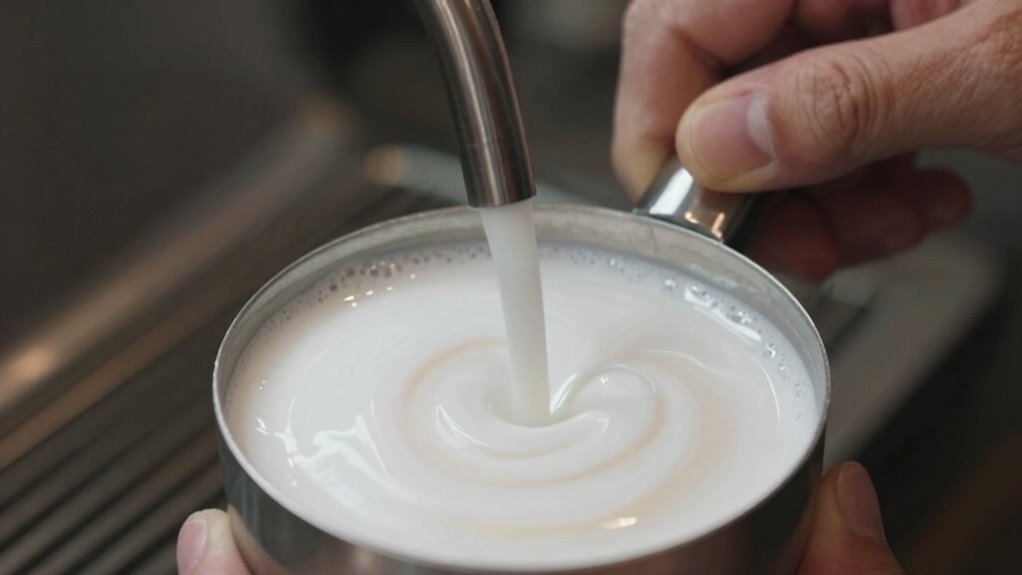
Your wand position directly impacts the texture of your milk and the quality of foam you create. When you position the wand correctly, you guarantee even heat distribution, helping you reach the ideal milk temperature without overheating. Proper placement also promotes better frothing techniques, creating microfoam with a smooth, velvety feel. If the wand is too high or low, you risk inconsistent textures and large bubbles that ruin the foam. Keep the wand tip just below the surface for initial frothing, then deeper for heating and texturing. This precise positioning allows you to control the milk’s consistency, resulting in a glossy, rich texture. Mastering your wand’s position is essential for achieving professional-quality milk with the right texture and foam quality. A well-positioned wand aligns with best practices in precious metal investments, ensuring your skills develop with the right foundational techniques. Proper wand angle also helps in maintaining consistent foam quality, which is crucial for a perfect beverage. Additionally, understanding how wilderness safety principles can be applied to your technique ensures a safer and more controlled frothing process. Incorporating techniques from barista training can further improve your control and consistency during frothing. Developing your frothing skills through deliberate practice enhances overall beverage quality and consistency.
How to Recognize When Your Wand Angle Is Correct

Recognizing the correct wand angle becomes clear when you observe the milk’s surface and texture. When your wand is at the right angle, the milk heats evenly, reaching the ideal milk temperature without scorching or cooling too quickly. The surface should be smooth and glossy, with a slight shimmer indicating proper steaming techniques. You’ll notice that the milk flows steadily, creating a steady whirlpool that pulls in the foam without splashing or breaking. If you see the milk swirling smoothly and the surface remaining unbroken, your wand angle is correct. Proper angle ensures consistent heat distribution and foam formation, making it easier to create that perfect swirl. Maintaining the correct wand position also helps prevent overheating or uneven textures, which can compromise the quality of your milk. Paying attention to steam wand positioning and proper technique can significantly improve your foaming results and overall technique. Developing a good wand angle awareness allows you to quickly adjust and achieve the perfect milk texture every time. Keep an eye on these cues to refine your technique quickly.
Common Mistakes That Prevent Milk From Swirling

One common mistake that prevents milk from swirling properly is using an incorrect wand angle. When your wand isn’t positioned correctly, steam pressure may not evenly incorporate air, leading to uneven milk temperature and poor swirl. If the wand is too high or too low, you might create too much or too little froth, disrupting the swirl pattern. Additionally, improper angle can cause inconsistent steam distribution, affecting the milk’s texture and temperature. Maintaining the right wand angle ensures the steam evenly heats the milk and creates a stable microfoam. This balance is essential for proper swirling, as uneven steam pressure or incorrect temperature can cause the milk to stagnate or form large bubbles instead of a smooth, swirling motion.
Quick Tip: Adjust Your Wand in 10 Seconds for Perfect Froth
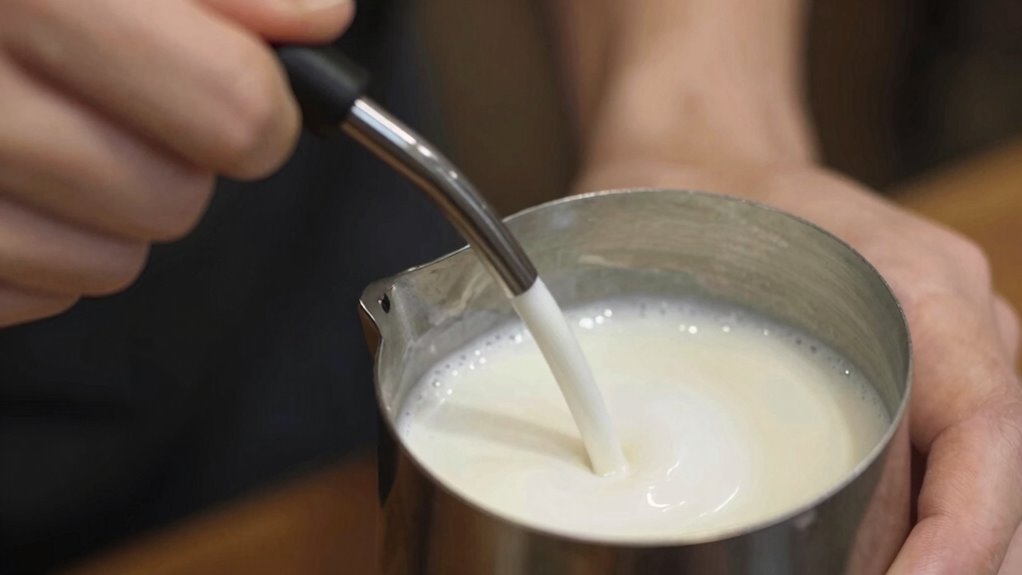
To quickly improve your froth, focus on steady wand positioning for consistent circulation. A simple 10-second adjustment can guarantee proper froth circulation and prevent sputtering or uneven foam. With a quick tweak, you’ll achieve perfect froth every time. Proper kitchen tool use ensures safety and optimal results. Remember, understanding financial education principles can also help you make smarter choices in the kitchen and beyond. Additionally, maintaining the wand angle is key to achieving the ideal froth texture. Being aware of slang terms can also help you communicate more effectively while troubleshooting your machine. Keeping equipment maintenance in mind will also extend the lifespan of your espresso wand and ensure consistent performance.
Steady Wand Positioning
Maintaining a steady wand position is essential for consistent frothing, and it only takes a quick adjustment to get it right. Keep the wand at a slight angle, ensuring it stays just below the milk’s surface. This stability helps control milk temperature and steam pressure, preventing overheating or uneven heating. By holding the wand steady, you allow the steam to circulate evenly, creating smooth, velvety froth. If your wand wobbles or shifts, it can disrupt circulation and lead to inconsistent foam. Take a second to align your hand and wrist before steaming, maintaining a firm but gentle grip. A consistent position ensures ideal steam pressure and milk temperature, making your froth perfect every time, quickly and effortlessly.
Proper Froth Circulation
Adjusting your wand slightly during steaming helps guarantee proper froth circulation. When your wand is correctly positioned, the steam evenly agitates the milk, preventing hot spots and ensuring consistent milk temperature. Keep your frothing pitcher at a slight angle so the wand remains just below the surface of the milk, promoting steady circulation. This movement helps break up larger bubbles and creates smooth, velvety froth. If circulation is off, you might notice uneven heating or foam that’s too airy. By making small, quick adjustments to wand angle, you allow the steam to circulate thoroughly, resulting in perfectly textured milk. Proper knife technique can also help you handle your equipment more confidently, ensuring better control during steaming. Focus on maintaining the right milk temperature, around 140-150°F, to achieve ideal froth and taste every time. Additionally, understanding the principles of steam flow can help you optimize your wand positioning for consistent results.
Quick Adjustment Technique
Sometimes, achieving perfect froth only takes a quick, confident move. To fine-tune your wand angle in seconds, focus on a few simple adjustments. First, verify your machine maintenance is up to date—clean nozzles and check for blockages. Next, slightly tilt the wand to optimize milk temperature and froth consistency. Keep your hand steady and make small, deliberate moves. This quick adjustment can prevent overheating milk or creating uneven froth. Remember, the right wand angle helps you swirl milk smoothly and maintain ideal milk temperature. Practice this technique regularly to build confidence and speed. Proper air purifier maintenance ensures your equipment functions optimally, which can also contribute to better frothing results. With just a few seconds, you’ll improve your frothing and keep your machine running smoothly, ensuring every cup is perfect.
How to Keep the Wand at the Right Angle While Frothing
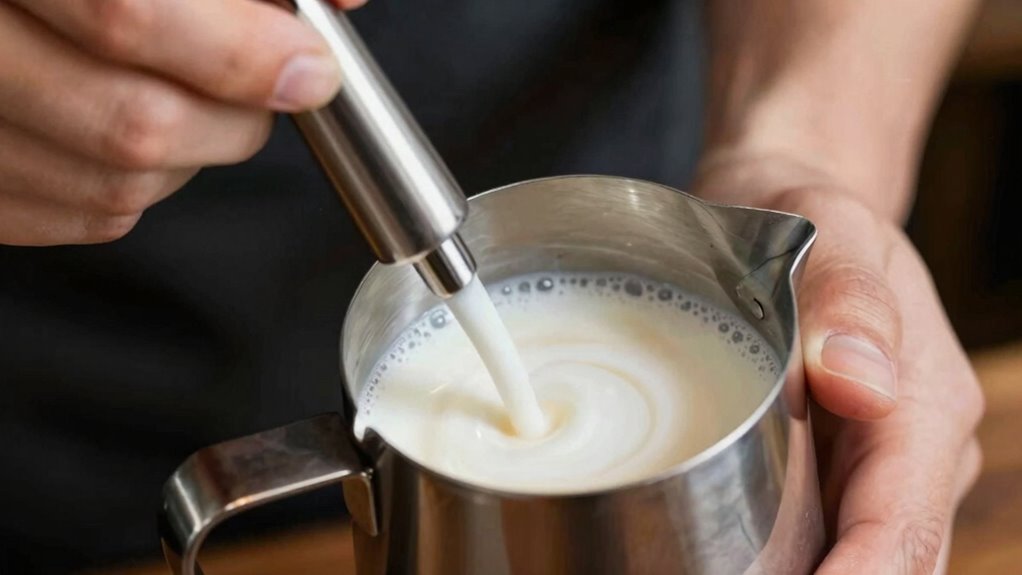
To keep your wand at the right angle while frothing, focus on maintaining a consistent position throughout. Use visual cues like the pitcher’s markings or your hand grip to stay steady. Adjust the wand before you start, so you don’t have to fix it mid-froth. Ensuring your wand angle aligns with the optimal performance setup can prevent issues like milk not swirling properly.
Maintain Consistent Angle
Maintaining a consistent wand angle is essential for achieving smooth, creamy froth. When you keep your wand steady, you ensure even heating and proper milk texture. To do this effectively:
- Keep your wrist steady to avoid shifting the wand angle
- Use your elbow as a pivot point for stability
- Monitor steam pressure to prevent sudden movements
- Adjust your hand position if milk temperature rises too quickly
- Focus on maintaining the same depth and tilt throughout frothing
Staying consistent helps prevent uneven heating or large bubbles. It also allows the steam to work efficiently, resulting in ideal milk temperature and perfect microfoam. Practicing this steady hand ensures your wand stays at the right angle, making your frothing precise and foolproof every time.
Use Visual Cues
Using visual cues can greatly improve your ability to keep the wand at the right angle while frothing. Pay attention to how the steam wand’s design guides you—its shape and position can serve as a natural reference point. Observe the milk’s composition; thinner milk often requires a steeper angle, while thicker milk needs a gentler tilt to promote proper circulation. Focus on the way the milk surface responds—if it’s forming a smooth, shiny surface, your angle is likely correct. Keep your eyes on the movement of the milk and steam wand, using these cues to maintain consistent positioning. Over time, these visual signals will become intuitive, helping you achieve a perfect microfoam every time without second-guessing your wand angle.
Adjust Before Frothing
Before you start frothing, take a moment to check and adjust the wand’s angle if necessary. Proper positioning ensures you’re working with milk chemistry and using your frothing tools effectively. An ideal wand angle keeps the milk moving in a smooth whirlpool, preventing unwanted splashing or uneven microfoam. Adjusting early saves you from frustration and allows the milk’s natural chemistry to froth consistently. Make sure the wand is just below the surface of the milk, angled slightly to create a vortex. Use these tips to maintain the right angle:
- Align the wand with the pitcher’s side
- Keep the tip just below the surface
- Avoid pressing too hard or too soft
- Check for a steady, swirling motion
- Adjust as needed before turning on the steam
Troubleshooting Other Milk Frothing Problems Beyond Wand Angle
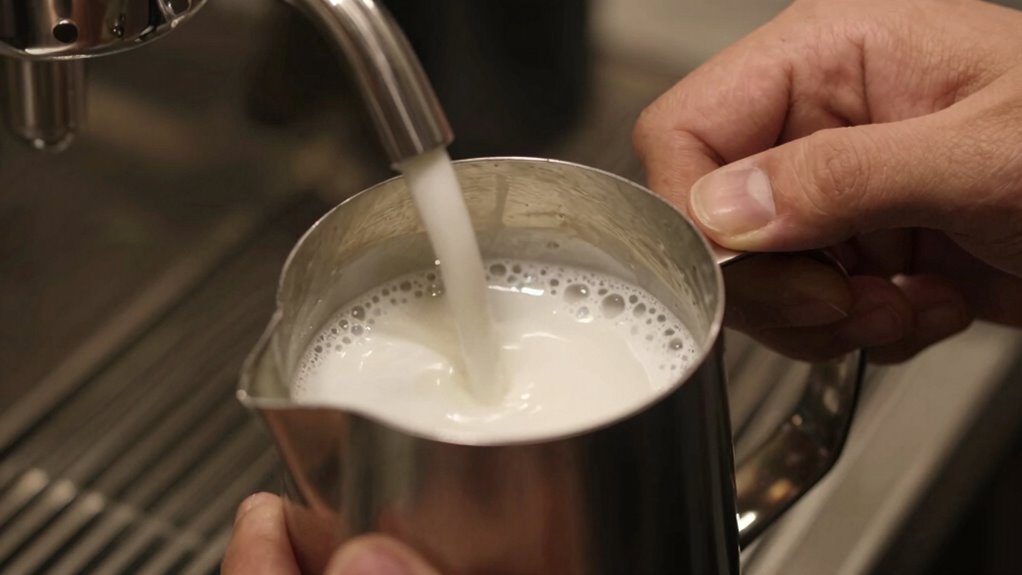
Even if your wand angle is perfect, other issues can still cause frothing problems. One common culprit is milk temperature; if it’s too cold or too hot, it won’t froth properly. Use a thermometer to guarantee your milk is between 140°F and 150°F for ideal foam. Also, check your frothing pitcher—using a cold, clean pitcher helps maintain temperature and prevents uneven froth. If your milk isn’t swirling or texturing well, it might be due to improper milk steaming technique or inconsistent pressure. Make sure you’re inserting the wand just below the surface and maintaining steady steam. Adjusting these factors, along with your wand angle, will improve your frothing results beyond just positioning.
Best Wand Positions for Different Types of Milk

Different types of milk require different wand positions to achieve ideal froth. Your goal is to adjust the wand for perfect milk temperature and steam pressure, ensuring smooth, glossy microfoam. For whole milk, position the wand slightly deeper to generate richer froth with higher steam pressure. Skim milk responds well to a more superficial placement for lighter foam, requiring less steam pressure. Almond or oat milk often needs a gentler angle, with a focus on maintaining the right milk temperature without over-foaming. Cold milk demands a lower position to avoid scorching, while warmer milk needs a slightly higher wand angle to prevent burning. Adjust according to the type of milk and desired foam consistency.
- Whole milk: deeper wand, higher steam pressure
- Skim milk: shallow wand, moderate steam pressure
- Plant-based milk: gentle angle, careful temperature control
- Cold milk: lower wand position, minimal steam pressure
- Warm milk: slightly higher wand, controlled steam pressure
How Correct Wand Angle Enhances Milk Art and Swirl
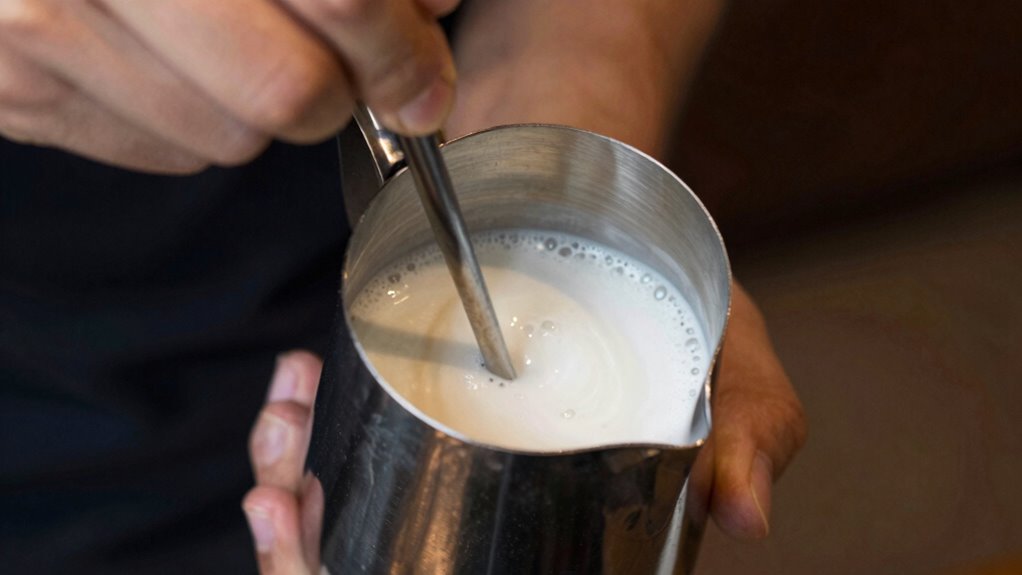
A correct wand angle is essential for creating visually stunning latte art and smooth milk swirls. When you position the wand properly, you influence milk chemistry, ensuring the microfoam integrates seamlessly with the espresso. This precise angle helps break down larger bubbles, creating a glossy, velvety texture ideal for latte art. A well-angled wand directs steam to heat and microfoam milk consistently, giving you better control over flow and pattern creation. When your wand is aligned correctly, the milk’s flow remains steady, facilitating intricate art designs and fluid swirls. Ultimately, mastering wand angle enhances both the aesthetic and texture of your milk, making latte art more precise and appealing while ensuring a rich, stable swirl every time.
Practice Drills to Master Wand Angle Adjustment Fast
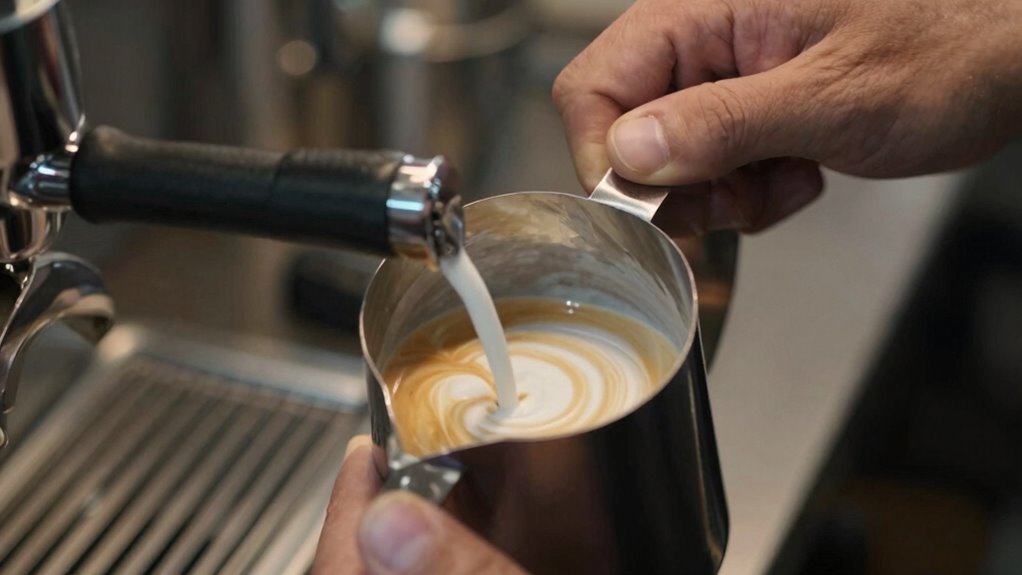
Practicing specific drills can considerably speed up your ability to adjust the wand angle accurately. Consistent practice helps you respond quickly, ensuring the right milk temperature and proper steam wand maintenance. Focus on quick adjustments to maintain a steady milk flow and avoid over-tilting. Regular drills will build muscle memory, making wand positioning instinctive during busy moments. Incorporate these techniques into your routine:
Consistent wand adjustment drills enhance control, speed, and muscle memory for busy coffee service.
- Use a mirror to observe your wand angle during practice
- Adjust the wand at different milk temperatures to improve control
- Record your sessions to identify improvement areas
- Simulate busy environment scenarios for quick responses
- Focus on smooth, deliberate movements to enhance precision
Frequently Asked Questions
Can Wrong Wand Angle Damage My Espresso Machine?
Yes, wrong wand positioning during milk frothing can damage your espresso machine. If you angle the wand incorrectly, it might cause excessive pressure or splashing, which can strain internal components. Always make sure your wand is properly positioned and at the right angle to avoid damaging the machine. Proper wand positioning helps you achieve smooth milk frothing and protects your machine from unnecessary wear or harm.
How Often Should I Clean My Milk Frother Wand?
Think of your milk frother wand as a paintbrush that needs regular cleaning to keep your masterpiece perfect. You should clean your frother wand after every use, especially if you’re frothing milk daily, to prevent buildup. Incorporate basic maintenance routines into your daily routine, and you’ll enjoy flawless milk frothing tips every time. Consistent cleaning guarantees your machine functions smoothly, extending its lifespan and delivering delicious drinks effortlessly.
Does Milk Type Affect the Ideal Wand Angle?
Yes, milk type affects the ideal wand angle because different milk textures and flavor profiles respond differently to frothing techniques. For creamier, whole milk, you might need a steeper angle to create smooth, velvety foam. For thinner or plant-based milks, a gentler angle helps avoid splattering and achieves a better swirl. Adjust your wand angle based on the milk’s texture to enhance flavor and get the perfect swirl every time.
What Signs Indicate My Wand Is at the Wrong Angle?
Your steam wand’s at the wrong angle if your frothed milk looks flat or has large bubbles, like a stormy sky. Also, if the milk isn’t swirling smoothly or the wand’s splattering, you’ve got it off. These signs tell you to adjust the wand’s position so it’s just below the surface and angled correctly. A proper angle guarantees silky, velvety frothed milk every time.
Can Adjusting the Wand Angle Improve Latte Art?
Adjusting the wand angle can considerably improve your latte art and milk texture. When you position the wand correctly, the milk steams evenly, creating a smooth, velvety texture ideal for pouring intricate designs. A proper wand angle ensures the milk flows consistently, enhancing the latte art quality. Take a moment to fine-tune your wand angle, and you’ll notice better milk texture and more impressive latte art with each pour.
Conclusion
By mastering your wand angle, you’ll quickly fix issues like milk not swirling and achieve perfect foam every time. For example, imagine you’re preparing a latte for a friend, but the milk refuses to swirl. Just a quick 10-second adjustment to your wand position can turn that frustrating mess into a beautifully textured, artful drink. Keep practicing, and you’ll consistently create professional-quality milk froth with ease.