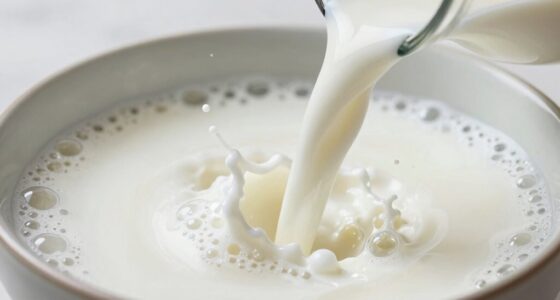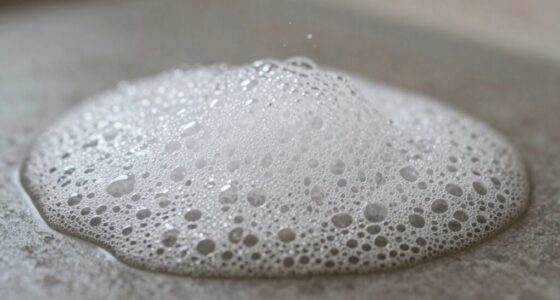

Tiny bubbles in your milk foam create a dry, gritty texture in cappuccinos because they disrupt the smooth, velvety feel you want. When bubbles are too small and unstable, they clump together and form a dense, dry foam instead of a moist, creamy layer. Proper frothing techniques, like controlling temperature and air incorporation, help produce stable, larger bubbles for better texture. If you want to master those perfect froths, you’ll discover more tips ahead.
Key Takeaways
- Excess tiny bubbles in milk foam create a dry, gritty texture, reducing creaminess and mouthfeel.
- Proper frothing technique prevents over-incorporation of tiny bubbles that lead to dry foam.
- Stable, larger bubbles result in moist, velvety foam, avoiding the dry, dense layer.
- Inadequate control of temperature and air infusion causes excessive small bubbles.
- Mastering bubble chemistry ensures a smooth, moist foam for a better cappuccino experience.

When bubbles are too small to see or control, they can cause unexpected problems in various systems, from industrial processes to household appliances. This is especially true in the world of coffee making, where tiny bubbles in your milk can influence the texture and mouthfeel of your cappuccino. Understanding how milk frothing techniques and bubble formation chemistry work can help you avoid the dreaded dry sensation many baristas and coffee enthusiasts dislike. Proper bubble stability is crucial for achieving the perfect foam, as it depends on the delicate balance of proteins and fats in the milk. Milk frothing techniques are designed to incorporate air into heated milk, creating a rich, velvety foam. You might think that simply steaming milk is enough, but the way you introduce air and control the temperature makes all the difference. When done improperly, you get an excess of tiny bubbles that cluster together, forming a dense, dry foam rather than the smooth, creamy froth you want. The goal is to control bubble size—small enough to be stable but not so tiny that they feel dry or gritty on your tongue. Achieving this balance involves precise technique: positioning the steam wand just below the milk’s surface, creating a whirlpool to incorporate air evenly, and maintaining the right temperature. Additionally, understanding the chemistry behind bubble formation can help you troubleshoot and improve your frothing results. Mastering the frotting techniques and understanding the science behind bubble formation can significantly improve your coffee experience. Paying attention to factors like bubble size control can also help optimize foam quality and reduce the likelihood of dry foam. Proper control over this process can make the difference between a dry, dense foam and a moist, velvety layer. In the end, mastering milk frothing techniques and understanding bubble formation chemistry helps you produce a creamy, moist foam instead of a dry, dense layer. When you control these factors, you avoid the unpleasant sensation of dry cappuccino foam, ensuring each sip feels smooth and satisfying. So, pay attention to your steaming method, keep the temperature in check, and appreciate the science behind those tiny bubbles—they’re the secret to perfect milk froth every time.

Breville BES003 Temp Control Milk Jug Espresso Accessory for Creating Latte Art
The Breville Temp Control Milk Jug includes an integrated thermometer indicator strip to help you texture milk to…
As an affiliate, we earn on qualifying purchases.
As an affiliate, we earn on qualifying purchases.
Frequently Asked Questions
Can Tiny Bubbles Be Completely Eliminated From Cappuccinos?
You can’t completely eliminate tiny bubbles from cappuccinos because foam stability depends on milk composition and how it’s steamed. Different milk types, like whole or skim, create varying bubble sizes and stability. To reduce tiny bubbles, guarantee proper steaming techniques and use fresh, high-quality milk. While some bubbles may still form, adjusting these factors helps create a creamier, smoother foam, making your cappuccino feel less dry and more enjoyable.
Do Different Types of Milk Affect Bubble Formation?
Yes, different milk types dramatically impact bubble formation—you’ll notice the difference instantly. Whole milk produces rich, stable foam with tiny bubbles, while skim milk creates larger, less stable ones. Your milk frothing techniques and coffee bean selection also influence bubbles’ size and stability. For the creamiest, most luxurious foam, choose fresh, high-quality milk and master your frothing skills. This combo transforms any cappuccino into a velvety masterpiece!
How Does Water Temperature Influence Bubble Size?
Water temperature critically influences bubble size during milk frothing. If the temperature is too high, it causes rapid vapor expansion, creating larger bubbles and uneven foam. Conversely, lower temperatures promote smaller, more stable bubbles. By maintaining proper temperature control, you guarantee consistent bubble size, resulting in smooth, creamy froth. Proper temperature control during milk frothing helps you achieve the perfect texture, making your cappuccinos feel luxurious and satisfying.
Are There Specific Tools to Reduce Tiny Bubbles?
You can use tools like a fine-mesh strainer or a microfoam wand to reduce tiny bubbles during milk frothing. These tools help control bubble formation and improve bubble stability, resulting in a smoother, creamier texture. Using a high-quality steam wand with precise temperature control also minimizes tiny bubbles, ensuring your cappuccino feels rich rather than dry. Proper technique and equipment enhance milk frothing and create a more consistent, velvety microfoam.
Does the Cup Shape Impact Bubble Retention?
Yes, cup shape impacts bubble retention by influencing bubble adhesion. A wider, rounded cup design allows bubbles to escape more easily, reducing bubble buildup and dryness. Conversely, narrow or straight-sided cups can trap bubbles, making cappuccinos feel drier. You should choose a cup with a shape that discourages bubble adhesion, such as a tapered or curved design, to improve your drinking experience and minimize tiny bubble retention.

Steam Wand Cleaning Tool Compatible with Sage Barista Pro, Espresso Machine Milk Frother Maintenance Tool
[Compatibility]: A precision tool designed to clean both the interior and exterior of steam wands, effectively removing stubborn…
As an affiliate, we earn on qualifying purchases.
As an affiliate, we earn on qualifying purchases.
Conclusion
You might believe that tiny bubbles simply add a creamy texture, but they also trap air that makes your cappuccino feel unexpectedly dry. Some experts argue these microbubbles create a barrier that limits moisture transfer, intensifying the dry sensation. While the science isn’t fully settled, experimenting with steaming techniques or using different milk types could reduce this effect. So, next time your cappuccino feels dry, consider adjusting your approach—your taste buds might thank you.

Rechargeable Milk Frother Handheld, 2-IN-1 Dual Spring Whisk Electric Frother Wand for Cappuccino Latte Macchiato, Portable Drink Mixer for Coffee, Matcha, Hot Chocolate
NO MORE BATTERIES — USB Rechargeable. Forget buying batteries! Just plug in the included USB cable to charge….
As an affiliate, we earn on qualifying purchases.
As an affiliate, we earn on qualifying purchases.
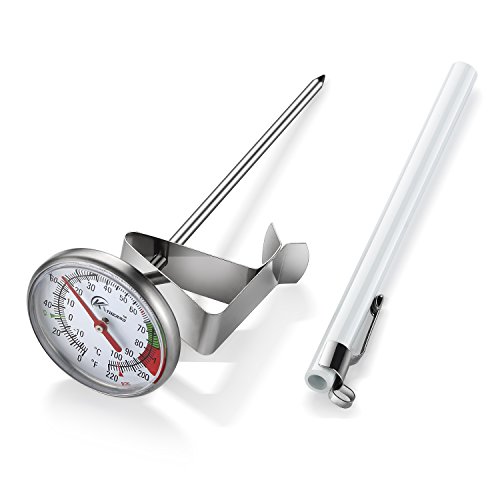
KT THERMO Instand Read 2-Inch Dial Thermometer,Best for The Coffee Drinks,Chocolate Milk Foam
DESIGN:Multi-stage design of the fixed clip, adjust the thermometer read the location of the disk surface to facilitate…
As an affiliate, we earn on qualifying purchases.
As an affiliate, we earn on qualifying purchases.